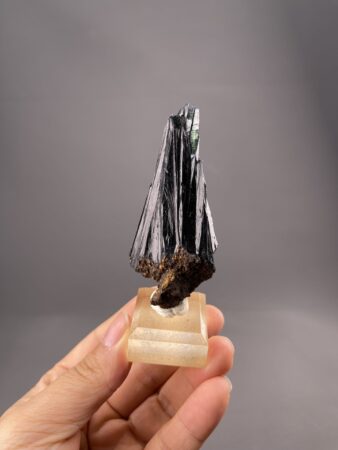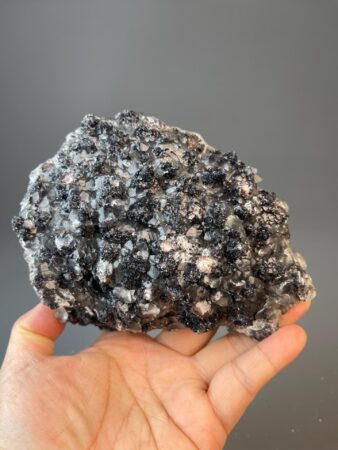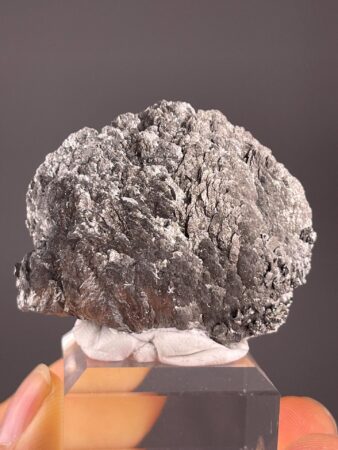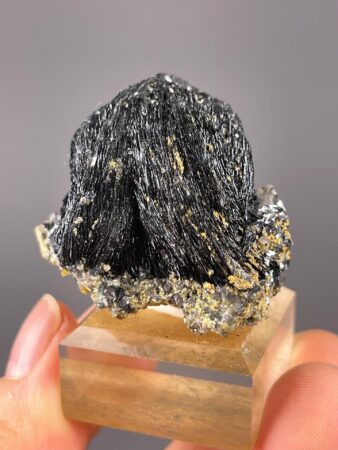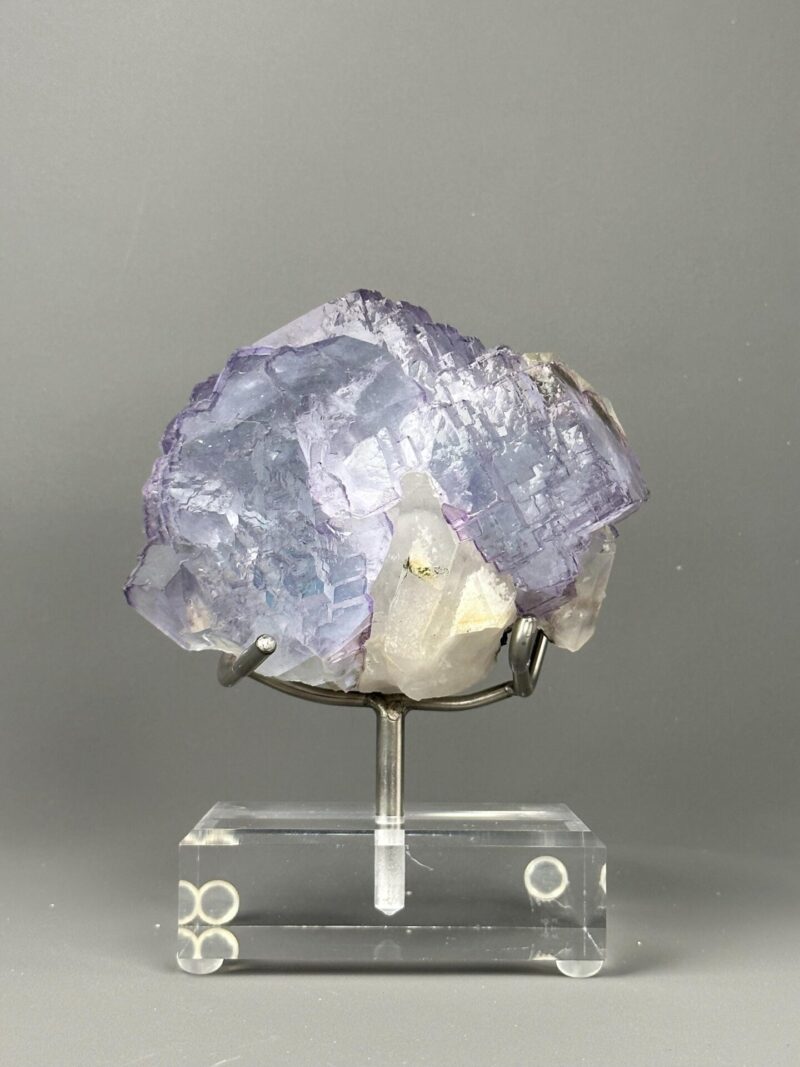
Hematite (Fe₂O₃) is the principal iron ore mineral worldwide and one of the most economically important minerals on Earth. Its blood-red streak (Greek “haima” = blood) is diagnostic. Specimen forms range from metallic “specularite” rosettes to “kidney ore” botryoidal aggregates and gem-grade octahedral crystals from Brazil and Switzerland.
Key Facts
- Mohs hardness 5–6.
- Trigonal; isostructural with corundum and ilmenite.
- Blood-red streak diagnostic — distinguishes from magnetite (black streak).
- Major ore mineral; >90% of global iron production.
- “Specularite” mirror-like aggregates and “kidney ore” botryoidal forms are collector classics.
Notable Localities
Cumberland (England), Elba (Italy), and Minas Gerais (Brazil) yield iconic specimens. Anshan (Liaoning) hosts China’s major hematite ore.
Found at these Localities
- Swiss Alps (Alpine-Cleft Province) (瑞士阿尔卑斯高山裂隙矿物产地)
- Siegerland District (西格兰铁矿区)
- Kharan, Balochistan (卡兰板钛矿产地)
- Cavradi Gorge (卡瓦拉迪峡谷)
- Italian Volcanic Province (Vesuvius / Lipari / Etna) (意大利火山矿物产地)
- Eastern Brazilian Pegmatite Province (巴西东部伟晶岩省)