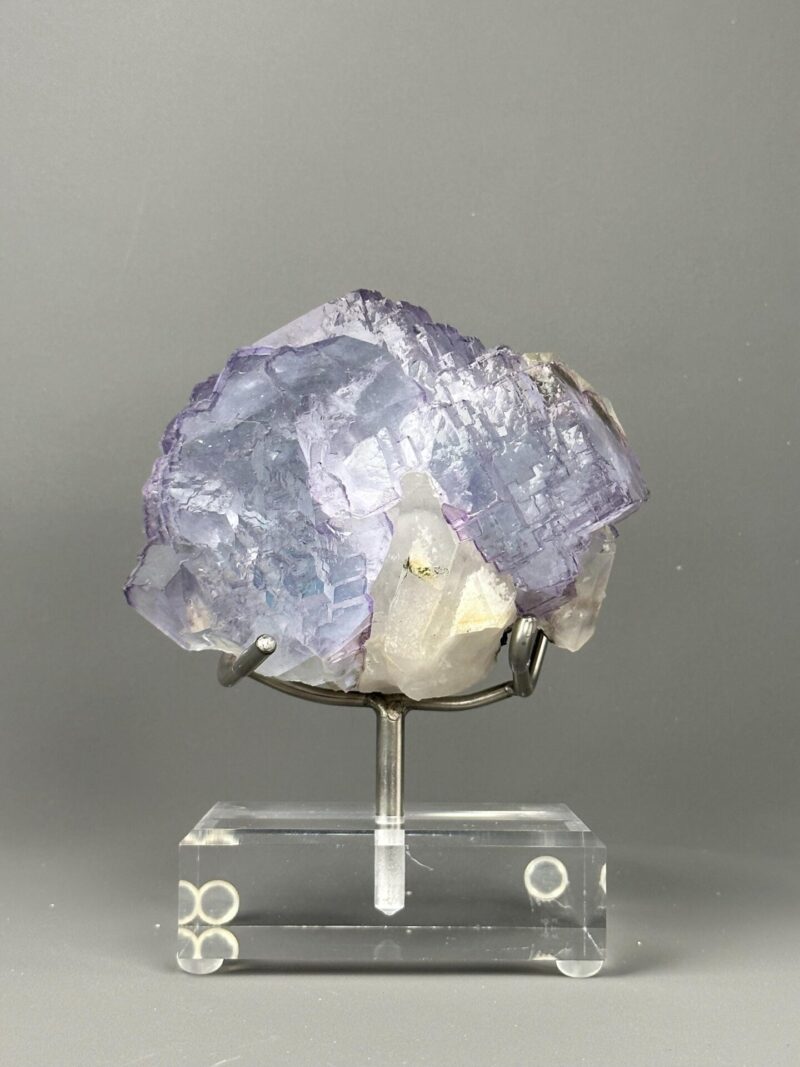
Witherite (BaCO₃) is barium carbonate — the carbonate analog of baryte (BaSO₄). Named after English chemist William Withering, it is the principal carbonate ore of barium. Witherite forms in low-temperature hydrothermal vein assemblages, often paired with galena and fluorite. Northumberland and Cumberland (England) are the historical type-area sources for collector specimens.
Key Facts
- Mohs hardness 3–3.5.
- Orthorhombic; isostructural with aragonite (CaCO₃) and strontianite (SrCO₃).
- Pseudo-hexagonal cyclic twinning is diagnostic.
- Heavy specific gravity (4.3) reflects barium content.
- Toxic — soluble Ba²⁺ is a poison; handle with care.
Notable Localities
Cumberland (England) and Settlingstones Mine (Northumberland) yield classic specimens. Illinois Pb-Zn district hosts US occurrences.
Found at these Localities
- Lanping Pb-Zn-Cu Field (兰坪铅锌铜矿田)