
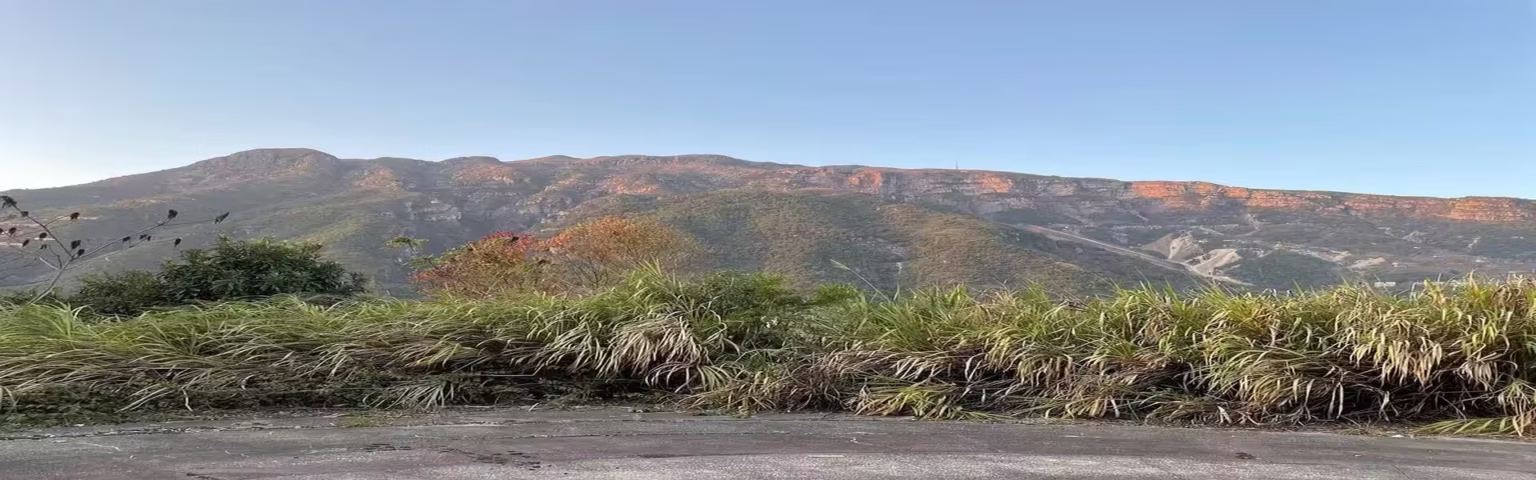
Yaogangxian Mine, Hunan
A tungsten-tin mine in the mountains of southern Hunan. Famous for fluorite in every conceivable color (the purple-green color zoning is iconic), scheelite, arsenopyrite, wolframite, and beryl. The 'porcelain blue' cubic fluorite phantoms from Yaogangxian are arguably the most-photographed Chinese specimens of the modern era.
Daye, Hubei + Shangbao, Hunan
Daye, near Huangshi, produces gleaming golden pyrite cubes on dolomite-calcite matrix, often with iridescent surfaces. Shangbao Mine in central Hunan produces the famous Shangbao green fluorite, sometimes capped by colorless quartz. Both are skarn deposits formed where granite intrusions baked nearby carbonate rocks.
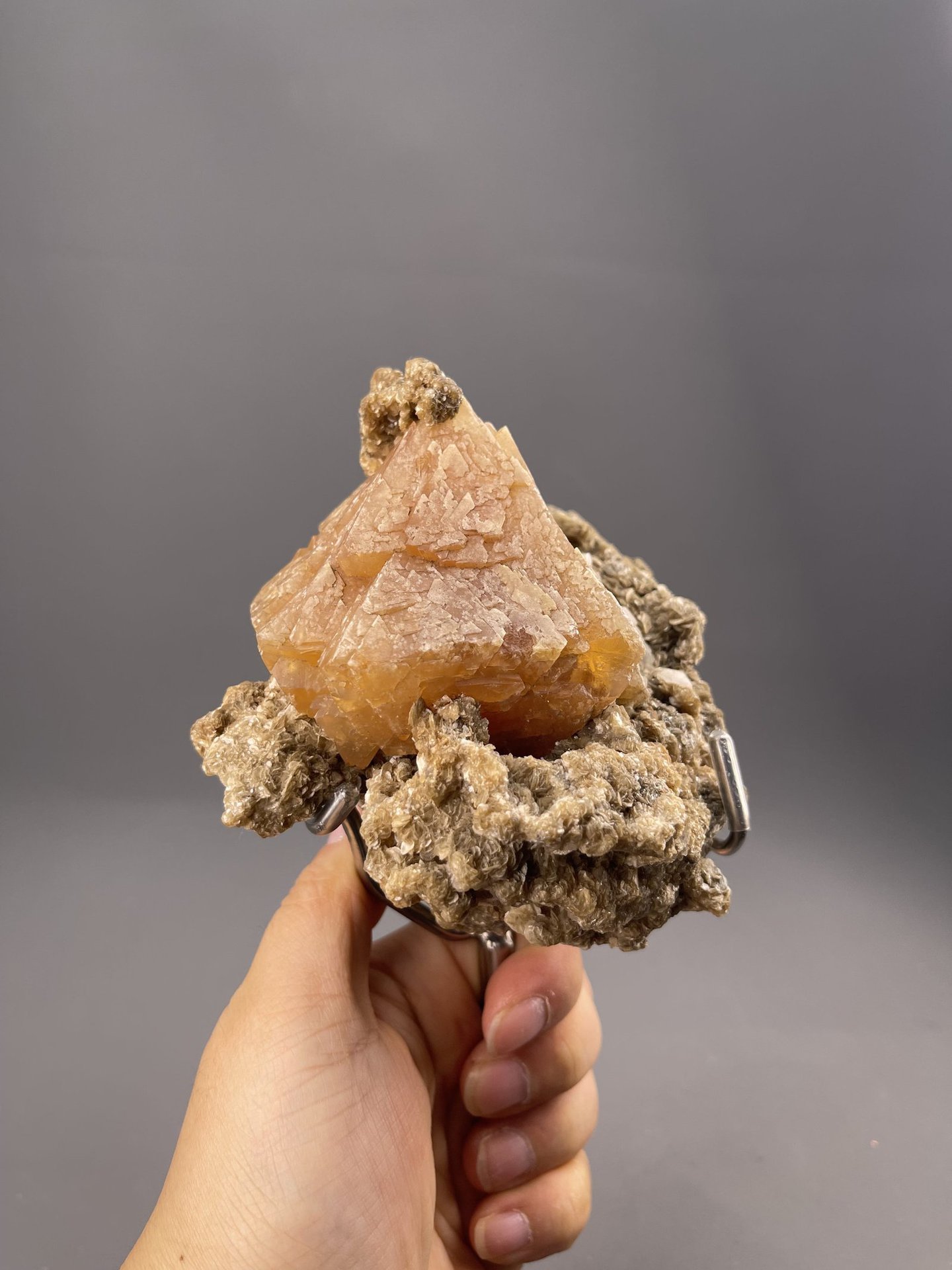
Xuebaoding, Sichuan + minor mines
Xuebaoding in Pingwu County produces gemmy cassiterite, beryl, and the famous scheelite-on-beryl pairings. Lengshuijiang in central Hunan is the world-class antimony locality, producing dramatic stibnite swords. Xianghualing in southern Hunan produces white fluorite cubes and rare polylithionite. The smaller mines — Jiangxi's Dexing pyrite, Inner Mongolia's Huanggang skarn, Guangxi's tin deposits — round out the picture.
How to tell the localities apart
Each classic Chinese locality has a fingerprint that becomes obvious once you have handled enough material. Yaogangxian reads as concentric purple-and-green color zoning inside transparent cubes, often with the opaque 'porcelain blue' look. Shangbao fluorite is a cleaner, brighter grass-green, frequently as gemmy cubo-octahedra with quartz. Daye is unmistakable: golden pyrite, often iridescent, with calcite and a pale dolomite base.
When you cannot identify a locality by eye, lean on the mineral association rather than the color alone. A tungsten-tin suite (wolframite, scheelite, cassiterite, beryl) points to Yaogangxian or Xuebaoding; a sulfide-skarn suite (pyrite, chalcopyrite, magnetite) points to Daye; acicular stibnite swords on quartz point to the Lengshuijiang antimony field.
Building a representative Chinese suite
A focused collection covers more ground than a scattershot one. A strong starting suite pairs one signature species from each major district: a color-zoned fluorite from Hunan, a pyrite-calcite plate from Daye, a scheelite or cassiterite from Xuebaoding, and a stibnite from the antimony belt. Together they tell the geological story of granite-related and carbonate-replacement deposits across south-central China.
When you upgrade, prioritize complete crystals, undamaged terminations, and matrix that is native to the locality rather than glued-on. A modest, correctly labeled piece from a famous mine almost always holds value better than a large but damaged or mislabeled one.
Provenance and labeling pitfalls
Because Chinese material moves through many hands before reaching the collector market, generic 'China' or 'Hunan, China' labels are common and frustrating. Whenever possible, pin a specimen to a specific mine — Yaogangxian, Shangbao, Xianghualing, Daye, Xuebaoding, Lengshuijiang — because the mine, not the province, is what carries reference and resale value.
The most common mistakes are confusing Shangbao and Yaogangxian green fluorite, mislabeling any Hubei pyrite-calcite plate as 'Daye' when it may be from a neighboring Huangshi-belt mine, and accepting repaired or assembled pieces without disclosure. Ask which mine and shaft, and treat a refusal to discuss the chain as a red flag.
Frequently asked questions
Which Chinese locality is most famous for fluorite?
Yaogangxian in southern Hunan is one of the most extensively documented Chinese fluorite localities. It is prized for purple-and-green colour zoning and opaque 'porcelain blue' cubes; Shangbao is another classic Hunan source. The article's sources section links the dedicated Mineralogical Record monograph.
How can I tell Yaogangxian fluorite from Shangbao fluorite?
Yaogangxian fluorite typically shows concentric purple-green zoning and phantoms, sometimes with the milky 'porcelain blue' tone. Shangbao green is usually a cleaner, more uniform green, frequently as gemmy cubo-octahedral crystals with associated quartz.
Are Chinese mineral localities still producing specimens?
Many remain active because they are worked primarily for metal ore, with specimens as a byproduct, so supply rises and falls with mining activity. Output from any single vug is finite, which is why fine matched pieces from a known pocket can become hard to replace.
Why do so many Chinese specimens just say 'China' on the label?
Material often passes through several dealers before export, and locality detail is frequently lost along the way. Buying from sellers who record the specific mine protects both the reference value and the resale value of the piece.