
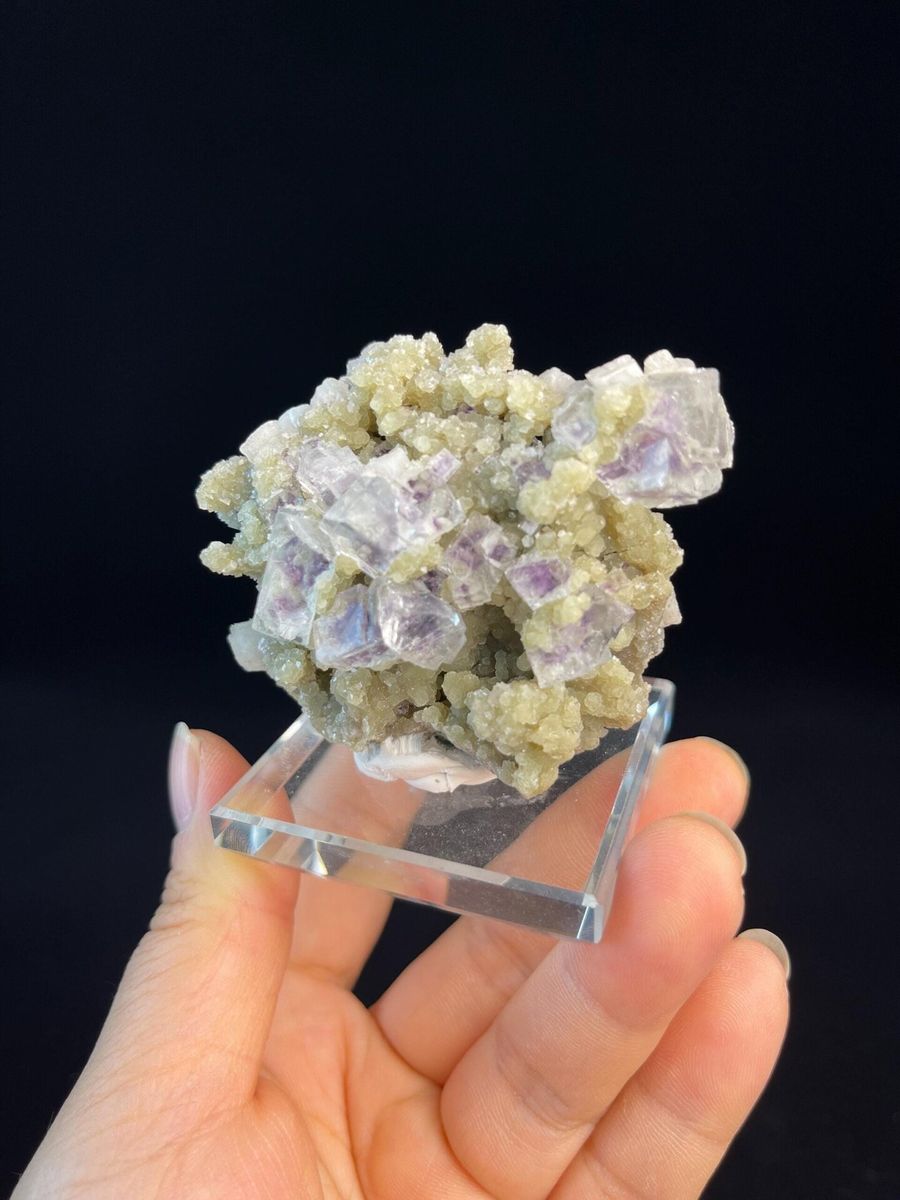
First, know what “treatment” can mean
Not every intervention is deception, and it helps to keep them separate:
- Oiling or waxing — a light coating that makes the surface clearer so internal color reads better. Very common on Chinese fluorite and generally reversible; it should still be disclosed.
- Lacquer or clear coating — a sprayed finish for artificial “flash.” This hides the true surface and any fractures.
- Dyeing — artificial color, usually to fake vivid reds and pinks (the “candy” and “watermelon” look) that fluorite rarely shows naturally.
- Heat or irradiation — used in the wider gem trade to shift color. Less common on display specimens, but it exists.
Cleaning and trimming are routine and not “treatment.” Coating, dyeing, heat, and irradiation are the ones that should always be disclosed.
Natural vs treated: what to look for
Start with your eyes. Natural fluorite comes in purple, green, blue, yellow, and colorless, often with more than one color in the same crystal. The reassuring signs of a natural stone, and the red flags of a treated one, line up like this:
- Color pattern — natural pieces show zoning and phantoms, with color sitting inside the crystal; dye tends to be too uniform, or pooled darker in cracks and pits.
- Hue — natural fluorite is purple, green, blue, or yellow; vivid candy-red and hot pink are the classic dyed “candy” or “watermelon” look.
- Surface — natural fluorite has glassy, glossy cube faces; treated pieces can look matte, “painted,” or carry a sprayed film.
- Price — a saturated, unusual color at a suspiciously low price is a warning sign, because treated material is cheap to produce.
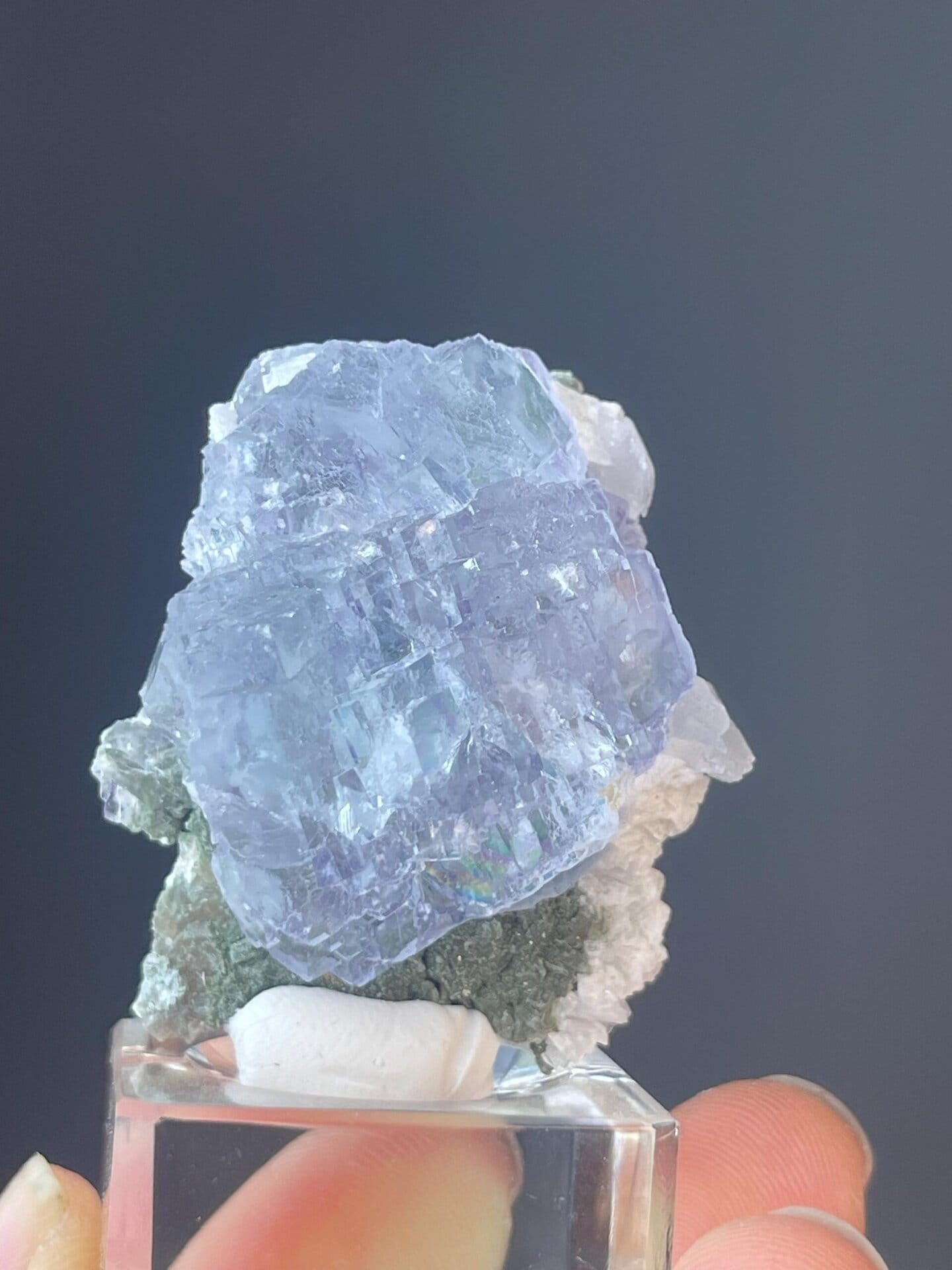
Four simple checks you can do at home
1. The acetone test (for dye and lacquer). Dampen a cotton swab with acetone — plain nail-polish remover works — and rub gently on a small, hidden spot. If color comes off onto the swab, or the surface goes dull, the piece has been dyed or lacquered. Natural fluorite color will not transfer.
2. The warm soapy soak (for oil and wax). Many Chinese fluorites are lightly oiled. A soak in warm, soapy water lifts the oil and reveals the true surface — sometimes duller than the shine suggested, and occasionally exposing filled fractures. This is not “catching a fake,” just seeing the real specimen.
3. The UV check (for identity and natural fluorescence). Fluorite is famously fluorescent — the phenomenon is literally named after it — and much of it glows blue or purple under longwave UV (black light). Glass and plastic imitations rarely reproduce that specific glow, so a UV light is a quick sanity check on whether you are even looking at real fluorite. Fluorescence itself is natural; it is not a sign of treatment.
4. The loupe and the price. Under a 10x loupe, look for dye pooled in cracks, a sprayed film across the faces, or color that clearly sits on top of the crystal. Then apply common sense about the price.
Go gently: fluorite has perfect cleavage and is fairly soft and brittle. Avoid ultrasonic cleaners, hot water, hard brushing, or acids, and never test on a prominent face. When a specimen is valuable or you are unsure, ask the seller or seek a professional opinion first.
Let natural signs do the work
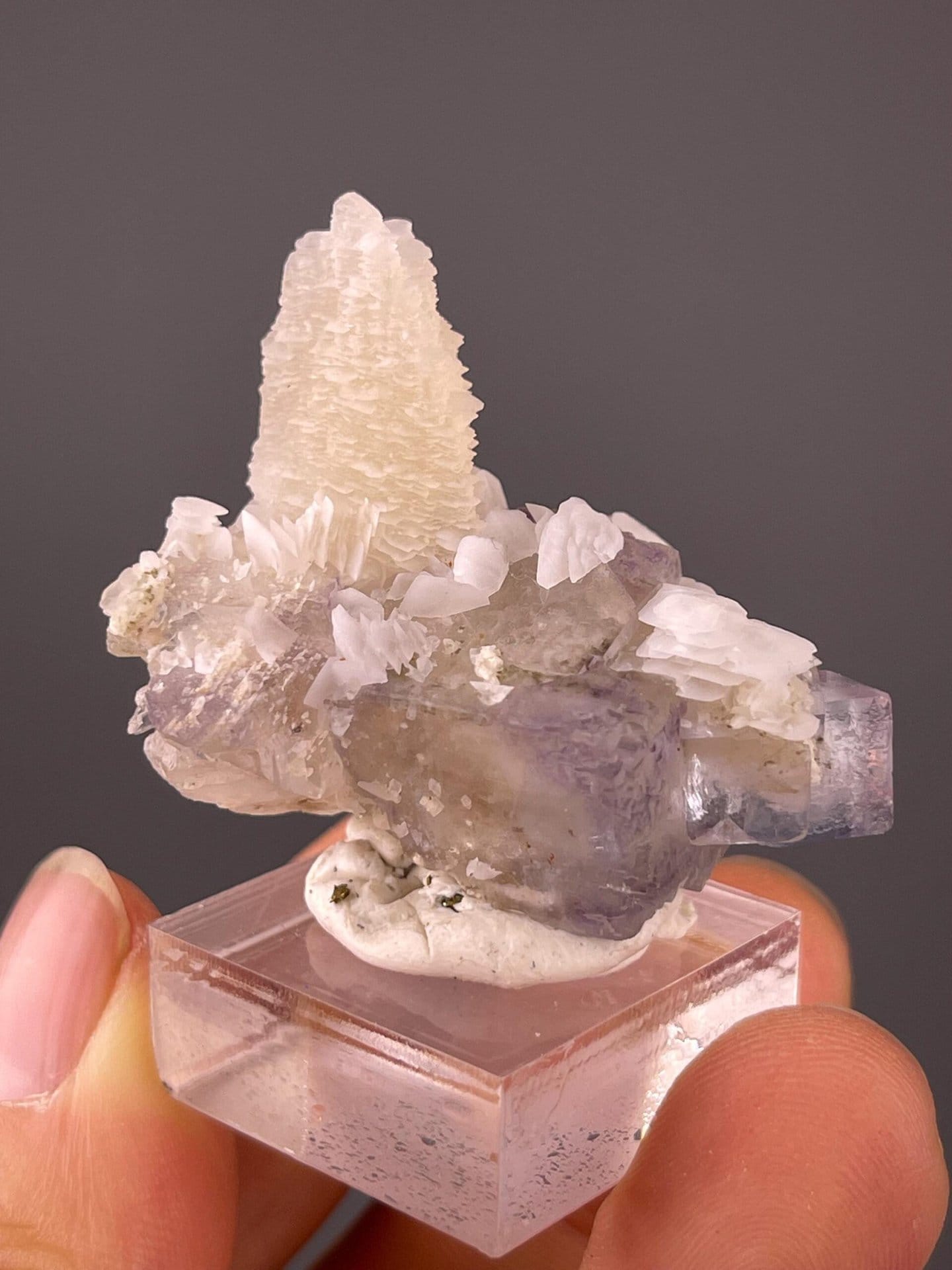
Rather than only hunting for fakes, learn what genuine fluorite looks like — it makes treated pieces stand out on their own. Reassuring natural signs include distinct color zoning or phantoms (ghostly earlier growth stages inside the crystal), sharp cubic or octahedral form, a glassy luster, and color that lives inside the crystal rather than on its skin. These features come from how fluorite grows and are difficult to imitate convincingly — which is why, in our experience, the best defense against treatment is simply knowing what natural looks like.
Frequently asked questions
Is “candy fluorite” or “watermelon fluorite” natural?
True watermelon fluorite (green-and-purple zoning) does occur naturally, but the vivid red and hot-pink “candy” tones sold under similar names are usually dyed or artificially enhanced, because natural red-toned fluorite is extremely rare. Treat saturated reds and pinks with caution and test before you trust them.
Does dyed fluorite wash off?
Surface dye and lacquer can often be lifted with acetone on a cotton swab, and light oil comes off in warm soapy water. Deeply infused dye may not fully remove, but the acetone swab test will still reveal that color transfers — which natural fluorite never does.
Is fluorescent fluorite treated or fake?
No. Fluorescence is a completely natural property caused by trace elements in the crystal, and fluorite is the mineral fluorescence was named after. A UV glow is actually a helpful check that you are looking at real fluorite rather than glass or plastic.
Why is my Chinese fluorite oily or greasy?
Chinese fluorite is very commonly given a light oil coating to make the surface clearer so the internal color shows better. It is usually harmless and reversible — a soak in warm soapy water removes it and shows the specimen’s true surface.