Aquamarine
Curated by Maggie Liu · Updated:
Aquamarine is a cyclosilicate mineral valued for its hardness and gem potential, with known Chinese sources.
About Aquamarineextended article
Aquamarine — beryl in its coolest color
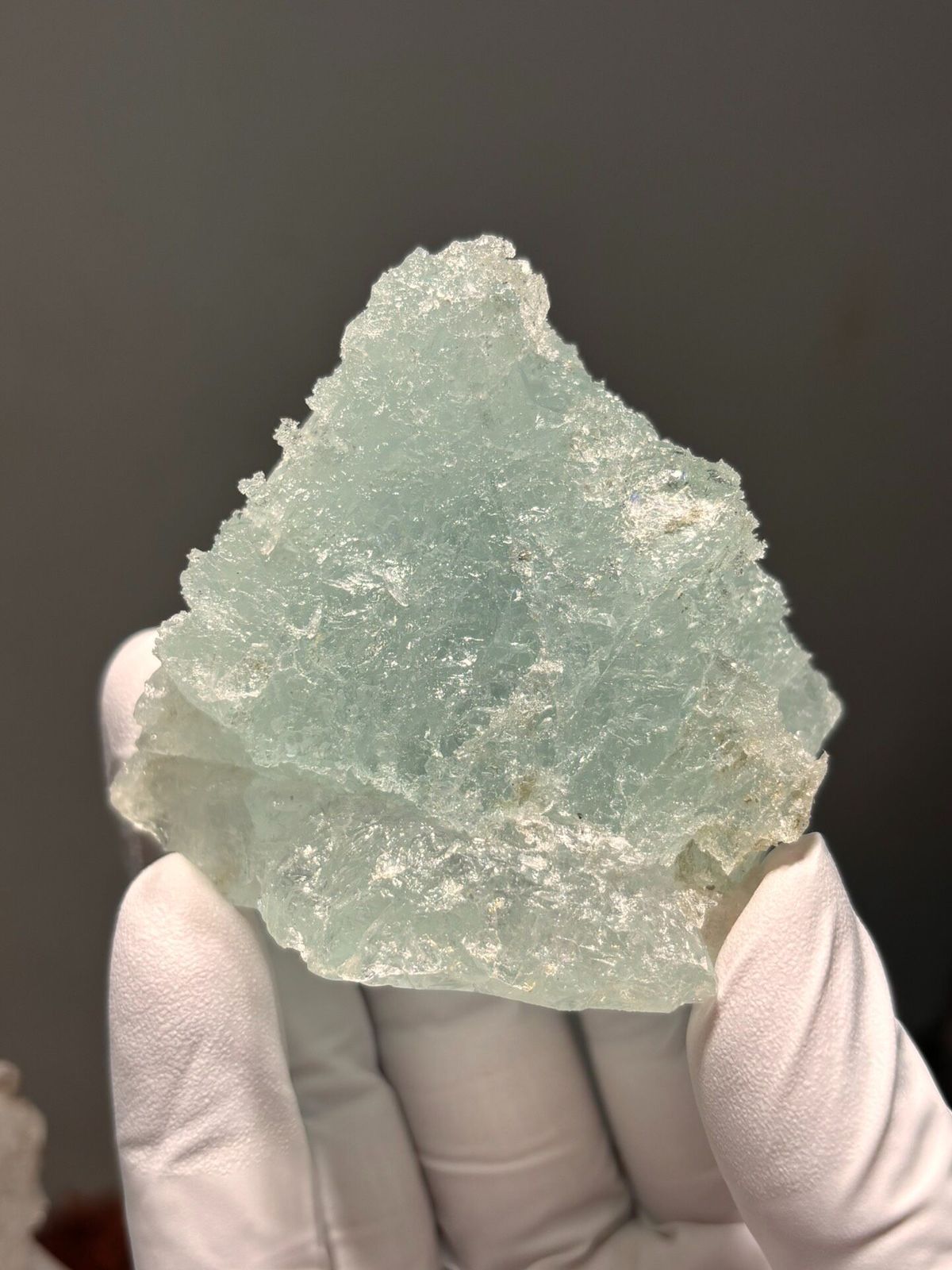
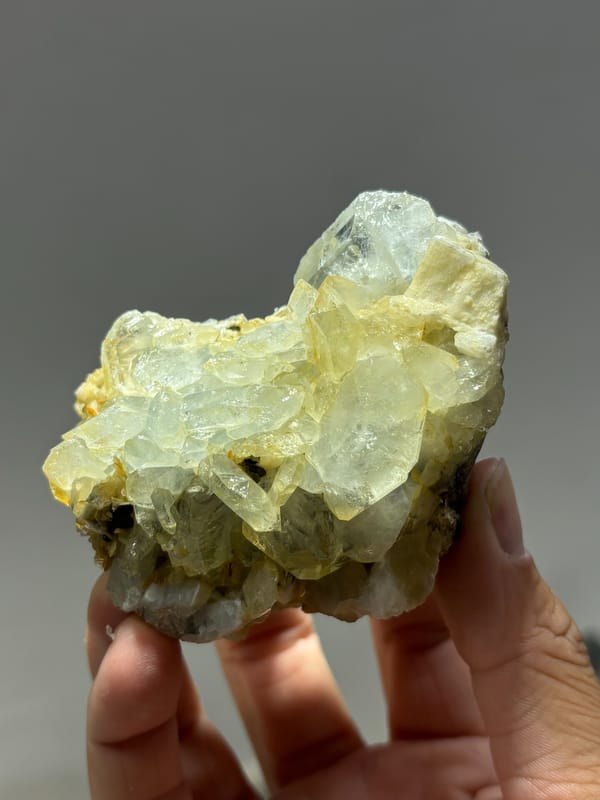
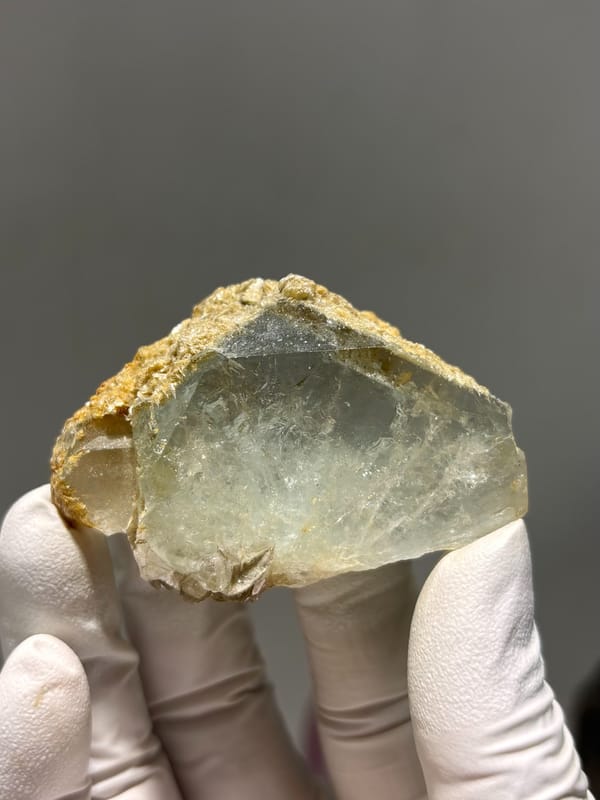
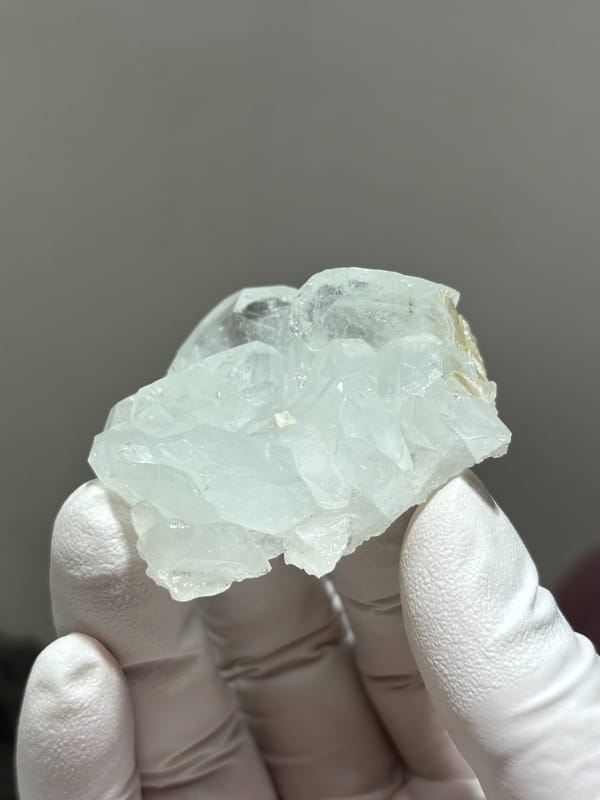
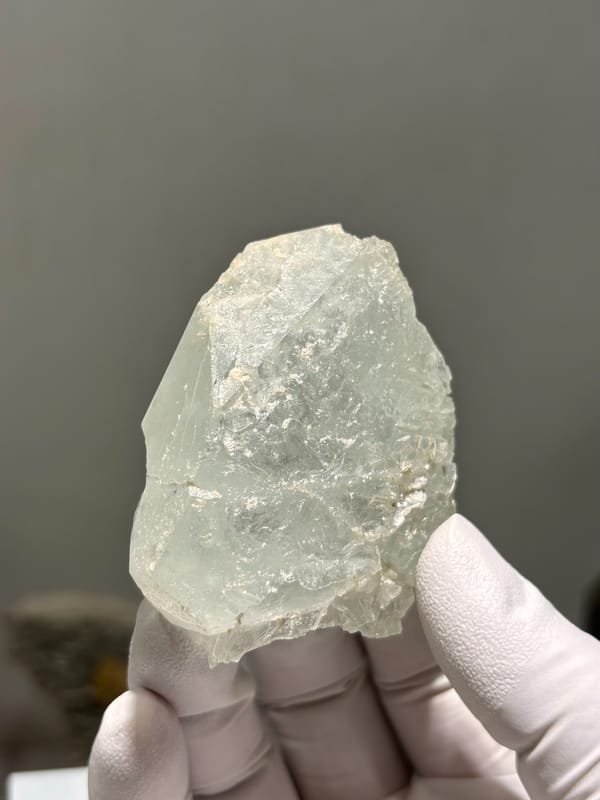
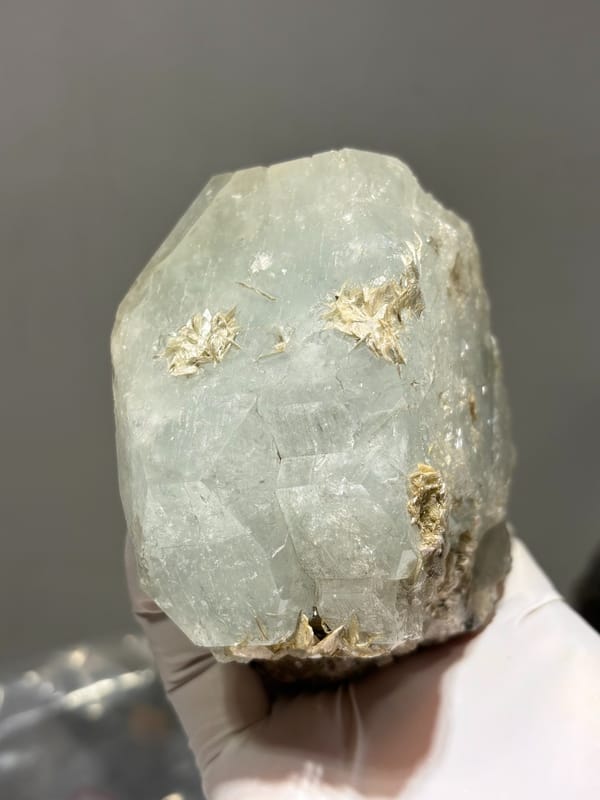
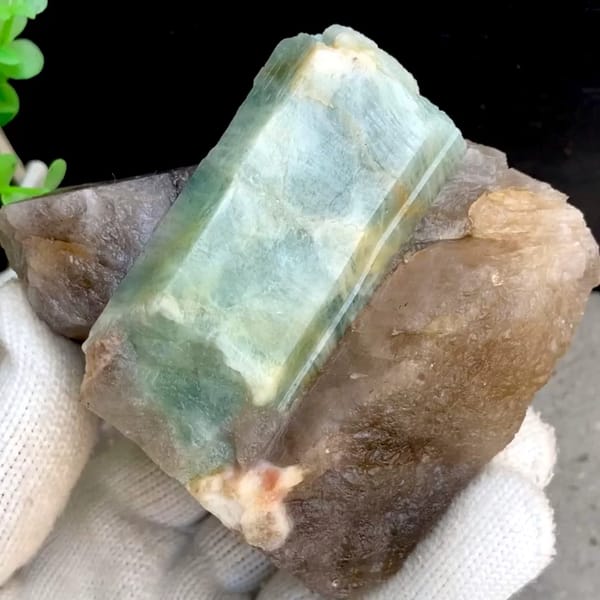
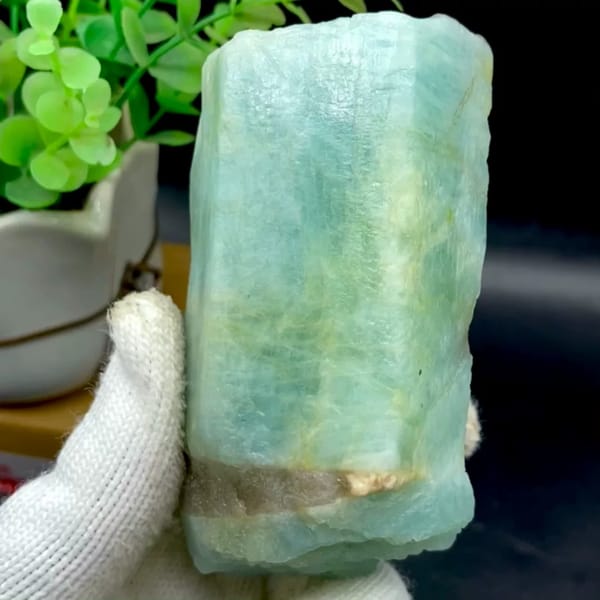
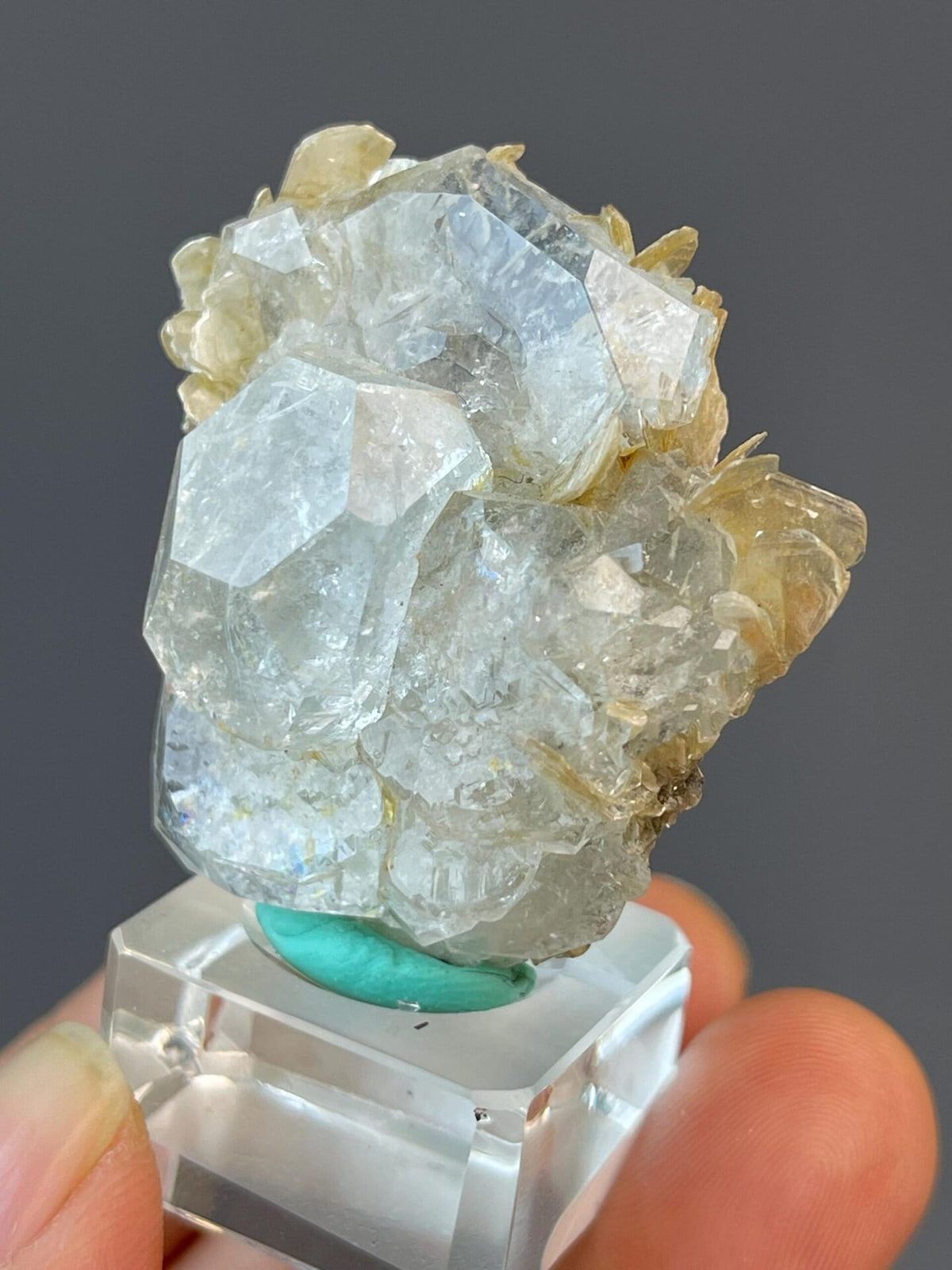
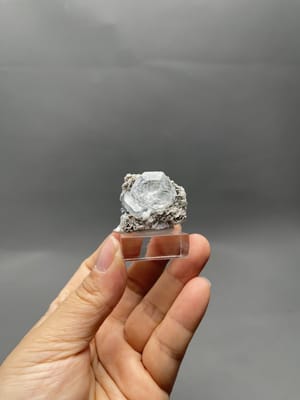
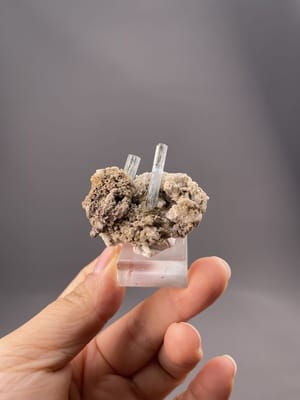
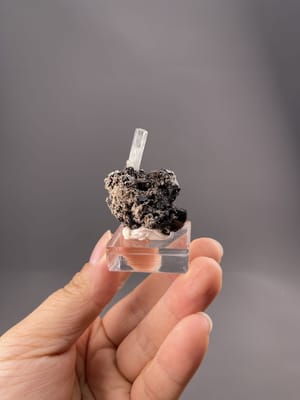
Aquamarine is the sky-blue to sea-green variety of beryl, colored by Fe²⁺ sitting in the channels of the beryl structure. It crystallizes as clean hexagonal prisms — often gemmy, often perfectly terminated — which makes it one of the most displayable of all gem-variety minerals.
The three sources we stock
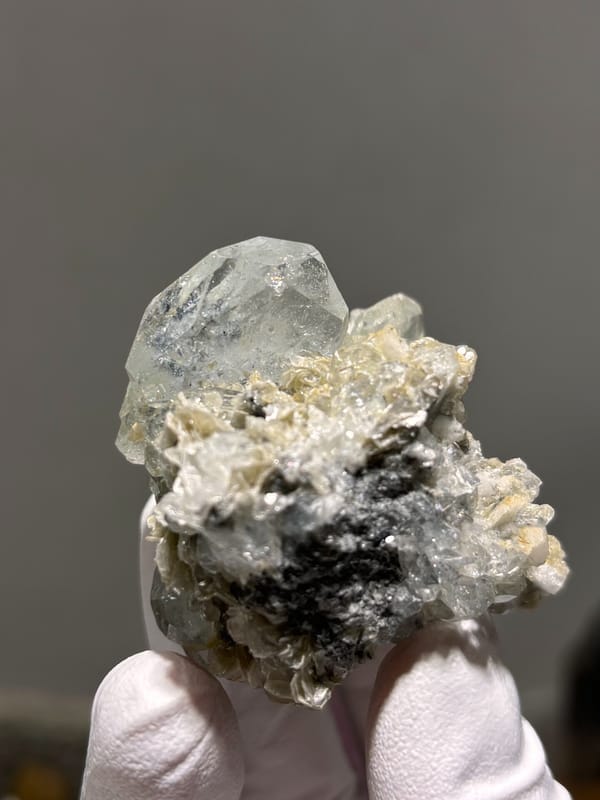
- Erongo Mountains, Namibia — columnar crystals with strong color, famous for pairing with jet-black schorl tourmaline in the same pocket; an aquamarine-on-schorl combination is the signature Erongo piece.
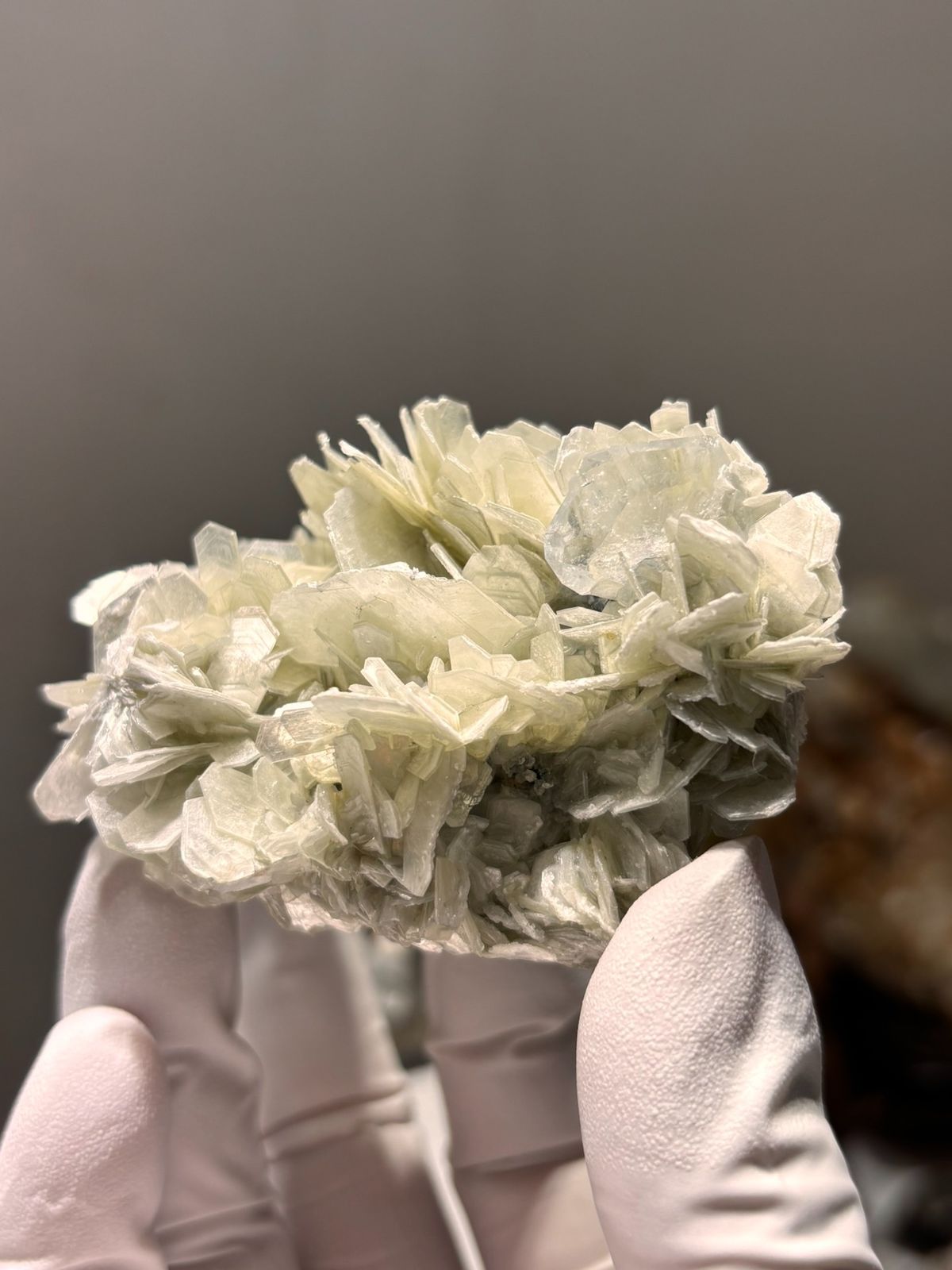
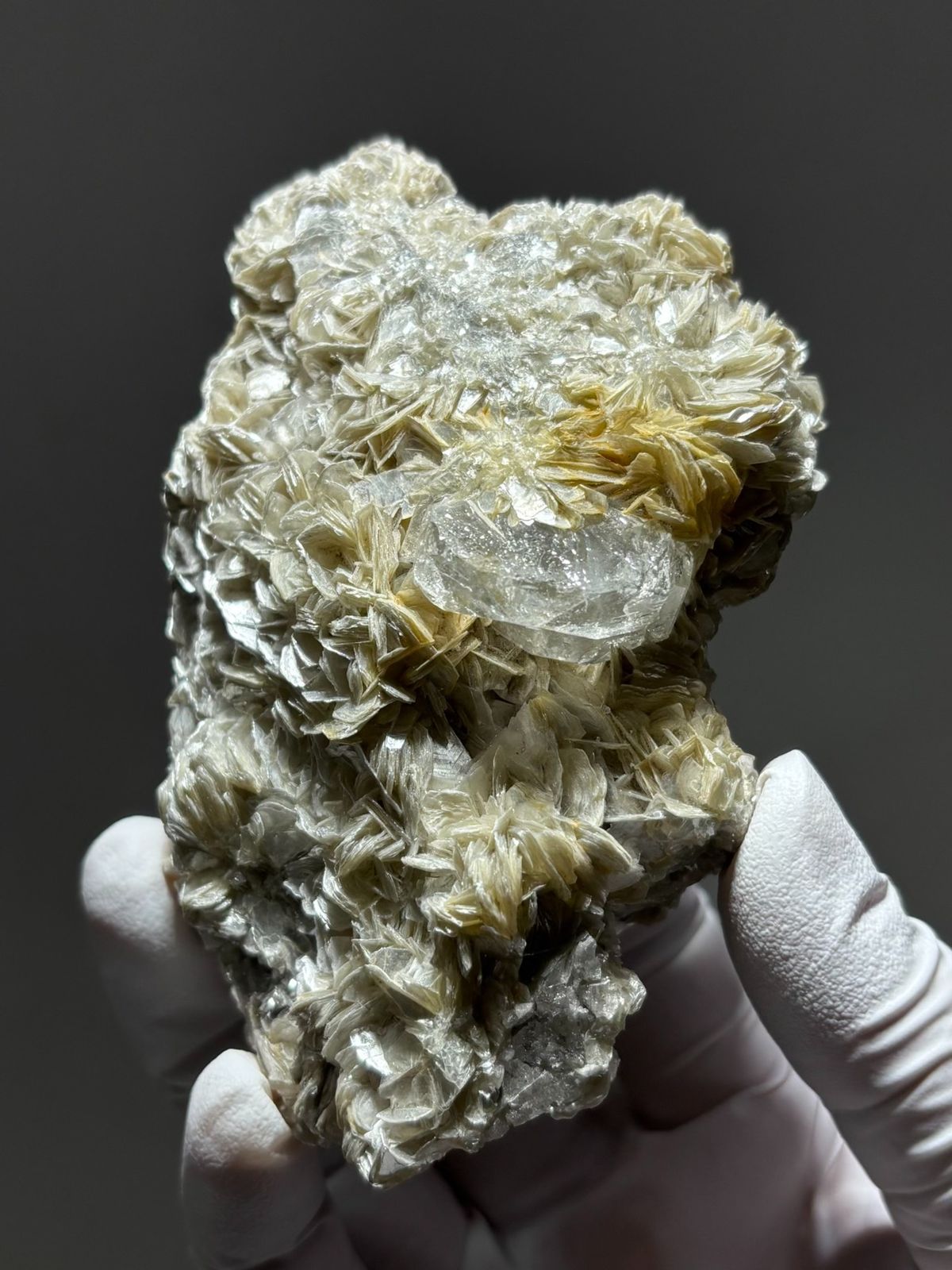
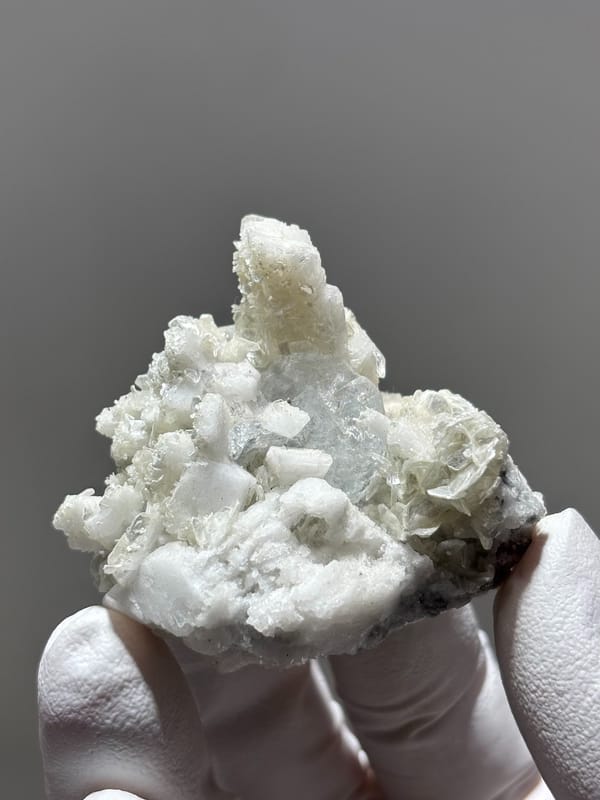
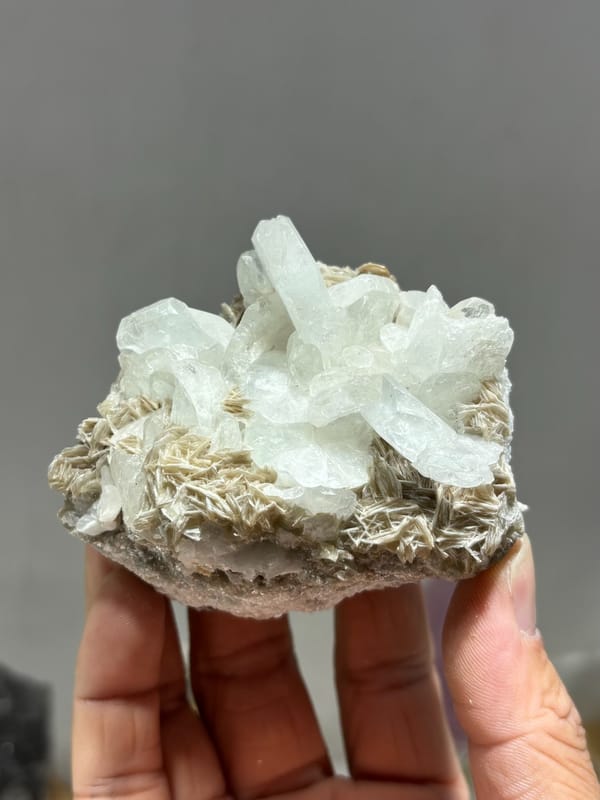
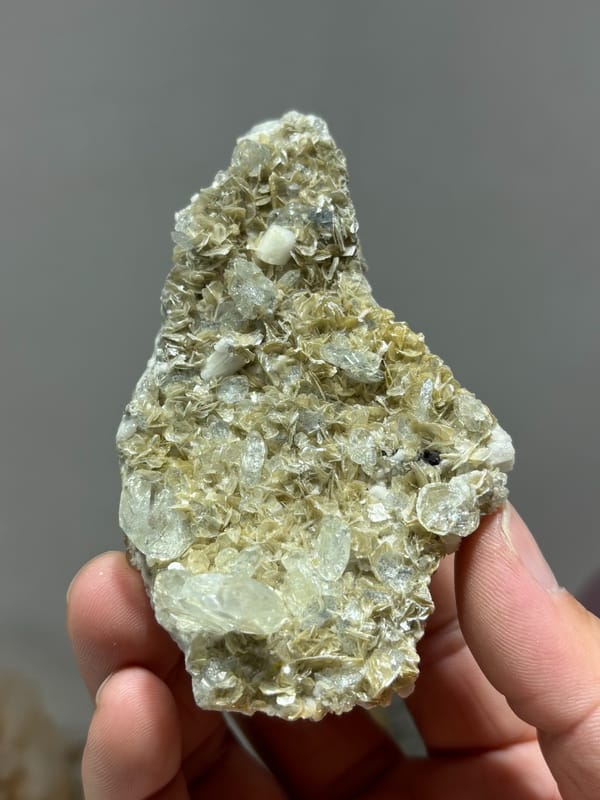
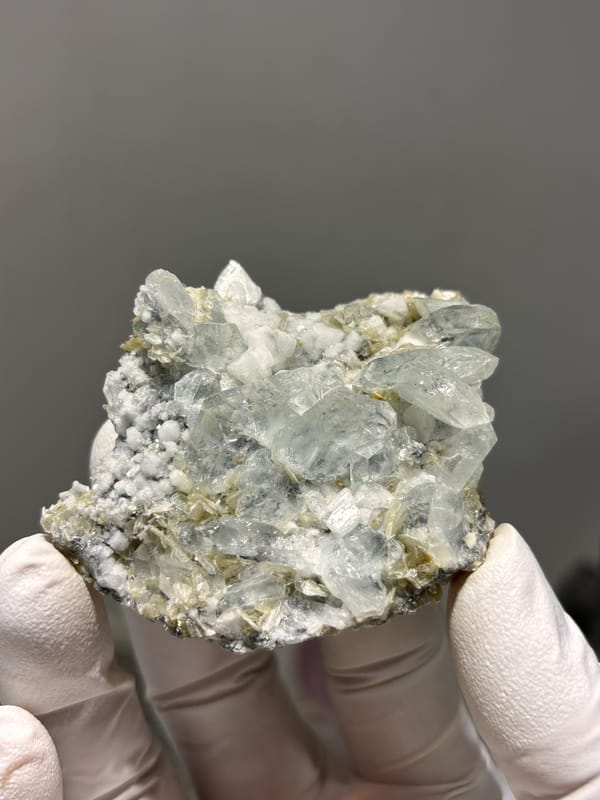
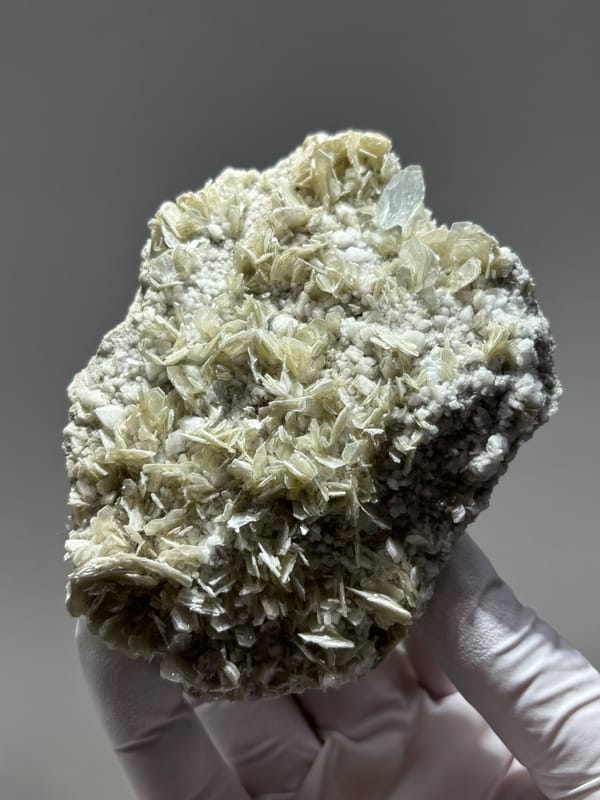
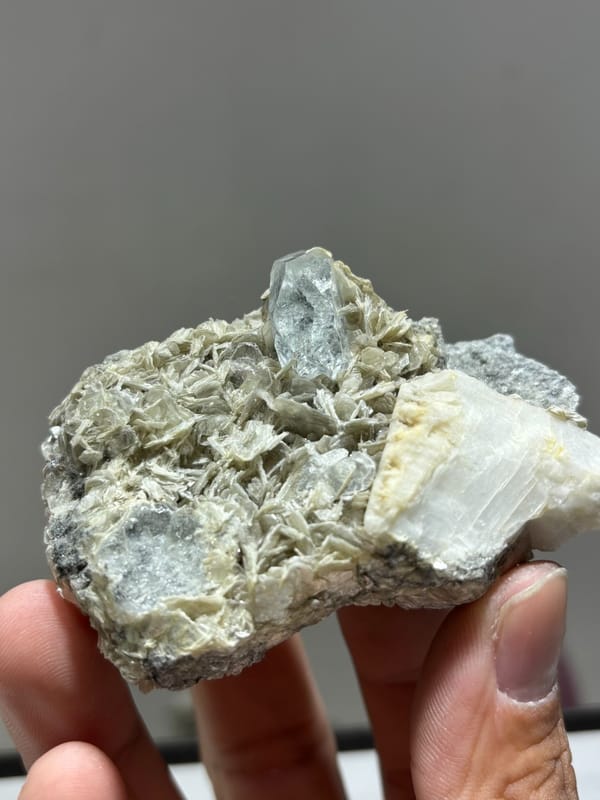
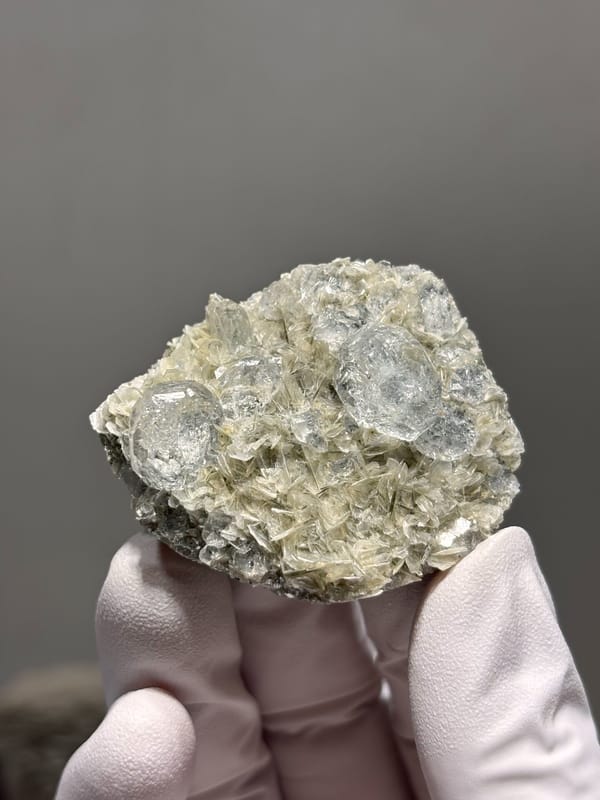
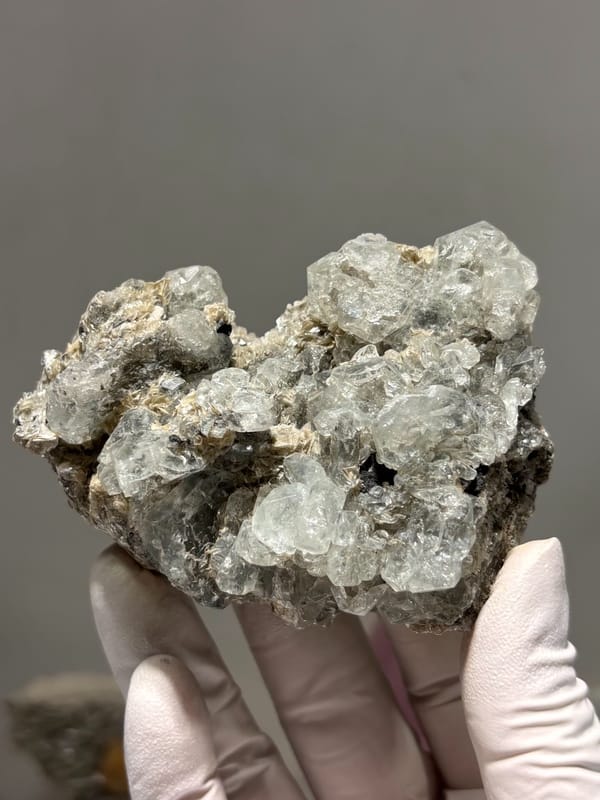
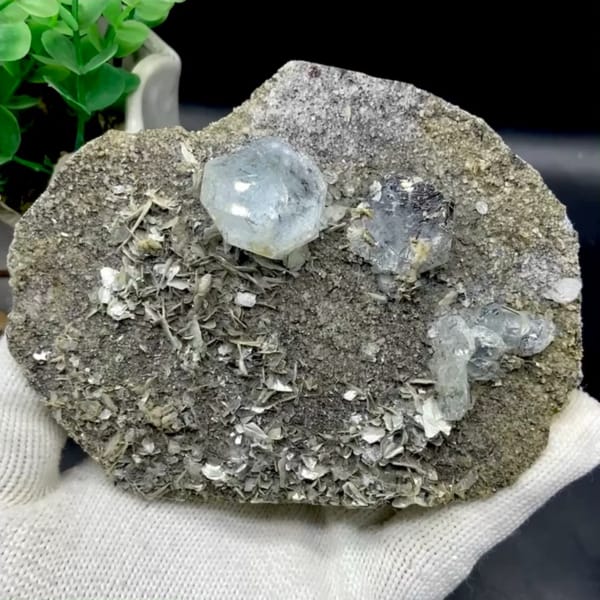
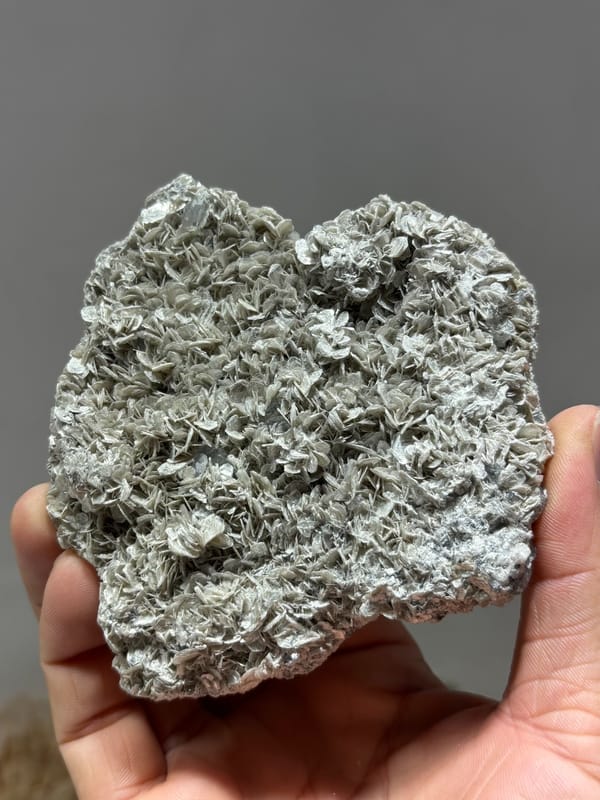
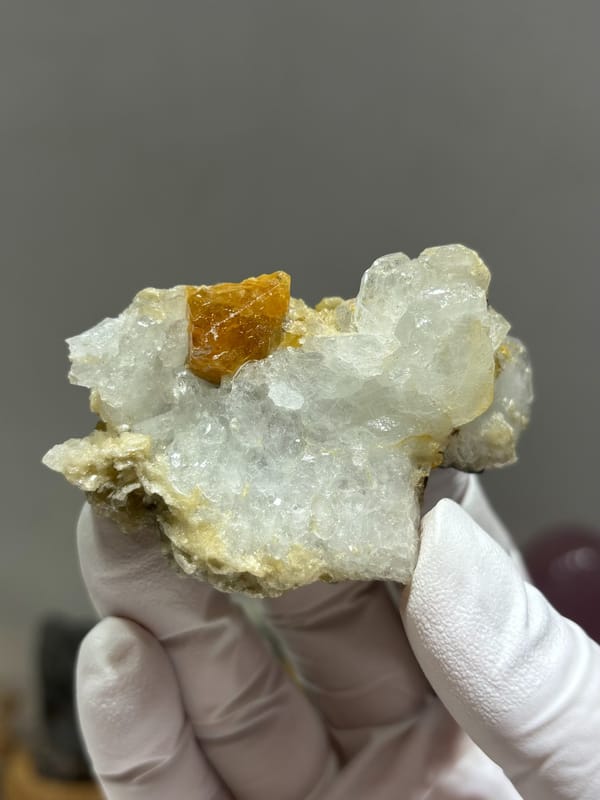
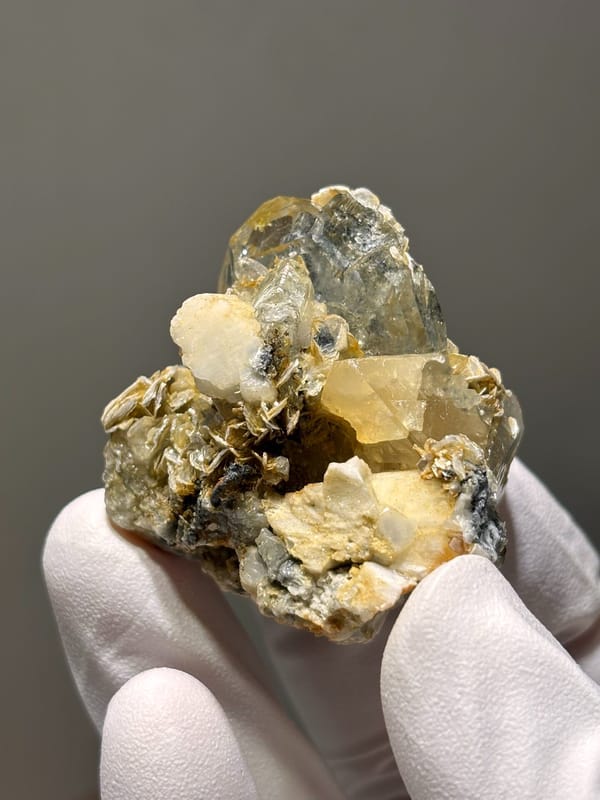
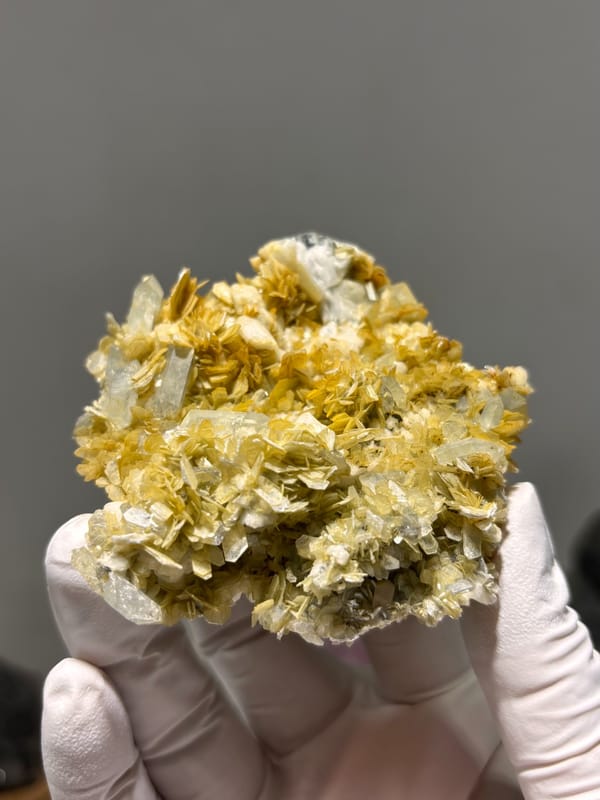
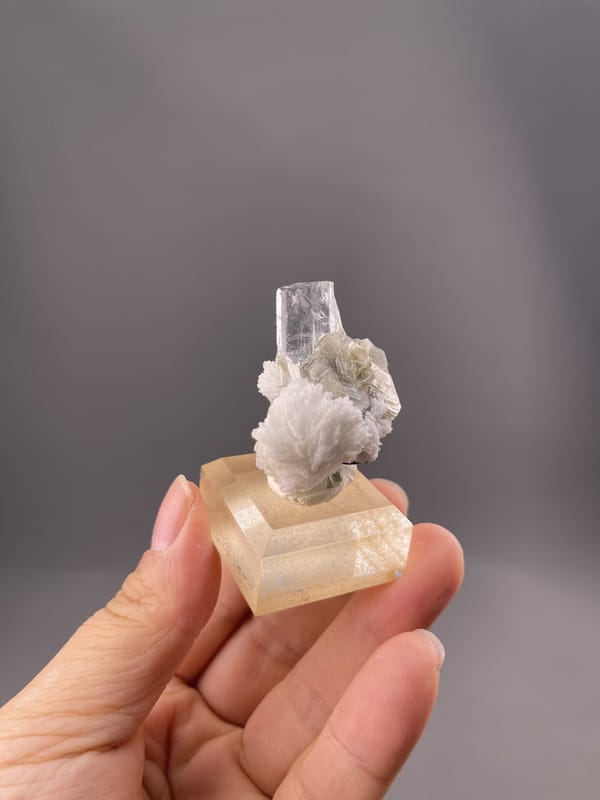
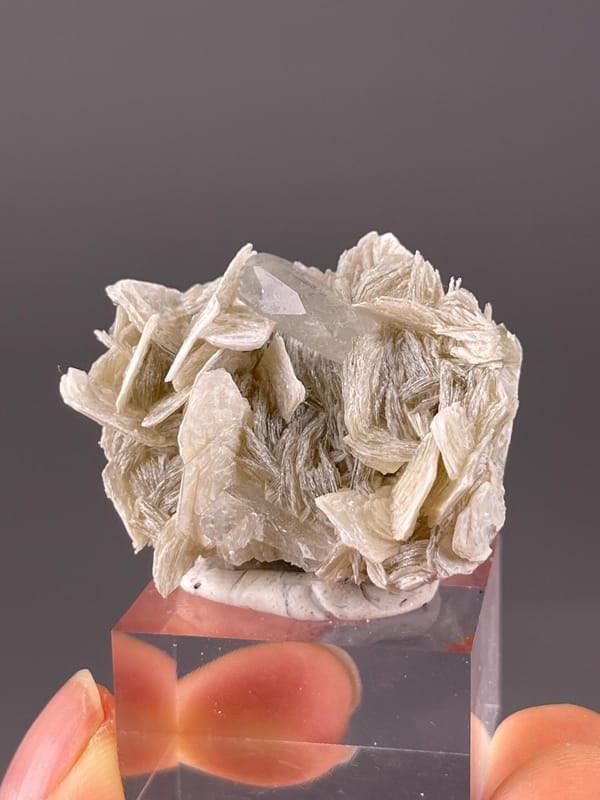
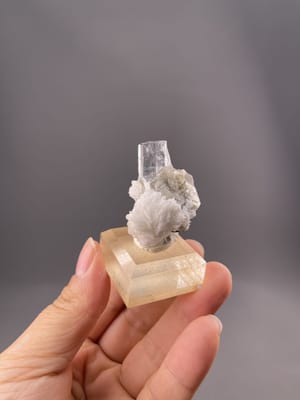
- Xuebaoding, Sichuan, China — China's noted aquamarine locality, where pale ice-blue prisms grow with silvery muscovite books in the same Sn-W system that produces the mountain's famous scheelite.
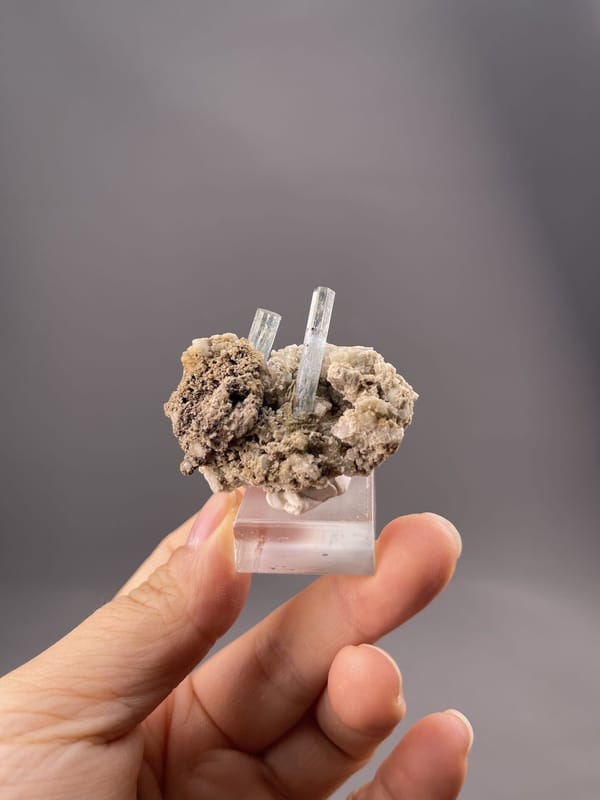
- Pakistan — sharp hexagonal crystals from the Karakoram pegmatite belt, the entry point for gem-crystal collecting.
What to look for
Color saturation and clarity pull in opposite directions — deep-blue crystals are rarely glassy-clear, and water-clear prisms are usually pale. Decide which you collect for. Matrix and combination pieces (with muscovite or schorl) carry more character than loose single crystals at the same price.
Related
Aquamarine is a variety of beryl; see also the Xuebaoding locality page and the tourmaline guide.
About Aquamarine
Aquamarine is a cyclosilicate mineral in the beryl group and has the chemical formula Be3Al2Si6O18. It crystallizes in the hexagonal system and ranks among the harder species, with lasting durability. Its combination of structural character and global distribution make it a recognized species in both systematic and aesthetic collections.
Identification & care
Crystals commonly develop as prismatic hexagonal crystals, often with striated prism faces; may reach enormous sizes. Its color is typically pale blue to deep blue-green (aqua). The luster is vitreous, the streak is white, and specimens range from transparent to translucent. The cleavage is imperfect basal. The fracture is conchoidal to uneven, which aids identification.
Collector context
How it forms
Aquamarine forms in granitic pegmatites; hydrothermal veins; metamorphic rocks; alluvial placers. It is commonly found in association with tourmaline, lepidolite, feldspar, muscovite, cassiterite, columbite.
Classic Chinese localities
Aquamarine is widely represented across Chinese provinces, including Hunan, Yunnan, Sichuan, Inner Mongolia.
Why collectors care
Collectors pursue natural crystals of Aquamarine because they preserve what cutting removes — the crystal form, color zoning, and growth history of a species also valued as a cut gem. A terminated aquamarine crystal with good clarity connects the collector directly to the geology that produced the stone.
What affects value
Value in Aquamarine is assessed, in typical order of weight, against: (1) locality provenance; (2) crystal size; (3) transparency and internal clarity; (4) color intensity and saturation; (5) crystal form and termination sharpness; (6) matrix and associated-species aesthetics; (7) gem-cutting potential. Verified locality documentation and cutting potential further elevate collector demand.
Frequently asked questions
What is Aquamarine?
Aquamarine has the chemical formula Be3Al2Si6O18, crystallises in the Hexagonal system, has a Mohs hardness of 7.5–8. Aquamarine is a cyclosilicate mineral valued for its hardness and gem potential, with known Chinese sources.
What is the chemical formula of Aquamarine?
The chemical formula of Aquamarine is Be3Al2Si6O18.
What crystal system does Aquamarine belong to?
Aquamarine crystallises in the Hexagonal crystal system.
Where is Aquamarine found?
Notable localities for Aquamarine include Minas Gerais, Mount Antero, Erongo Mountains, Kunar Valley, Xuebaoding, Pingwu.
Is Aquamarine rare?
As a collector mineral, Aquamarine is generally considered uncommon.