
Tourmaline
Curated by Maggie Liu · Updated:
Tourmaline is a silicate mineral valued for its hardness and gem potential, with several world-class Chinese localities.
About Tourmalineextended article
Tourmaline — one name, an entire crystal family
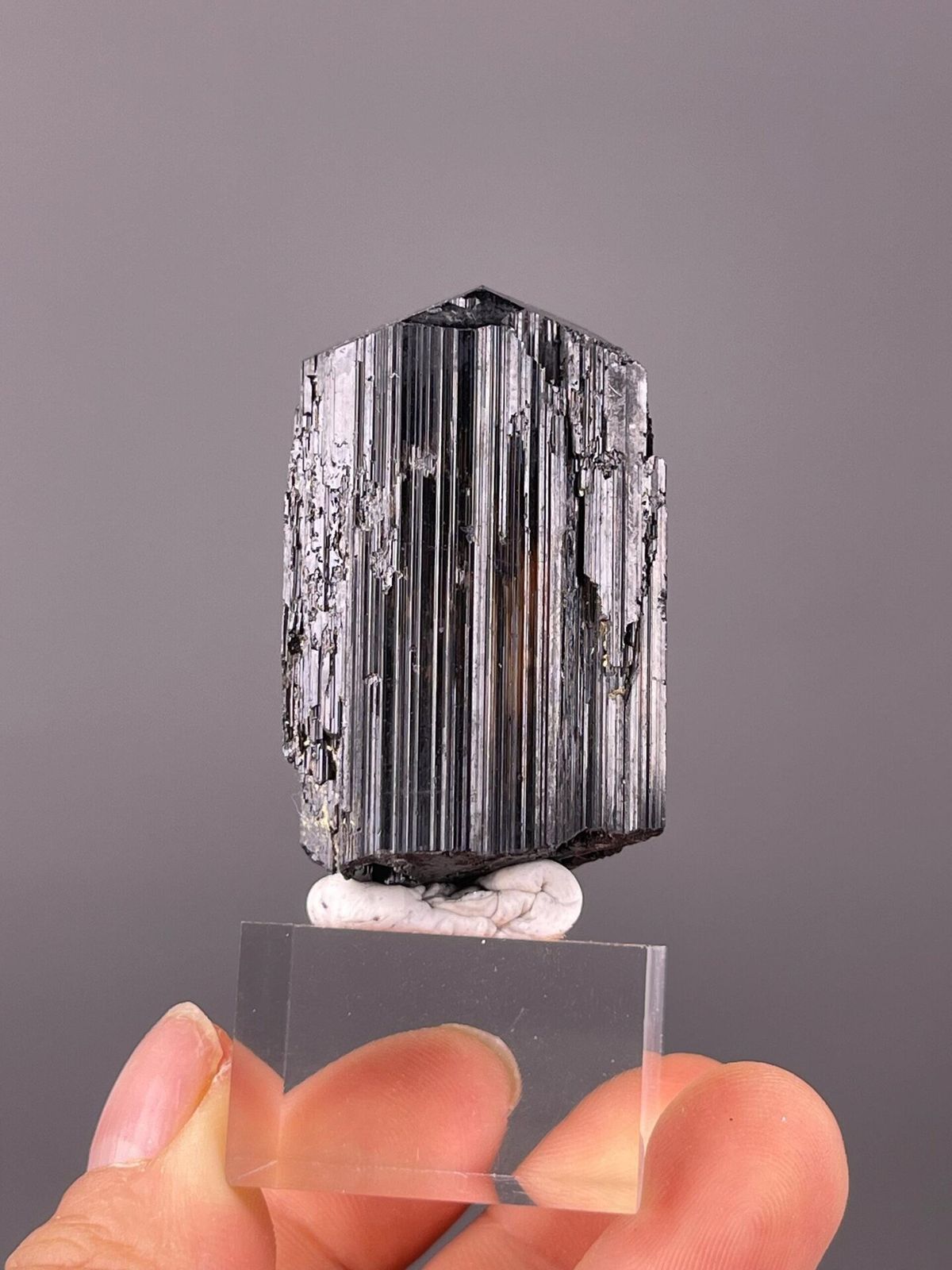
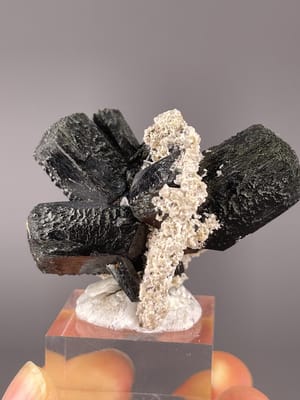
Tourmaline is not a single mineral but a boron-silicate group: jet-black schorl (iron-rich, by far the most common), gem-colored elbaite (lithium-bearing — the pinks, greens, and watermelons of the jewelry world), and brown magnesian dravite, among others. All share the same trigonal architecture: striated prisms with a rounded-triangular cross-section, strong dichroism, and the pyroelectric quirk that made Dutch traders call it the "ash drawer" — warm crystals attract dust.
Schorl — the collector workhorse
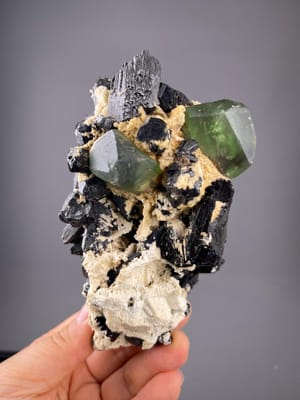
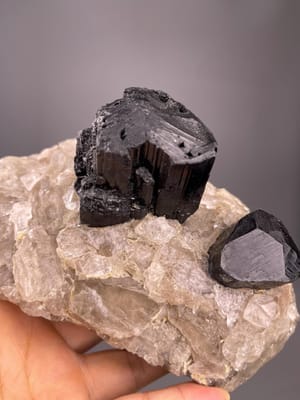
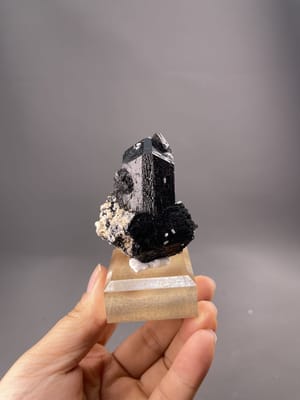
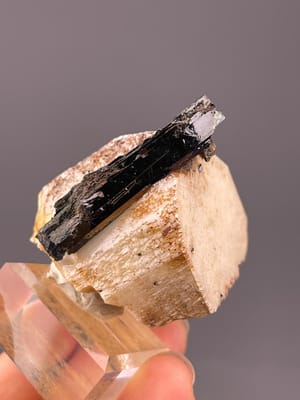
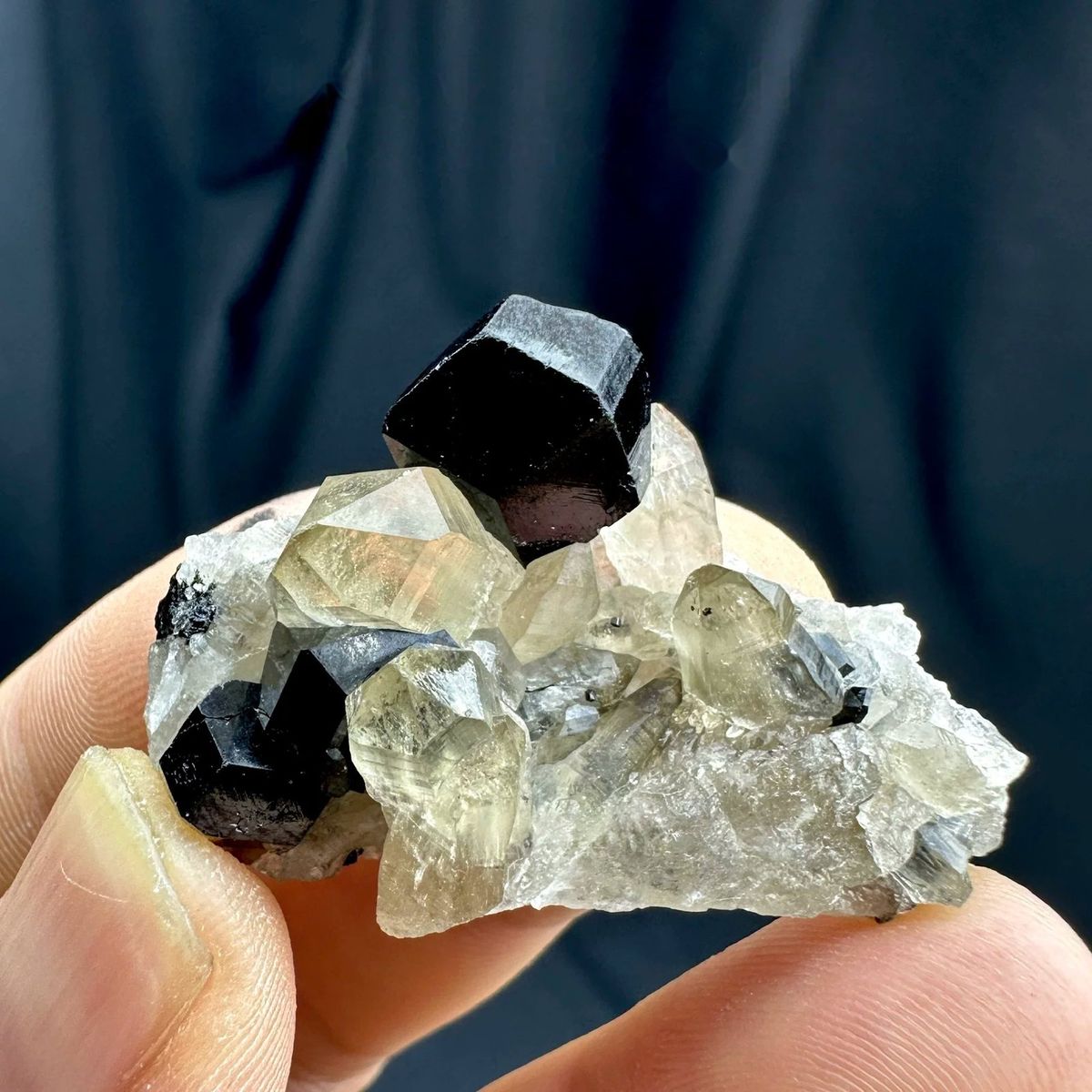
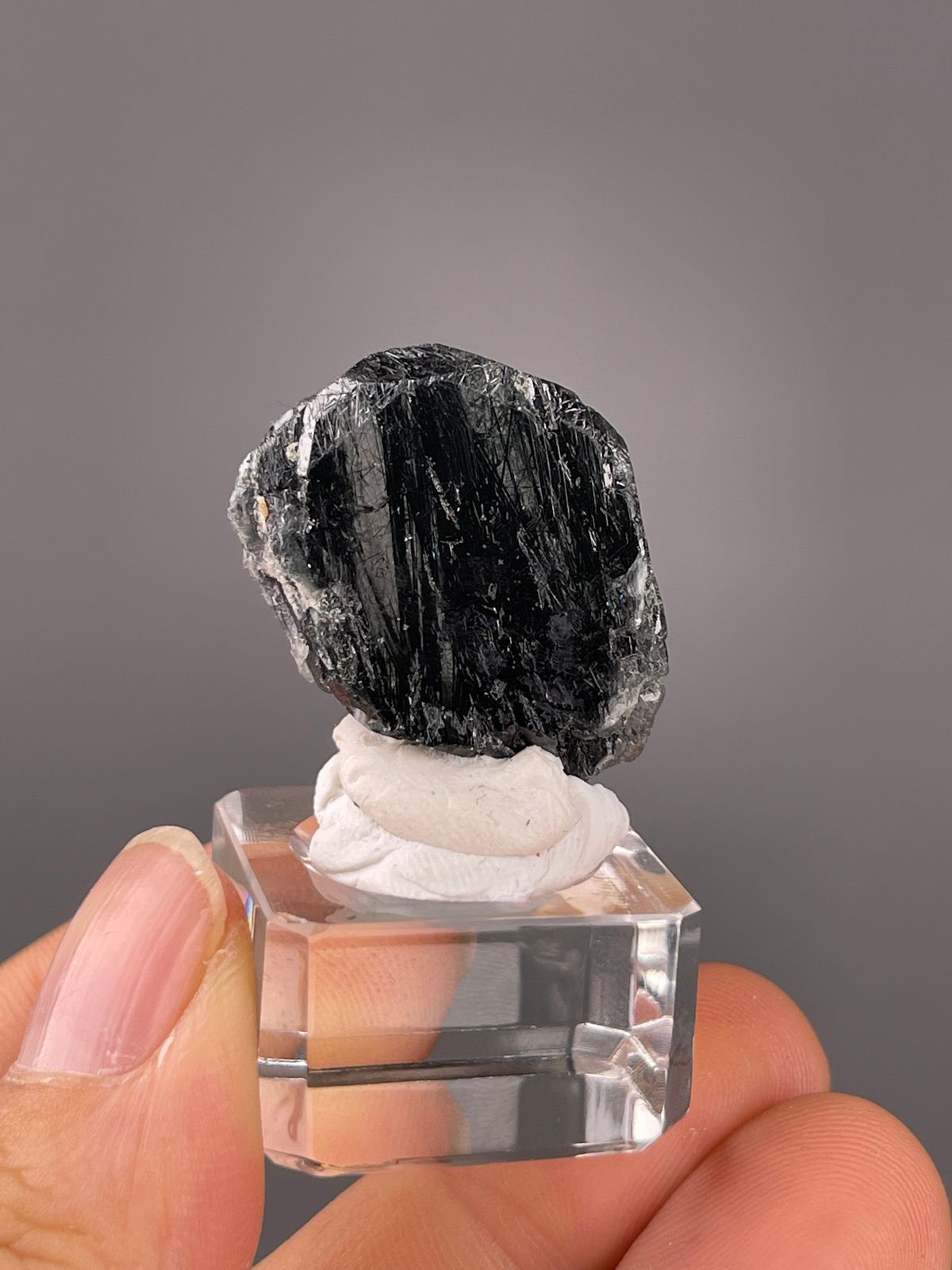
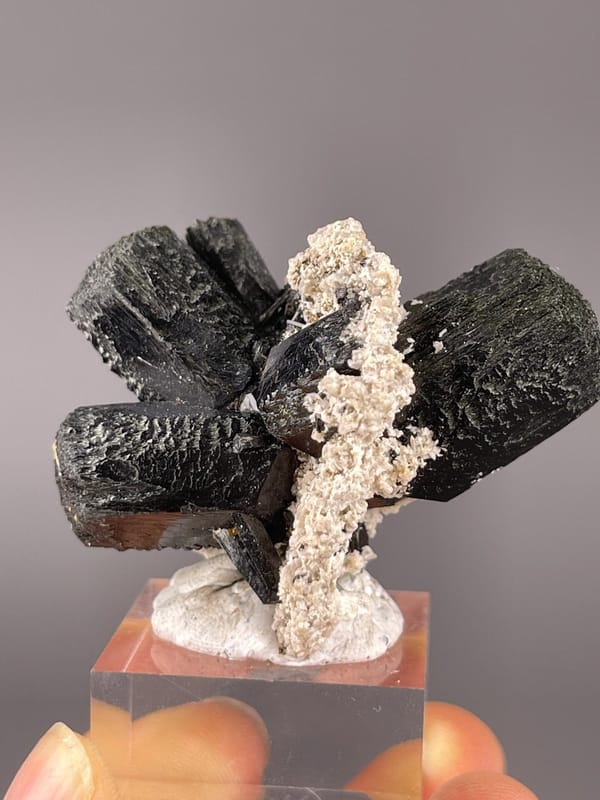
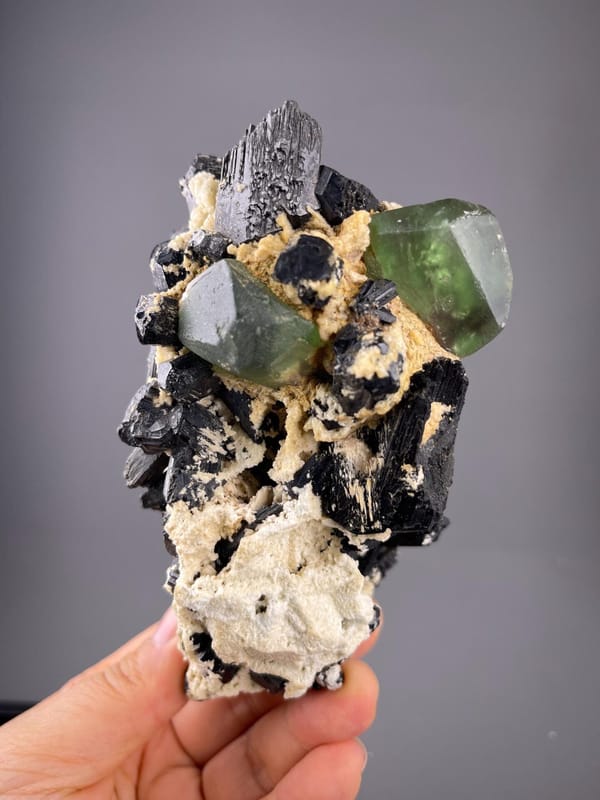
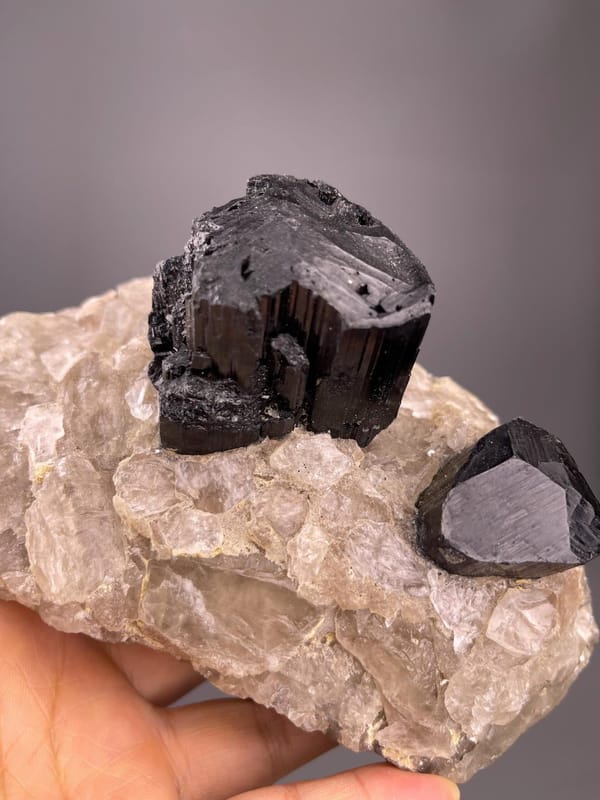
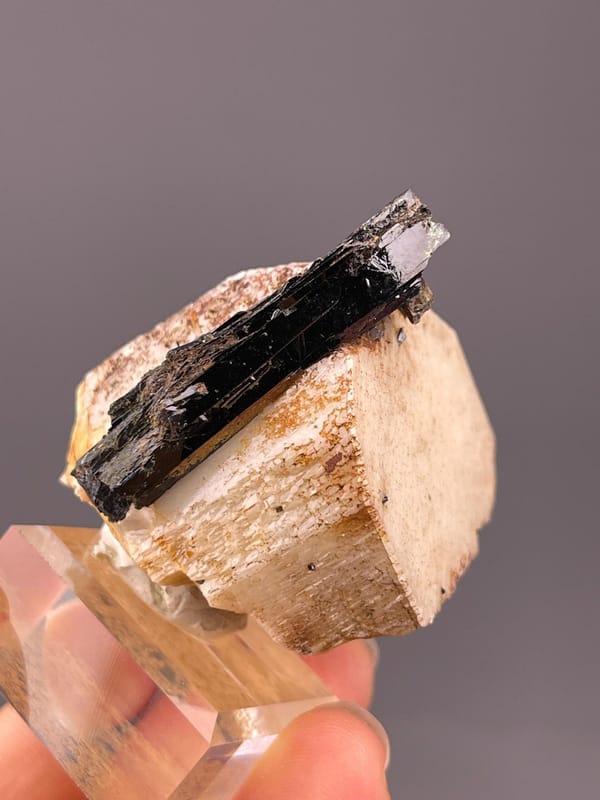
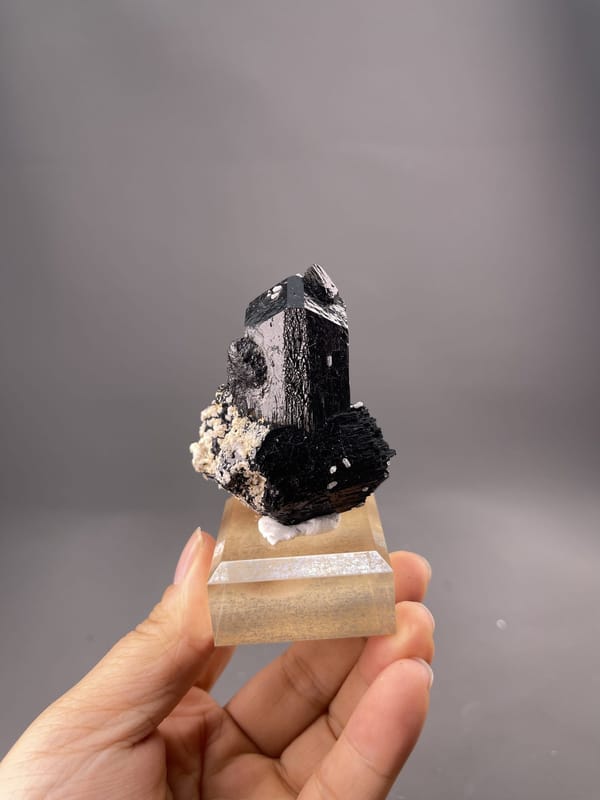
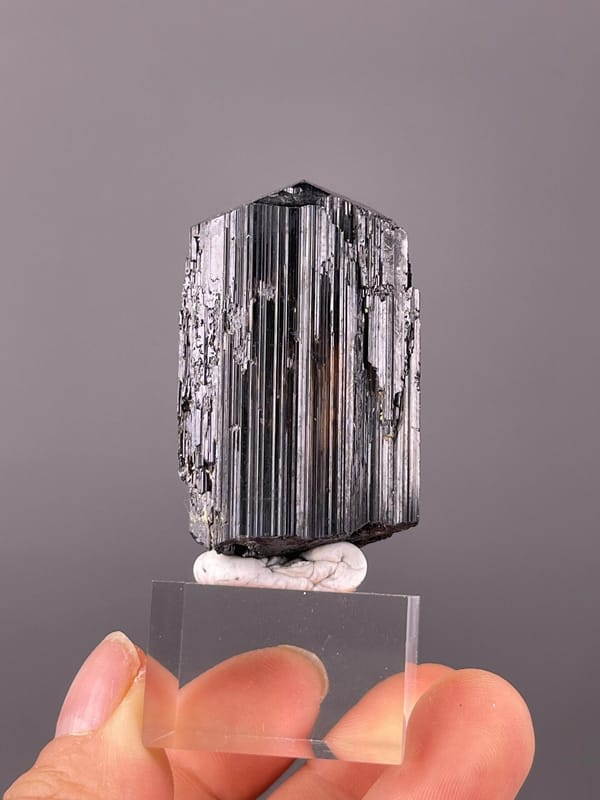
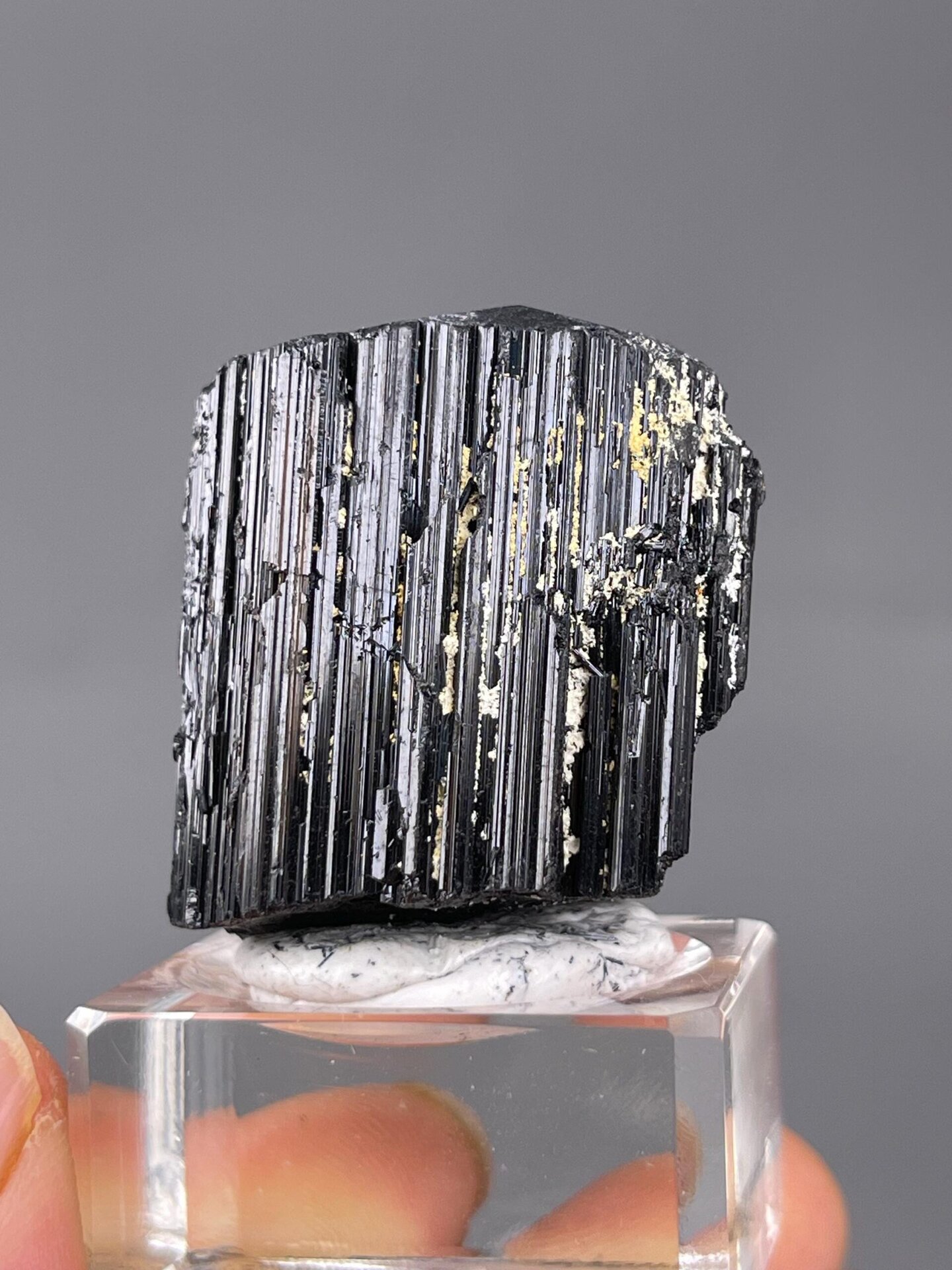
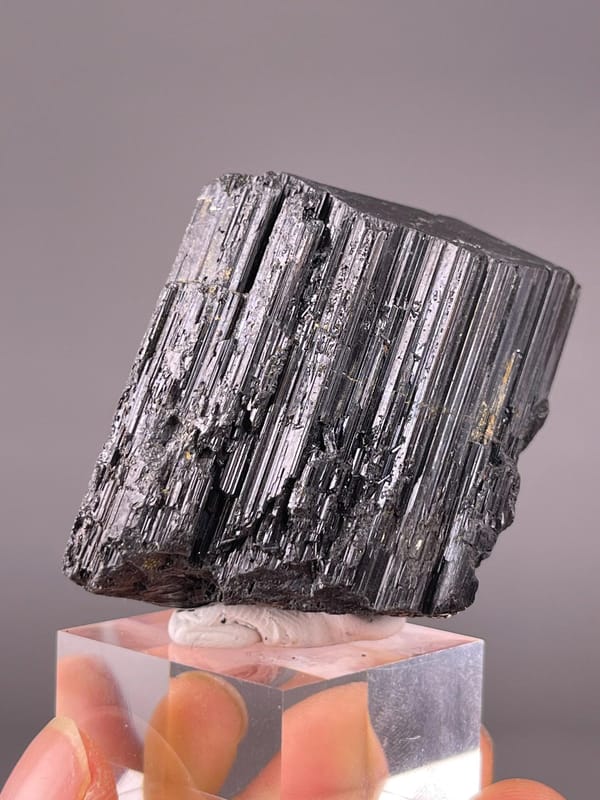
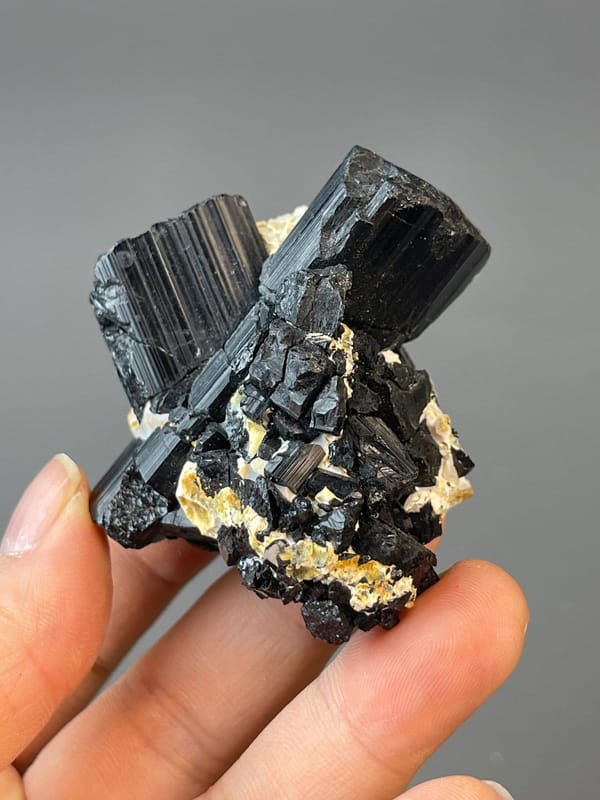
Black schorl forms some of the most architectural crystals in mineralogy: deeply striated columns with sharp trigonal terminations and a luster that reads metallic at arm's length. It is the tourmaline we stock most: lustrous prisms from the pegmatites of Namibia's Erongo Mountains — including the classic Erongo pairing of black tourmaline with green fluorite — prismatic crystals from Tsumeb, schorl in feldspar matrix, and raw single crystals from China.
What to look for
- Termination quality — a clean pyramidal or flat termination outranks a broken column
- Luster — the best schorl is glassy-bright along the striations
- Combinations — schorl with fluorite, smoky quartz, or feldspar carries a premium over loose single crystals
Related guides
See the fluorite guide for Erongo's companion species, and the quartz guide for the smoky-quartz matrix pieces.
About Tourmaline
Tourmaline belongs to the silicate class in the tourmaline supergroup and has the chemical formula AD₃G₆(T₆O₁₈)(BO₃)₃X₃Z (complex borosilicate supergroup). It crystallizes in the trigonal system and ranks among the harder species, with lasting durability. Its combination of structural character and global distribution make it a recognized species in both systematic and aesthetic collections.
Identification & care
Crystals commonly develop as prismatic with triangular cross-section, striated lengthwise; massive. Its color varies widely across the species. The luster is vitreous, the streak is white, and specimens range from transparent to opaque. The fracture is conchoidal, which is one of its key identifying features.
Collector context
How it forms
The geological setting for Tourmaline is typically granitic pegmatites, metamorphic rocks, hydrothermal veins. It is commonly found in association with quartz, feldspar, lepidolite, beryl, apatite.
Classic Chinese localities
Documented Chinese occurrences are recorded at Shangbao Mine, Jiama Cu-polymetallic deposit and Xianghualing Sn-polymetallic ore field, among others.
Why collectors care
Tourmaline occupies a rare position: it matters equally to specimen collectors and to the gem trade. Crisp natural crystals with saturated color and good clarity command premium pricing and are among the highest-prestige targets in any systematic collection.
What affects value
Value in Tourmaline is assessed, in typical order of weight, against: (1) locality provenance; (2) crystal size; (3) transparency and internal clarity; (4) color intensity and saturation; (5) crystal form and termination sharpness; (6) matrix and associated-species aesthetics; (7) gem-cutting potential. Verified locality documentation and cutting potential further elevate collector demand.
Naming history
Tourmaline comes from the Sinhalese turamali, a Sri Lankan term for mixed gem gravels — essentially "stones of assorted colours," which was less a name than a shrug. It turned out to be apt: tourmaline spans a wider colour range than almost any other mineral, and 18th-century Dutch traders knew it as aschentrekker, "ash-puller," because heating it makes it electrically charged enough to pick up ash.
Frequently asked questions
What is Tourmaline?
Tourmaline has the chemical formula AD₃G₆(T₆O₁₈)(BO₃)₃X₃Z (complex borosilicate supergroup), crystallises in the Trigonal system, has a Mohs hardness of 7–7.5. Tourmaline is a silicate mineral valued for its hardness and gem potential, with several world-class Chinese localities.
What is the chemical formula of Tourmaline?
The chemical formula of Tourmaline is AD₃G₆(T₆O₁₈)(BO₃)₃X₃Z (complex borosilicate supergroup).
What crystal system does Tourmaline belong to?
Tourmaline crystallises in the Trigonal crystal system.
Where is Tourmaline found?
Notable localities for Tourmaline include Yunnan Province, Minas Gerais, Pala District, Kunar Valley, China.
Is Tourmaline rare?
As a collector mineral, Tourmaline is generally considered common.
Related minerals
Available Tourmaline specimens
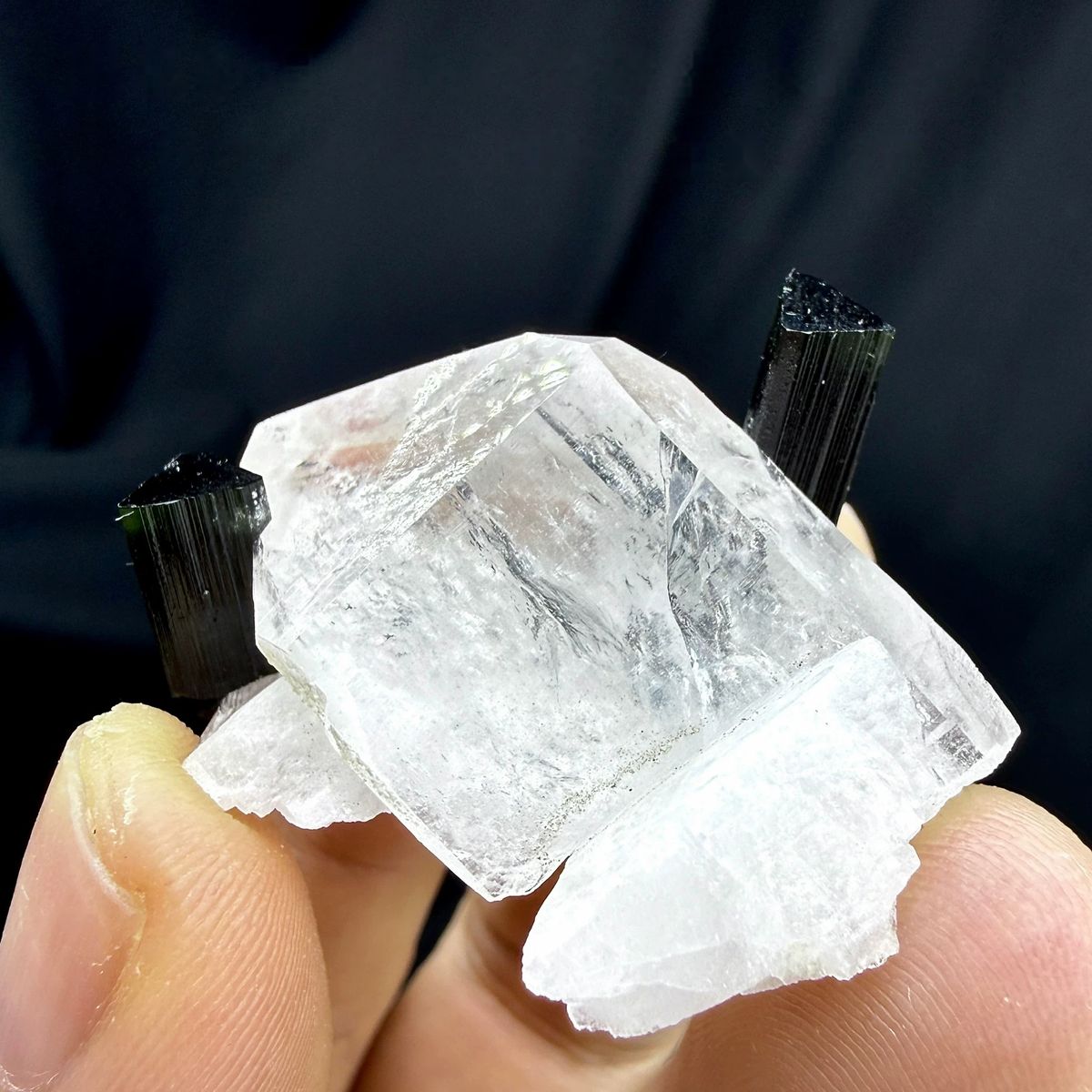
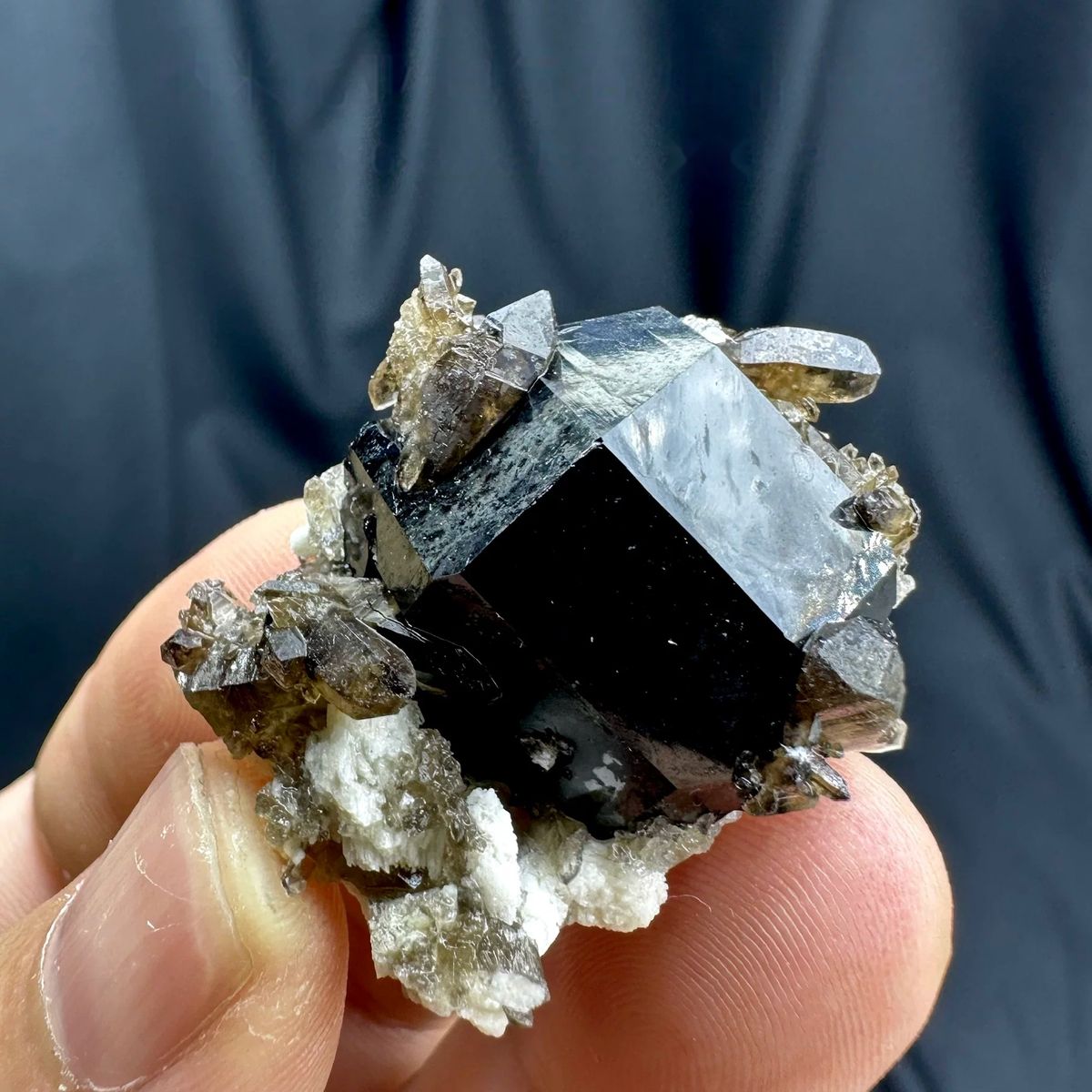
Recently sold Tourmaline specimens
External references
Tourmaline on Wikidata.