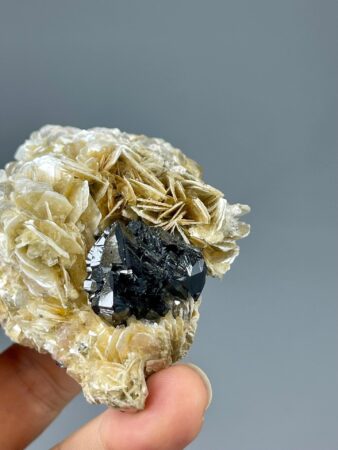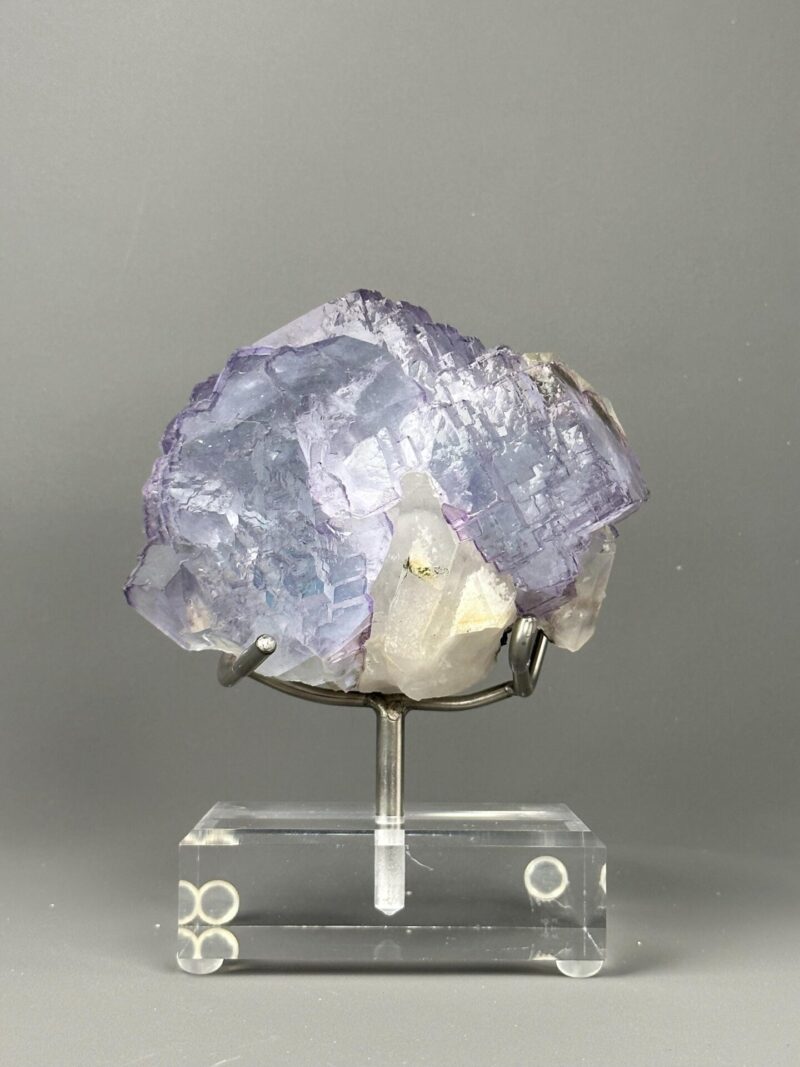
Biotite (K(Mg,Fe)₃(AlSi₃O₁₀)(OH,F)₂) is the dark iron-magnesium mica, named after physicist Jean-Baptiste Biot. It is one of the most abundant rock-forming minerals in granites, gneisses, and schists, where it forms flexible elastic black to brown plates. The IMA reclassified Biotite in 1998 as a series rather than a discrete species, but the historical name remains in widespread use.
Key Facts
- Mohs hardness 2.5–3.
- Monoclinic phyllosilicate; perfect basal cleavage.
- Iron content drives the dark color (vs. muscovite’s silver).
- Major component of granite, granodiorite, schist, and gneiss.
- Now classified as a series spanning phlogopite (Mg) and annite (Fe).
Notable Localities
Bancroft (Ontario, Canada) and Jharkhand (India) yield large books. Vesuvius (Italy) supplies type-area specimens. Brazil’s Minas Gerais hosts pegmatite material.
Found at these Localities
- Eastern Brazilian Pegmatite Province (巴西东部伟晶岩省)
- Italian Volcanic Province (Vesuvius / Lipari / Etna) (意大利火山矿物产地)
- Maharashtra Deccan Traprock Zeolites (马哈拉施特拉德干玄武岩沸石产地)