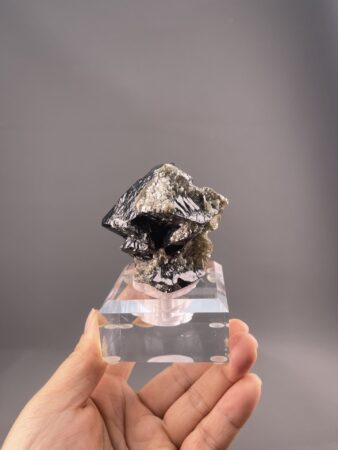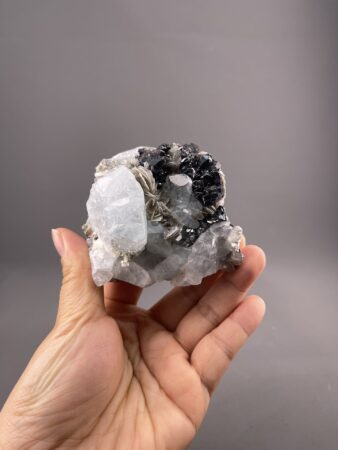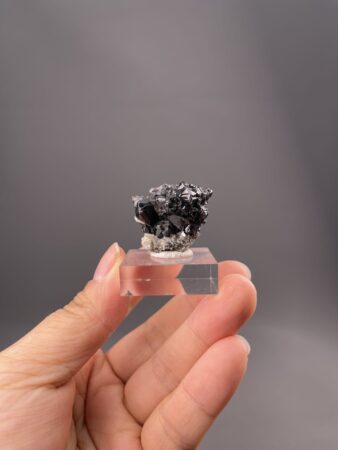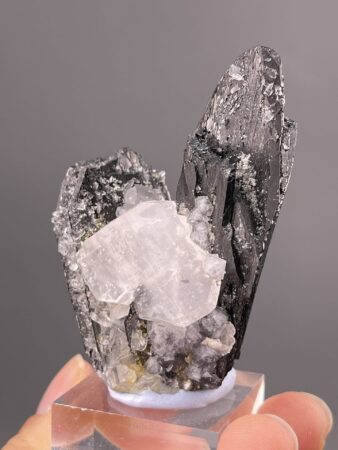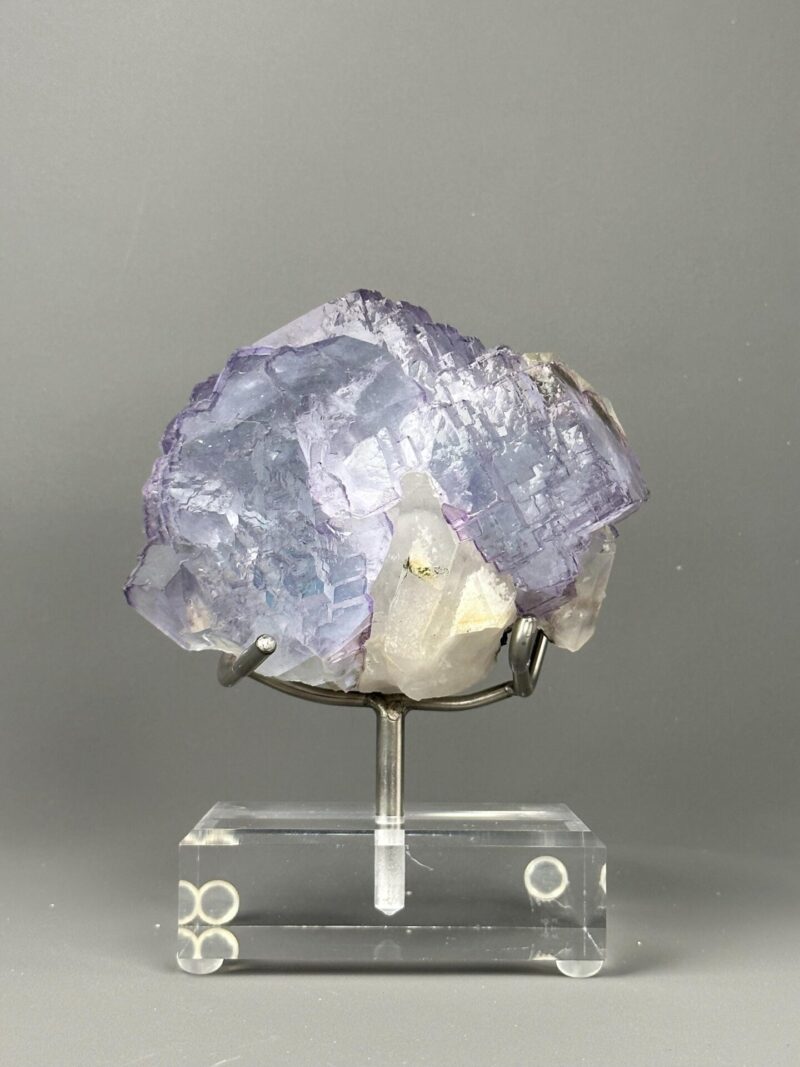
Cassiterite is the principal ore of tin and the signature heavy mineral of the Xianghualing-Xuebaoding-Gejiu axis. Black or deep brown adamantine pyramids, often twinned into a dramatic visor or knee shape, define the species visually. China is both the largest producer of tin and the source of the world's finest specimen material.
Key Facts
- Mohs hardness 6-7 – one of the harder oxides.
- Specific gravity 6.99 – extremely heavy; diagnostic in hand.
- Visor / knee twinning is a textbook habit, almost unique among collector species.
- Tin (Sn) ore – the basis of bronze, the original metal alloy.
- Xianghualing and Xuebaoding produce the world reference for collector-grade material.
Notable Varieties
- Visor twin / knee twin (twinned crystal)
- Wood tin (botryoidal habit)
The Chinese Angle
The Xianghualing district in Hunan and Xuebaoding in Sichuan produce gem-quality cassiterite twins, often translucent reddish-brown, in matrix combinations with fluorite, beryl, and muscovite. Gejiu in Yunnan supplies the bulk industrial output.
Found at these Localities
- Erzgebirge / Krušné Hory (埃尔茨山脉/克鲁什内山(德捷边境矿带))
- Cornwall Mining District (康沃尔矿区)
- Panasqueira (帕纳斯凯拉钨矿)
- Llallagua (Siglo XX) (亚亚瓜矿)
- Dachang Tin-Polymetallic Field (大厂锡多金属矿田)
- Gejiu Mine (个旧锡矿)
- Xianghualing Mine (香花岭)
- Xuebaoding Mine (雪宝顶)
- Yunnan (云南)
- Sichuan (四川)
- Hunan (湖南)