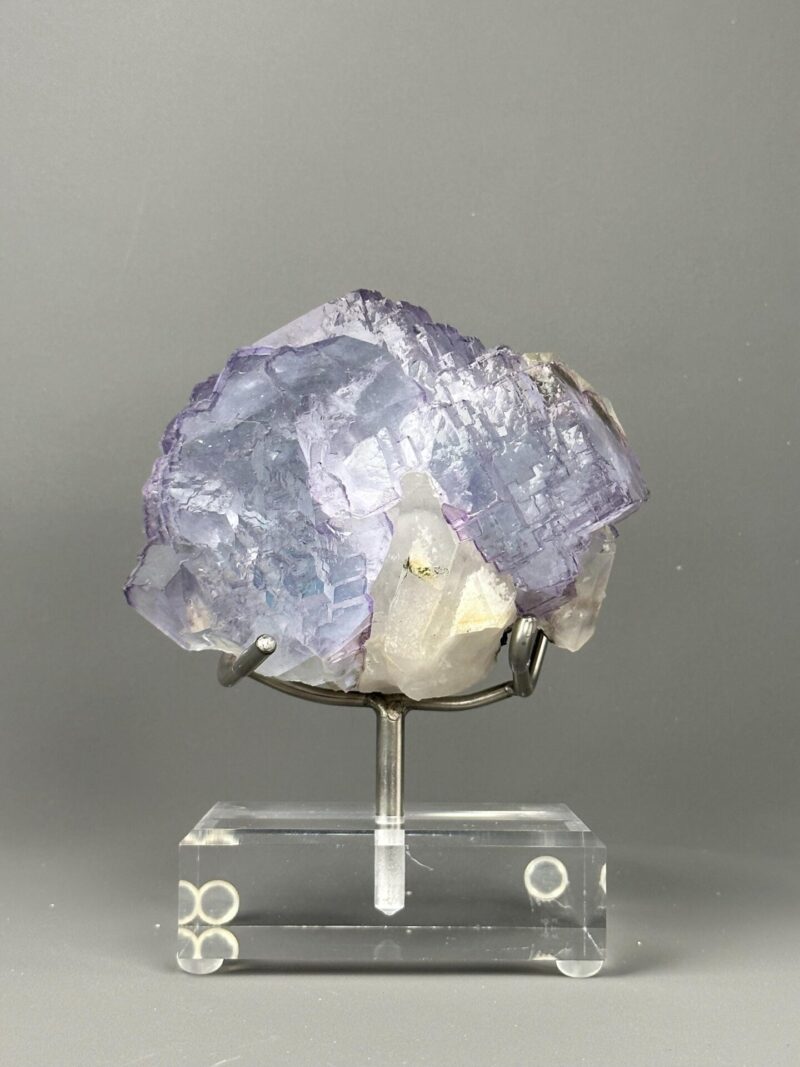
Diamond (C) is the hardest natural mineral on the Mohs scale (10) and the densest carbon polymorph. Formed at >100 km depth in upper-mantle peridotites, diamonds reach the surface in kimberlite and lamproite pipes. Mengyin (Shandong) and Wafangdian (Liaoning) host China’s only confirmed kimberlite diamond fields. The Cullinan (South Africa, 1905) and Hope (India) diamonds are among the most famous historical specimens.
Key Facts
- Mohs hardness 10 — hardest natural mineral.
- Isometric; classic octahedral, cubic, and dodecahedral crystals.
- Specific gravity 3.5; refractive index 2.42 (highest of common gems).
- Forms in mantle peridotite at >100 km depth and 1100–1400°C.
- Strong dispersion produces the diagnostic “fire” of cut gems.
Notable Localities
Kimberley (South Africa), Yakutia (Russia), and Argyle (Australia) are major modern sources. Mengyin (Shandong) and Wafangdian (Liaoning) host Chinese kimberlite pipes.
Found at these Localities
- Wafangdian Diamond Mine (瓦房店金刚石矿)
- Mengyin Diamond Mine (蒙阴金刚石矿)
- Maharashtra Deccan Traprock Zeolites (马哈拉施特拉德干玄武岩沸石产地)