
How to tell them apart
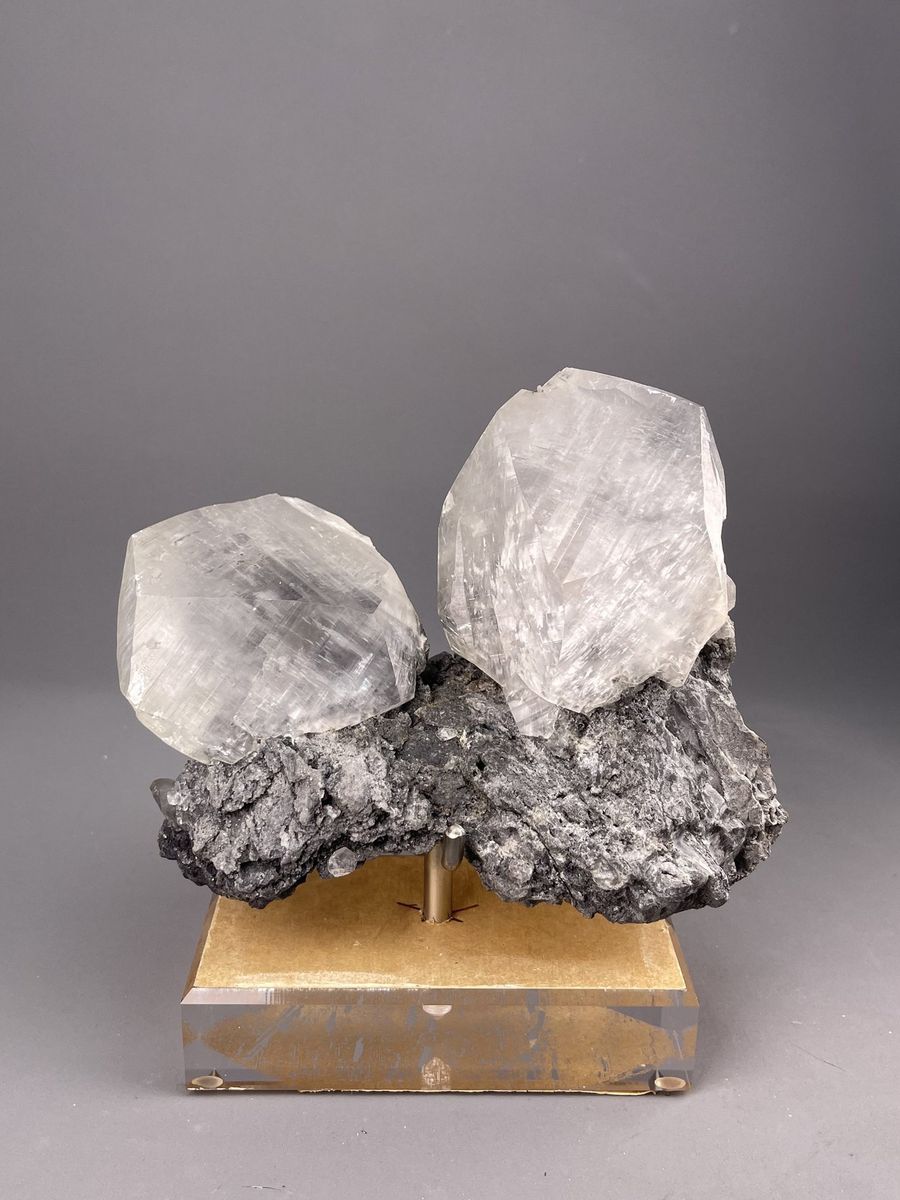
Calcite cleaves perfectly into rhombohedra. Aragonite has poor cleavage and fractures conchoidally. Calcite's hardness is 3; aragonite is 3.5–4. Calcite fizzes vigorously in dilute HCl; aragonite reacts more slowly. Calcite's specific gravity is 2.71; aragonite is 2.95 (you can feel the heft difference once you've handled both).
Why two polymorphs exist
Aragonite is metastable at surface temperature and pressure but kinetically locked into its structure — meaning it doesn't spontaneously convert to calcite even though it 'should' thermodynamically. Geological time and warm groundwater are enough to drive the conversion; many ancient aragonite shells are now calcite. Modern shells, sputnik clusters, and hot-spring deposits remain aragonite.
Famous aragonite localities
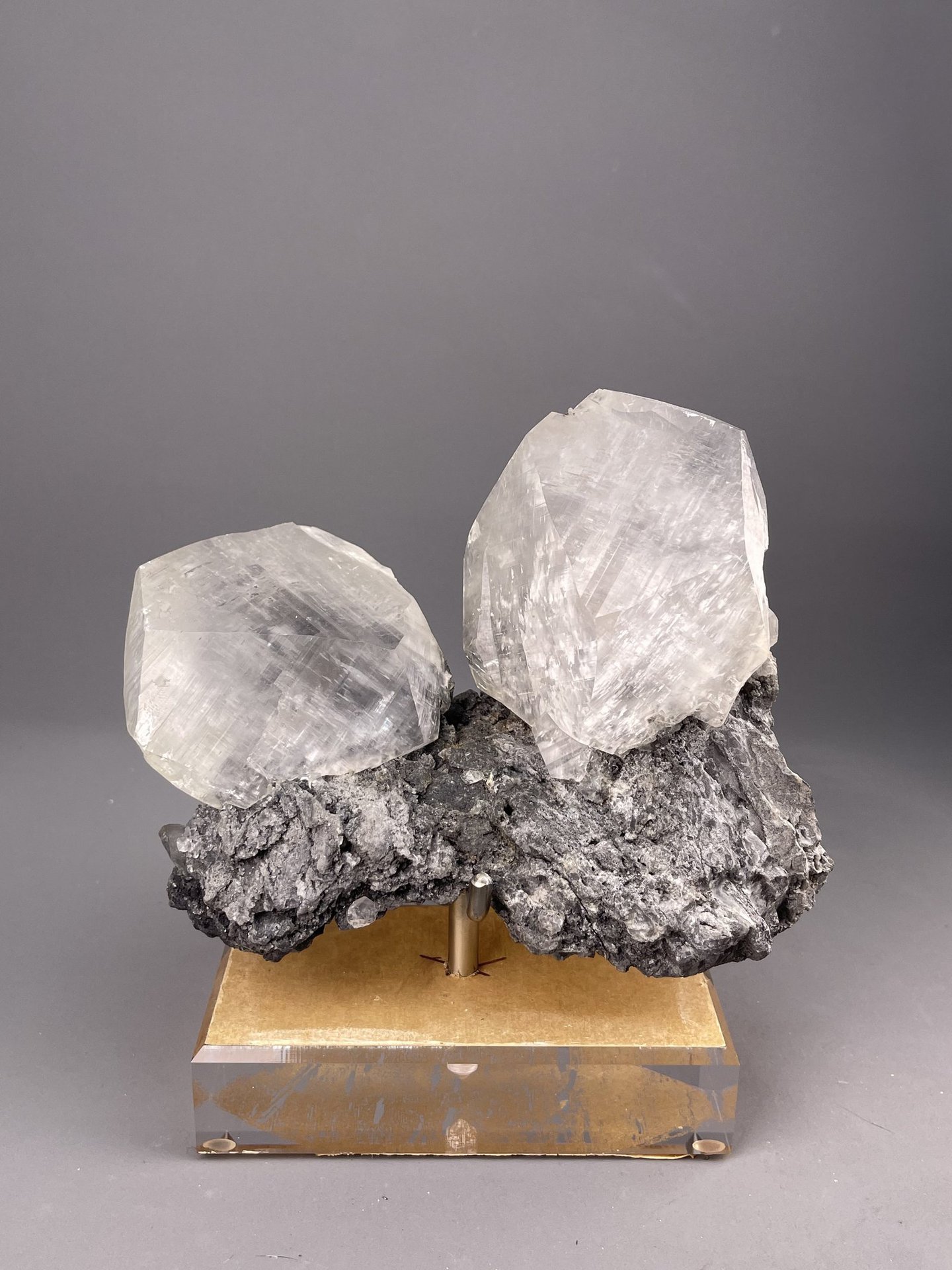
Molina de Aragón, Spain (the type locality, source of the name) — produces classic cyclic-twinned 'sputnik' aragonite. Morocco (Sefrou region) — fan-like aragonite sprays in stunning natural color. Tsumeb, Namibia — small but exquisite aragonite groups. Sicily — flos-ferri aragonite (coralloid aggregates). Each has a distinctive habit.
What 'polymorph' really means
A polymorph is one chemical composition that can adopt more than one crystal structure, and calcite versus aragonite is the textbook example for collectors. Both are CaCO₃ — same calcium, same carbonate group — but the atoms pack differently: calcite arranges them with trigonal symmetry, aragonite with orthorhombic symmetry. Because the chemistry is identical, no acid test or simple flame test can separate them; the difference lives entirely in the architecture.
That distinction is more than academic, because structure controls properties. The denser packing of aragonite is exactly why it carries a higher specific gravity and a slightly greater hardness than calcite, even though both are 'just calcium carbonate.' Understanding polymorphism also explains why the same dissolved carbonate can build either mineral depending on the temperature, chemistry, and rate at which it crystallizes.
The wider carbonate family
Calcite and aragonite are only the entry point to a large and collectible carbonate group, all united by the CO₃ anion that fizzes in acid. Dolomite, CaMg(CO₃)₂, adds magnesium and reacts only sluggishly with cold dilute acid — a handy way to tell it from calcite at the bench. Siderite (FeCO₃) and rhodochrosite (MnCO₃) swap in iron and manganese, the latter prized for its rose-pink color.
The copper carbonates are the showpieces of the family: azurite, Cu₃(CO₃)₂(OH)₂, and malachite, Cu₂CO₃(OH)₂, owe their intense blue and green to copper and frequently occur together in the oxidized zones of copper deposits. A common misconception is that a brisk reaction to acid by itself proves calcite — but azurite, malachite, and aragonite all react too, so the acid test confirms a carbonate, not a specific species.
Calcite and carbonates from Chinese mines
China is a major source of display-grade calcite, and the Daye district in Huangshi, Hubei is documented in a Mineralogical Record locality article. Its skarn and replacement deposits yield well-formed calcite crystals, often with sulfides and iron minerals. Fankou in Guangdong, a major lead-zinc producer, is another locality where carbonate crystals accompany the ore.
The copper carbonates also have a Chinese presence, with azurite and malachite recovered from oxidized copper occurrences. For a collector, a practical project is to assemble a Chinese carbonate study set — a rhombohedral calcite from Daye plus a copper carbonate or two — and confirm each with a drop of dilute acid, watching the brisk fizz that is the signature of the entire CO₃ group.
Sources & evidence limits
These references support the specific points described below. A trade name, colour, photograph, price, or seller statement alone cannot prove treatment status or origin.
Frequently asked questions
Are calcite and aragonite the same mineral?
They have the same chemistry, CaCO₃, but they are different minerals because their crystal structures differ — calcite is trigonal, aragonite orthorhombic. Chemists call this relationship polymorphism.
How do I tell calcite from aragonite at home?
Test cleavage and heft. Calcite cleaves into clean rhombs and feels a touch lighter, while aragonite tends to fracture irregularly and is slightly denser and harder. Both fizz in dilute acid, so the acid test alone will not separate them.
Will my aragonite eventually turn into calcite?
Not on any human timescale under normal display conditions. Aragonite is metastable but kinetically stable, so the conversion to calcite generally requires geological time and warm groundwater. Your specimen is safe in the cabinet.
Why does calcite fizz in acid?
The carbonate group reacts with acid to release carbon dioxide gas, which you see as effervescence. This is a defining test for the carbonate family as a whole, including dolomite, azurite, and malachite, though some carbonates react more slowly than calcite.