
The habit catalog
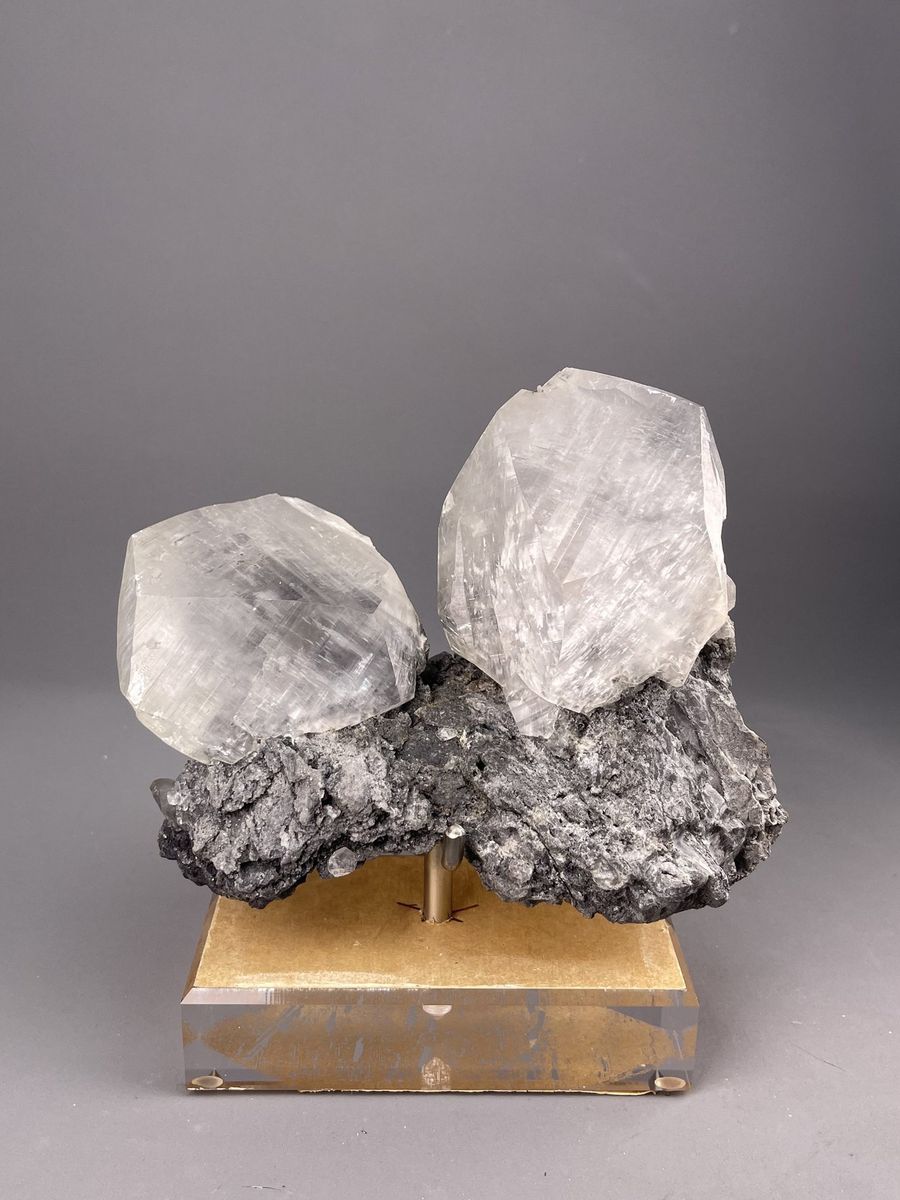
Rhombohedral (cleavage rhombs, nailhead form). Scalenohedral (dogtooth — six tapering triangular faces meeting at sharp points). Prismatic (long hexagonal columns). Tabular (thin plates). Acicular (needles). Botryoidal. Stalactitic (flowstone, dripstone). Coralloid. And dozens of combination forms where two or more dominant faces meet on one crystal.
Distinguishing calcite from aragonite and dolomite
Calcite (CaCO₃ trigonal) cleaves rhombohedrally. Aragonite (same formula but orthorhombic) does not — it fractures conchoidally. Dolomite (CaMg(CO₃)₂) is rhombohedral like calcite but harder (4 vs. 3) and fizzes much more slowly in dilute HCl because the magnesium slows the reaction. All three are common at Chinese localities; knowing the difference matters for accurate IDs.
Locality flavor
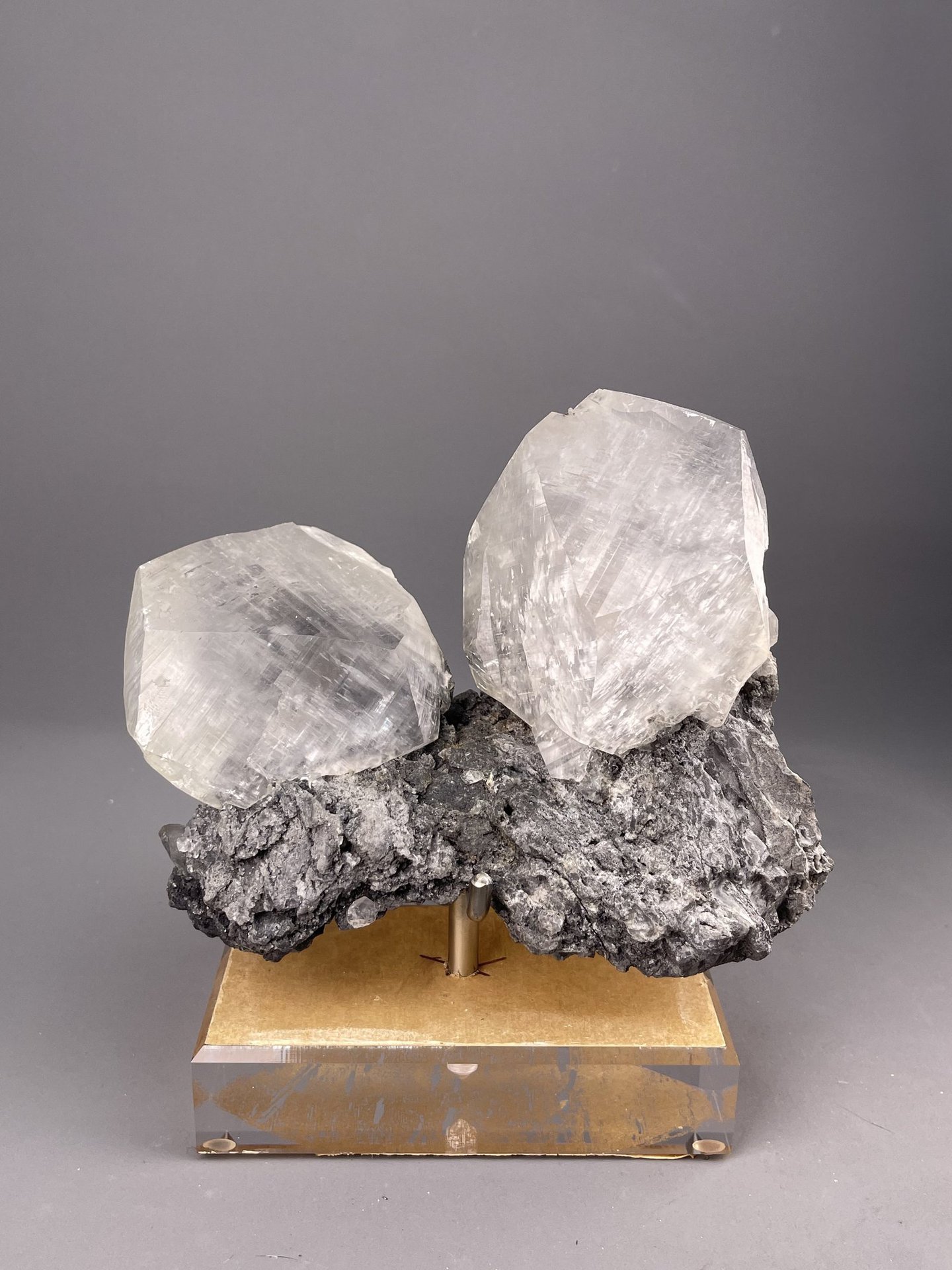
Daye-Hubei produces calcite on golden pyrite plates, often with iridescent surfaces. Wenshan, Yunnan, produces deep amber 'Wenshan' calcite scalenohedrons. Romanian Cavnic produces stalactitic flowstone. Mexican Naica produces gigantic gypsum-and-calcite chambers. American Tri-State produces the famous twinned 'butterfly' calcites. Each locality is a distinctive look.
Chinese calcite worth collecting
China supplies a remarkable variety of calcite, and a few signatures are worth recognizing. Daye and the wider Huangshi belt in Hubei produce water-clear to grey scalenohedral calcite perched on golden, often iridescent pyrite — one of the most photogenic carbonate combinations on the market. Fankou in Guangdong is a celebrated source of fine carbonates and sulfides where calcite associates with galena and sphalerite.
Beyond these, calcite turns up as a late-stage species across many Chinese skarn and vein deposits, frequently capping fluorite, stibnite, or quartz. That habit of crystallizing last makes it a useful reading of a pocket's final chemistry.
Fluorescence and optical effects
Calcite is one of the most rewarding fluorescent minerals: many specimens glow red, pink, or orange under shortwave UV, depending on trace manganese and other activators, though response varies widely by locality. If you collect under UV, test before you buy, since two similar-looking pieces can fluoresce very differently. Clear Iceland-spar calcite also shows strong double refraction — a line viewed through it appears doubled — which is a classic optical demonstration.
These effects are part of calcite's collector appeal, but they should complement crystal quality rather than excuse damage. A brightly fluorescent but chipped piece is still a chipped piece.
Buying, care, and common mistakes
Calcite is soft (hardness 3) and cleaves perfectly in three directions, so sharp scalenohedral points and rhomb edges chip with the slightest knock. Inspect every termination under raking light and check for reglued points, which are a frequent and easily missed repair. Avoid acids entirely when cleaning, since even weak household acids etch and dull the surfaces.
The usual mistakes are mistaking dolomite or aragonite for calcite, overpaying for a damaged display point, and accepting an assembled or repaired piece without disclosure. A quick hardness and cleavage check resolves the ID, and a direct question about repair protects the purchase.
Sources & evidence limits
These references support the specific points described below. A trade name, colour, photograph, price, or seller statement alone cannot prove treatment status or origin.
Frequently asked questions
How do I tell calcite from dolomite and aragonite?
Calcite is softer than dolomite (3 versus 4) and effervesces briskly in dilute acid, while dolomite reacts slowly. Aragonite shares calcite's chemistry but is orthorhombic and fractures rather than cleaving into rhombs, so cleavage and hardness together usually settle the identification.
Why does calcite have so many crystal shapes?
Calcite's trigonal structure can express an unusually large number of crystal faces, and small changes in temperature, chemistry and growth rate favor different forms. The result is hundreds of documented habits, from dogtooth scalenohedra to nailhead rhombs and flowstone.
Is Chinese calcite fluorescent?
Many calcite specimens fluoresce red, pink or orange under shortwave UV because of trace manganese, but the response depends heavily on the locality and individual piece. If fluorescence matters to you, test the specific specimen rather than assuming.
How should I clean and store calcite?
Never use acids, which etch the surface, and avoid abrasive scrubbing on the soft, easily chipped crystals. Dust gently, handle by the matrix, and cushion the fragile points well in storage.