
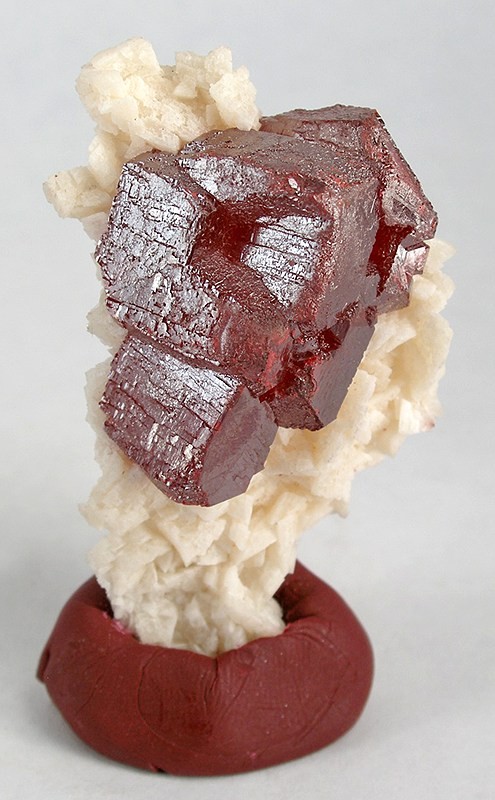
Why this mineral deserves a specific safety page
CDC/ATSDR identifies cinnabar ore as mercuric sulfide, and NIH PubChem likewise identifies red cinnabar and black metacinnabar as naturally occurring mercury sulfides, compiling hazard information for the compound. These sources do not mean every intact display specimen creates the same exposure — but they do justify preventing avoidable dust, ingestion, heating and casual handling.
This page is about enclosed collector specimens. It is not medical advice, and it cannot certify an individual specimen as risk-free.
Conservative display and storage
- Keep the specimen in a stable, closed display box or case with a secure base.
- Place it away from children, pets, food preparation and high-traffic handling.
- Avoid heat and strong light: not near a fireplace, heater, sunny window or hot display lamp.
- Preserve the mineral name, locality and safety note with the specimen.
- Inspect through the case. If loose powder or new damage appears, stop handling it.
Handling and cleaning
Move the specimen only when necessary. Avoid touching your face during handling, and wash hands with soap and water afterward. Never use compressed air, a rotary tool, abrasive brushing or any process that can spread particles.
This guide deliberately does not prescribe a universal wet-cleaning method: coatings, matrix and specimen condition vary, and a poor method can mobilize material or damage the piece. If cleaning seems necessary, ask a qualified conservator who can evaluate the exact specimen.
If a specimen is broken, powdery, contaminated, or must be discarded, isolate it from living areas and seek case-specific advice from a qualified hazardous-material professional or the relevant local waste authority. Do not place a mercury-bearing specimen into ordinary waste on the strength of a general web article — including this one.
Sources & evidence limits
These references support the specific points described below. A trade name, colour, photograph, price, or seller statement alone cannot prove treatment status or origin.
Frequently asked questions
Is an intact cinnabar specimen safe to display?
Risk depends on condition, composition, environment and handling. A conservative approach is to keep an intact specimen enclosed, avoid heat and strong light, minimize handling and prevent dust or ingestion. No article can certify an individual specimen as risk-free.
Can I wash cinnabar under a tap?
This guide does not recommend a universal washing method. Water, brushing and runoff can damage the specimen or spread material. Ask a qualified conservator or safety professional who can evaluate the exact piece.
Should I wear gloves?
Gloves can reduce direct contact during a necessary move, but they do not replace dust control, careful technique and handwashing afterward.
What if my cinnabar specimen is shedding powder?
Stop handling it, keep people and pets away, avoid sweeping or blowing the powder, and obtain qualified local advice for containment and disposal.