Computed from simplified end-member formula. Solid-solution series, water content, and trace substitutions cause real-world variation.
IMA Abbreviation (Whitney-Evans 2010)
Cin
→ Cinnabar
Hg sulfide
Standard symbol from American Mineralogist (Whitney & Evans, 2010). Used in thin-section labeling, phase diagrams, and IMA-style species records.
⏳ Long-term Aging & Care Timeline
surface darkeningyears
Trigger: light + air
Intervention: Bright red may dull. Light limitation extends color life.
Pronunciation
/ˈsɪnəbɑːr/
↔ SIN-uh-bar
Persian zinjifrah
Lapidary & Faceting Recommendations
Recommended cut:
cabochon (rare)
Also seen:
cabochon
Typical yield:
25% of rough
Soft (Mohs 2-2.5); rarely cut. Some Chinese material occasionally cabbed for collector market.
⚠ Safety & Handling
☠toxichigh
Mercury sulfide — Hg released by abrasion, heat, or acid. Cinnabar dust is hazardous.
Handling: Handle whole crystals only. Wash hands after. Never grind or polish. Never heat. Keep away from children.
Information provided in good faith. Consult local hazmat regulations for transport and disposal. Severely hazardous specimens may require special storage cabinets.
Tenacity
Behavior:
sectile
Under stress:
Cuts; cleaves
Soft (Mohs 2-2.5); can be sliced.
Luster
adamantine→sub-metallic
High RI gives near-metallic shine to red surfaces.
Diaphaneity (Transparency)
transparent-to-translucent
Rare gem-grade transparent material from China.
Type Locality
Almadén— Spain
Described 1747 by Wallerius
› Browse all type localities
Diagnostic Field Tests
Streak test→ Scarlet red
Diagnostic — separates from realgar (orange-red).
SG check→ ~8.1 g/cm³ — feels very heavy
Among the densest non-metals.
⚠ Use dilute HCl (~10%) only on inconspicuous spots; rinse promptly. Smell-tests should be brief and ventilated. Taste-test ONLY halite/sylvite — never lead, arsenic, or sulfur minerals.
Specific Gravity
8.00–8.20
g/cm³
very heavy
HgS; among the densest non-metal minerals.
For comparison: water = 1.00, glass ≈ 2.5, quartz = 2.65, corundum ≈ 4.00, galena ≈ 7.50, gold ≈ 19.3.
Streak Test
scarlet red
Bright scarlet — distinct from realgar (orange-red).
Streak = color of the powdered mineral. Drag specimen across unglazed white porcelain plate (Mohs 6.5). For minerals harder than the plate, crush a small flake into powder and observe color.
Cinnabar sits at 2–2.5 on the Mohs scale —
soft enough to be scratched by a fingernail.
Colors:
Streak Scarlet
Crystal system Trigonal
Pronunciation/ˈsɪnəbɑːr/
Type localityAlmadén, Ciudad Real, Spain
Discovery Known since antiquity
Sulfides & SulfosaltsSulfides
TL;DR · 1 min read
Cinnabar (HgS) is the primary ore of mercury and one of the most visually arresting minerals on Earth — its scarlet-to-vermilion crystals have been mined for pigment, alchemy, and metallurgy for over 3,000 years. Chinese cinnabar localities include Wanshan and Tongren in Guizhou, where mercury ores and collector specimens have been documented.
Cinnabar (HgS) is the primary ore of mercury and one of the most visually arresting minerals on Earth — its scarlet-to-vermilion crystals have been mined for pigment, alchemy, and metallurgy for over 3,000 years. Chinese cinnabar localities include Wanshan and Tongren in Guizhou, where mercury ores and collector specimens have been documented.
Notable Chinese Localities
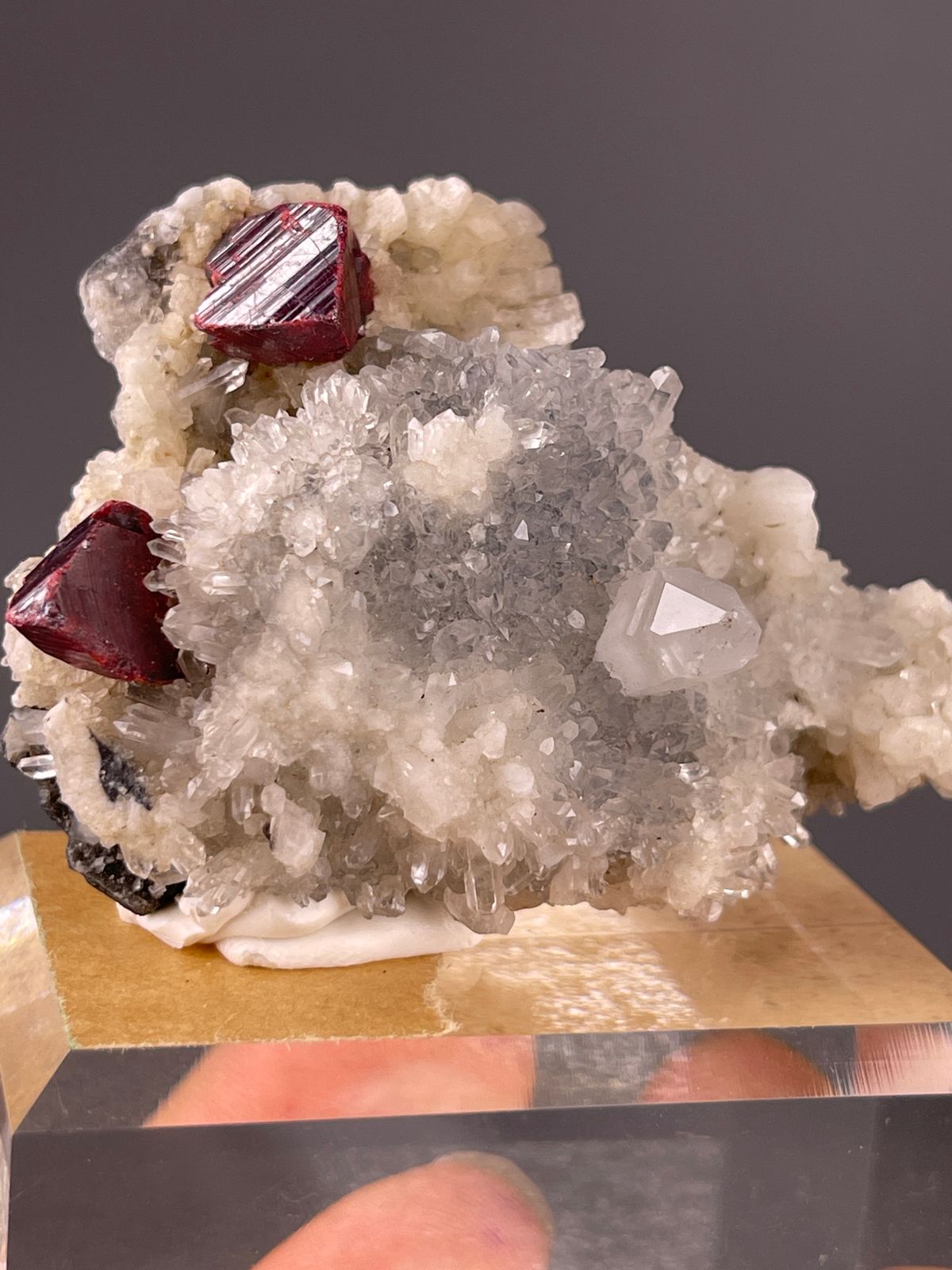
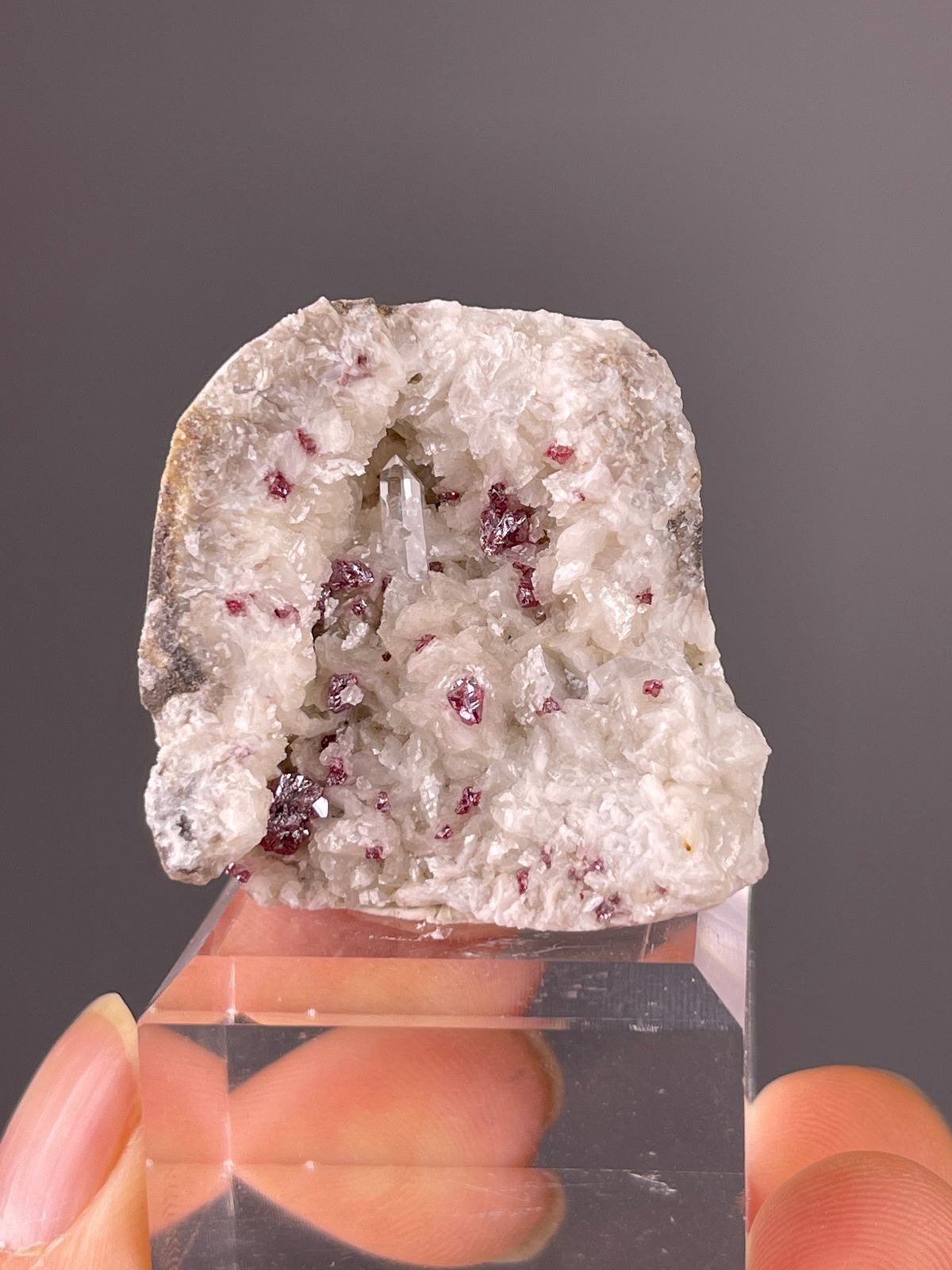
Wanshan Mine (Guizhou) is a major Chinese cinnabar source and the type-locality benchmark for sharp rhombohedral crystals on white dolomite matrix. Tongren and Wuchuan (also Guizhou) and Hunan’s Xiangxi belt also produce collector material.
Cite this entry
APA
MyMineralBox Editorial Team. (2026). Cinnabar. My Mineral Box. Retrieved May 23, 2026, from https://mymineralbox.com/mineral-encyclopedia/minerals/cinnabar/
MLA
MyMineralBox Editorial Team. "Cinnabar." My Mineral Box, 2026, https://mymineralbox.com/mineral-encyclopedia/minerals/cinnabar/. Accessed May 23, 2026.
Chicago
MyMineralBox Editorial Team. "Cinnabar." My Mineral Box. Last modified May 4, 2026. https://mymineralbox.com/mineral-encyclopedia/minerals/cinnabar/.
BibTeX
@misc{mmb_cinnabar,
 author = {{MyMineralBox Editorial Team}},
 title = {{Cinnabar}},
 year = {2026},
 publisher = {My Mineral Box},
 url = {https://mymineralbox.com/mineral-encyclopedia/minerals/cinnabar/},
 urldate = {2026-05-23}
}
About Cinnabar
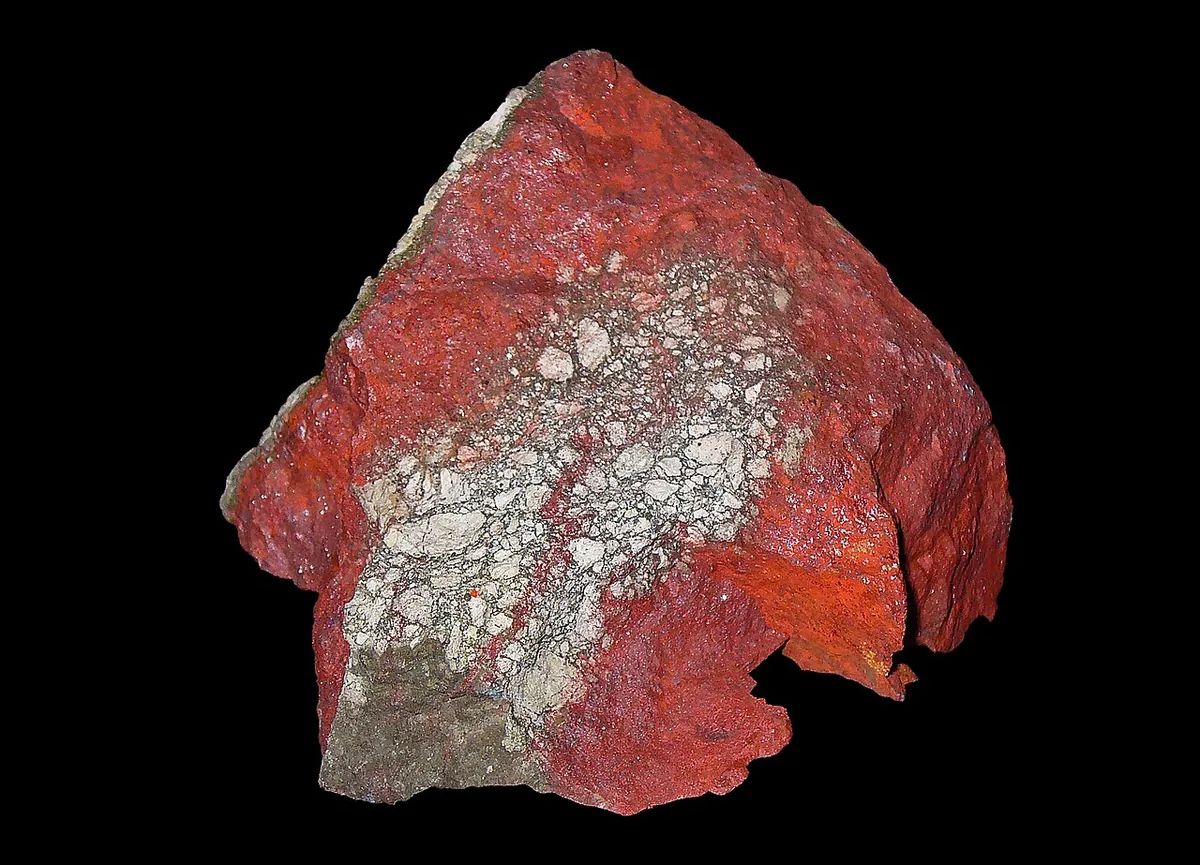
Cinnabar belongs to the sulfide class in the cinnabar group and has the chemical formula HgS. It crystallizes in the trigonal system and is relatively soft, requiring careful handling. Its combination of structural character and global distribution make it a recognized species in both systematic and aesthetic collections.
Identification & care
Crystals commonly develop as thick tabular to rhombohedral crystals, often twinned; massive, granular, earthy coatings; drusy. Its color range is broad, including vermillion-red, brick-red, brownish-red, and rarely greyish. The luster is adamantine, sub-metallic, dull (earthy), the streak is scarlet to vermillion-red, and specimens range from transparent to translucent (crystals); opaque (massive). The cleavage is perfect on {10-10} (prismatic), three directions. The fracture is uneven, sub-conchoidal, which aids identification.
Collector context
How it forms
In terms of geology, Cinnabar forms in low-temperature hydrothermal deposits associated with volcanic activity or hot springs; often in sedimentary rocks near volcanic centers. It is commonly found in association with realgar, orpiment, mercury (native), stibnite, pyrite, quartz, calcite, dolomite.
Classic Chinese localities
Cinnabar has known Chinese occurrences in Hunan, Guizhou.
Why collectors care
Collectors pursue Cinnabar for the clarity of its crystal form and, in good material, saturated color that reads instantly across a display case. A well-terminated cinnabar on clean matrix photographs well, identifies quickly, and anchors a cabinet piece. Top Chinese specimens over the last two decades have reset the bar for what cinnabar looks like at collector grade.
What affects value
Value in Cinnabar is assessed, in typical order of weight, against: (1) locality provenance; (2) size relative to the species norm; (3) crystal form and termination sharpness; (4) color saturation and zoning; (5) transparency and internal clarity; (6) matrix quality and aesthetic balance; (7) condition (absence of damage, chips, or repair). Cleaning quality and verified locality documentation act as multipliers across the above.
Naming history
Cinnabar reaches us through Greek kinnabari, a word Greek itself borrowed — most likely from Persian, and possibly further east. It is mercury's principal ore and was ground into vermilion, the most brilliant red pigment of the ancient and medieval world, used from Roman frescoes to Chinese lacquer. The beauty and the toxicity arrived together.
Frequently asked questions
What is Cinnabar?
Cinnabar has the chemical formula HgS, crystallises in the Trigonal system, has a Mohs hardness of 2–2.5. Cinnabar is a sulfide mineral recognized among collectors for its crystal form and distribution, with known Chinese sources.
What is the chemical formula of Cinnabar?
The chemical formula of Cinnabar is HgS.
What crystal system does Cinnabar belong to?
Cinnabar crystallises in the Trigonal crystal system.
Where is Cinnabar found?
Notable localities for Cinnabar include Wanshan Mine, Almadén, Idrija.
Is Cinnabar rare?
As a collector mineral, Cinnabar is generally considered rare.
We use a small set of cookies (analytics, checkout, chat) to keep the site working and understand how visitors use it. Checkout-essential cookies are always loaded. Privacy policy