
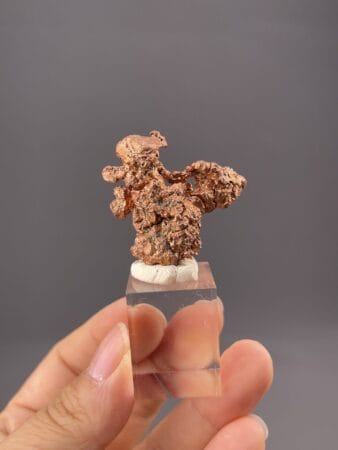
Skarn geology
Daye is a textbook skarn deposit: a granitic intrusion baked the surrounding Triassic limestone, driving hot mineral-rich fluids into the contact zone. Iron (magnetite), copper (chalcopyrite, bornite), and pyrite precipitated as the primary ore. Open vugs in the contact zone provided space for spectacular calcite, dolomite, and pyrite crystals.
The signature look
Bright golden pyrite cubes, often with druzy quartz dustings, on creamy or grey dolomite matrix. Calcite scalenohedrons grow on top. Many pyrite plates show striking surface iridescence — purple, blue, and gold reflections from a thin sulfide oxidation layer that develops naturally underground. Iridescent Daye specimens are among the most distinctive in modern collecting.
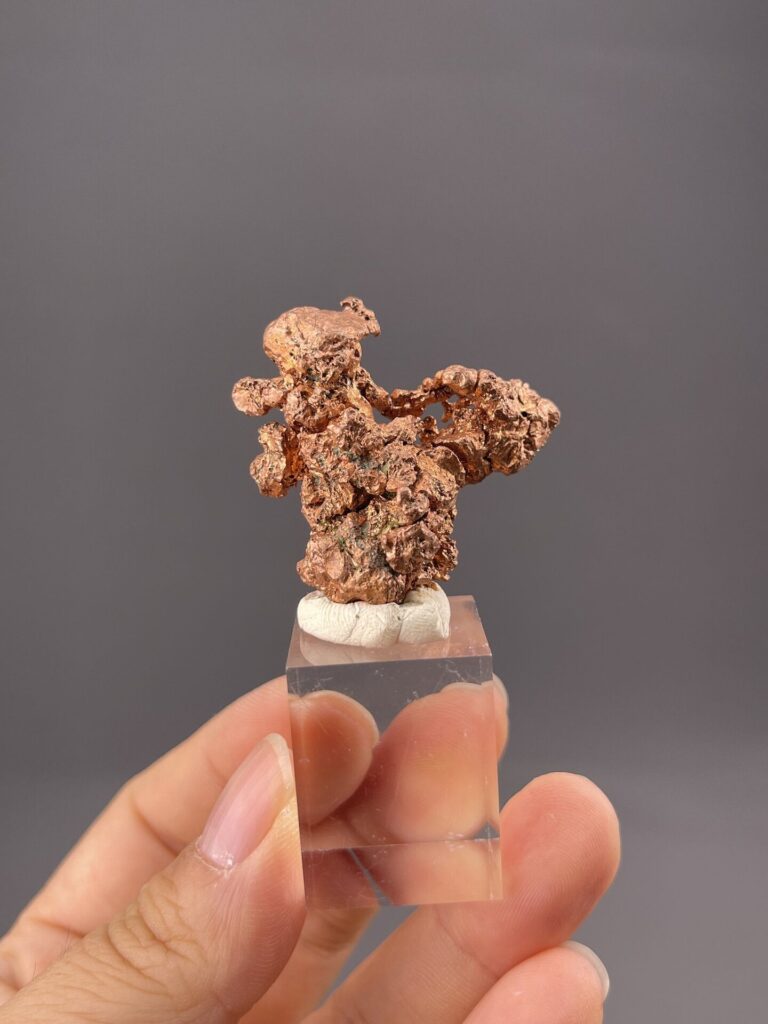
Other species
Chalcopyrite (metallic golden cubes with sometimes-flashy iridescence), bornite (peacock-ore iridescence), arsenopyrite, sphalerite, magnetite. The associated dolomite matrix often has subtle pink color from manganese substitution. Specimens with calcite + iridescent pyrite + dolomite matrix are the locality's flagship combo.
Judging a Daye pyrite-calcite plate
The best Daye plates balance three elements: well-formed golden pyrite, clean calcite crystals, and a tidy dolomite base, arranged so each shows to advantage rather than crowding the others. On the pyrite, look for sharp cube or pyritohedron faces and a bright, untarnished luster; on the calcite, prize transparent, undamaged scalenohedral points. Iridescence, where present, should be even and lustrous rather than a dull, patchy film.
Damage is the usual value-killer. Calcite is soft and its points chip easily, so inspect every termination under raking light, and check the back of the plate for fresh breaks where it was removed from the pocket.
Stability and natural patina
Daye pyrite is generally stable, but like all iron sulfides it can deteriorate if stored in damp conditions. Keep specimens in a dry environment, ideally 40–50% relative humidity, and watch for any white powdery efflorescence or a sulfur smell, which are early warnings of pyrite decay. A sealed cabinet with desiccant is good insurance for a prized plate.
The surface iridescence on many Daye specimens is a natural oxidation film and should not be scrubbed or 'polished'; aggressive cleaning strips the very feature that makes the piece desirable. Dust gently and avoid harsh acids, which etch the calcite and dull the pyrite.
Common mistakes and labeling
The most frequent error is treating any golden pyrite-and-calcite plate from the Huangshi region as 'Daye' when it may come from a neighboring mine in the same iron belt. Pin the specific mine when you can, because the locality is what carries reference value. Be cautious, too, of artificially induced iridescence or coated pyrite sold as natural — genuine Daye patina is subtle and tied to the underground oxidation history.
Watch for reattached calcite points and assembled plates. Ask whether the piece has been repaired or glued, and treat an evasive answer as a reason to walk away.
One naming habit matters more than the rest: there is no single "Daye Mine." Daye is a county-level mining district (Daye Co., Huangshi, Hubei) whose individual mines — the Fengjiashan Mine, the Tonglushan Mine and others — are separate, distinct localities. Write "Daye, Hubei" when the label supports only the district, and name a specific mine only when the original label does. A district-level attribution is honest; a mine name invented for presentation is not.
Frequently asked questions
What does the Daye, Hubei locality produce?
Daye is best known for golden pyrite cubes, frequently iridescent, paired with calcite scalenohedrons on a pale dolomite matrix. It also yields chalcopyrite, bornite, sphalerite and magnetite from its skarn ore zones.
Is the iridescence on Daye pyrite natural?
On genuine specimens the iridescence is a natural thin oxidation film that forms on the pyrite underground. It should be left alone, since scrubbing or acid cleaning removes the colorful surface that makes these pieces collectible.
Will Daye pyrite decay over time?
Daye pyrite is generally stable but, like any iron sulfide, can break down in humid storage. Keep it dry at around 40–50% relative humidity and watch for white powder or a sulfurous odor, which signal the onset of pyrite decay.
Where exactly is Daye?
Daye is a district near Huangshi in eastern Hubei Province, China, within a long-worked iron-copper mining belt. The crystallized specimens come from open vugs in the skarn contact zones of these deposits.