Overview
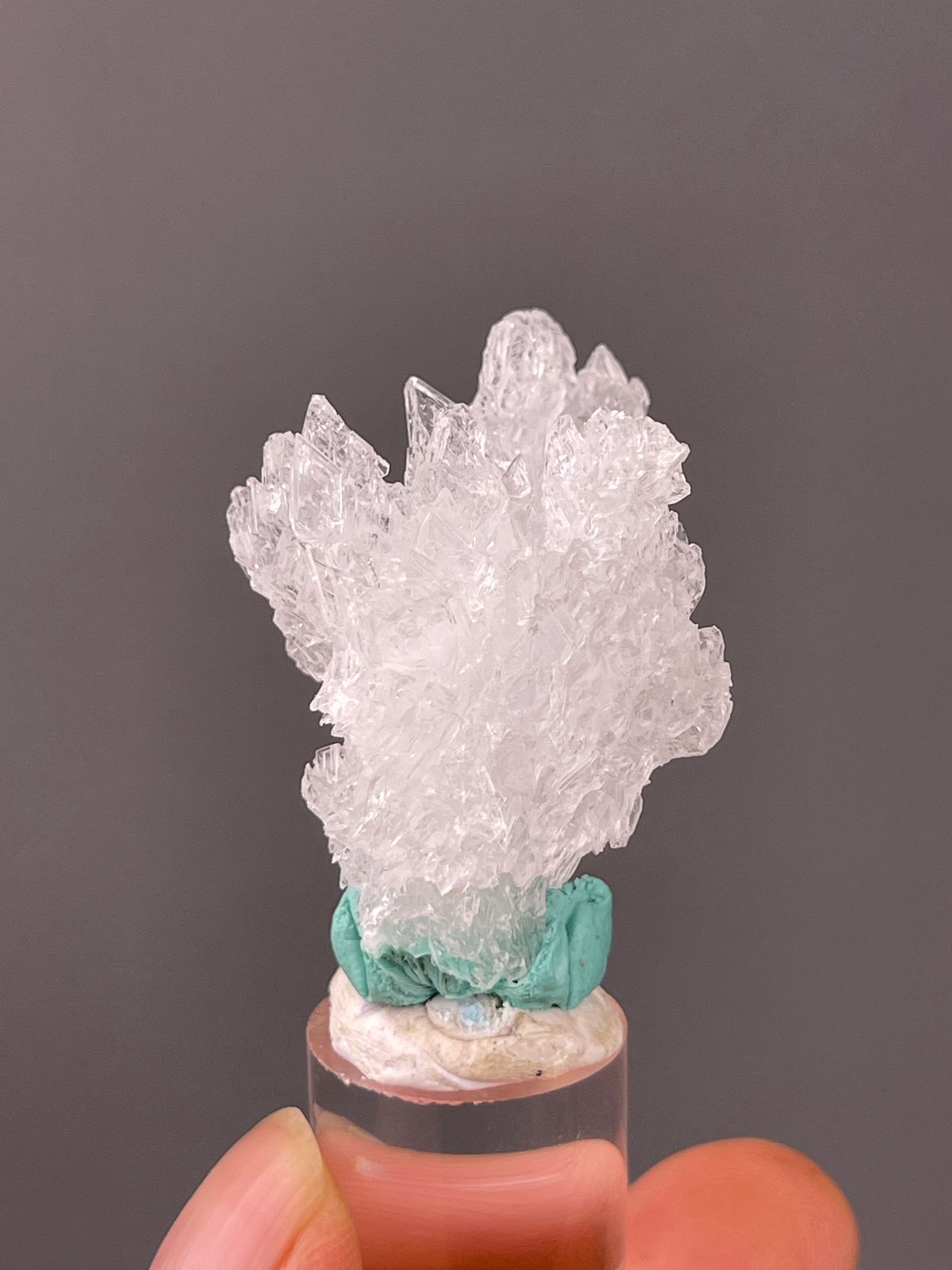
The name “creditite” is almost certainly a misspelling of creedite, a rare calcium-aluminium sulfate-halide mineral prized by collectors for its showy radiating sprays of bladed crystals. Creedite was first described in 1916 from the Colorado Fluorspar Company mine near the town of Creede, in Mineral County, Colorado, after which it is named. It is uncommon, and well-formed specimens, especially the bright violet to orange clusters from Mexico, are sought after for display.
Composition & structure
Creedite is a hydrated calcium-aluminium sulfate that also carries fluorine and hydroxyl groups, with the formula Ca3Al2(SO4)(F,OH)10·2H2O. Structurally it belongs to the monoclinic crystal system and typically forms slender prismatic crystals that fan outward into spiky, sea-urchin-like aggregates. The combination of sulfate and fluoride in one structure is unusual and reflects the fluorine-rich chemical environments in which it grows.
| Formula | Ca3Al2(SO4)(F,OH)10·2H2O |
| Crystal system | Monoclinic |
| Mohs hardness | 3.5–4 |
| Lustre | Vitreous |
| Colour | Colourless, white, violet to purple, orange |
| Type locality | Colorado Fluorspar Co. mine, near Creede, Mineral County, Colorado, USA |
Formation & occurrence
Creedite is a secondary mineral that forms where fluorite-bearing hydrothermal deposits are altered, commonly during the oxidation of fluorite ore bodies. It is associated with fluorite, barite and kaolinite at the type locality, and grows in veins and vugs where fluorine-rich fluids react with aluminous host rock. Because these conditions are specific, creedite is never abundant and tends to occur as a minor late-stage phase rather than a rock-forming mineral.
Identification & similar species
The hallmark of creedite is its radiating habit of glassy, bladed crystals, often in striking violet, which is fairly diagnostic when present. Its modest hardness of about 3.5 to 4, vitreous lustre and white streak help separate it from harder species. Colourless creedite can be confused with other delicate sulfate or fluoride minerals, but its crystal form, association with fluorite, and chemistry distinguish it on closer study.
Notable localities & collecting
Beyond the Colorado type locality, the most celebrated creedite comes from the Santa Eulalia district in Chihuahua, Mexico, source of the vivid purple and orange “starburst” clusters seen in collections worldwide. Other documented occurrences include Tonopah and other parts of Nevada, Arizona and California, as well as Bolivia, Tajikistan and Kazakhstan. Collectors value undamaged sprays, but the crystals are fragile and somewhat soft, so they need careful handling and protection from knocks and abrasion.