
Hematite
Curated by Maggie Liu · Updated:
Hematite is an oxide mineral recognized among collectors for its crystal form and distribution, with several world-class Chinese localities.
About Hematiteextended article
Hematite (Fe₂O₃) is the principal iron ore mineral worldwide and one of the most economically important minerals on Earth. Its blood-red streak (Greek “haima” = blood) is diagnostic. Specimen forms range from metallic “specularite” rosettes to “kidney ore” botryoidal aggregates and gem-grade octahedral crystals from Brazil and Switzerland.
Specimen forms
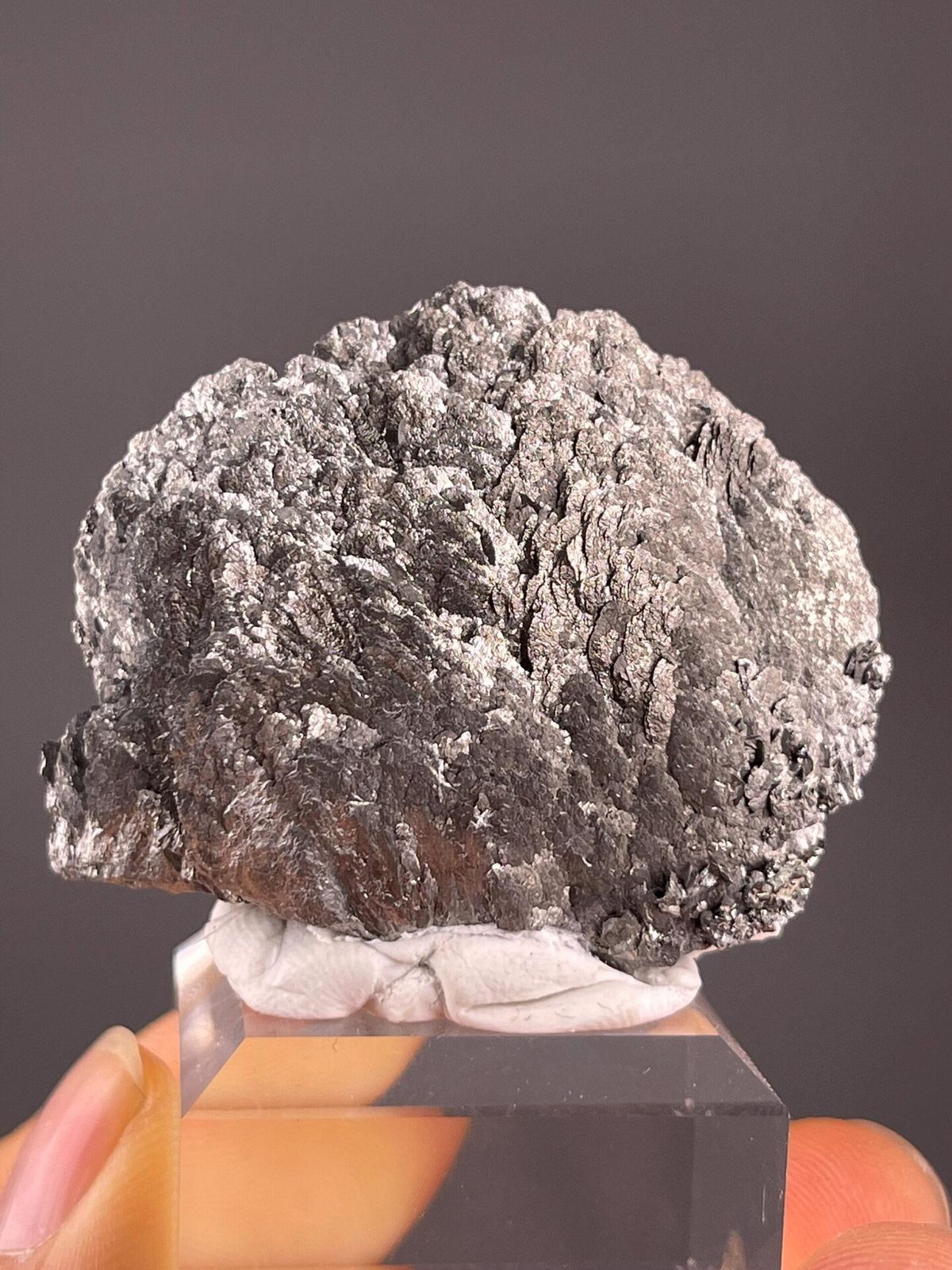
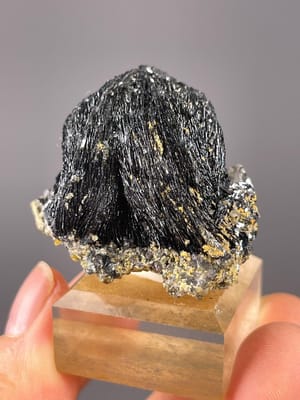
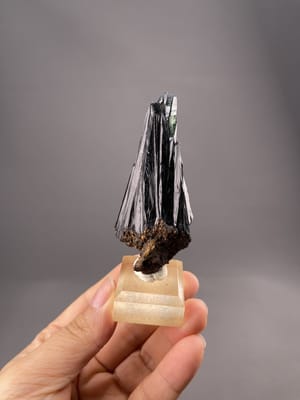
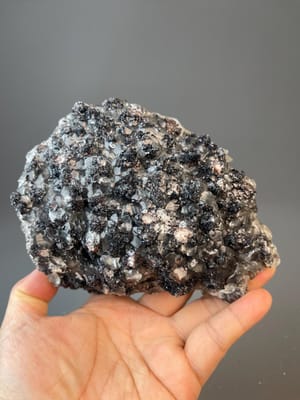
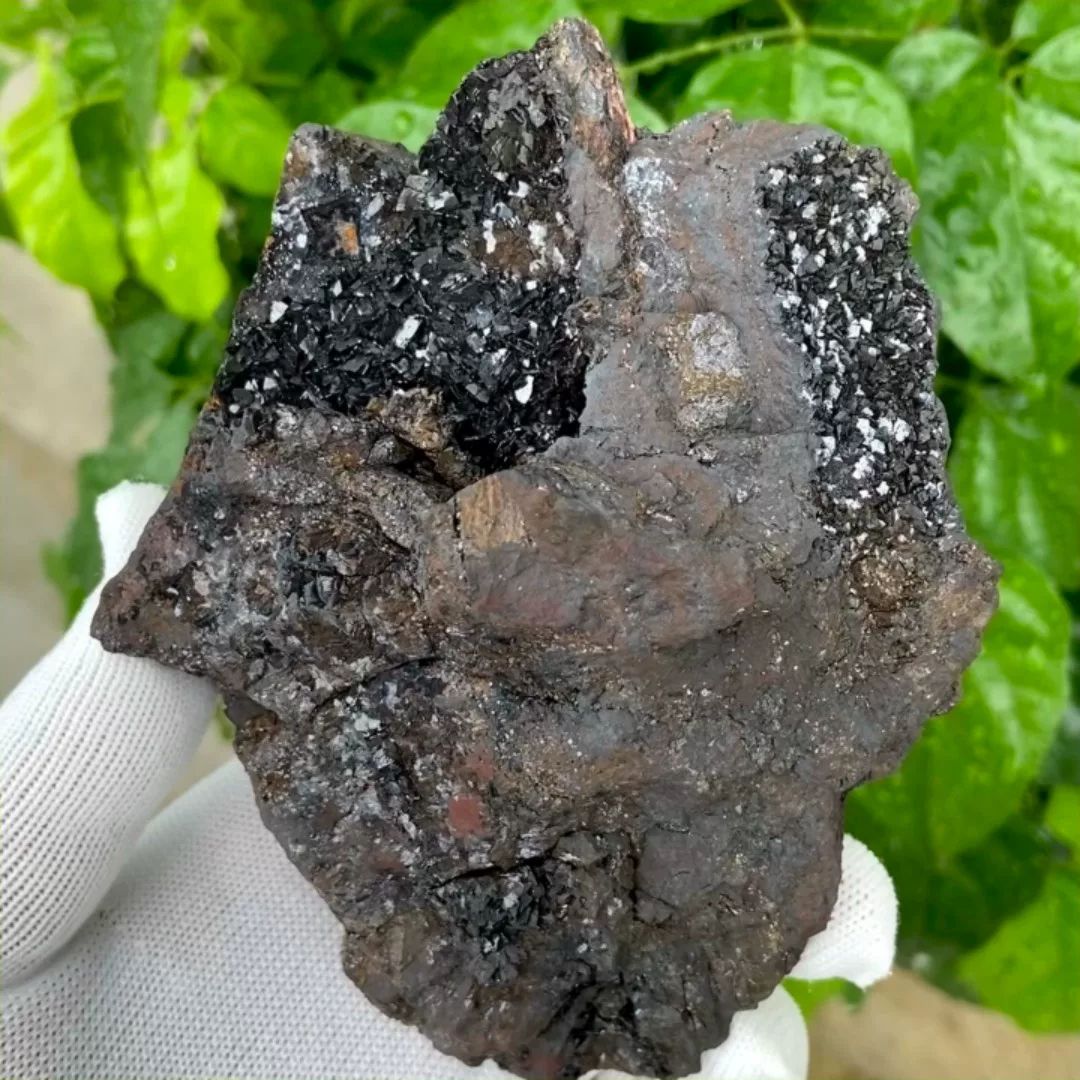
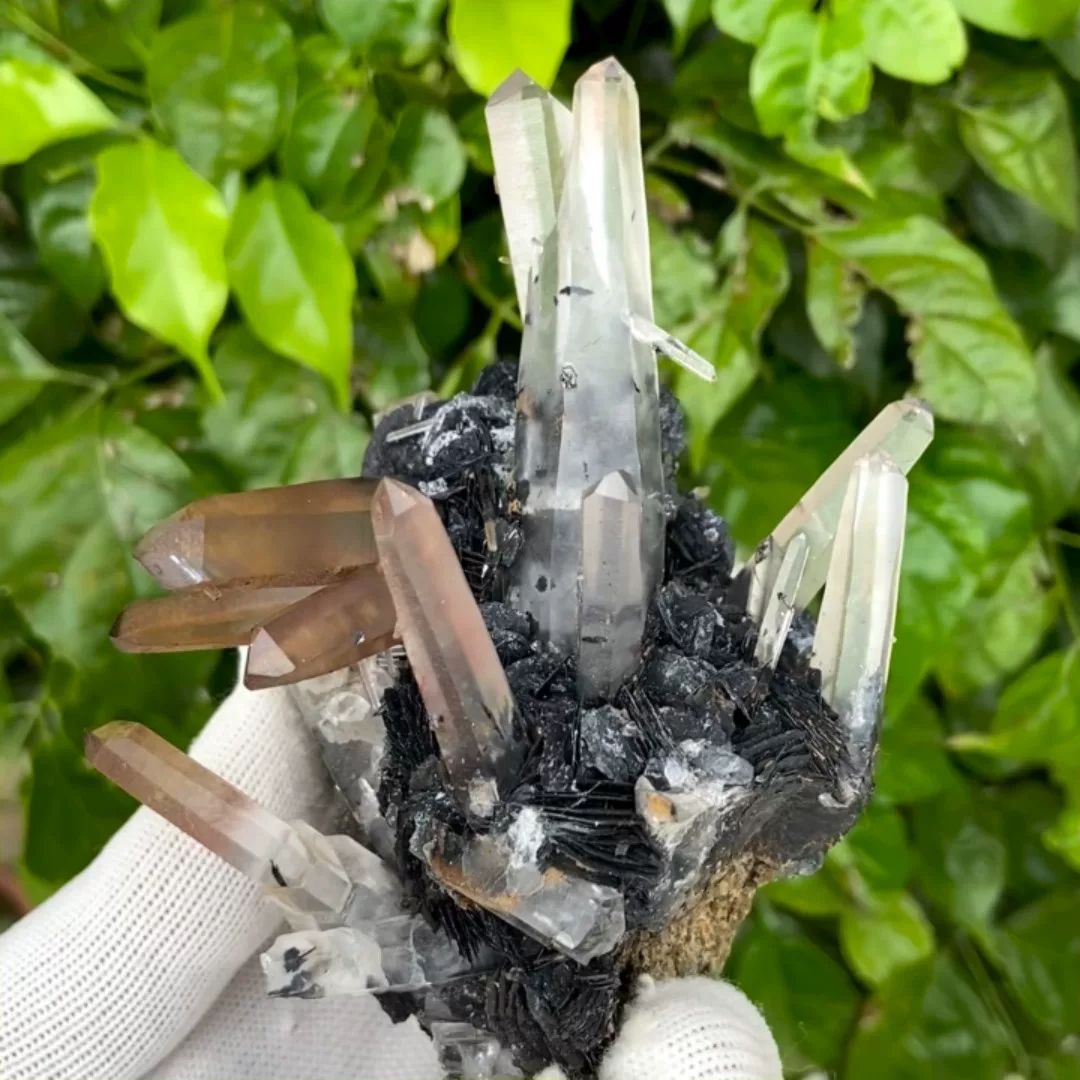
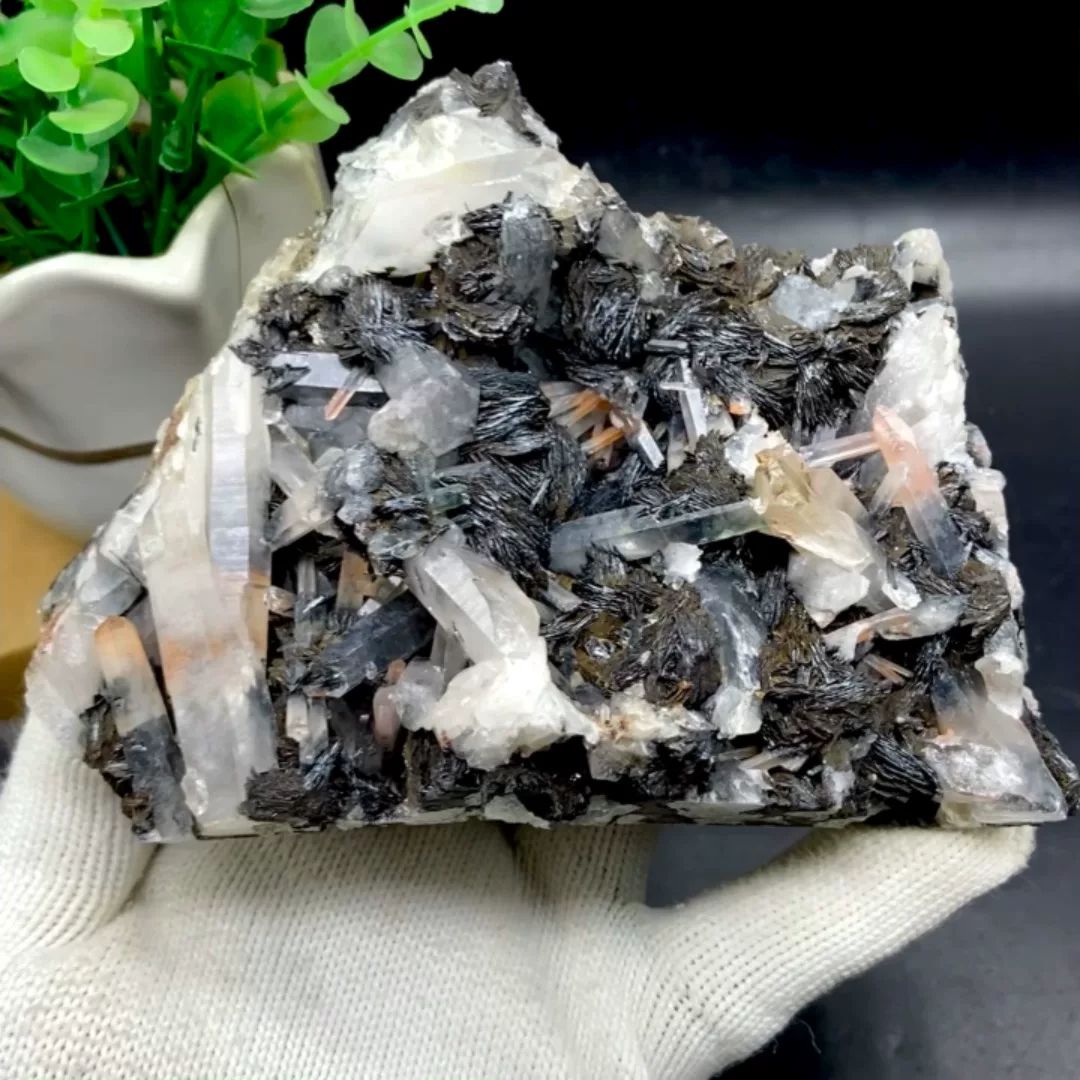
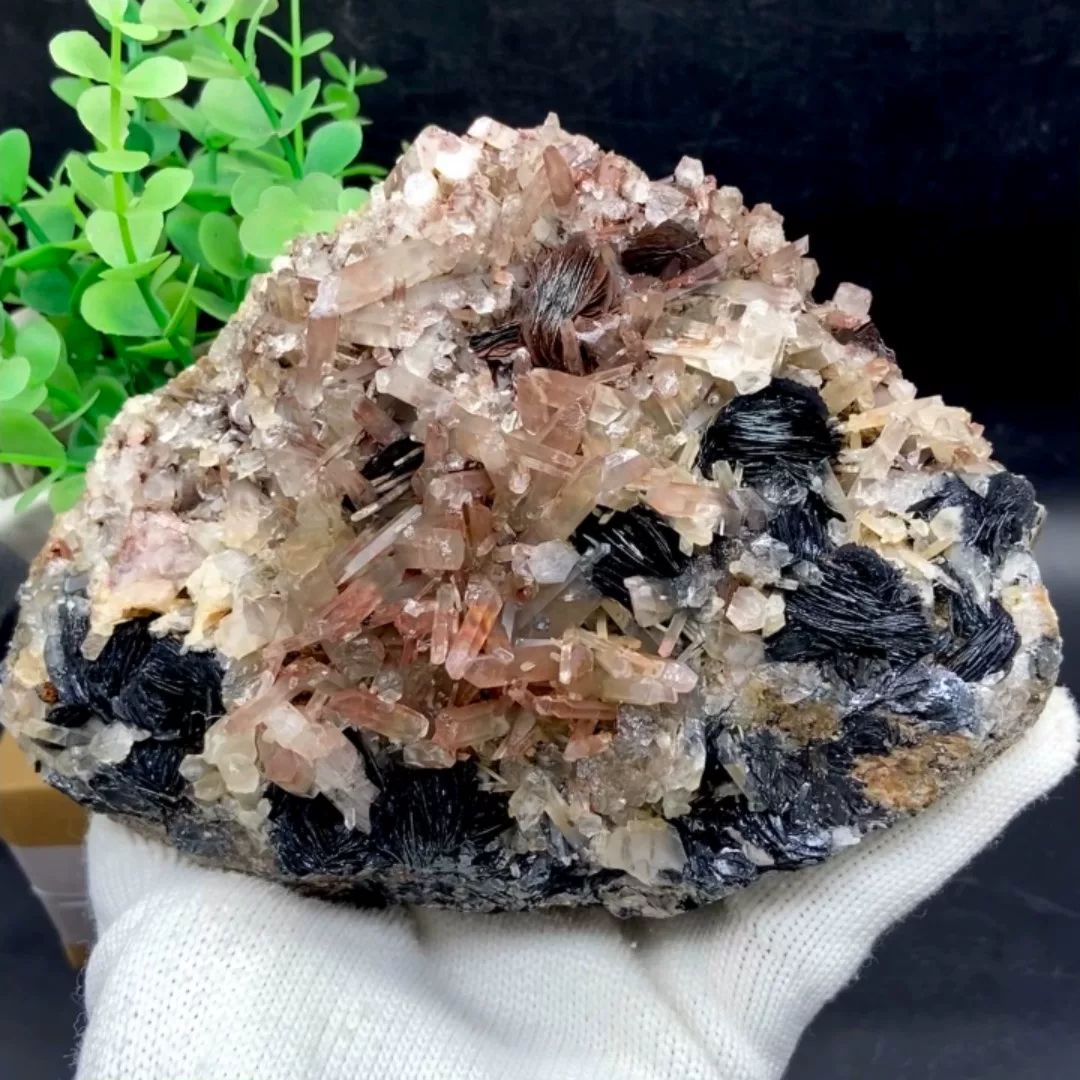
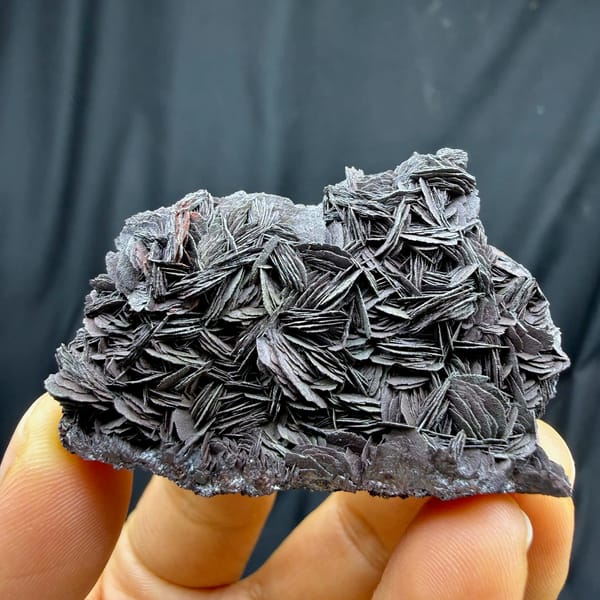
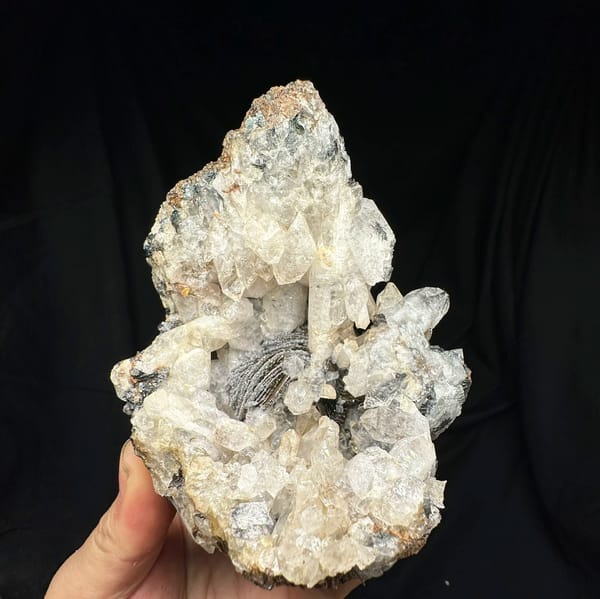
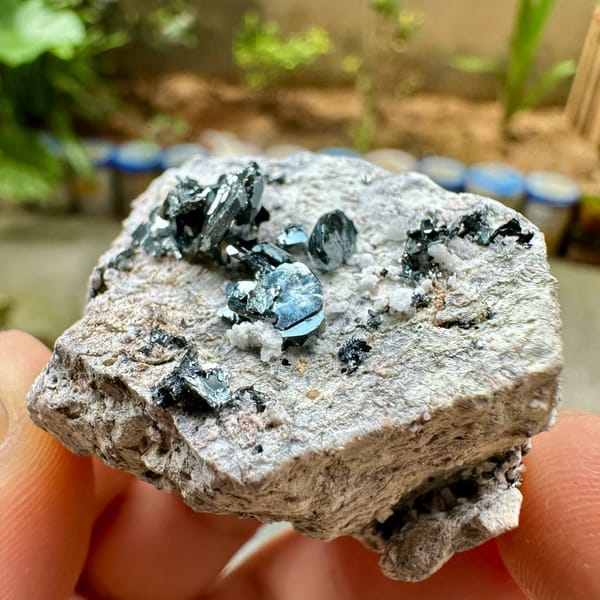
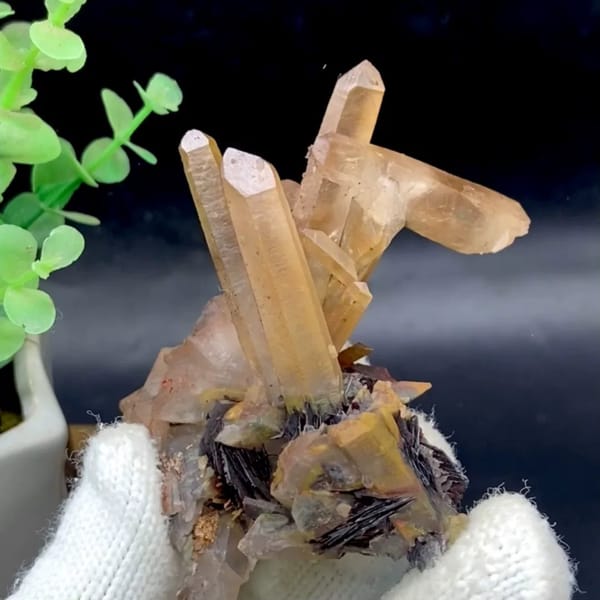
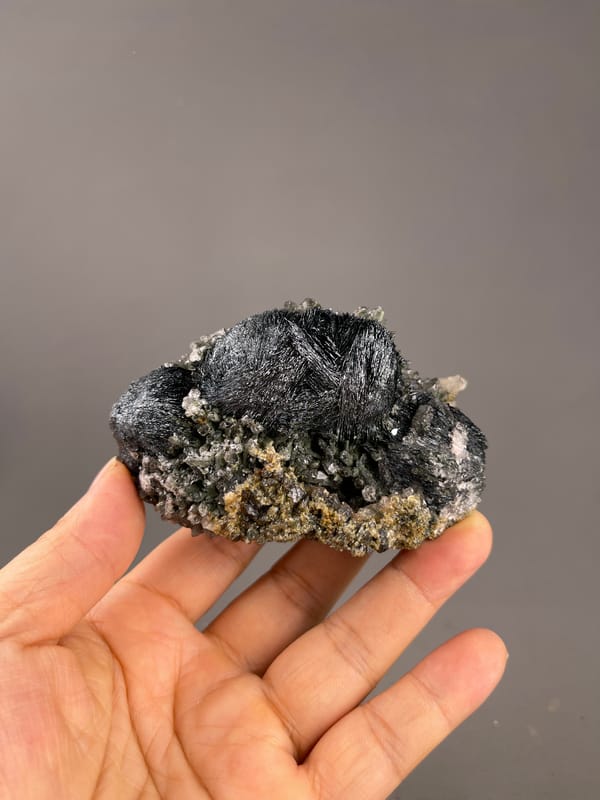
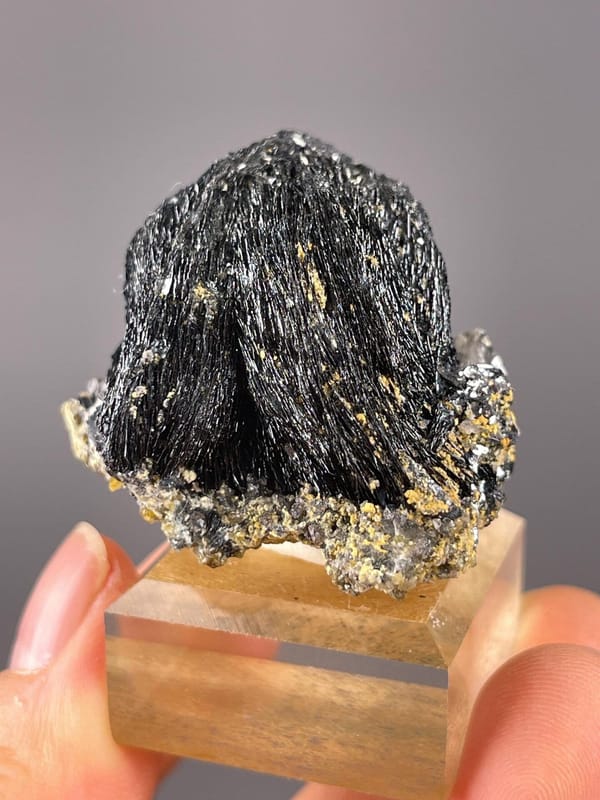
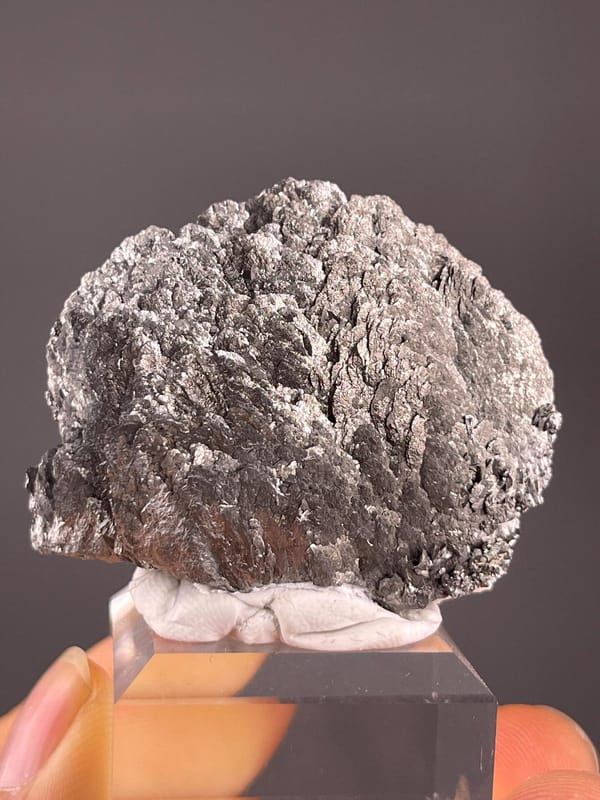
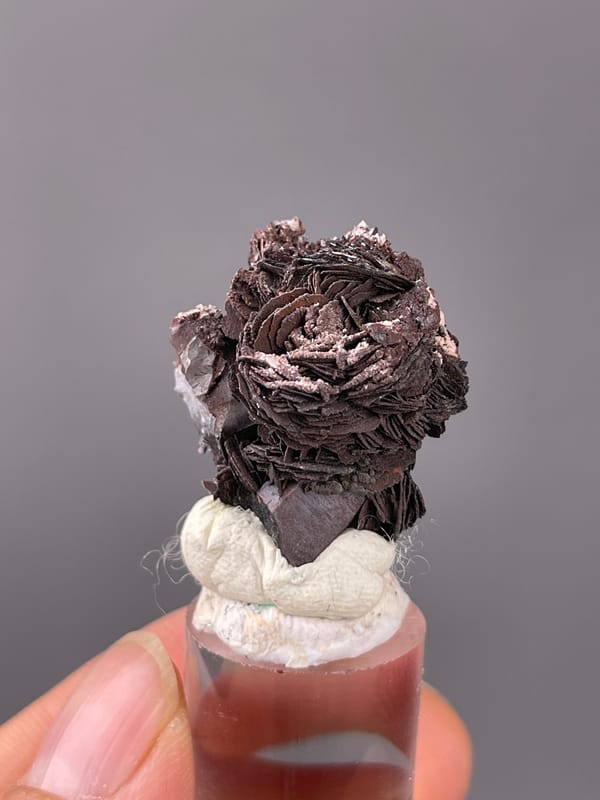
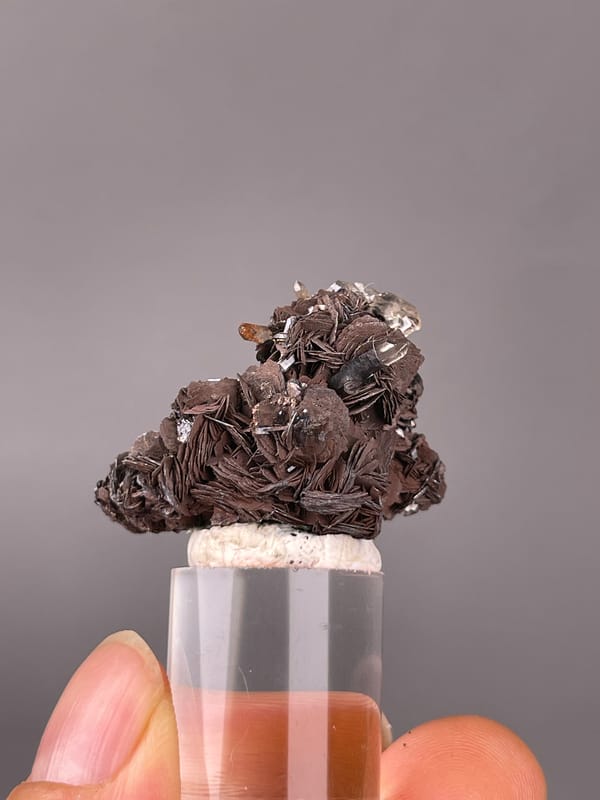
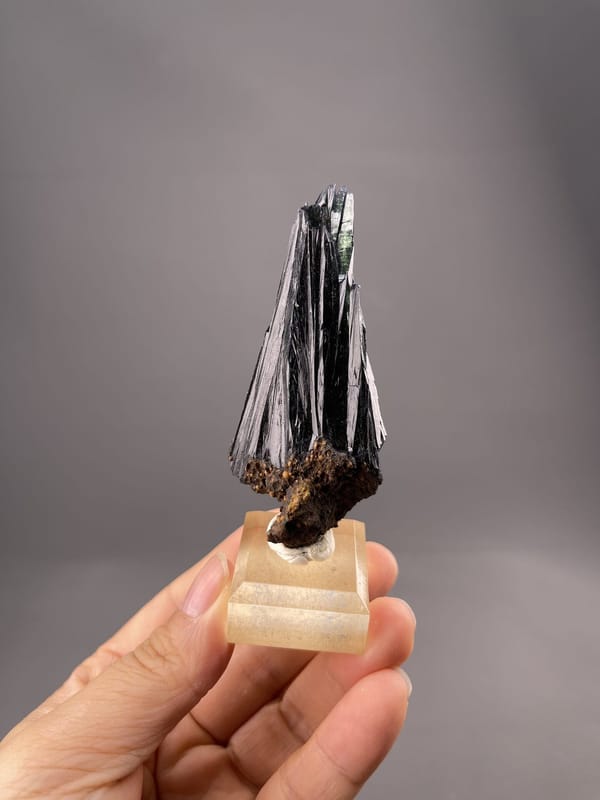
Collector hematite spans four looks: mirror-bright specular clusters of bladed crystals; martite — sharp octahedra where hematite has replaced earlier magnetite, keeping the shape while changing the species; botryoidal kidney ore; and iridescent surfaces where a thin oxide film splits the metallic luster into rainbow color. Unlike magnetite, hematite responds only weakly to a magnet — a quick bench test for the two.
Our sources
Our metallic material centers on Bayan Obo, Inner Mongolia — specular hematite from the famous Fe-REE deposit — plus Inner Mongolian martite octahedra and classic bright-luster crystals from Minas Gerais, Brazil.
What to look for
Luster is everything: the best specularite reads like polished steel. On martite, sharpness of the inherited octahedral form sets the grade.
From our inventory
See the Inner Mongolia locality page for the Bayan Obo material.
Hematite in China
One of China's most distinctive hematite occurrences is the giant Bayan Obo iron-and-rare-earth deposit in Inner Mongolia, a source of bright specular hematite — mirror-lustred plates and rosettes of metallic grey crystals — that reaches collectors alongside the deposit's many rare-earth and fluorite minerals.
About Hematite
Hematite is classified as an oxide mineral in the corundum group (hematite subgroup) and has the chemical formula Fe2O3. It crystallizes in the trigonal system and has a distinctive metallic presence in any collection. Its combination of structural character and global distribution make it a recognized species in both systematic and aesthetic collections.
Identification & care
Hematite typically forms tabular, platy (specularite), rosette-like (iron rose), botryoidal (kidney ore), micaceous (micaceous hematite), massive, earthy (ochre, red ochre). Its color range is broad, including steel-grey, black, reddish brown, and earthy varieties red to brick-red. The luster is metallic, submetallic, earthy, the streak is reddish brown, and specimens are typically opaque; thin flakes may be translucent reddish. The fracture is conchoidal, uneven, which is one of its key identifying features.
Collector context
How it forms
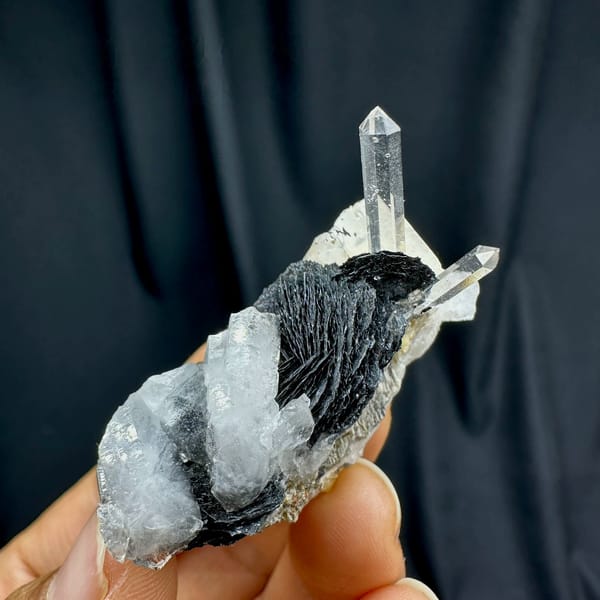
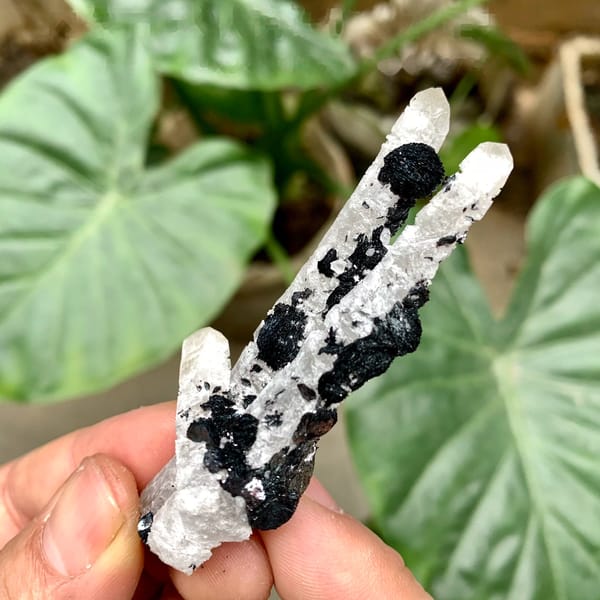
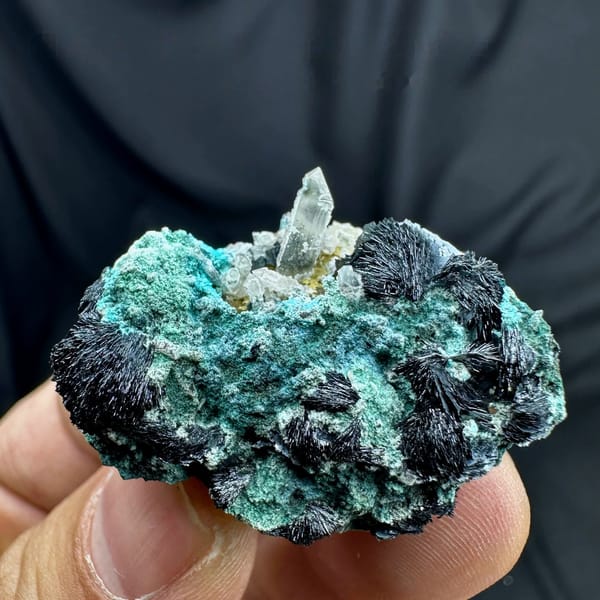
In terms of geology, Hematite forms in extremely widespread — banded iron formations (bif), sedimentary iron ore, hydrothermal veins, volcanic fumaroles, metamorphic rocks; as a secondary alteration product of iron-bearing minerals. It is commonly found in association with magnetite, goethite, pyrite, rutile, quartz, calcite, siderite, ilmenite.
Classic Chinese localities
Huanggang Fe-Sn deposit is an important Chinese source for the species.
Why collectors care
Collectors pursue Hematite for the clarity of its crystal form and, in good material, saturated color that reads instantly across a display case. A well-terminated hematite on clean matrix photographs well, identifies quickly, and anchors a cabinet piece. Top Chinese specimens over the last two decades have reset the bar for what hematite looks like at collector grade.
What affects value
Value in Hematite is assessed, in typical order of weight, against: (1) locality provenance; (2) size relative to the species norm; (3) crystal form and termination sharpness; (4) color saturation and zoning; (5) transparency and internal clarity; (6) matrix quality and aesthetic balance; (7) condition (absence of damage, chips, or repair). Cleaning quality and verified locality documentation act as multipliers across the above.
Naming history
Hematite is named for blood: Greek haima. Not for the mineral's appearance — hematite crystals are usually black or steel-grey — but for its streak. Drag any hematite across unglazed porcelain and it leaves a distinct red-brown line, which is still the fastest field identification there is, and which made it humanity's original red ochre pigment.
Frequently asked questions
What is Hematite?
Hematite has the chemical formula Fe2O3, crystallises in the Trigonal system, has a Mohs hardness of 5–6.5. Hematite is an oxide mineral recognized among collectors for its crystal form and distribution, with several world-class Chinese localities.
What is the chemical formula of Hematite?
The chemical formula of Hematite is Fe2O3.
What crystal system does Hematite belong to?
Hematite crystallises in the Trigonal crystal system.
Where is Hematite found?
Notable localities for Hematite include Bayan Obo, Inner Mongolia.
Is Hematite rare?
As a collector mineral, Hematite is generally considered common.
Related minerals
Available Hematite specimens
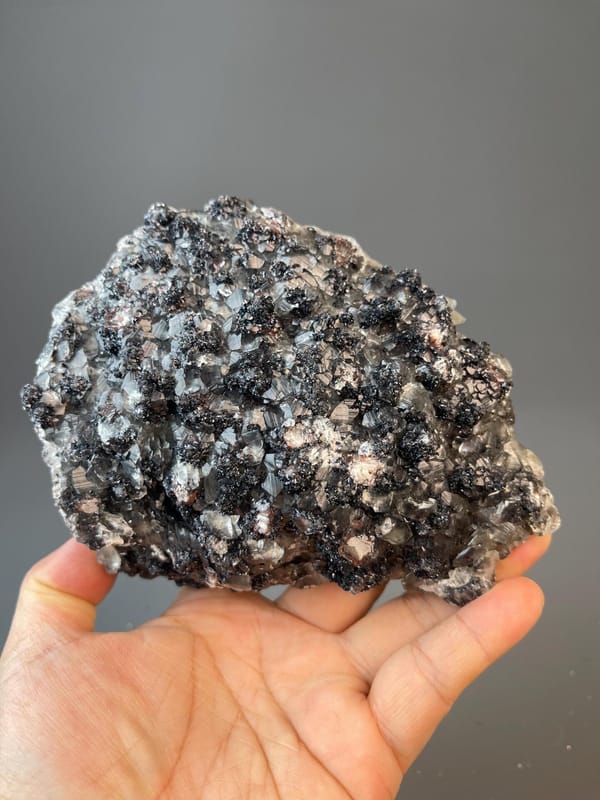
Recently sold Hematite specimens
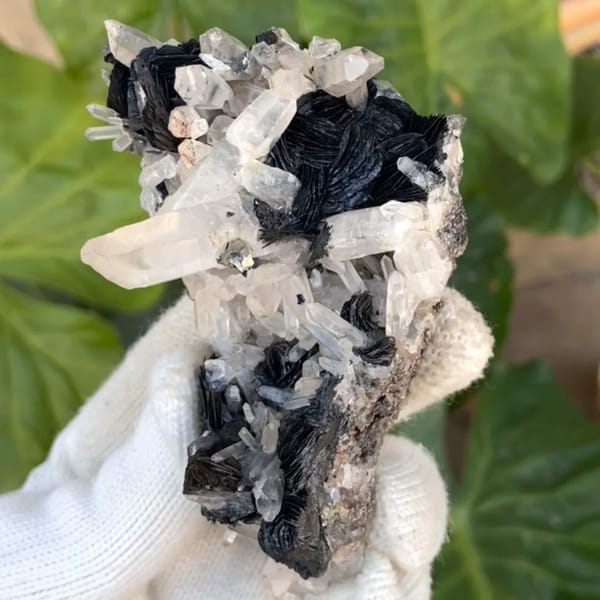
External references
Hematite on Wikidata.