
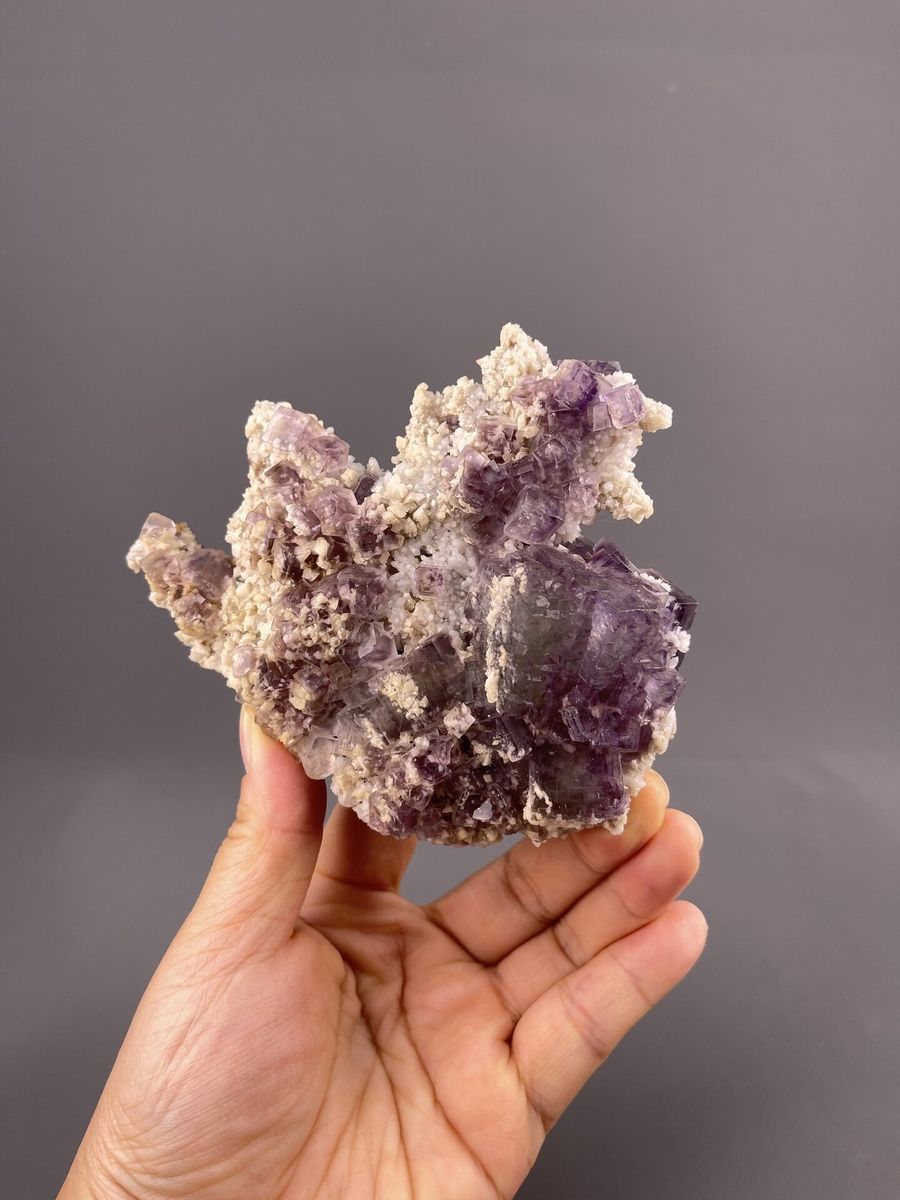
Why Chinese fluorite is a collector favorite
Since the 1990s, Chinese localities have produced fluorite that reset collectors’ expectations for the species — gemmy cubes in saturated purples and greens, dramatic color zoning and phantoms, and aesthetic fluorite-on-quartz combinations.
For a collector, Chinese fluorite offers an unusually broad range: affordable, colorful thumbnails for beginners all the way up to large cabinet showpieces, with well-documented localities and recognizable regional styles in between.
Colors and crystal forms
Color: purple (from lilac to deep violet) and green (pale to rich) are the most common and characteristic, with blue, colorless, and bi-colored material also appearing. Many specimens show color zoning or concentric phantoms — growth zones visible inside the crystal — which collectors prize.
Form: the cube is the dominant habit, sometimes modified by octahedral or other faces; octahedral fluorite also occurs. Fluorite frequently grows on or with quartz, and the contrast between glassy colored fluorite and a pale quartz bed is part of the appeal.
The classic Chinese fluorite localities
Hunan Province is the heartland of Chinese fluorite. Yaogangxian is the benchmark, known for green and purple cubes and fluorite-on-quartz. Shangbao is famous for green and cubic fluorite, and Xianghualing for fluorite alongside tin minerals. Other provinces — including Fujian and Jiangxi — also produce fine fluorite with their own characteristics.
Learning these regional "styles" helps you recognize material and judge whether a specimen’s appearance fits its stated locality. The links below go to detailed pages for each.
What to look for — quality factors
Color: saturation and appeal lead. Vivid, even color or attractive zoning/phantoms beats pale, washed-out material.
Transparency and luster: the best fluorite is gemmy and glassy, letting light into the crystal. Tilt the piece to see how the faces shine.
Crystal form: look for sharp, complete cube edges and corners.
Aesthetics and contrast: how the fluorite sits on its matrix or quartz, and how strong the color contrast is. A balanced, naturally-positioned piece displays best.
Condition — fluorite is soft, so check edges
Fluorite is only about 4 on the Mohs scale and has perfect octahedral cleavage, so it chips and cleaves more easily than quartz and many other species. Condition is therefore a bigger factor than usual.
Check the crystal edges and corners closely for chips, bruises, or cleaved faces — especially on the front display side. Ask the seller directly about any damage or repair a photo might hide. A small contact on the back matters far less than a cleave across a front face. Because fluorite is fragile, also confirm careful packing for shipping.
Sizes and what drives price
Chinese fluorite is available from thumbnails to large cabinet plates. Price is driven by color quality, transparency, crystal sharpness, size, aesthetics, and condition together — not by size alone.
A small, gemmy, vividly-colored, undamaged piece can be more desirable than a larger but duller or chipped one. Decide what you value — a single perfect crystal, a dramatic fluorite-on-quartz combination, or a large display piece — and buy the best condition within your budget.
How to start buying
Compare a few specimens side by side — color, transparency, sharpness, and condition become much clearer in comparison. Read the locality pages for context, keep the locality information with the specimen, and prioritize condition and color over sheer size.
If a particular locality appeals to you, the focused Yaogangxian guide goes deeper. The links below take you to the fluorite reference page, the main localities, and the specimens we currently have in stock.
The classic Chinese fluorite localities
Each links to a detailed locality page — geology, regional style, and in-stock specimens.
- Yaogangxian Mine, HunanThe benchmark — green & purple cubes, fluorite-on-quartz.
- Shangbao Mine, HunanGreen and cubic fluorite.
- Xianghualing Mine, HunanFluorite with tin minerals.
- Hunan ProvinceThe fluorite heartland.
- Fujian ProvinceFine fluorite and pyrite.
- Guizhou ProvincePurple, etched and geometric fluorite records.
- Jiangxi ProvinceDistinctive Chinese fluorites.
Go deeper
Frequently asked questions
What colors does Chinese fluorite come in?
Purple (lilac to deep violet) and green (pale to rich) are the most common and characteristic, with blue, colorless, and bi-colored material also appearing. Color zoning and internal phantoms are common and often prized.
Which Chinese localities are best for fluorite?
Hunan Province is the heartland: Yaogangxian (green and purple cubes, fluorite-on-quartz), Shangbao (green and cubic fluorite), and Xianghualing (fluorite with tin minerals). Fujian and Jiangxi also produce fine fluorite with their own characteristics.
Is Chinese fluorite fragile?
Yes, relatively. Fluorite is about 4 on the Mohs scale with perfect octahedral cleavage, so it chips and cleaves more easily than quartz. Inspect edges and corners for damage, ask about repair, and ensure careful packing for shipping.
What makes one Chinese fluorite better than another?
Color quality, transparency and luster, crystal sharpness, aesthetics (including fluorite-on-quartz contrast), size, and condition together determine quality. A small, gemmy, undamaged, vividly-colored piece can outrank a larger but duller or chipped one.