Malachite

Crystal system · Monoclinic

Malachite is a carbonate mineral recognized among collectors for its crystal form and distribution, with several world-class Chinese localities.
Hydrous copper carbonate, banded green; monoclinic.

About Malachiteextended article

China-iconic

China is a defining locality for Malachite · 孔雀石. See the Chinese collector page →

Save to favoritesview your list
Typical Price Tiers (per piece)
Entry
$20+
Mid-tier
$150+
Premium
$1,500+
Investment
$8,000+
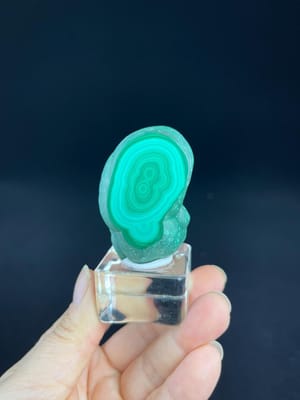
Velvet botryoidal / banded patterns. Russian Urals historic premium.
Approximate retail prices. Wholesale + private sale typically 40-60% of retail. Auction premium 10-25%. For investment-grade purchase steps, see the investment checklist.
Crystal Structure
Monoclinic Cu₂(CO₃)(OH)₂.
External databases provide CIF (Crystallographic Information File) downloads + interactive 3D viewers. AMCSD: American Mineralogist Crystal Structure Database (free, RRUFF-hosted). COD: open community-curated database.
Elemental Composition (by mass)
ElementMass %Visual
Cu Copper57.48%
O Oxygen36.18%
C Carbon5.43%
H Hydrogen0.91%
Computed from simplified end-member formula. Solid-solution series, water content, and trace substitutions cause real-world variation.
Reference Resources
IMA Abbreviation (Whitney-Evans 2010)
Mlc
→ Malachite
Cu carbonate
Standard symbol from American Mineralogist (Whitney & Evans, 2010). Used in thin-section labeling, phase diagrams, and IMA-style species records.
⏳ Long-term Aging & Care Timeline
stable
Trigger:
Intervention: Generally very stable. Surface dulling from oils possible; wipe with soft dry cloth.
Pronunciation
/ˈmæləkaɪt/
MAL-uh-kite
Greek malache (mallow)
Lapidary & Faceting Recommendations
Recommended cut:
cabochon
Also seen:
free-form, sphere
Typical yield:
60% of rough
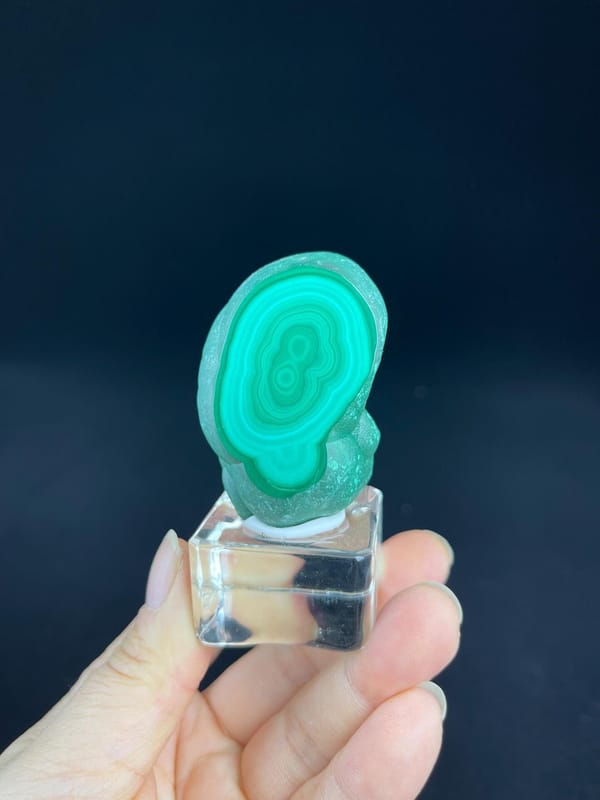
Banded structure shown by orientation. Often cut as spheres or eggs to emphasize patterns.
⚠ Safety & Handling
acid-sensitivehigh
Carbonate — dissolves in acid. Also dust contains Cu which is mildly toxic.
Handling: No acids. Wash hands after handling (Cu).
Information provided in good faith. Consult local hazmat regulations for transport and disposal. Severely hazardous specimens may require special storage cabinets.
UV Fluorescence
SW (254 nm)
none
LW (365 nm)
none
Cu carbonate; Cu quenches.
SW = shortwave (germicidal lamp). LW = longwave (blacklight). Response varies with locality, trace impurities, and treatment.
Pseudomorph Relationships
Replaced by — this mineral commonly becomes:
Azurite replacement (rare)
Reverse direction — rare, occurs when carbonate CO₂ partial pressure increases. Tsumeb has documented examples.
Tsumeb, Namibia.
Chrysocolla replacement
Hydrothermal silicification of malachite produces blue-green chrysocolla.
Eilat, Israel; Chile.
Replaces — this mineral is often a pseudomorph after:
Azurite replacement
Azurite is the less stable Cu carbonate; over geological time it transforms to malachite while preserving azurite's tabular habit.
Tsumeb, Bisbee, Chessy.
Cuprite replacement
Reverse direction — oxidation of cuprite to Cu carbonates preserves cuprite's octahedral form.
Africa, Mexico.
A pseudomorph (Greek "false form") is a mineral with the external shape of another species — the chemistry has changed but the crystal habit is inherited. › Full catalogue
Tenacity
Behavior:
brittle
Under stress:
Cleaves; fibrous splits
Fibrous habit may split rather than cleave.
Luster
vitreoussilky
Crystalline vitreous; fibrous habit silky.
Color Cause (Chromophore)
Chromophore:
Cu²⁺
Mechanism:
idiochromatic in copper carbonate
Color produced:
green
Cu²⁺ at 0.4% concentration would give the same color — but malachite IS a Cu mineral.
Notable localities (coordinates)
All localities and full GeoJSON available at /wp-json/mmb/v1/localities-geo
Diaphaneity (Transparency)
translucent-to-opaque
Fibrous habit translucent at edges.
Type Locality
(ancient — Greek "malache") — Mediterranean
Source: Theophrastus
Magnetism
Category:
weakly paramagnetic
Test result:
Slight pull (Cu)
Cu carbonate — Cu²⁺ paramagnetic.
Test with rare-earth magnet (N42 or N52 neodymium). Suspend specimen on thread for sensitive paramagnetic detection. Diamagnetic minerals are weakly repelled (visible only with strong magnets like bismuth).
Diagnostic Field Tests
HCl test→ Vigorous effervescence + green solution
Carbonate fizz; green dissolves into HCl.
Hot needle→ No reaction
Confirms mineral vs plastic imitation (which melts/smokes).
⚠ Use dilute HCl (~10%) only on inconspicuous spots; rinse promptly. Smell-tests should be brief and ventilated. Taste-test ONLY halite/sylvite — never lead, arsenic, or sulfur minerals.
Specific Gravity
3.60–4.05
g/cm³
medium
Copper carbonate.
For comparison: water = 1.00, glass ≈ 2.5, quartz = 2.65, corundum ≈ 4.00, galena ≈ 7.50, gold ≈ 19.3.
Streak Test
pale green
Distinct from chrysocolla (bluer streak).
Streak = color of the powdered mineral. Drag specimen across unglazed white porcelain plate (Mohs 6.5). For minerals harder than the plate, crush a small flake into powder and observe color.
Synthetics & Imitations
Lab-grown methods
Hydrothermal 1994 · Russian (UDSR)
Lab malachite with synthetic banding; trade-marketed for jewelry.
Common imitations
Dyed howlite / plastic
Common cheap imitation.
Geological Setting
Environment:
supergene
Host rock:
oxidized copper deposit
Companions:
Supergene enrichment of primary copper sulfides. DRC Katanga, Russian Urals classic localities.
Care notesTolerates light water rinse if well-crystallized. Drilled cabochons can be polished. Full cleaning guide →
Formation eraSupergene oxidation; recent (Quaternary) on top of older Cu deposits.
Cleavage & Fracture
Cleavage:
perfect 1 perfect {201}
Fracture:
subconchoidal / fibrous
Fibrous habits split along fiber direction.
Market availability: Common
Widely available in most dealer stocks. Specimens span all price tiers.
Collector tier: Cabinet Classic
World-class display species — sought after for cabinet collections, well-documented localities, frequent show-piece pieces.
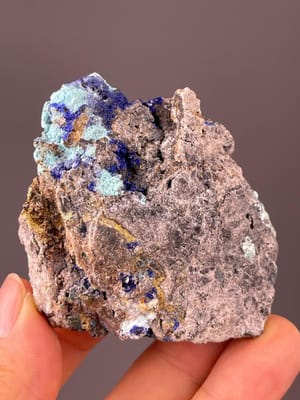
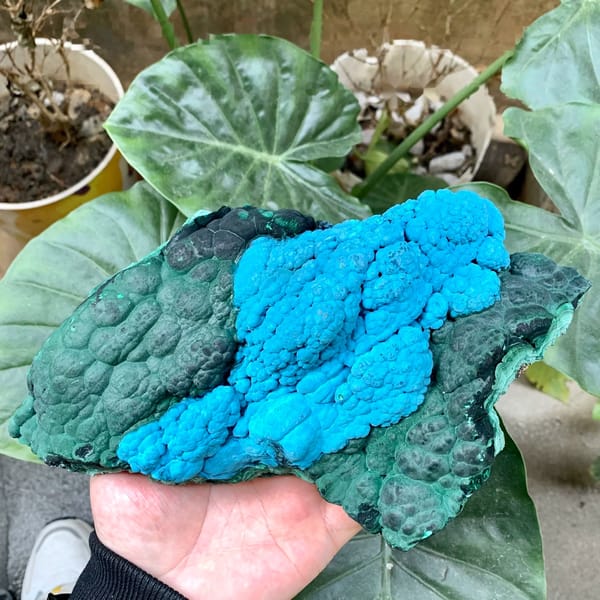
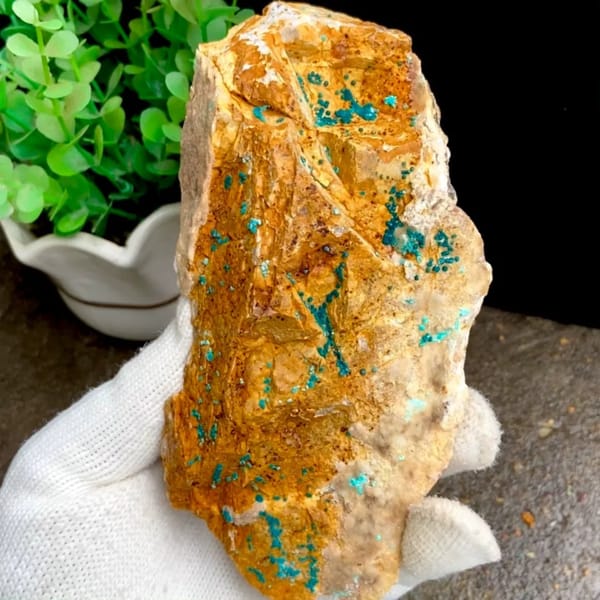
Often found withAzurite · Cuprite · Native copper · Chrysocolla
Mohs 3.5-4
Vickers (~) 200 HV
Knoop (~) 220 HK
Nickel–Strunz 5.BA.10
Dana 16a.03.02.01
Geological setting
Skarn
Element composition by mass

Formula: Cu2(CO3)(OH)2 · molar mass: 221.11 g/mol

Cu 57.48%
O 36.18%
C 5.43%
H 0.91%

Computed from atomic weights (IUPAC 2021). Site-occupancy groups (Fe,Mn) split equally.

Mohs Hardness 3.5-4

Malachite sits at 3.5-4 on the Mohs scale — can be scratched by a steel knife.

🔊 Read aloud
Colors:
Streak
Pale green
Crystal system
Monoclinic
Pronunciation/ˈmæləkaɪt/
Type localityBisbee, Arizona, USA / Ural Mountains, Russia
✓ I have this★ WishlistView my collection →

Discovery First described 1747

📇 Print ID card

CarbonatesCarbonates – Anhydrous
TL;DR · 1 min read
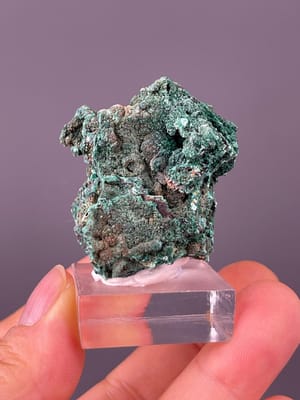
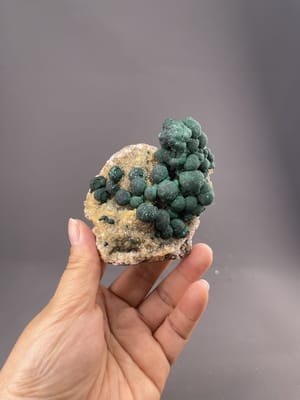
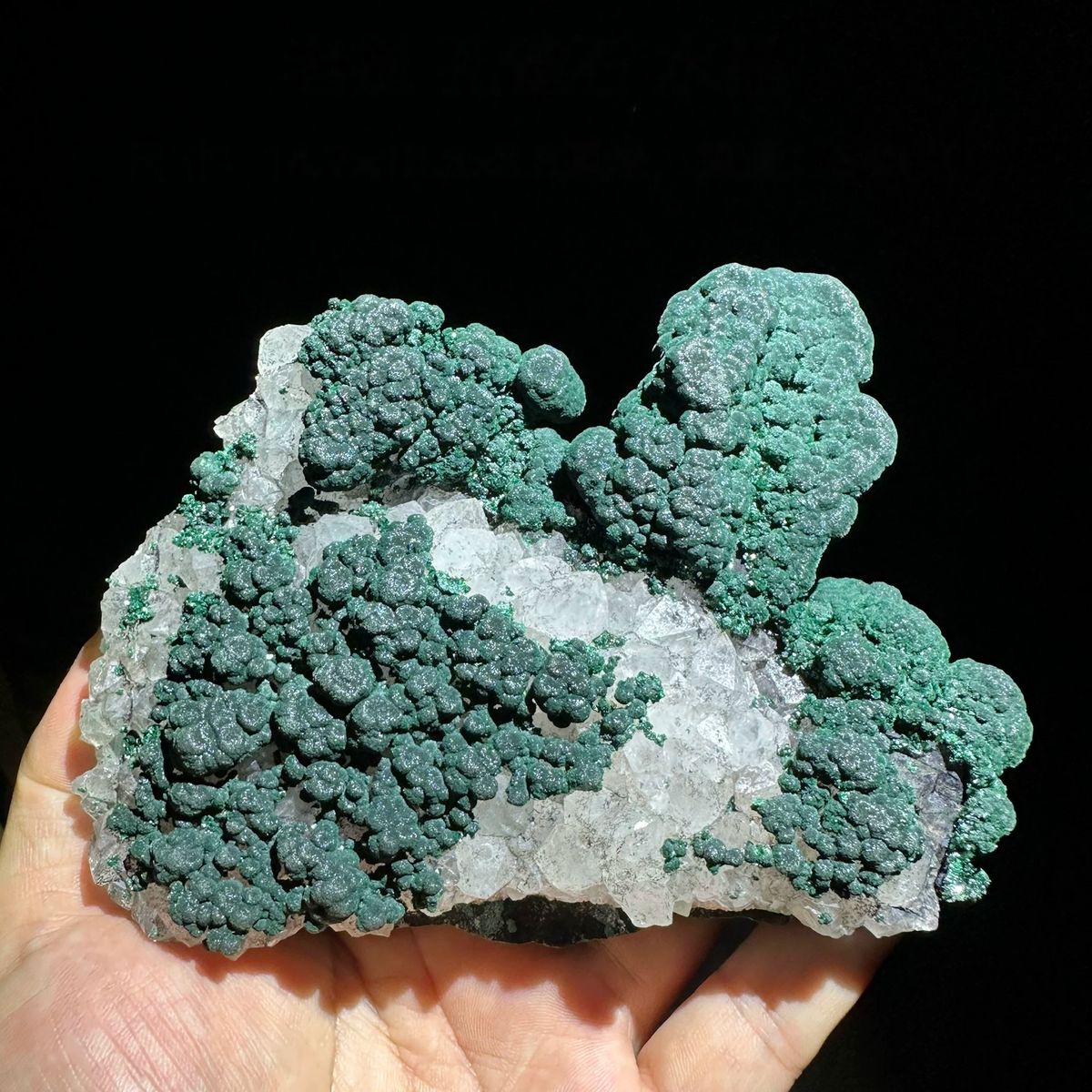
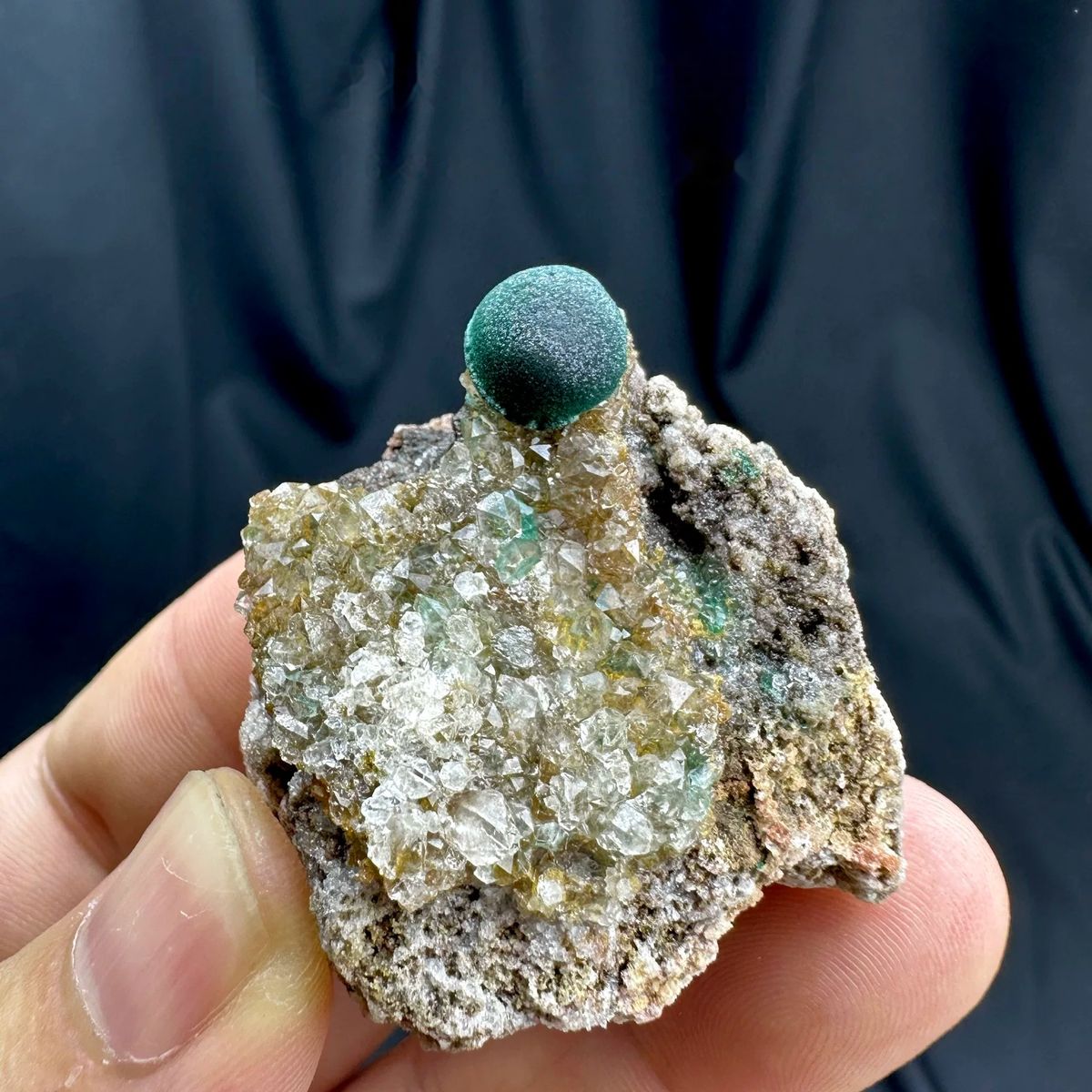
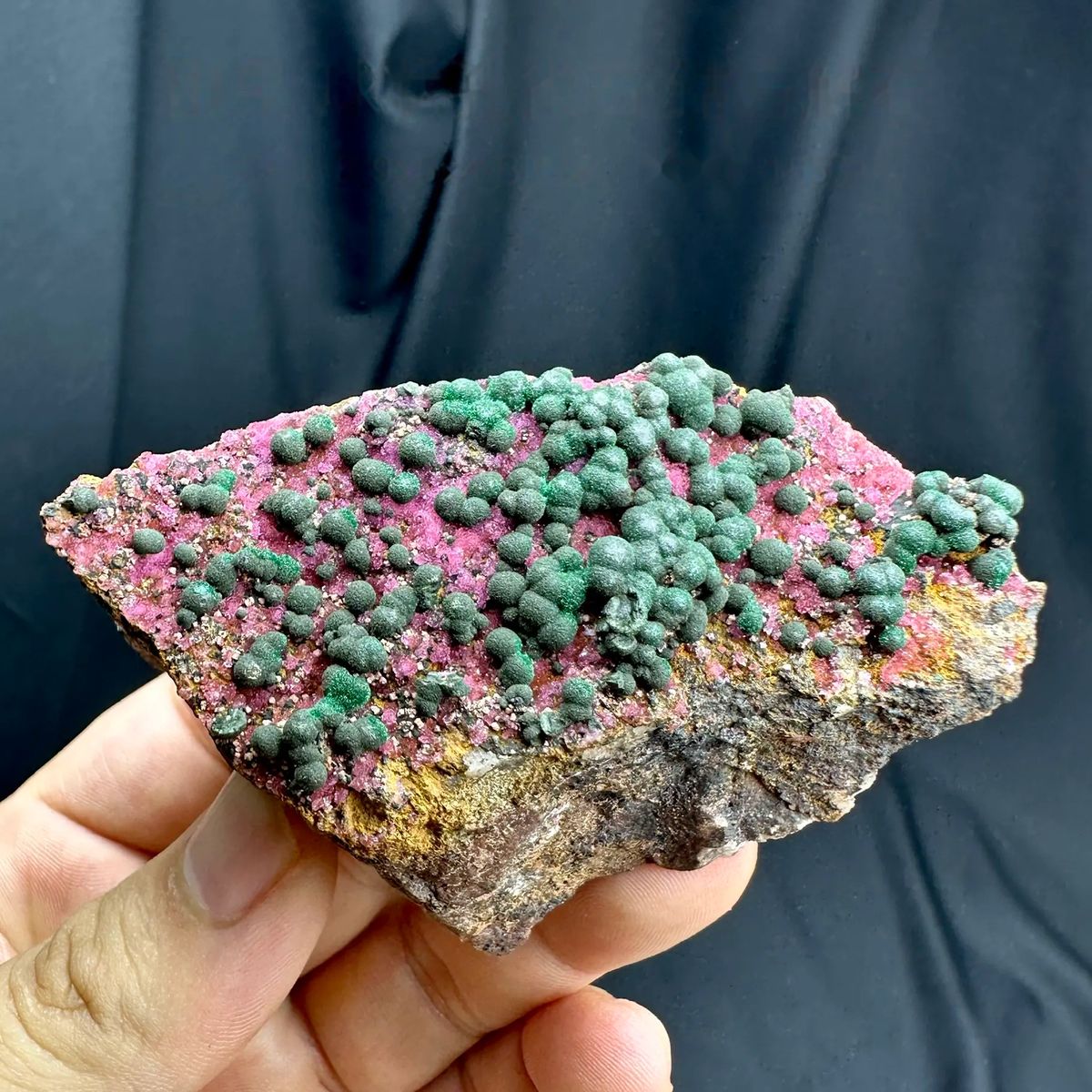
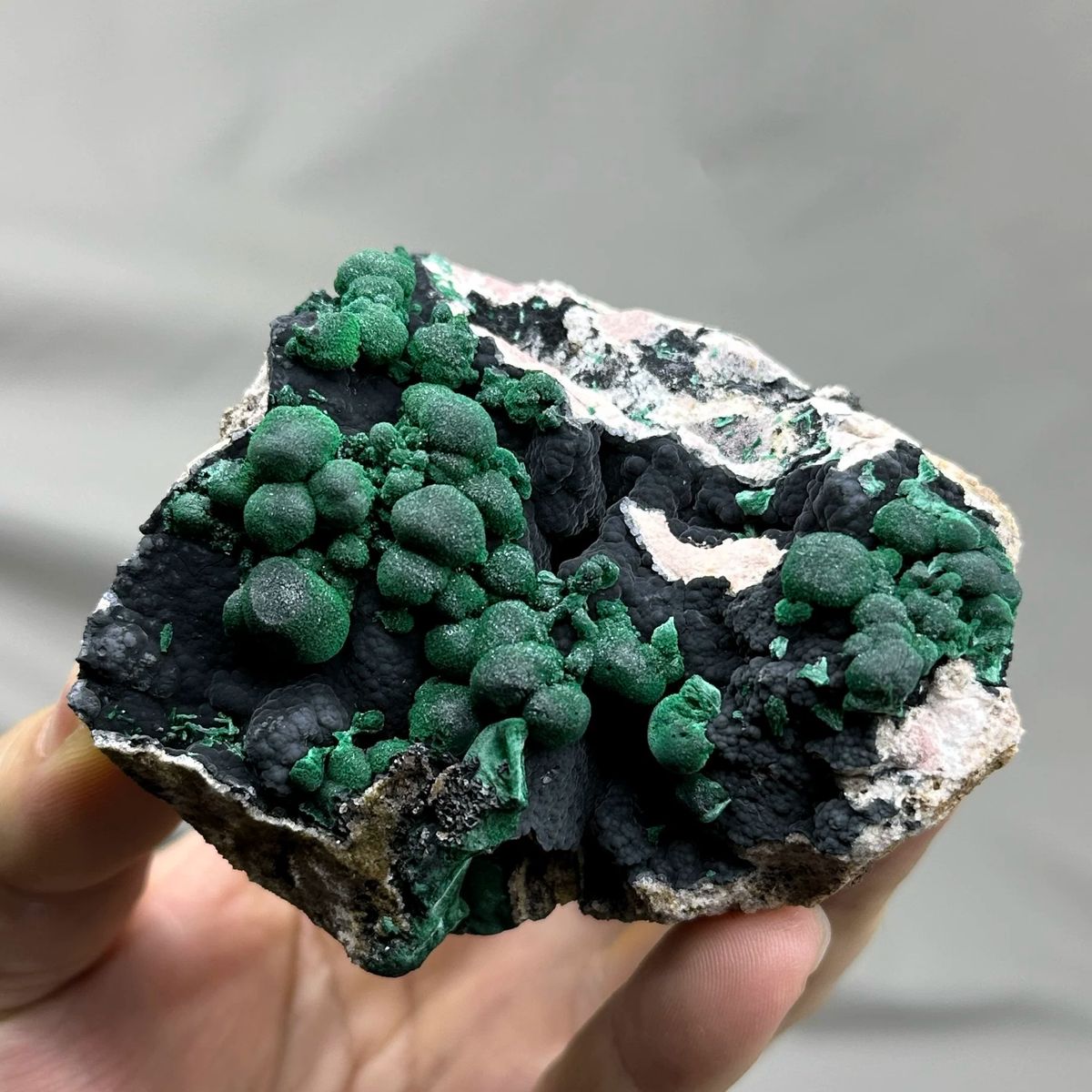
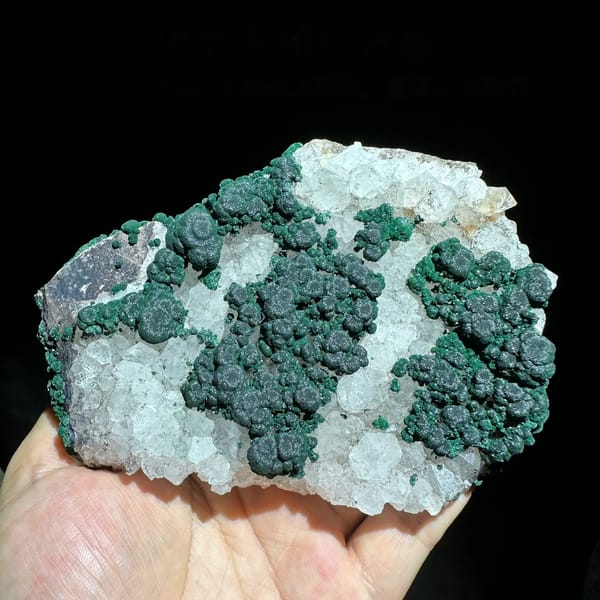
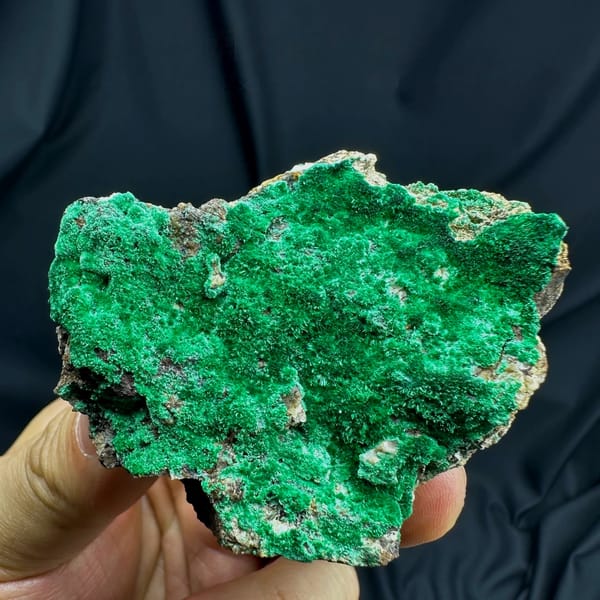
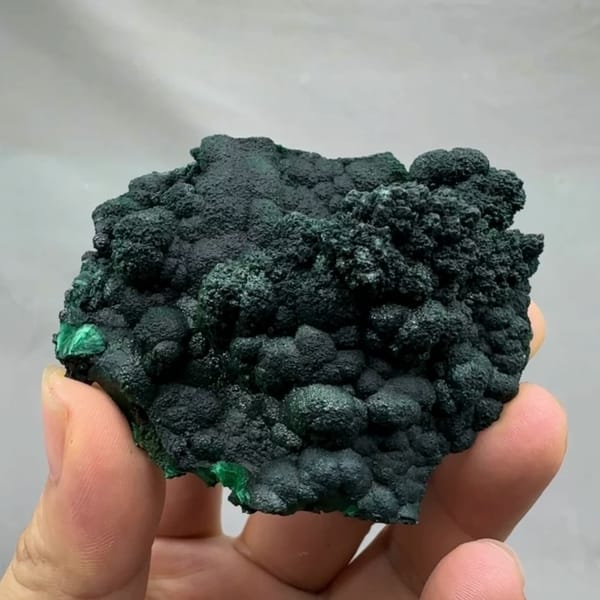
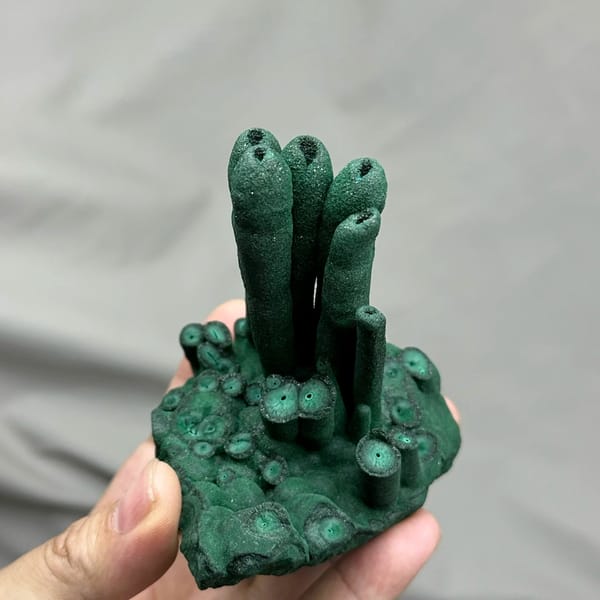
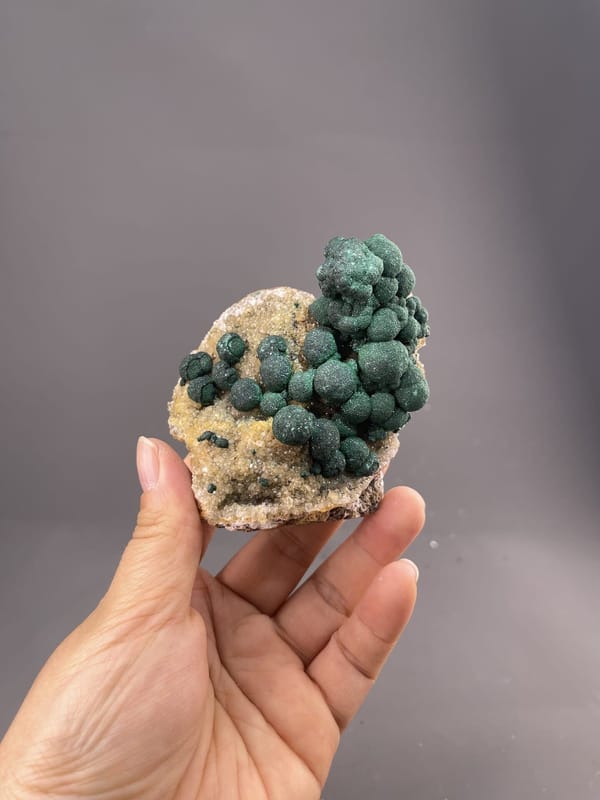
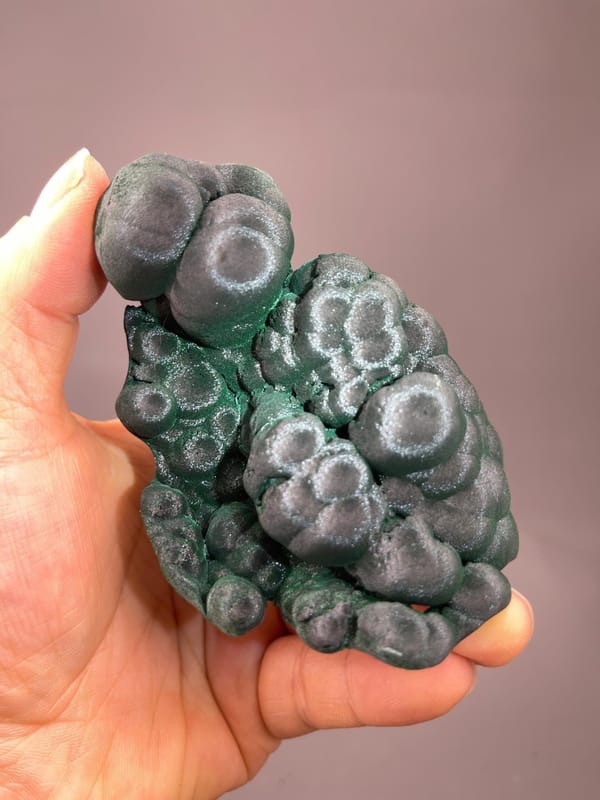
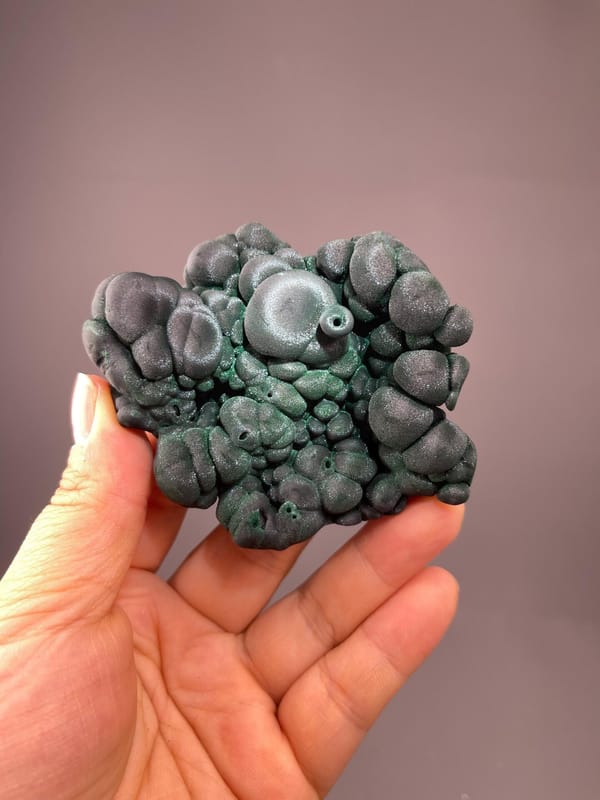
Malachite is a copper carbonate hydroxide and one of the most visually distinctive species in collecting – bright green botryoidal masses, banded slabs, and stalactitic clusters. It forms in the oxidized zone of copper deposits, almost always paired with its blue cousin Azurite (same elements, different hydration).
Text size:AAA

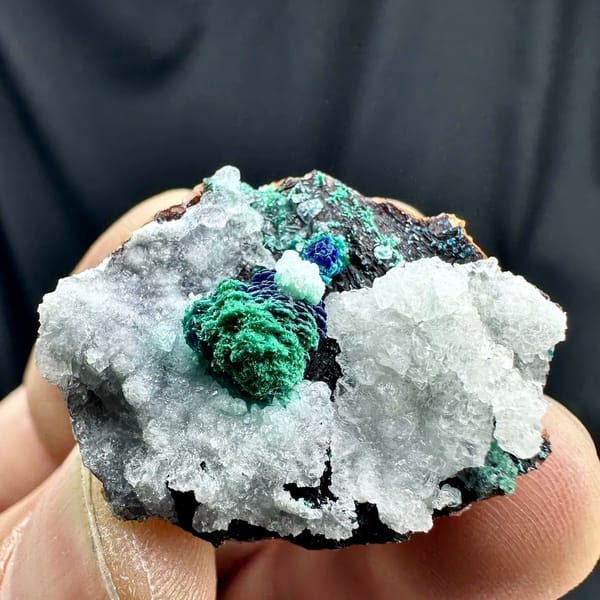
Malachite is a copper carbonate hydroxide and one of the most visually distinctive species in collecting – bright green botryoidal masses, banded slabs, and stalactitic clusters. It forms in the oxidized zone of copper deposits, almost always paired with its blue cousin Azurite (same elements, different hydration). Where Azurite is the upper-zone fresh signal, Malachite is the deeper-altered final phase. Russia's Tsar Hermitage carved entire columns from Ural malachite; ancient Egyptians ground it for green pigment.

Notable Varieties #

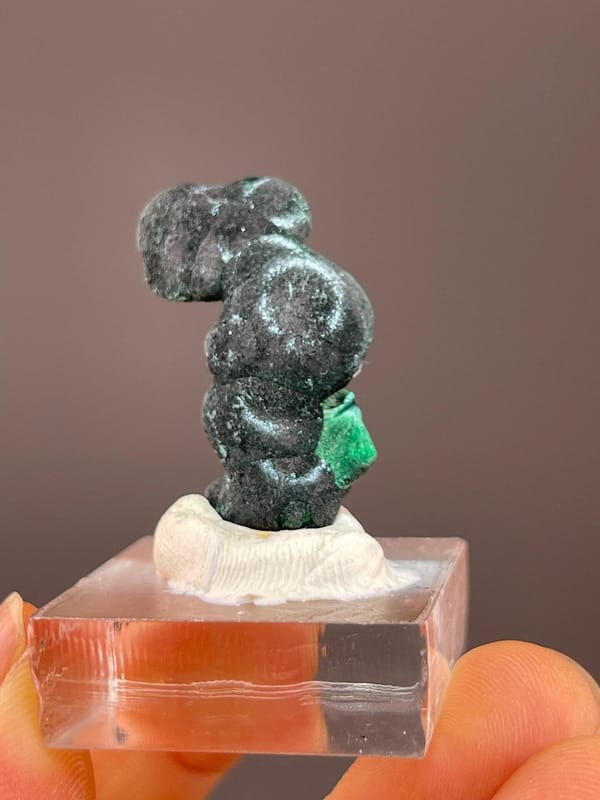
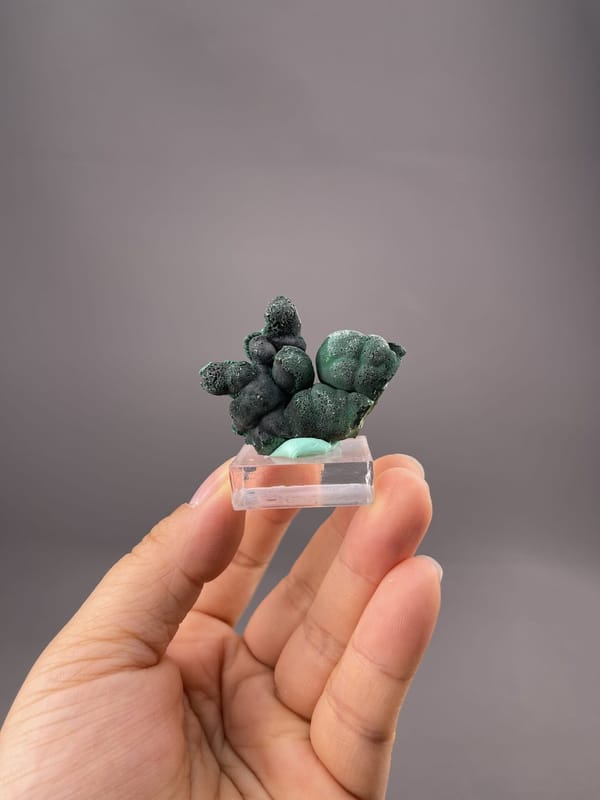
  • Botryoidal (most common collector form; "grape" textures)
  • Stalactitic (cave-formed columns and pendants)
  • Pseudomorph after Azurite (square crystals replaced by green – Tsumeb, Bisbee)
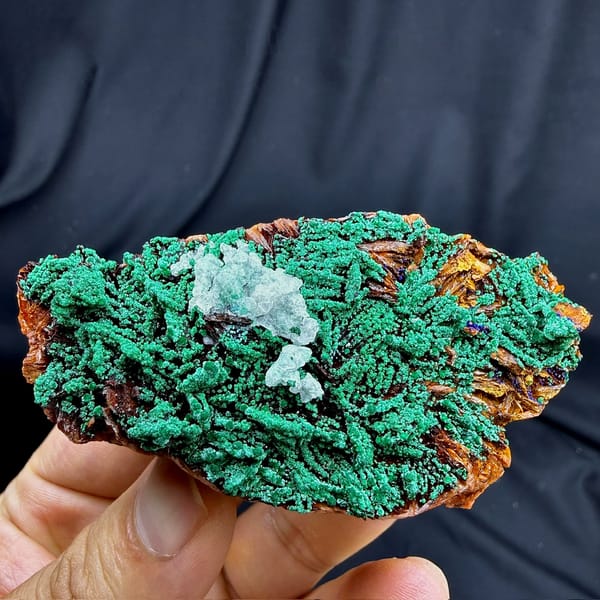
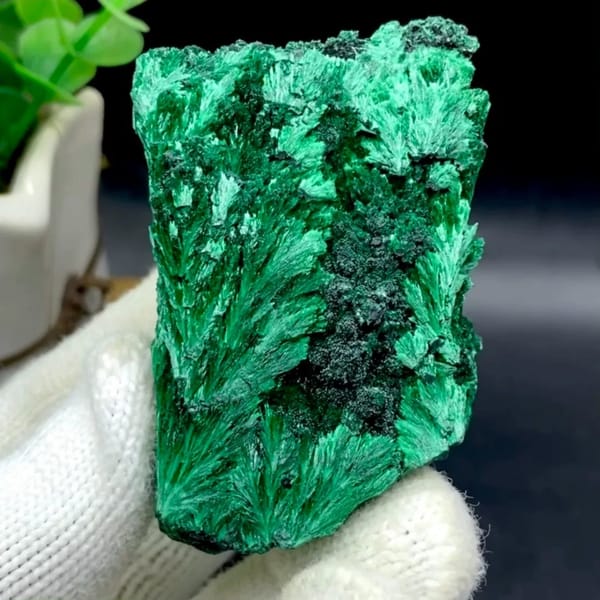
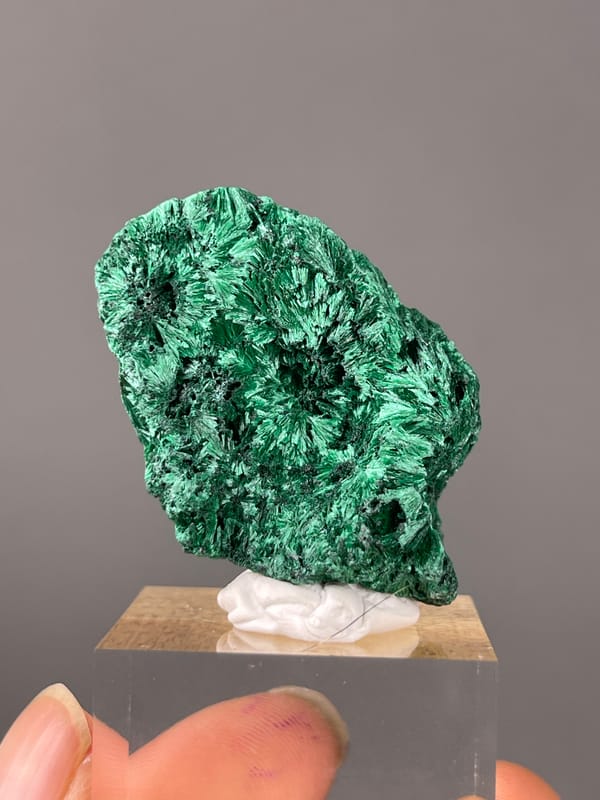
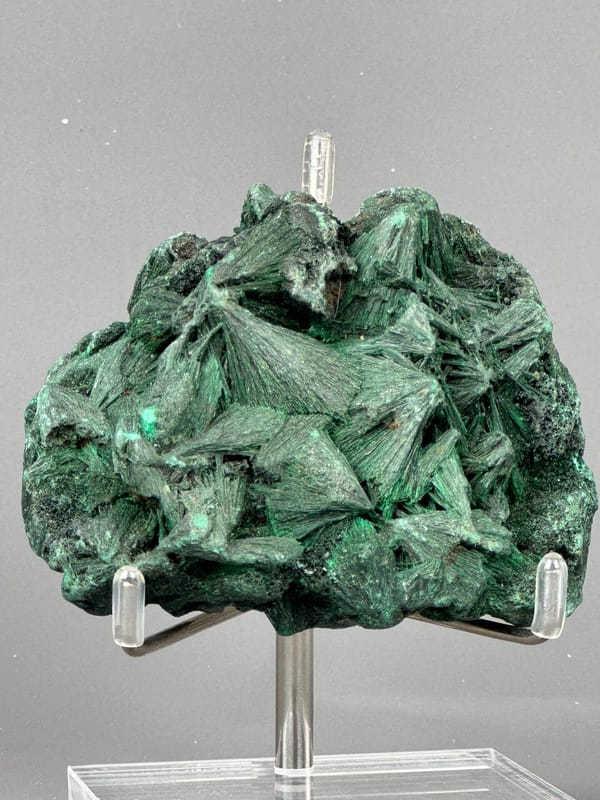
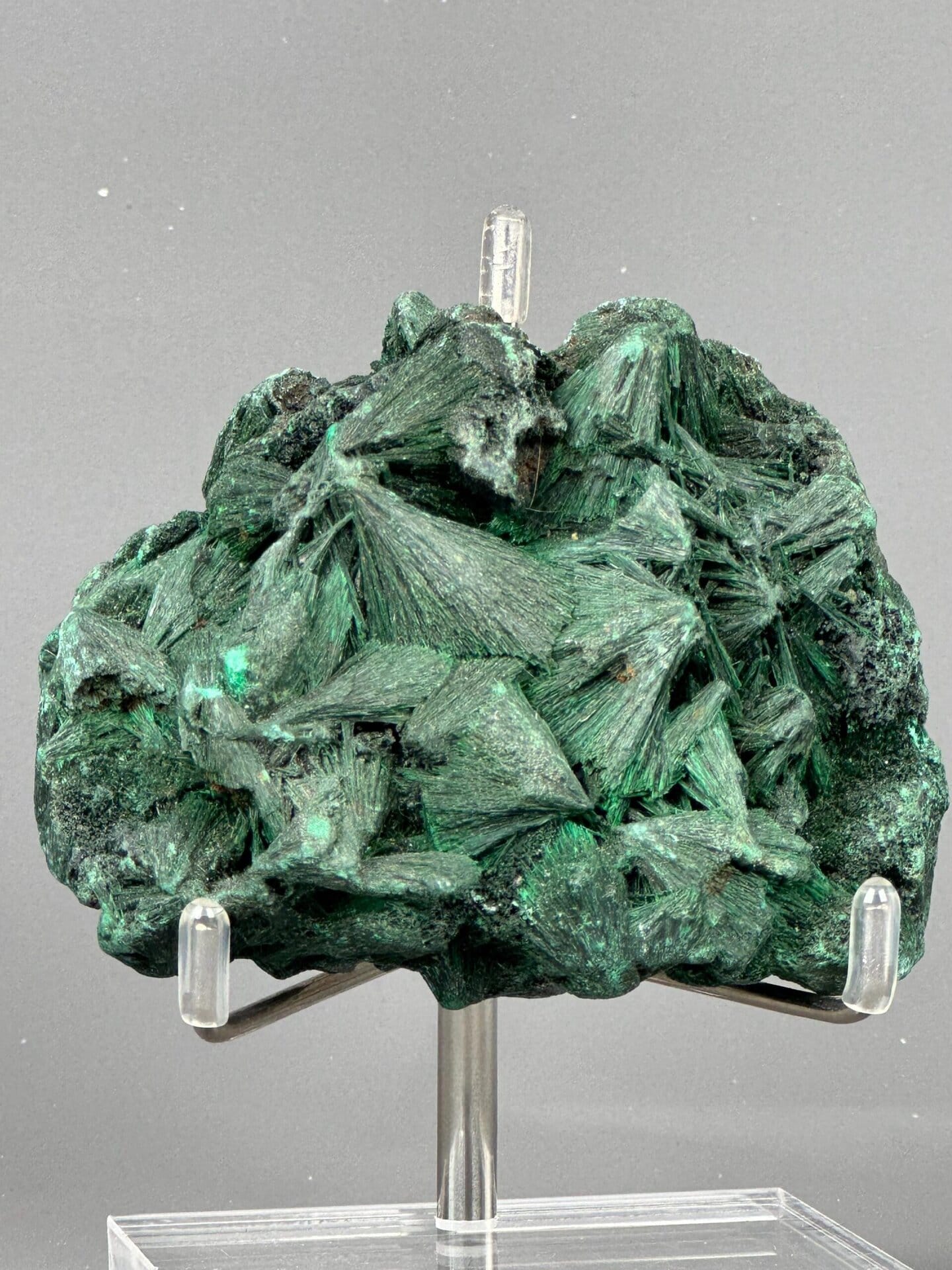
  • Plumose (fibrous radiating sprays)
  • "Azurmalach" (intergrowth with Azurite – dual color)

The Chinese Angle #

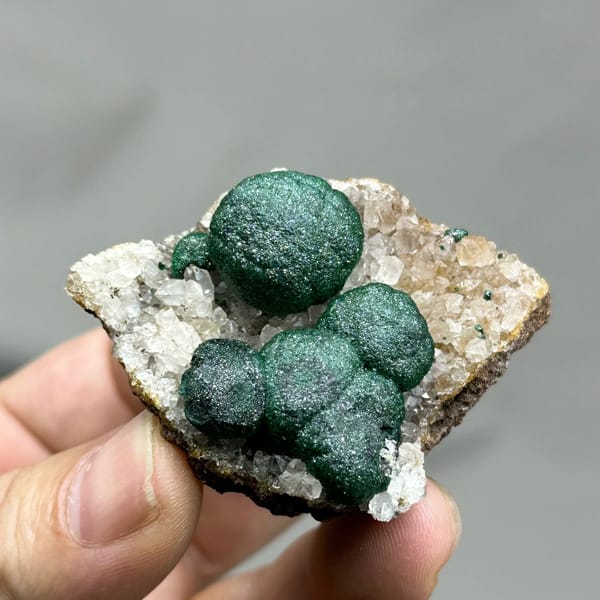
Yangchun in Guangdong produces some of the finest botryoidal Chinese malachite, with deep saturated green and well-formed spherical structures. Hubei (the same Cu-Fe skarn districts that produce Daye galena and pyrite) also yields collector malachite. Both pair frequently with Azurite, and combination matrix specimens are characteristic. Outside China, Katanga (DRC) and Tsumeb (Namibia) remain the global references.

Test at home — what scratches what
Will scratch your specimen:
🔪 Steel pocket knife (soft steel) (Mohs 5) · 🥃 Glass plate (Mohs 5.5) · 🔧 Steel file / hardened steel (Mohs 6.5) · ⚙ Sharp steel needle / quartz scratch (Mohs 7) · 🪨 Topaz scratch test (Mohs 8) · 💎 Corundum (sapphire/ruby) (Mohs 9)
Your specimen will scratch:
👆 Talc dust (Mohs 1) · 💅 Fingernail (Mohs 2.5)

Always test on an inconspicuous edge first. Save the test for unimportant specimens — better to use a streak plate or knowledge of locality + paragenesis.

Cite this entry
APA
MyMineralBox Editorial Team. (2026). Malachite. My Mineral Box. Retrieved May 23, 2026, from https://mymineralbox.com/mineral-encyclopedia/minerals/malachite/
MLA
MyMineralBox Editorial Team. "Malachite." My Mineral Box, 2026, https://mymineralbox.com/mineral-encyclopedia/minerals/malachite/. Accessed May 23, 2026.
Chicago
MyMineralBox Editorial Team. "Malachite." My Mineral Box. Last modified May 4, 2026. https://mymineralbox.com/mineral-encyclopedia/minerals/malachite/.
BibTeX
@misc{mmb_malachite,
 author = {{MyMineralBox Editorial Team}},
 title = {{Malachite}},
 year = {2026},
 publisher = {My Mineral Box},
 url = {https://mymineralbox.com/mineral-encyclopedia/minerals/malachite/},
 urldate = {2026-05-23}
}

Identification & care

Malachite typically forms botryoidal (grape-like), stalactitic, massive, tabular crystals, acicular. Its color is typically bright green, deeper/darker in crystal form and yellowish green in transmitted light. The luster is silky (fibrous), earthy, vitreous (crystals), the streak is light green, and specimens range from translucent to opaque. The cleavage is perfect on {201}. The fracture is subconchoidal to uneven, which aids identification.

Collector context

How it forms

In terms of geology, Malachite forms in secondary mineral in oxidized zones of copper ore deposits. It is commonly found in association with azurite, chrysocolla, cuprite, native copper, calcite.

Classic Chinese localities

**Jiama Cu-polymetallic deposit** and **Dexing Cu-Mo-Au ore field** are an important Chinese source for the species.

Why collectors care

Malachite is a frequently-sought species in serious collections because its habit is recognizable, its color often strong, and its best examples unmistakable even at a distance. Chinese material has driven much of the recent visual shift in the species — sharper crystals, deeper colors, cleaner matrix.

What affects value

Value in Malachite is assessed, in typical order of weight, against: (1) locality provenance; (2) size relative to the species norm; (3) crystal form and termination sharpness; (4) color saturation and zoning; (5) transparency and internal clarity; (6) matrix quality and aesthetic balance; (7) condition (absence of damage, chips, or repair). Cleaning quality and verified locality documentation act as multipliers across the above.

Naming history

The name Malachite has a specific etymological and historical context — see Mindat's reference entry for provenance details. We have retained naming data at the record level; published prose is paraphrased from factual fields rather than copied from source.

Available Malachite specimens
9 specimens