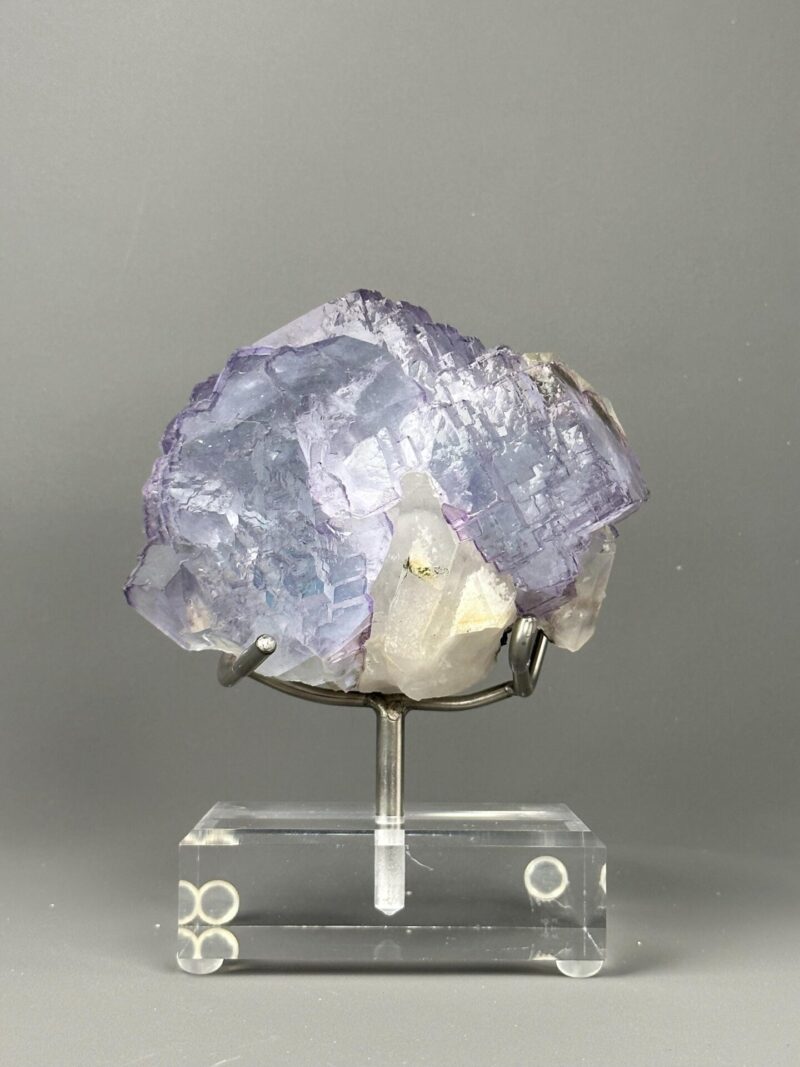
Smithsonite (ZnCO₃) is a secondary zinc carbonate that forms in the oxidized cap of zinc-lead deposits. It is famous for botryoidal, grape-like crystal habits in saturated colors — apple green, sky blue, lavender pink, and lemon yellow. Yunnan and Guangxi host significant Chinese deposits.
Key Facts
- Mohs hardness 4–4.5.
- Trigonal carbonate, isostructural with calcite.
- Distinctive botryoidal (grape-cluster) habit; crystals as rhombohedrons are rarer.
- Color depends on trace metal substitution: copper → green/blue, cobalt → pink, cadmium → yellow.
- Named after James Smithson, founder of the Smithsonian Institution.
Notable Chinese Localities
Yunnan and Guangxi host pink and blue-green smithsonite. Hunan yields grayish-blue botryoidal specimens.
Found at these Localities
- Tri-State Mining District (Joplin) (三州矿区(乔普林))
- Broken Hill (布罗肯希尔铅锌银矿)
- Lavrion (Laurium) (拉夫里翁古铅锌银矿)
- Bisbee (Warren District) (比斯比铜矿)
- Tsumeb Mine (楚梅布矿)
- Yunnan (云南)
- Guangxi (广西)
- Hunan (湖南)