
Light: the biggest threat to color
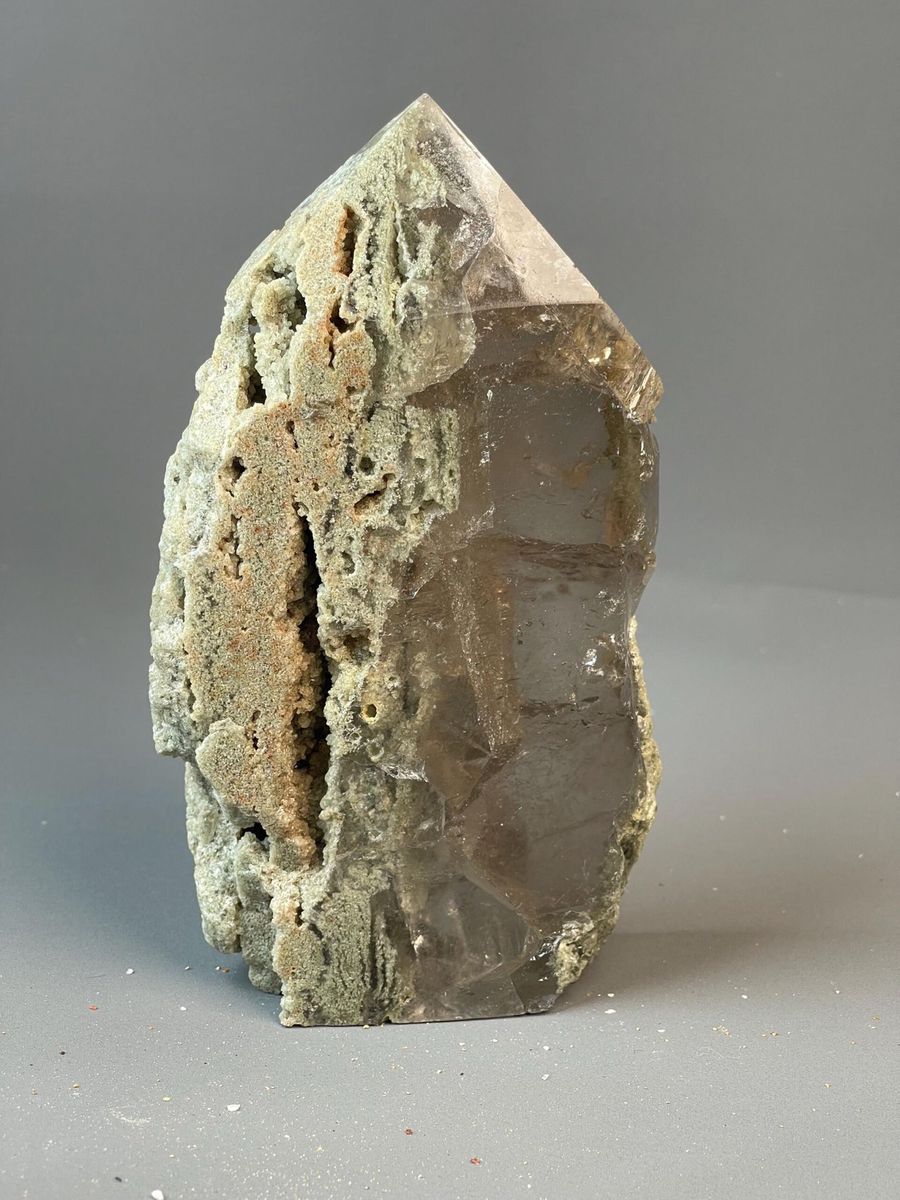
Strong, prolonged light is the quiet enemy of colored crystal. Amethyst, rose quartz and especially purple and blue fluorite can fade with long exposure to direct sunlight or hot display lamps.
Display colored carvings away from sunny windowsills and use cool LED lighting rather than hot halogen spots. Durable, near-colorless quartz and agate are far less light-sensitive, so they can take brighter spots.
Stable, safe placement
Think about gravity and traffic. Spheres roll, so always seat them in a ring or stand; tall towers and thin figures tip, so give them a low center of gravity and a spot where they won't be brushed by sleeves, pets or doors.
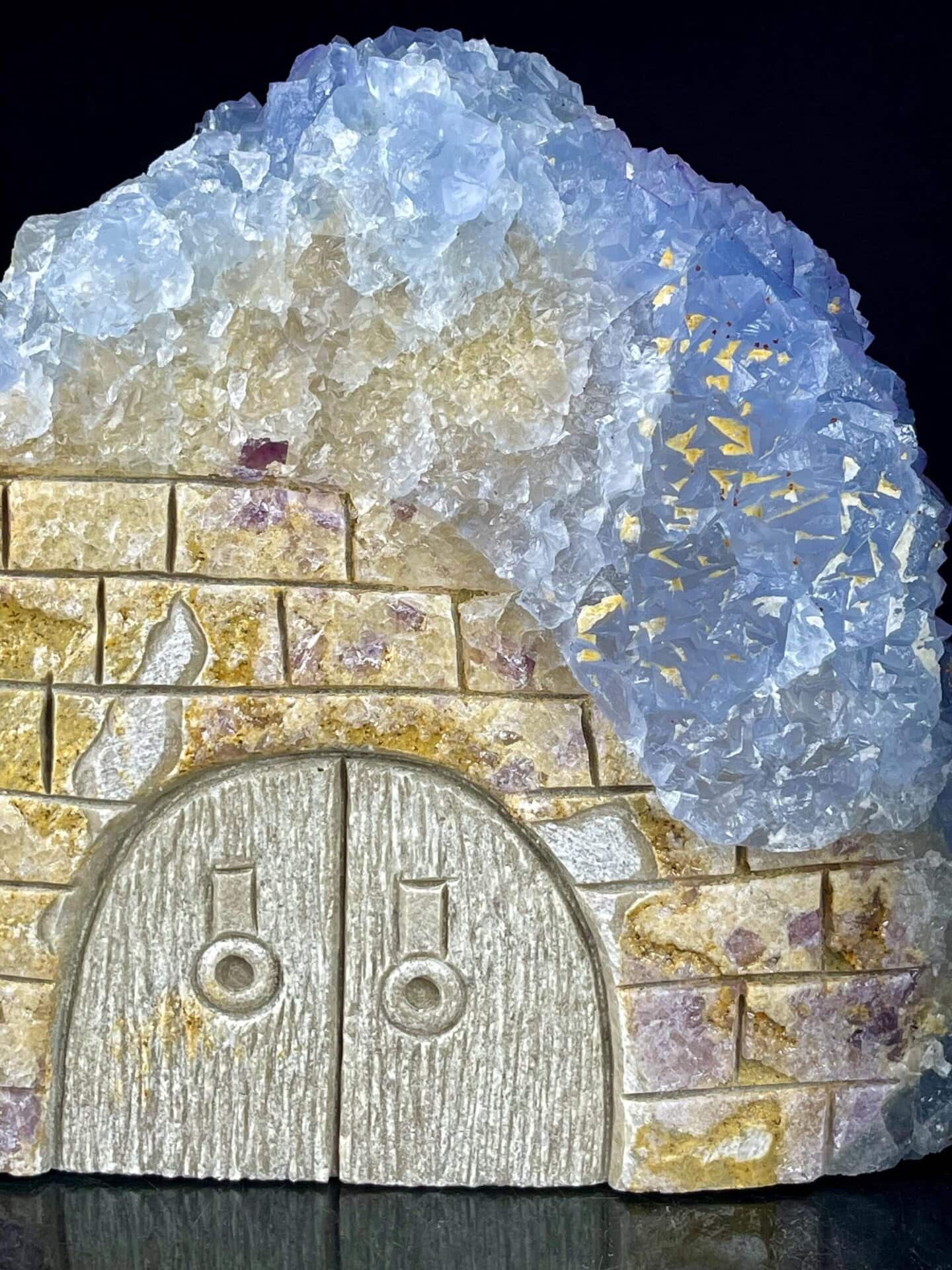
Keep fragile, soft carvings (fluorite, calcite, selenite) where they won't be knocked together or against glass — a lined shelf or individual stands prevent the edge chips these materials are prone to.
Handling without damage
Pick up carvings with two hands and by the body, not by a thin extremity such as an ear, tail or point that can snap. Make sure your hands are clean and dry, since oils and grit can dull a polish over time.
Set pieces down gently onto a soft surface. Most carving damage happens not on display but during cleaning and moving, so slow down for those moments.
Cleaning — match the method to the stone
Hard quartz and agate can be washed in lukewarm water with mild soap and dried with a soft cloth. Soft or sensitive stones need a gentler touch: dust fluorite and calcite with a soft dry brush or a barely damp cloth, and dry at once.
Never soak selenite or other soluble stones — water dissolves and clouds them — and keep acids and household cleaners away from calcite, which they etch. Skip ultrasonic cleaners on all carvings.
Dust, humidity and temperature
Dust is mostly cosmetic but abrasive if rubbed in, so brush or blow it off rather than scrubbing. Avoid big, sudden temperature swings, which can stress crystalline stones like fluorite, and avoid very damp environments for soluble or hygroscopic materials.
A stable room — normal household temperature and humidity, out of direct sun — suits virtually every carving.
Carvings as gifts and decor
Part of the appeal of carvings is that they work as decor and gifts, not just collection pieces. A durable quartz or agate carving is the safest choice for a gift that will be handled, while a soft fluorite or selenite piece is best presented as a protected display object.
A short care note — keep out of strong sun, dust gently, handle by the body — passed on with the piece helps it survive in a non-collector's home. See also how to choose a carving.
Frequently asked questions
Do crystal carvings fade in sunlight?
Some do — amethyst, rose quartz and purple/blue fluorite can fade with prolonged direct sun or hot lights. Keep colored carvings out of direct sunlight; quartz and agate are far more light-stable.
How do I clean a crystal carving?
Wash hard quartz and agate in lukewarm soapy water and dry with a soft cloth. Only dust soft stones like fluorite and calcite, never soak selenite, and keep acids off calcite. Avoid ultrasonic cleaners.
How should I display a crystal sphere safely?
Always seat a sphere in a ring or stand so it cannot roll off, place it away from edges and traffic, and keep soft or colored spheres out of strong light.
Which carving materials are the most fragile?
Selenite (gypsum, Mohs 2) and calcite (Mohs 3) are softest and most sensitive to water and acids; fluorite (Mohs 4) is soft and cleaves easily. Quartz and agate (Mohs 7) are the most durable.