
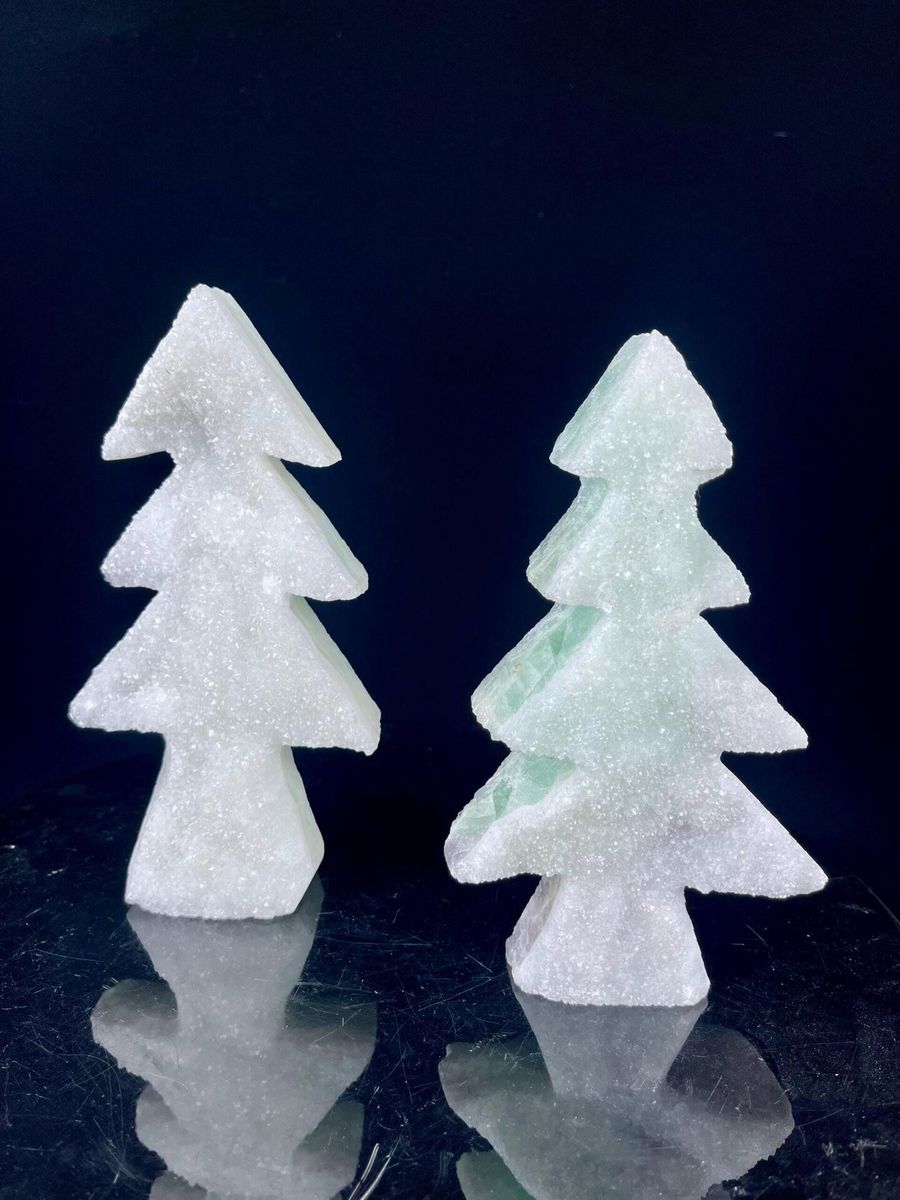
Why carvers love fluorite
Fluorite comes in a wider range of colors than almost any other mineral and is often beautifully color-zoned, with bands of green, purple, blue and colorless stone in a single piece. Skilled carvers orient a block so the finished sphere or figure shows that banding to best effect.
It is also translucent to nearly transparent and takes a deep, glassy polish, so light travels into the stone and the color seems to glow from within.
The colors to look for
Green and purple are the classic fluorite carving colors, often together; blue is scarcer and prized, and "rainbow" fluorite stacks several bands at once. Even colorless zones can be used beautifully for contrast.
The best carvings have rich, clear color and crisp banding rather than muddy or washed-out tones. China — the world's leading source of collector fluorite — supplies much of the rough behind today's fluorite carvings.
Softness and cleavage — handle with care
This is the key thing every fluorite owner must know: fluorite is soft (Mohs 4, so a steel knife scratches it) and has perfect octahedral cleavage in four directions, which means a sharp knock can pop a clean flake or chip off an edge.
Handle fluorite carvings gently, never stack or let them clack against other pieces, and expect that older or well-handled carvings may show small edge chips — factor this into the price.
Light, heat and color fading
Some fluorite, especially purple and blue, can slowly fade with prolonged exposure to strong sunlight or UV. Display fluorite carvings away from direct sun and hot display lights to keep the color saturated for years.
Fluorite is also more sensitive to thermal shock than quartz, so avoid sudden temperature changes — don't move a piece from a cold room into hot water, for example.
Common forms and what they cost
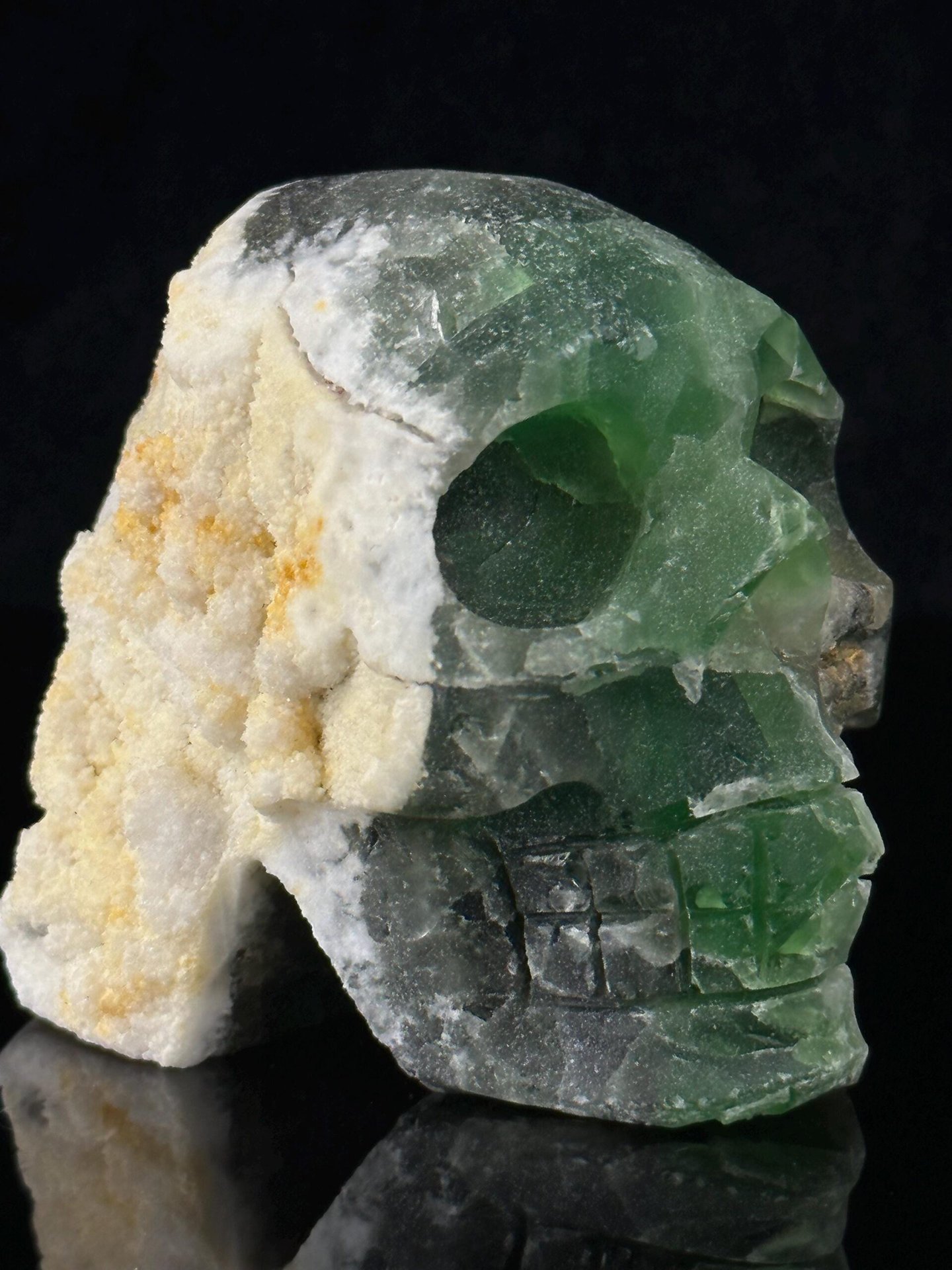
Fluorite is carved into spheres, eggs, skulls, towers (points), hearts, freeforms and animal figures. Spheres and skulls show off color zoning especially well. Value tracks color quality and contrast, size, the crispness of the carving and polish, and condition.
A vivid, cleanly carved, undamaged piece commands a clear premium over a pale or chipped one of the same size.
How to clean and keep a fluorite carving
Clean fluorite only by dusting with a soft, dry brush or wiping with a barely damp soft cloth, then drying immediately; never use an ultrasonic cleaner, harsh chemicals or hot water, all of which can damage it.
Display it where it won't be knocked, out of strong light, and ideally on a soft pad or stand. See our general guides to cleaning and displaying carvings.
Frequently asked questions
Is fluorite good for carving?
Yes — its rich color zoning and glassy polish make it a favorite, but it is soft (Mohs 4) with perfect cleavage, so fluorite carvings need gentle handling and protection from knocks and strong light.
Does fluorite fade in sunlight?
Some fluorite, especially purple and blue, can slowly fade under prolonged strong sunlight or UV. Display fluorite carvings away from direct sun and hot lights to preserve the color.
Why does my fluorite carving have small chips?
Fluorite cleaves perfectly in four directions and is only Mohs 4, so edges and high points chip easily from handling. Minor edge chips are common and should be reflected in the price.
How do I clean a fluorite carving?
Dust with a soft dry brush or wipe with a barely damp cloth and dry at once. Avoid ultrasonic cleaners, hot water and chemicals, which can damage soft fluorite.