
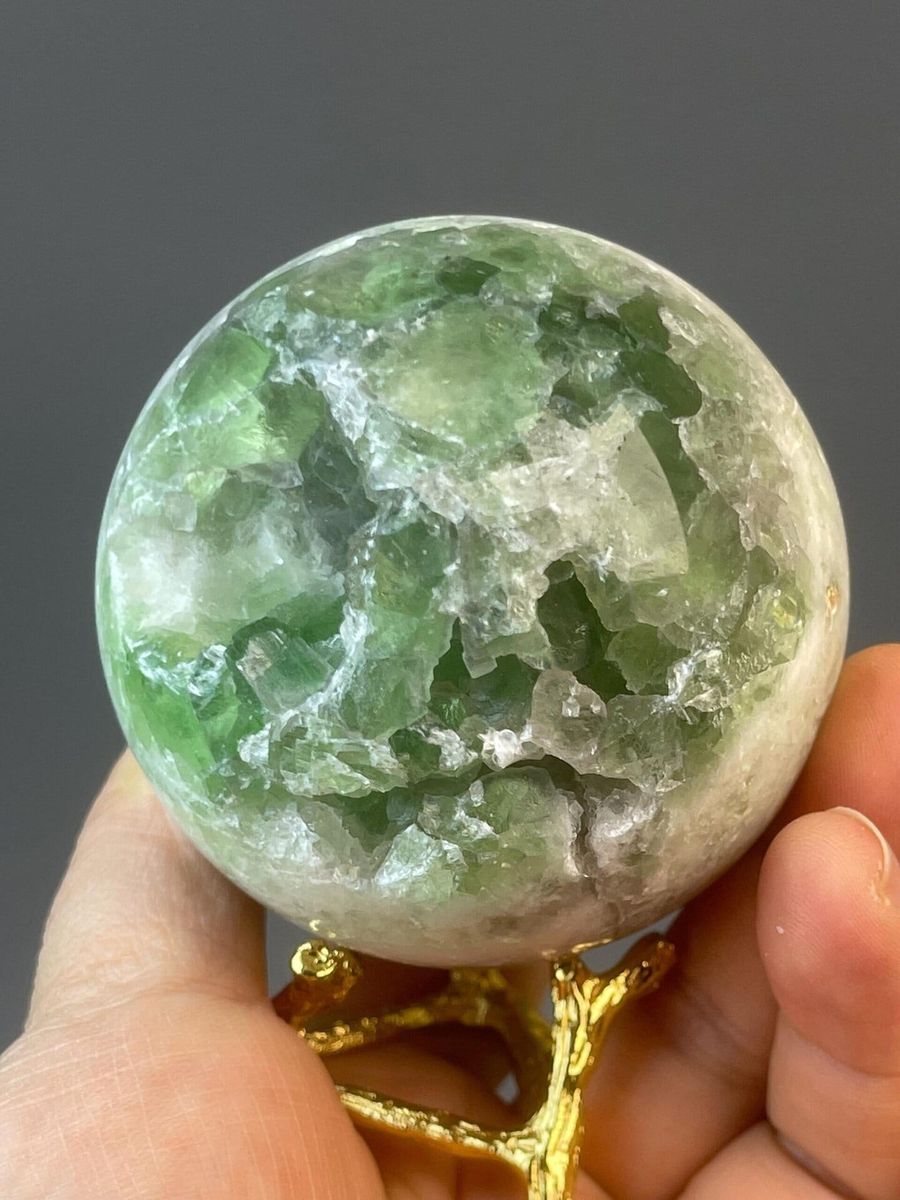
Start with the material
The stone decides almost everything: its color, its durability, and how it should be cared for. Hard, tough materials like quartz and agate (Mohs 7) take a brilliant polish and survive handling, while softer stones such as fluorite (Mohs 4) and calcite (Mohs 3) carve into gorgeous color but chip and scratch far more easily.
Know what you are buying before you fall for the shape — a soft material is fine on a shelf but a poor choice for a piece you'll handle daily.
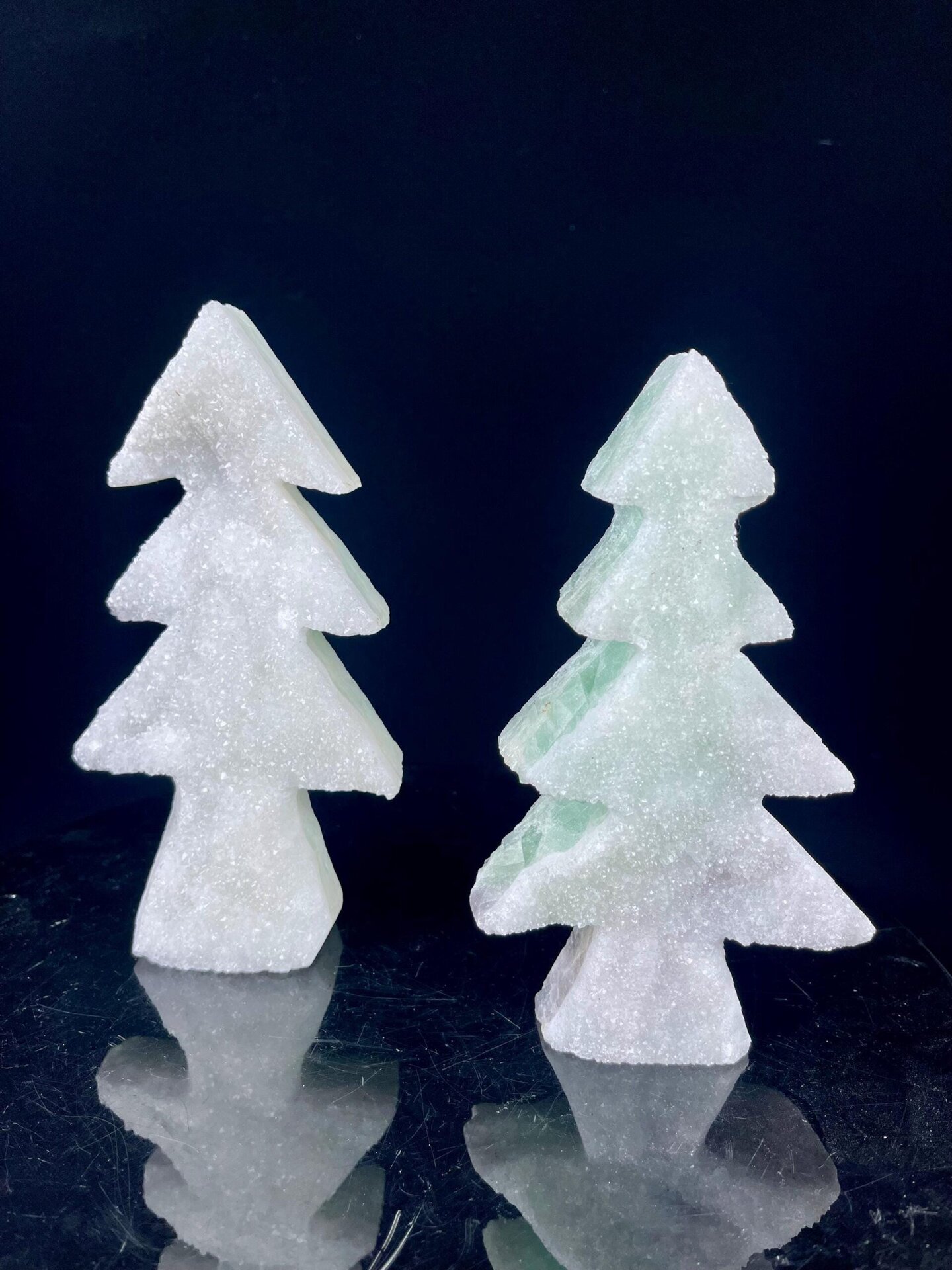
Color, zoning and pattern
Color is the heart of a carving's appeal. Look for even, saturated color or — in banded materials like fluorite and agate — bold, well-placed zoning that the carver has used to the design's advantage.
Be a little skeptical of colors that look too uniform or unnaturally vivid; natural stone usually has subtle variation, veining and the odd inclusion. A carving with character in its pattern is more interesting than a flawless but flat one.
Shape, proportion and finish
Judge the form as you would any sculpture: balanced proportions, a stable base or a true sphere, smooth flowing lines, and a high, even polish without dull patches, tool marks or flat-ground facets where curves should be.
On figural carvings — animals, skulls, towers — check that details are crisp and symmetry is good. Run a fingertip over the surface; quality work feels smooth and consistent everywhere, including the back and underside.
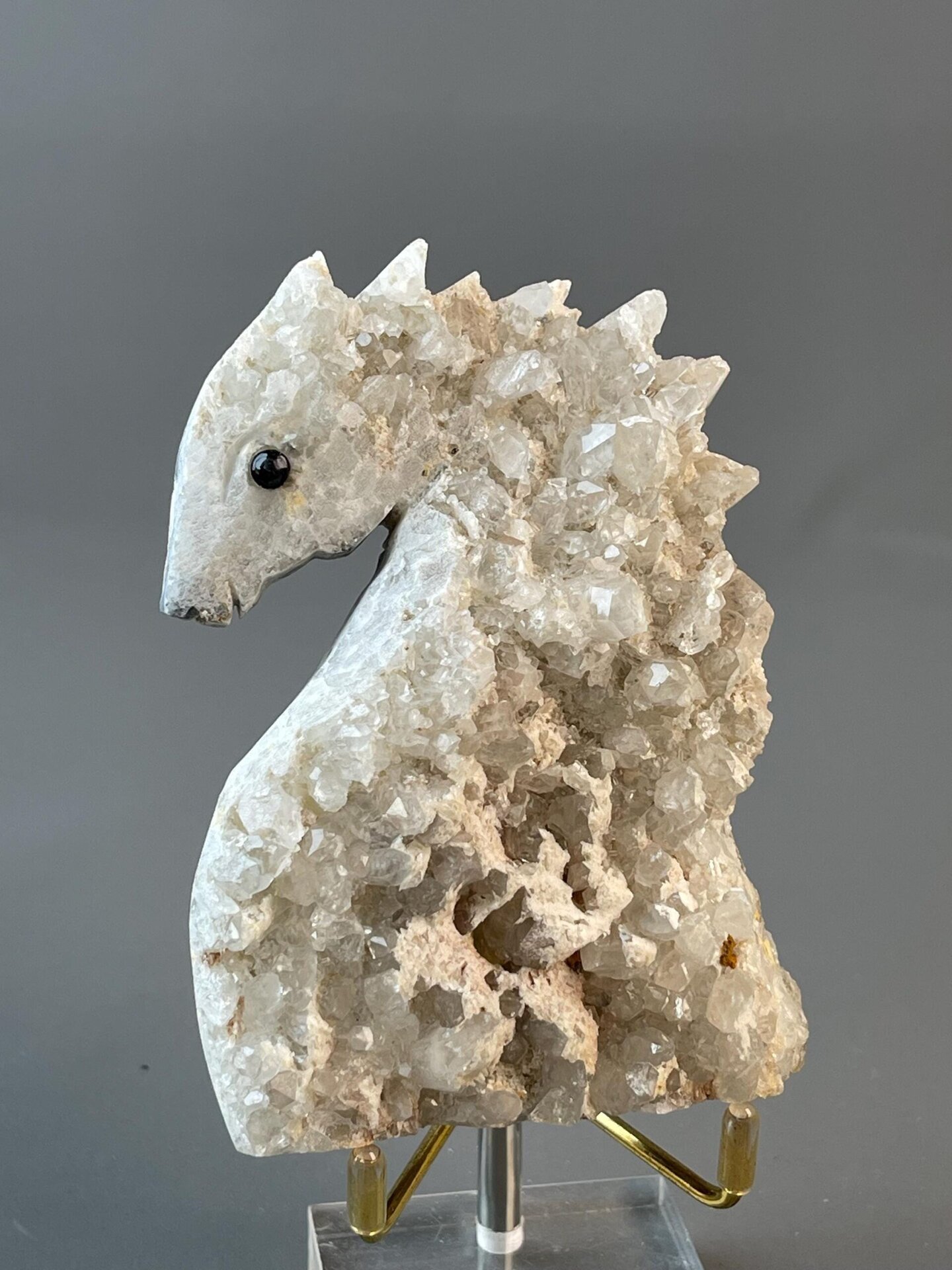
Condition — check for damage
Examine the piece in good light and in your hands. Look for chips on edges and high points, scratches across the polish, and bruises or fractures inside translucent stones. On softer materials like fluorite and calcite, small edge chips are common and should be reflected in the price.
Turn it over: damage and repairs are often hidden on the base. A faint glue line, a color or polish mismatch, or a too-flat join can signal a repaired break.
Natural vs. dyed or reconstituted
Carvings are more often treated than specimens. Pale agate is frequently dyed in bright unnatural colors; some "stone" is reconstituted (crushed mineral bonded with resin) or even glass or resin cast to imitate crystal.
Clues are color pooling in cracks, garish or perfectly even hues, suspiciously low weight, warmth to the touch, and visible mold seams or trapped bubbles. Ask the seller plainly whether a piece is natural, dyed or reconstituted — see natural vs. treated and spotting fakes.
Matching the carving to its use
Decide how the piece will live. A hard quartz or agate carving is ideal for a desk, a gift, or anywhere it will be picked up; a soft fluorite or selenite carving is best as a protected shelf display away from knocks and direct sun.
Match size and subject to the spot and the recipient, and remember that a modest carving in a durable, well-finished material often pleases more than a large piece in fragile, poorly polished stone.
Frequently asked questions
What is the best material for a crystal carving?
For durability and a high polish, quartz and agate (Mohs 7) are ideal. Fluorite and calcite carve into beautiful color but are softer and need gentler handling and protection from light.
How can I tell if a carving is dyed?
Look for color pooling in cracks, unnaturally even or garish hues, and color concentrated on the surface. Dyed agate is very common in inexpensive carvings; ask the seller to confirm if it is natural or dyed.
Are crystal carvings natural?
Many are solid natural stone, but some are dyed, and a few are reconstituted (crushed mineral in resin) or imitation glass/resin. Weight, temperature and seams help tell them apart, and a good seller will disclose treatments.
Do crystal carvings make good gifts?
Yes — a well-chosen carving in a durable material like quartz or agate is a popular, lasting gift. Match the subject and size to the recipient and pick a hard stone if it will be handled often.