
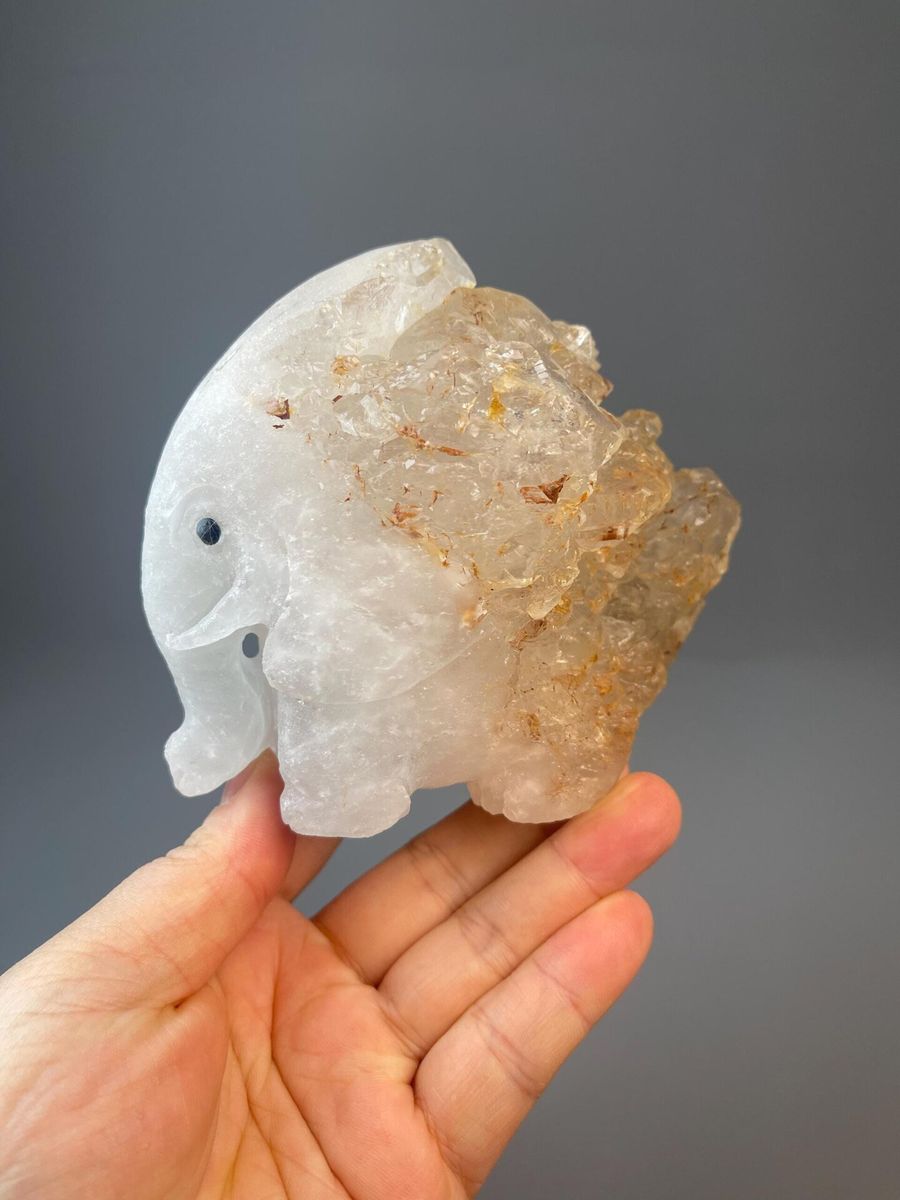
The quartz family of carving stones
Quartz appears in carvings in many guises: water-clear rock crystal, milky and smoky quartz, purple amethyst, rose quartz, and the cryptocrystalline forms agate, chalcedony and jasper. Patterned "flower agate" and banded agate are especially popular for figural work.
All share quartz's chemistry and hardness, so they behave similarly under the carver's wheel and in your hands — durable and reliable.
Hard, tough and built to last
Quartz is Mohs 7 and has no cleavage, breaking instead with a conchoidal (shell-like) fracture, and the agate/chalcedony forms are tougher still because they are made of microscopic interlocking fibers.
That combination makes quartz and agate ideal for pieces that will be handled — desk figures, palm stones, spheres and gifts — because they resist the scratches and chips that plague softer materials.
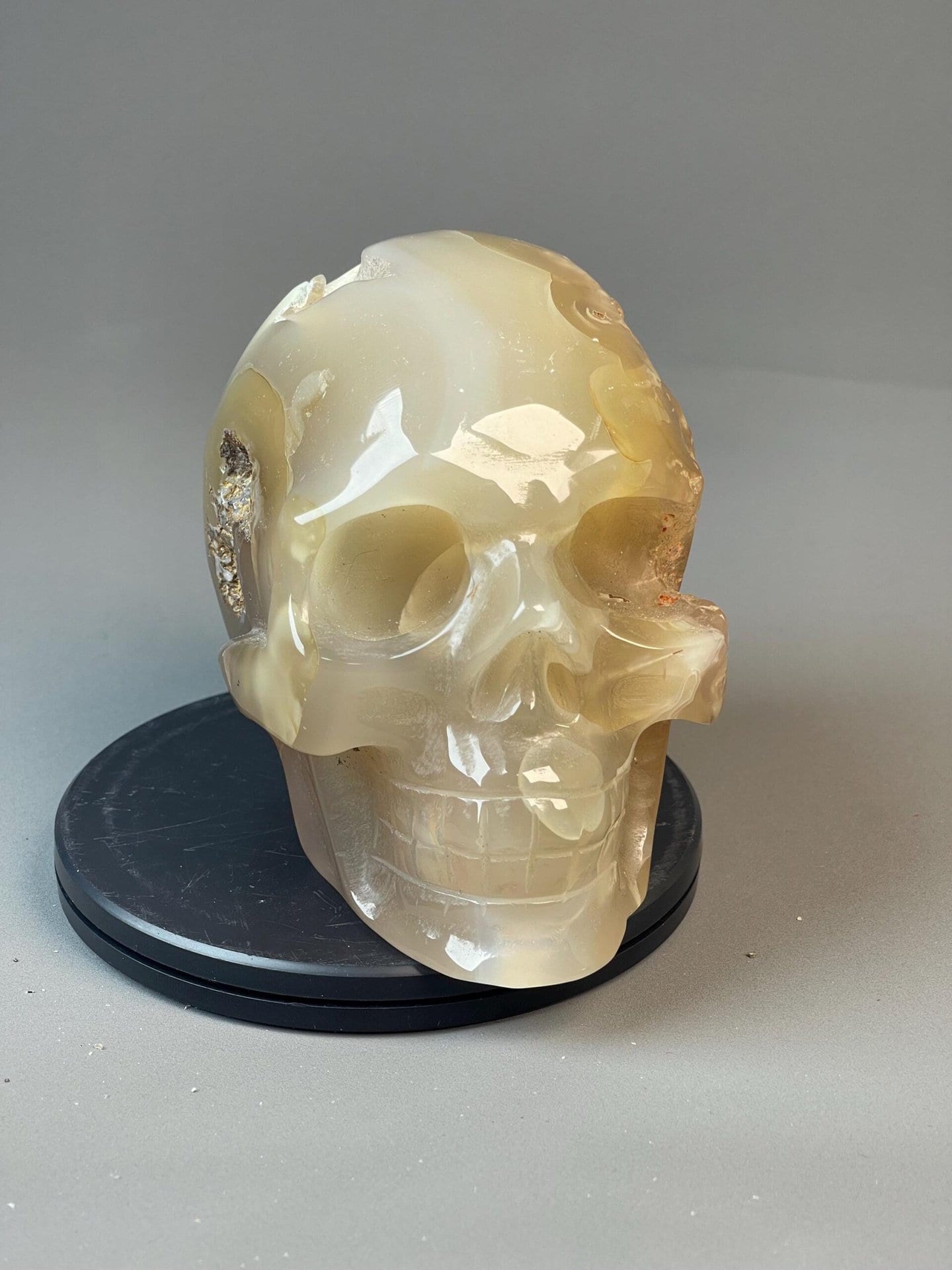
Judging clarity, color and pattern
For transparent quartz, prize clarity and the play of light; a few internal veils or rainbows can add interest but heavy cloudiness or fractures detract. For amethyst and rose quartz, look for even, pleasing color.
For agate and jasper, the pattern is everything — bold banding, landscape scenes or the flower-like inclusions of flower agate, used cleverly by the carver. A high, even polish and crisp carved detail finish the piece.
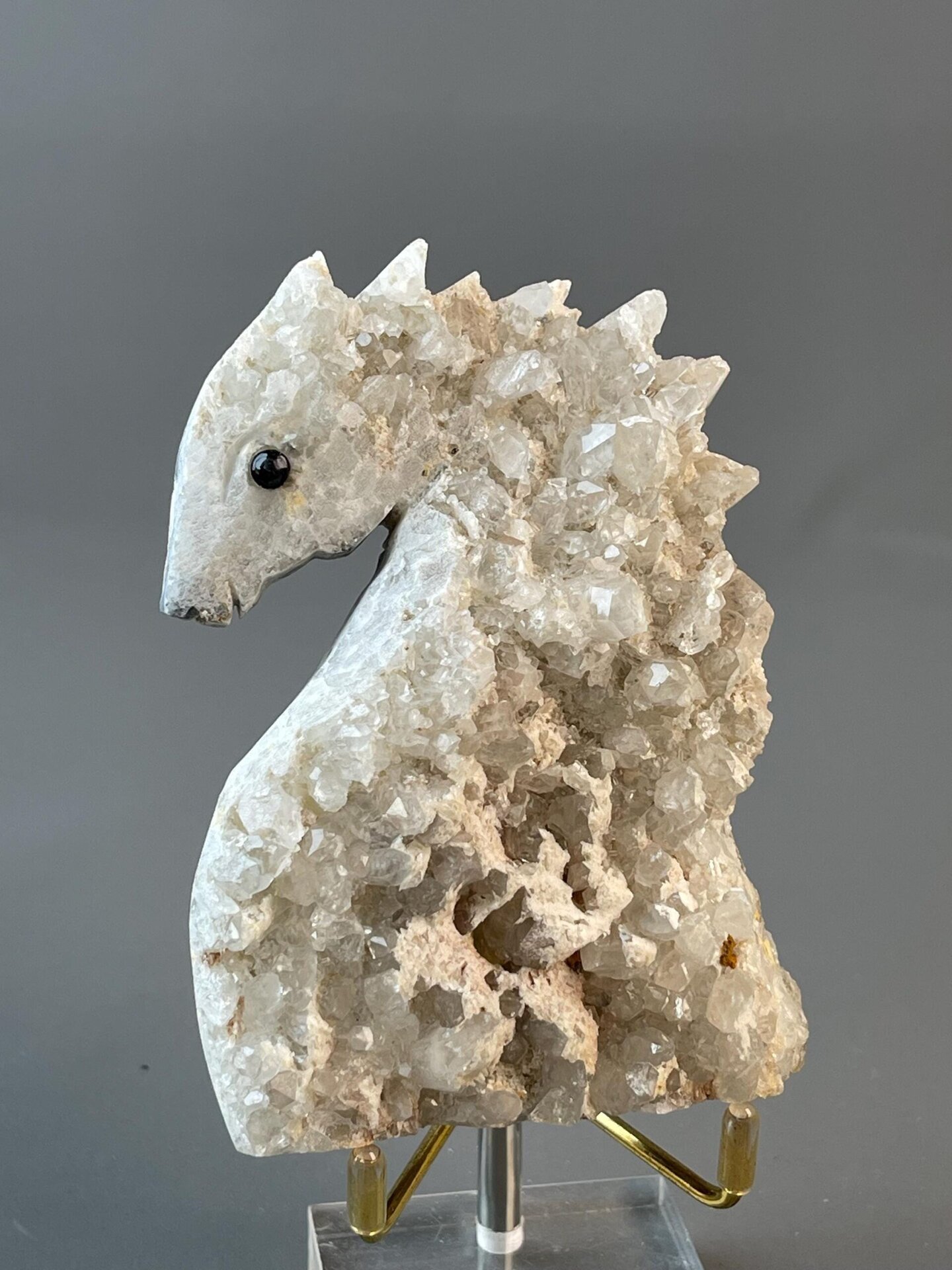
Spotting dyed agate and imitations
Because agate is pale and porous, it is the most commonly dyed carving material — those electric blue, pink and purple agate slices and figures are almost always dyed. Dye is not dishonest if disclosed, but it should be priced as dyed, not natural.
Watch for color pooling in cracks, garish even hues, and — for outright fakes — low weight, warmth to the touch, and mold seams that betray glass or resin. See how to spot fakes.
Forms, figures and what to pay for
Quartz and agate are carved into animals, spheres, skulls, hearts, palm stones, bowls and bookends. Value follows material quality (clarity or pattern), the difficulty and crispness of the carving, size, polish and condition.
Because the material is durable, condition issues are usually limited to scratches on the polish or a chipped thin extremity — check ears, tails and points on figural pieces.
Caring for quartz carvings
Quartz and agate are easy to live with: wash gently in lukewarm water with mild soap, dry with a soft cloth, and they will keep their polish for a lifetime. They resist everyday handling far better than soft stones.
The main caution is that strong, prolonged sunlight can fade amethyst and rose quartz, so keep colored quartz carvings out of direct sun. See displaying & caring for carvings.
Sources & evidence limits
These references support the specific points described below. A trade name, colour, photograph, price, or seller statement alone cannot prove treatment status or origin.
Frequently asked questions
Is quartz good for carving?
Yes — quartz and its agate/chalcedony forms are Mohs 7, hard and tough with no cleavage, so they take a high polish and resist chipping. They are ideal for figures, spheres and pieces that will be handled.
Is colorful agate natural or dyed?
Bright blue, pink and purple agate carvings are almost always dyed, because natural agate is usually pale. Dyeing is acceptable when disclosed; ask the seller and expect dyed pieces to be priced accordingly.
How do I clean a quartz or agate carving?
Wash gently in lukewarm water with a little mild soap, rinse and dry with a soft cloth. Quartz and agate are durable and need no special care beyond keeping colored varieties out of strong sun.
Does amethyst or rose quartz fade?
Prolonged strong sunlight can fade amethyst and rose quartz over time. Display colored quartz carvings away from direct sun to keep their color.