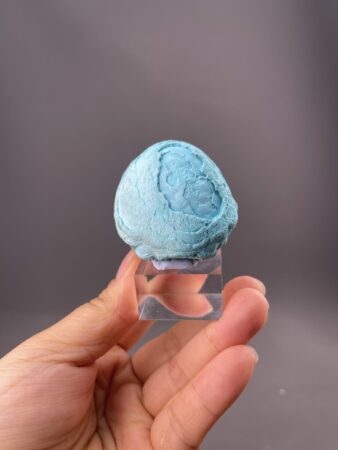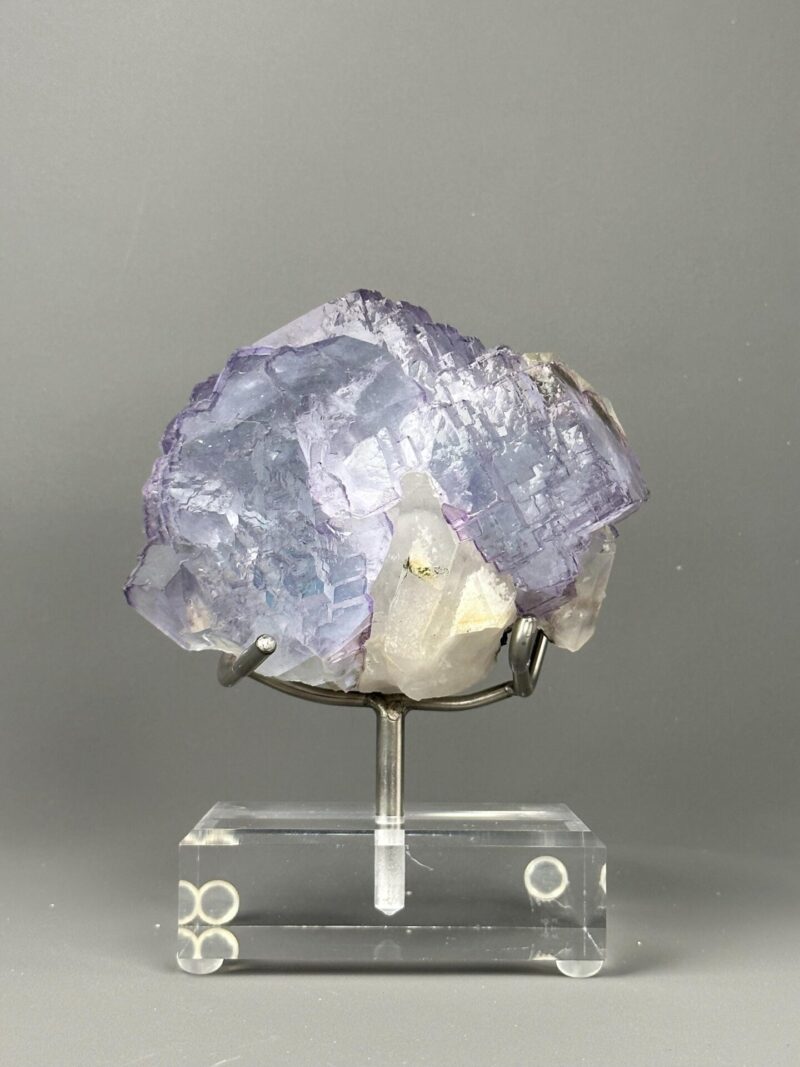
Chrysocolla is a hydrous copper-aluminum silicate, almost always cryptocrystalline to amorphous, prized by collectors and lapidaries for its electric blue-to-blue-green color rivaling turquoise. It frequently coats and replaces malachite and azurite in oxidized copper deposits.
Properties
- Formula: (Cu,Al)2H2Si2O5(OH)4·n(H2O)
- Crystal system: Amorphous (cryptocrystalline)
- Hardness: 2.5 – 7 (variable depending on quartz/chalcedony content)
- Color: Blue, blue-green, cyan, turquoise
- Streak: White to pale blue
- Luster: Vitreous to dull, waxy
- Cleavage: None
- Density: 1.9 – 2.4 g/cm³
Occurrence in China
Chrysocolla is common in the oxidized caps of Chinese Cu mines: Pulang and Lanping (Yunnan), Tonglushan (Hubei), Dexing (Jiangxi). Globally famous from Inspiration and Ray (Arizona), Chuquicamata (Chile) and the Congo copperbelt.
Identification
Vivid blue-cyan color + botryoidal/encrusting habit + low density (when pure) + association with malachite/azurite. Quartz-bearing varieties (“gem silica”) can be much harder and lapidary-grade.
Collector Notes
Chrysocolla pseudomorphs after malachite (sharp Mal crystals replaced by Chr blue) are highly prized. “Eilat stone” is chrysocolla-malachite-turquoise mixture from Israel; gem-silica from Inspiration commands top dollar.
Found at these Localities
- Chuquicamata (丘基卡马塔铜矿)
- Bisbee (Warren District) (比斯比铜矿)
- Lanping Pb-Zn-Cu Field (兰坪铅锌铜矿田)
- Pulang Cu Porphyry Mine (普朗铜矿)
- Tonglüshan Bronze-Age Cu Mine (铜绿山古矿)
- Dexing Mine (德兴铜矿)
- Hubei (湖北)
- Yunnan (云南)
- Jiangxi (江西)
Available Products of Chrysocolla
1 available specimen