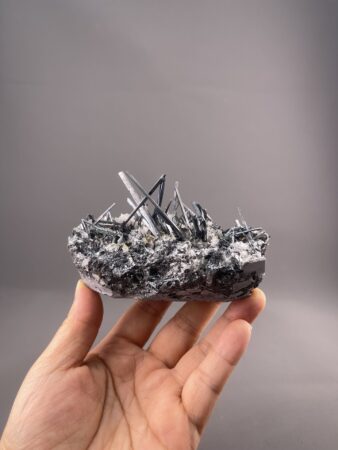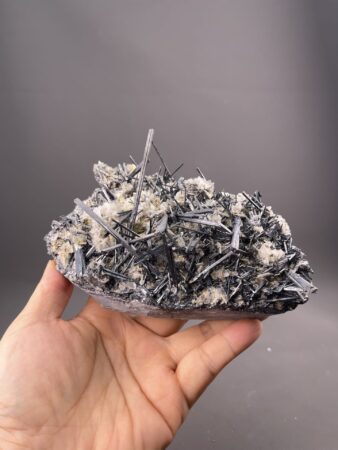
Stibnite — the principal ore of antimony — is one of the most distinctive sulfides in collecting. Its long silvery blades, radiating into starburst sprays, are a signature look of Chinese mineralogy. The Xikuangshan deposit in Hunan is the world's largest antimony resource and produces specimens unrivaled anywhere else.
Key Facts
- Mohs hardness 2 — scratched easily with a fingernail or copper.
- Melts in a candle flame (low melting point, ~550 °C). One of the few sulfides this soft.
- Perfect cleavage parallel to the long axis — crystals split into ribbon-like fragments.
- Tarnishes to iridescent purple/blue/gold over months in display.
- Hunan produces 75% of global antimony — and most of the world's best stibnite specimens.
The Chinese Angle
The Xikuangshan and Wuning deposits yield individual stibnite crystals in excess of 30 cm — including the legendary Houluoping pocket whose blades resembled polished steel sabers. Chinese stibnite is the worldwide reference for the species; nothing else comes close in size or perfection.
Found at these Localities
- Shimen Realgar-Orpiment Mine (石门雄黄雌黄矿)
- Xikuangshan Antimony Mine (锡矿山锑矿)
- Hunan (湖南)
Available Products of Stibnite
23 available specimens — showing 12 random
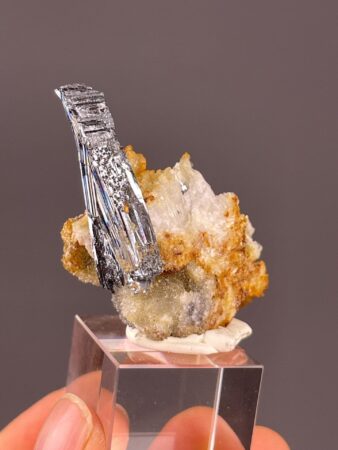
Stibnite Crystal on Matrix, Hunan, China
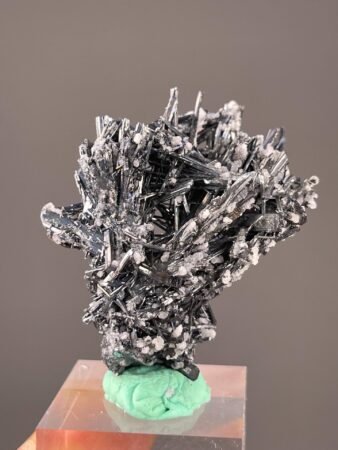
Stibnite Crystal with Calcite, Hunan
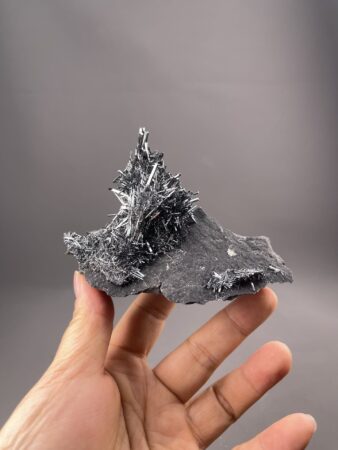
Stibnite Crystals, Lengshuijiang, China
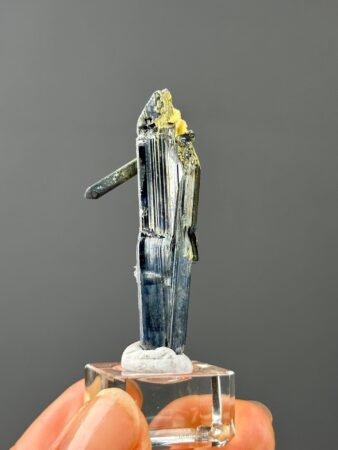
Stibnite Crystal – Columnar Form – Hunan, China
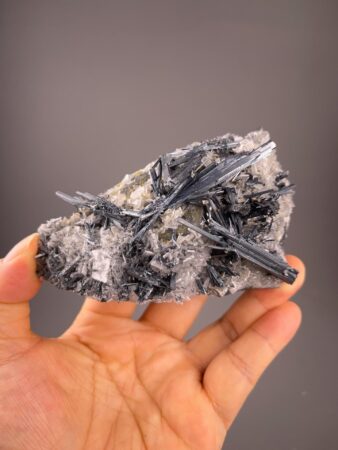
Stibnite Cluster with Barite, Lengshuijiang, Hunan
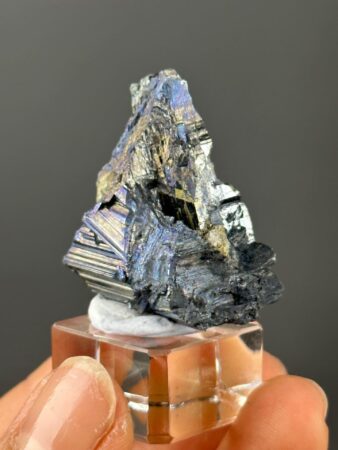
Stibnite Crystal Cluster – Hunan, China
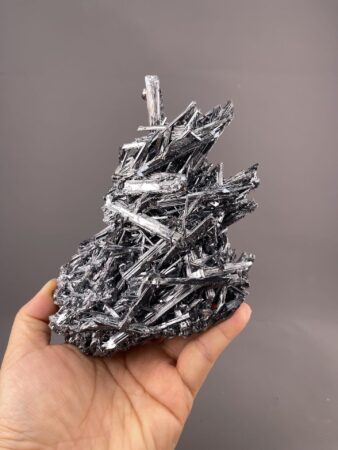
Stibnite Crystal Formation, Hunan, China
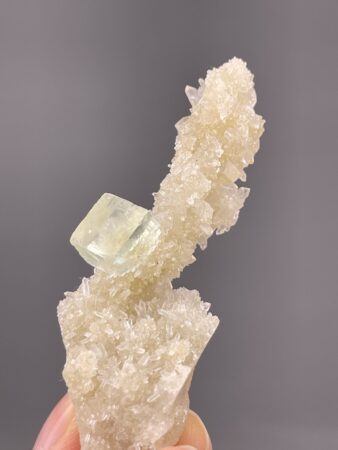
Stibnite Crystal – Columnar Form – Lengshuijiang Mine, Hunan
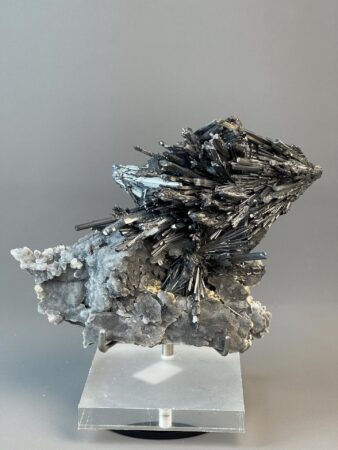
Stibnite Crystal Formation – Antimony Sulfide – Hunan, China
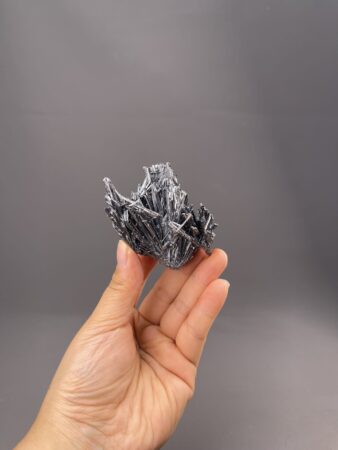
Stibnite Crystals – Acicular Radiating Form – Lengshuijiang, Huna…
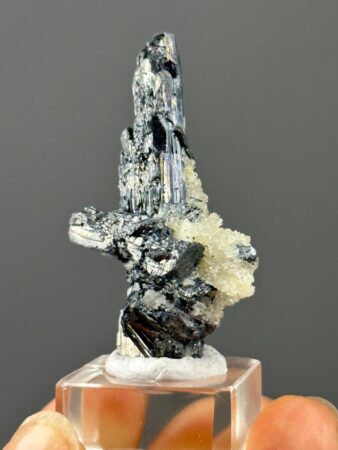
Stibnite Crystal on Barite – Hunan, China
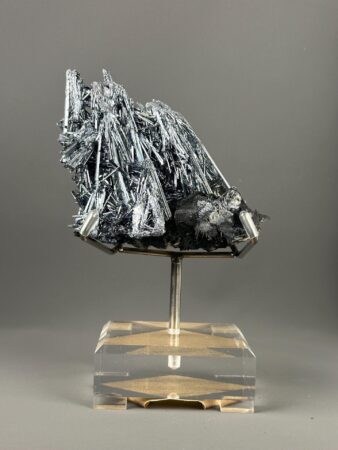
Stibnite Needle Crystal Formation – Hunan, China