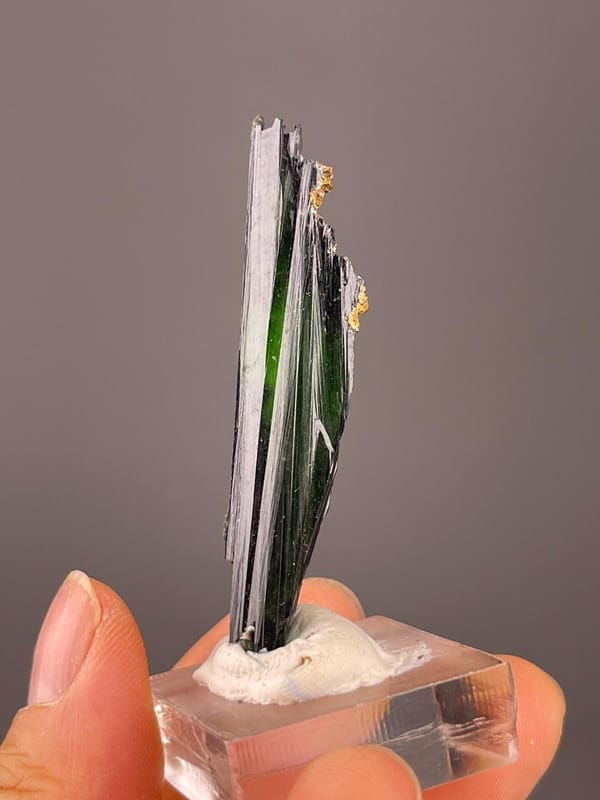
Vivianite
Curated by Maggie Liu · Updated:
Vivianite is a phosphate mineral recognized among collectors for its crystal form and distribution, with known Chinese sources.
Vivianite is a hydrated iron phosphate that is colourless when fresh but oxidises to a deep blue-green, forming bladed crystals.
About Vivianiteextended article
Vivianite is a hydrated iron phosphate prized by collectors for its dramatic colour. Freshly exposed crystals can be nearly colourless, but on exposure to light and air the iron oxidises and the mineral deepens to a striking blue, blue-green and finally near-black, often in sprays of bladed crystals.
Identifying vivianite
Vivianite is soft (1.5–2) with a perfect cleavage that yields flexible sheets. Its evolving blue-green colour is diagnostic. It forms in oxygen-poor, phosphate-rich settings — in the cavities of fossil shells and bones, in clays and bogs, in some ore deposits and in granite pegmatites.
Where it is found
Notable vivianite comes from Bolivia (large bladed crystals), Cameroon and Brazil, and as blue coatings on fossil ivory and ironstone concretions worldwide.
For collectors
Deeply coloured, lustrous bladed crystals and aesthetic sprays are the prize. Because vivianite is light-sensitive and soft, specimens are best kept out of strong light and handled with care.
About Vivianite
Vivianite is a phosphate mineral in the vivianite group and has the chemical formula Fe2+3(PO4)2 · 8H2O. It crystallizes in the monoclinic system and is relatively soft, requiring careful handling. Its combination of structural character and global distribution make it a recognized species in both systematic and aesthetic collections.
Identification & care
Crystals commonly develop as prismatic to flattened bladed crystals; radiated fibrous; earthy masses; often as crusts on fossils or shell fragments. Its color is typically colorless and transparent when fresh (fe2+ state). The luster is vitreous, pearly, dull, the streak is colorless to bluish white; rapidly darkens to dark blue or brown on exposure, and specimens are typically transparent, translucent. The cleavage is perfect on {010}; pearly on cleavage surfaces. The fracture is irregular/uneven, which aids identification.
Collector context
How it forms
Vivianite forms in secondary mineral in iron-phosphate environments; weathering zones of iron ore and phosphate-bearing rocks; found in bogs, peat, clay, and fossil deposits; also in granite pegmatites. It is commonly found in association with pyrite (oxidized to form phosphate), limonite, strengite, phosphosiderite, triphylite, apatite.
Classic Chinese localities
Vivianite is widely represented across Chinese provinces, including Fujian, Anhui, Jiangsu, Guangdong.
Why collectors care
Vivianite is a frequently-sought species in serious collections because its habit is recognizable, its color often strong, and its best examples unmistakable even at a distance. Chinese material has driven much of the recent visual shift in the species — sharper crystals, deeper colors, cleaner matrix.
What affects value
Value in Vivianite is assessed, in typical order of weight, against: (1) locality provenance; (2) size relative to the species norm; (3) crystal form and termination sharpness; (4) color saturation and zoning; (5) transparency and internal clarity; (6) matrix quality and aesthetic balance; (7) condition (absence of damage, chips, or repair). Cleaning quality and verified locality documentation act as multipliers across the above.
Frequently asked questions
What is Vivianite?
Vivianite has the chemical formula Fe2+3(PO4)2 · 8H2O, crystallises in the Monoclinic system. Vivianite is a phosphate mineral recognized among collectors for its crystal form and distribution, with known Chinese sources.
What is the chemical formula of Vivianite?
The chemical formula of Vivianite is Fe2+3(PO4)2 · 8H2O.
What crystal system does Vivianite belong to?
Vivianite crystallises in the Monoclinic crystal system.
Related minerals
Available Vivianite specimens
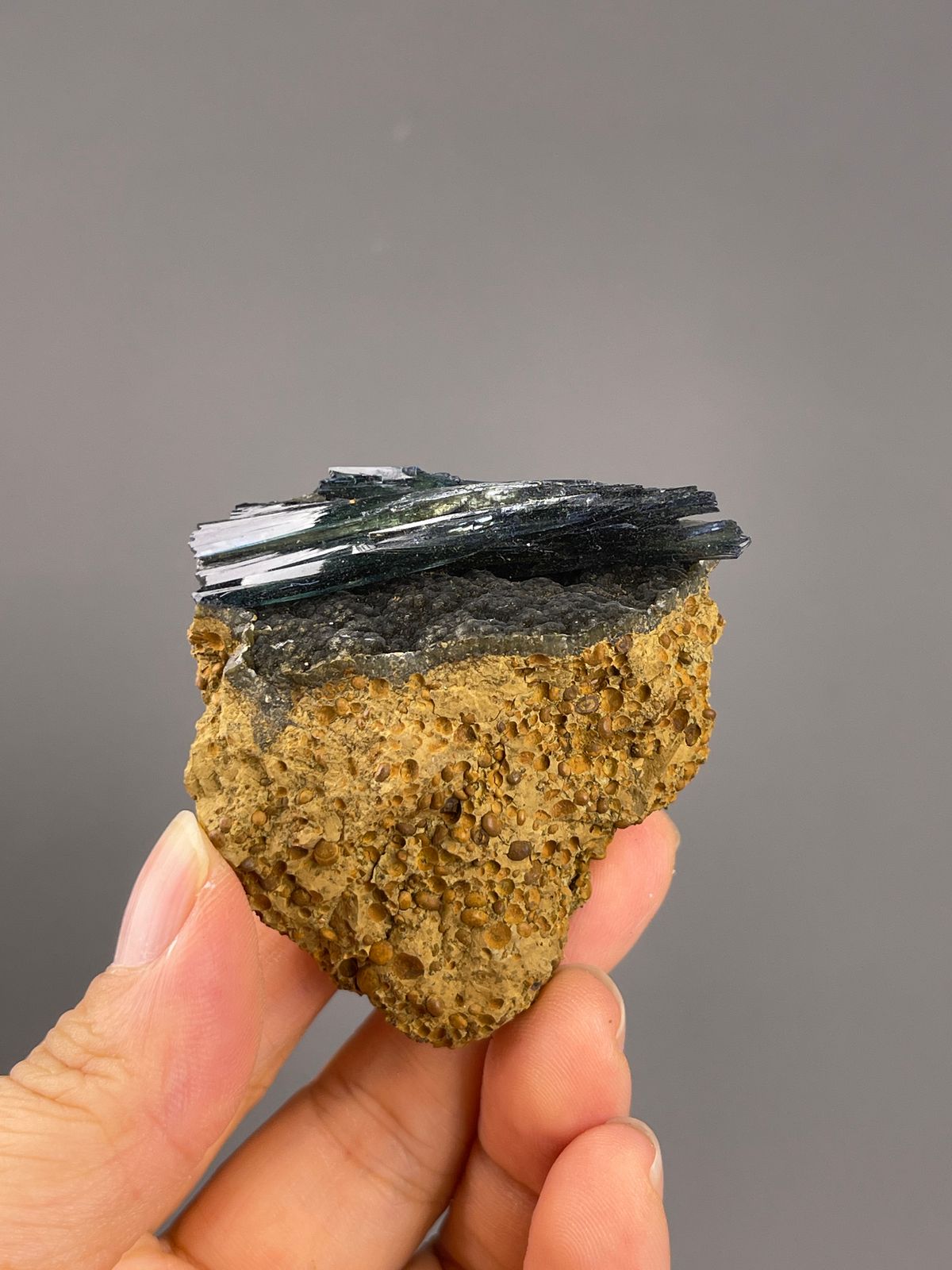
Dark Bladed Vivianite on Ochre Matrix | Brazil
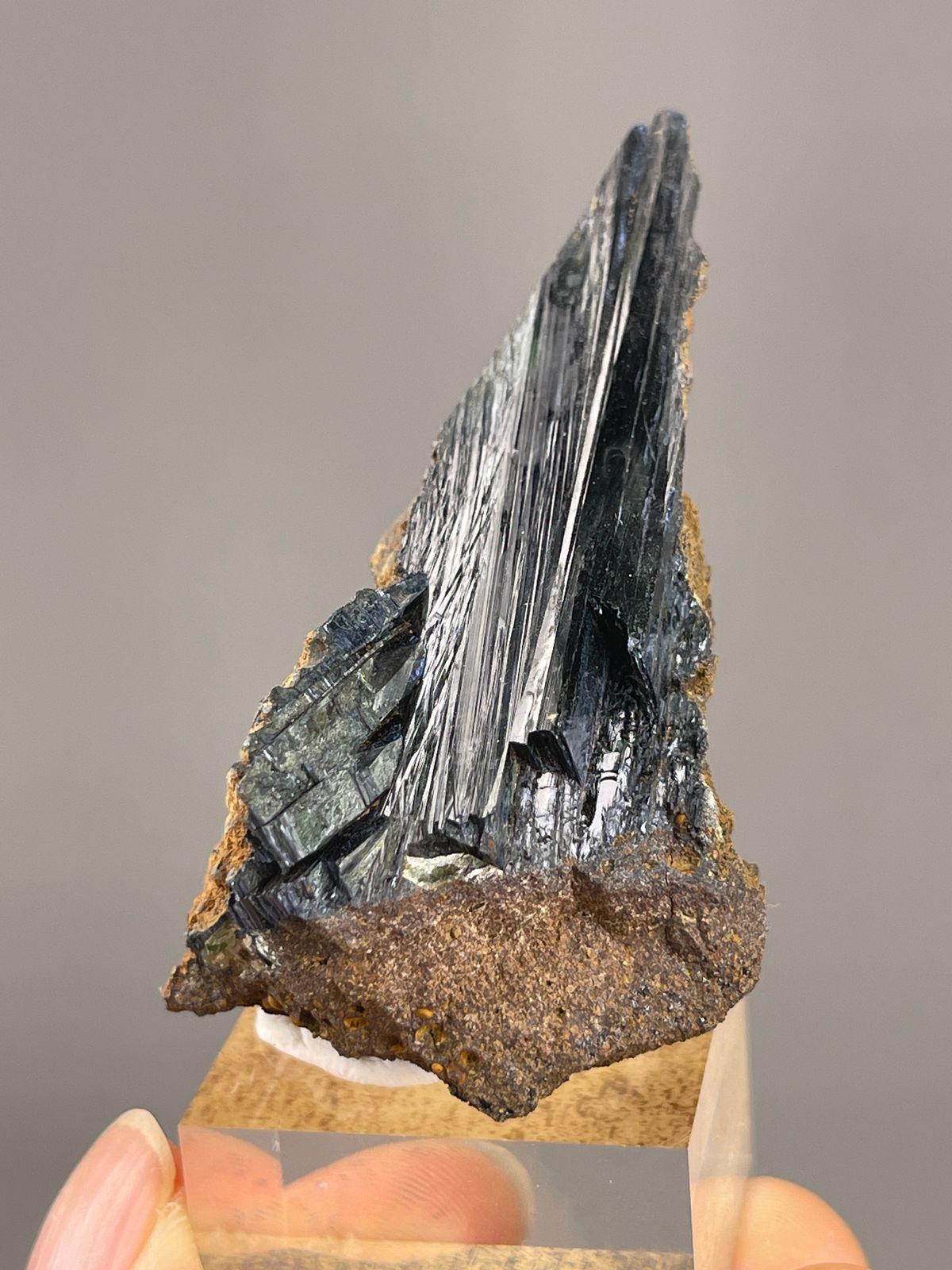
Upright Bladed Vivianite on Brown Matrix | Brazil
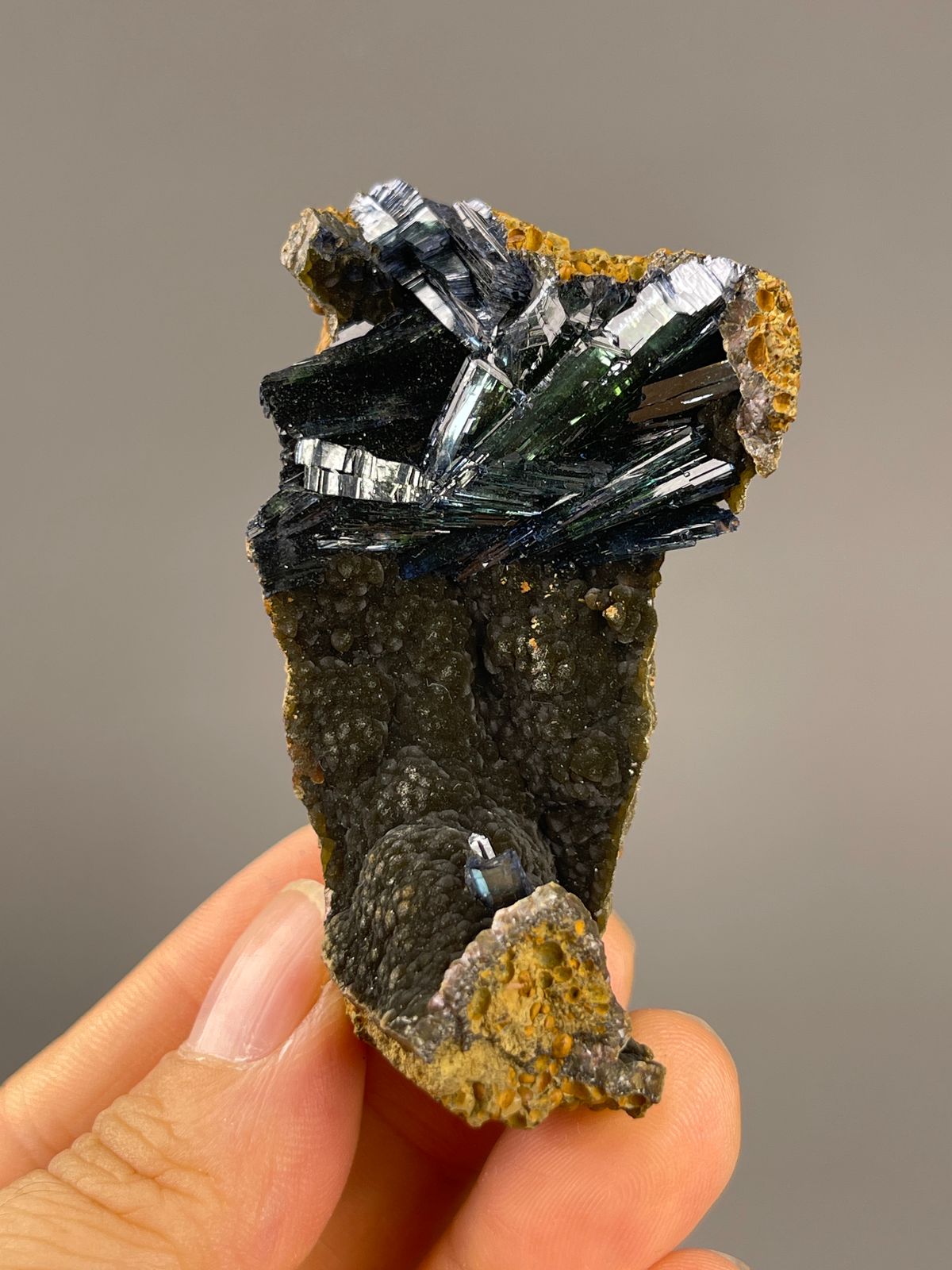
Vivianite Crystal Spray on Curved Matrix | Brazil
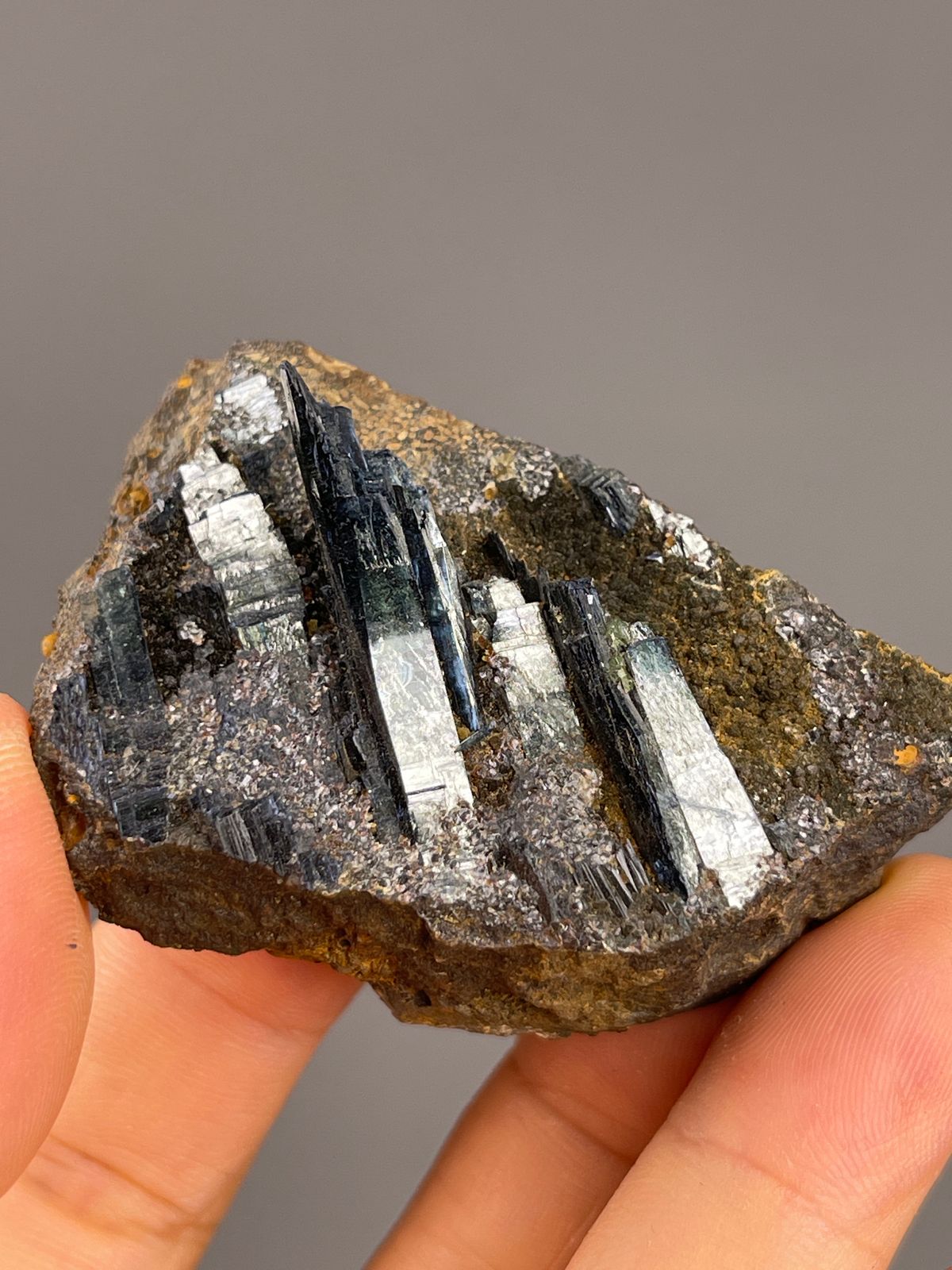
Scattered Vivianite Blades on Broad Matrix | Brazil
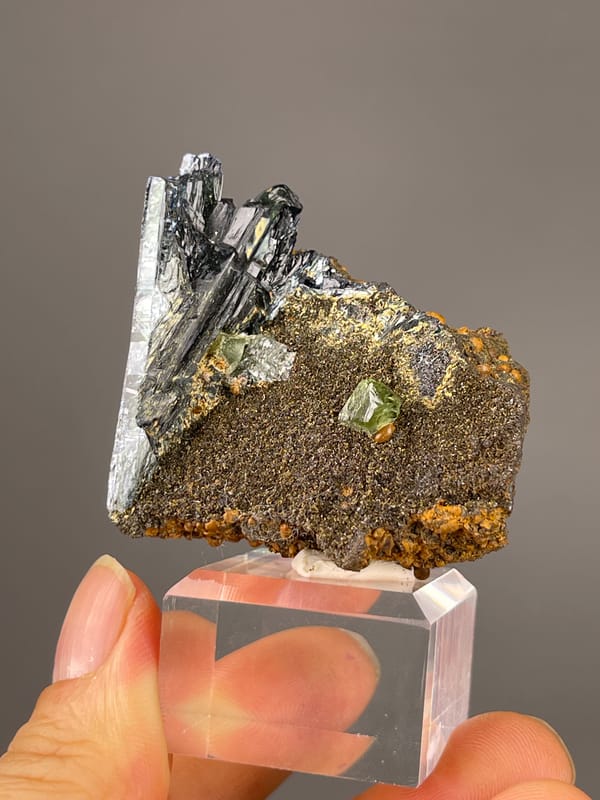
Black Vivianite with associated iron phosphate — Brazil
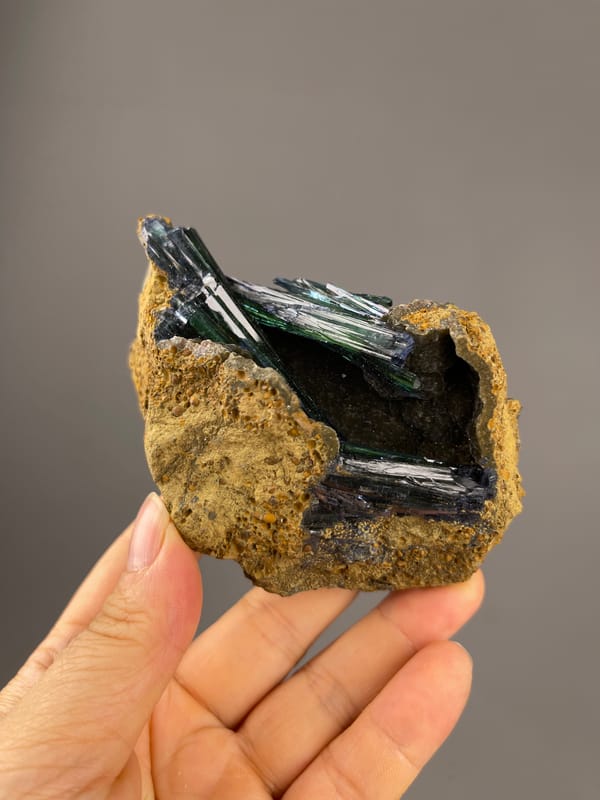
Green Vivianite — Brazil