Elemental Composition (by mass)
| Element | Mass % | Visual |
|---|---|---|
| W Tungsten | 60.54% | |
| O Oxygen | 21.07% | |
| Fe Iron | 18.39% |
Computed from simplified end-member formula. Solid-solution series, water content, and trace substitutions cause real-world variation.
IMA Abbreviation (Whitney-Evans 2010)
Wf
→ Wolframite
Fe-Mn tungstate
Standard symbol from American Mineralogist (Whitney & Evans, 2010). Used in thin-section labeling, phase diagrams, and IMA-style species records.
Pronunciation
/ˈwʊlfrəmaɪt/
↔ WOOL-fruh-mite
German "wolf foam"
Magnetism
Category:
weakly paramagnetic
Test result:
Detectable pull
Fe-Mn rich; one of the most magnetic non-ore silicate analogs.
Test with rare-earth magnet (N42 or N52 neodymium). Suspend specimen on thread for sensitive paramagnetic detection. Diamagnetic minerals are weakly repelled (visible only with strong magnets like bismuth).
Specific Gravity
7.10–7.50
g/cm³
very heavy
W-Fe-Mn series.
For comparison: water = 1.00, glass ≈ 2.5, quartz = 2.65, corundum ≈ 4.00, galena ≈ 7.50, gold ≈ 19.3.
Streak Test
brown / brownish black
Streak helps separate from scheelite (white streak).
Streak = color of the powdered mineral. Drag specimen across unglazed white porcelain plate (Mohs 6.5). For minerals harder than the plate, crush a small flake into powder and observe color.
Care notesStable; standard distilled-water cleaning OK. Full cleaning guide →
Formation eraGranite-pegmatite Variscan + Mesozoic events; Hunan mid-Jurassic 150-160 Ma.
Market availability: Uncommon
Found at major shows and select dealers. Quality varies by locality.
Collector tier: Cabinet Classic
Display species collected for cabinet presentation, with specimens recorded from named localities.
Mohs 4.5
Vickers (~) 200 HV
Knoop (~) 220 HK
Nickel–Strunz
4.DB.30Dana
48.01.01.04Diagnostic properties
Notably dense
Element composition by mass
Formula: (Fe,Mn)WO4 · molar mass: 303.23 g/mol
| W | 60.63% | |
| O | 21.1% | |
| Fe | 9.21% | |
| Mn | 9.06% |
Computed from atomic weights (IUPAC 2021). Site-occupancy groups (Fe,Mn) split equally.
Mohs Hardness
4.5
Wolframite sits at 4.5 on the Mohs scale — can be scratched by a steel knife.
Colors:
Streak
Dark reddish brown to black
Dark reddish brown to black
Crystal system
Monoclinic
Monoclinic
Pronunciation/ˈwʊlfrəmaɪt/
Type localitySchlaggenwald, Saxony, Germany
Discovery First described 1546 by Georgius Agricola (Saxony)
TungstatesTungstates
TL;DR · 1 min read
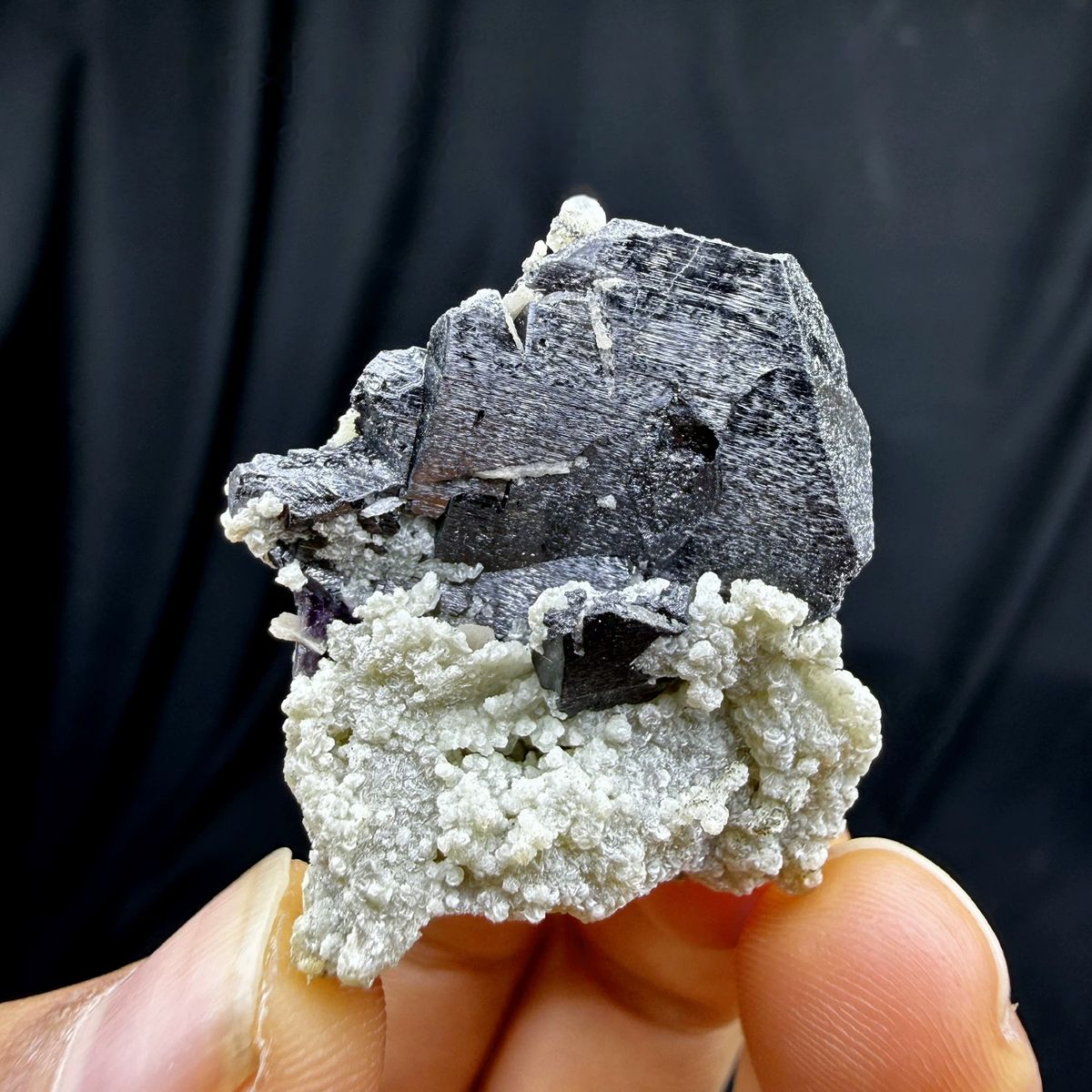
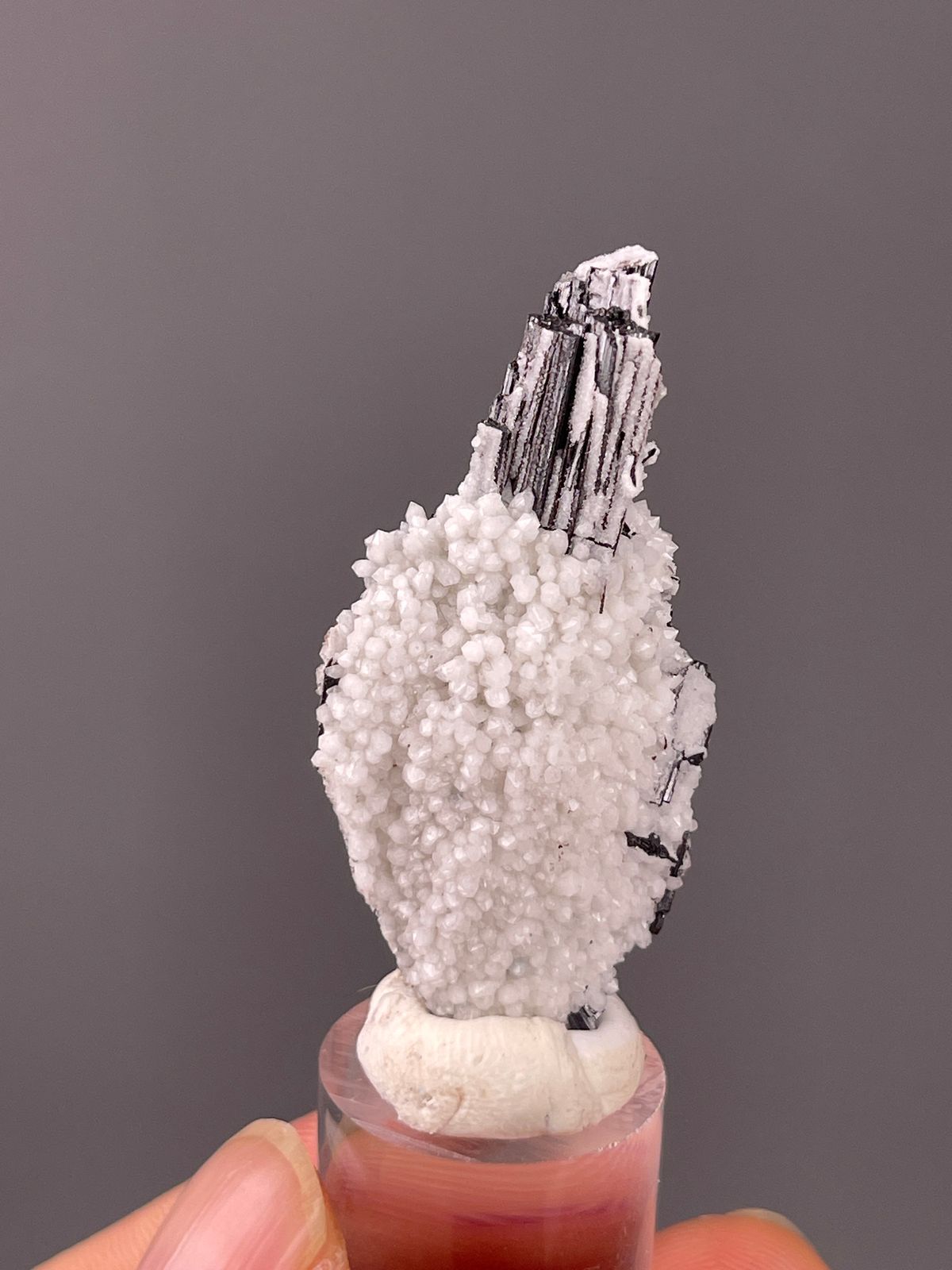
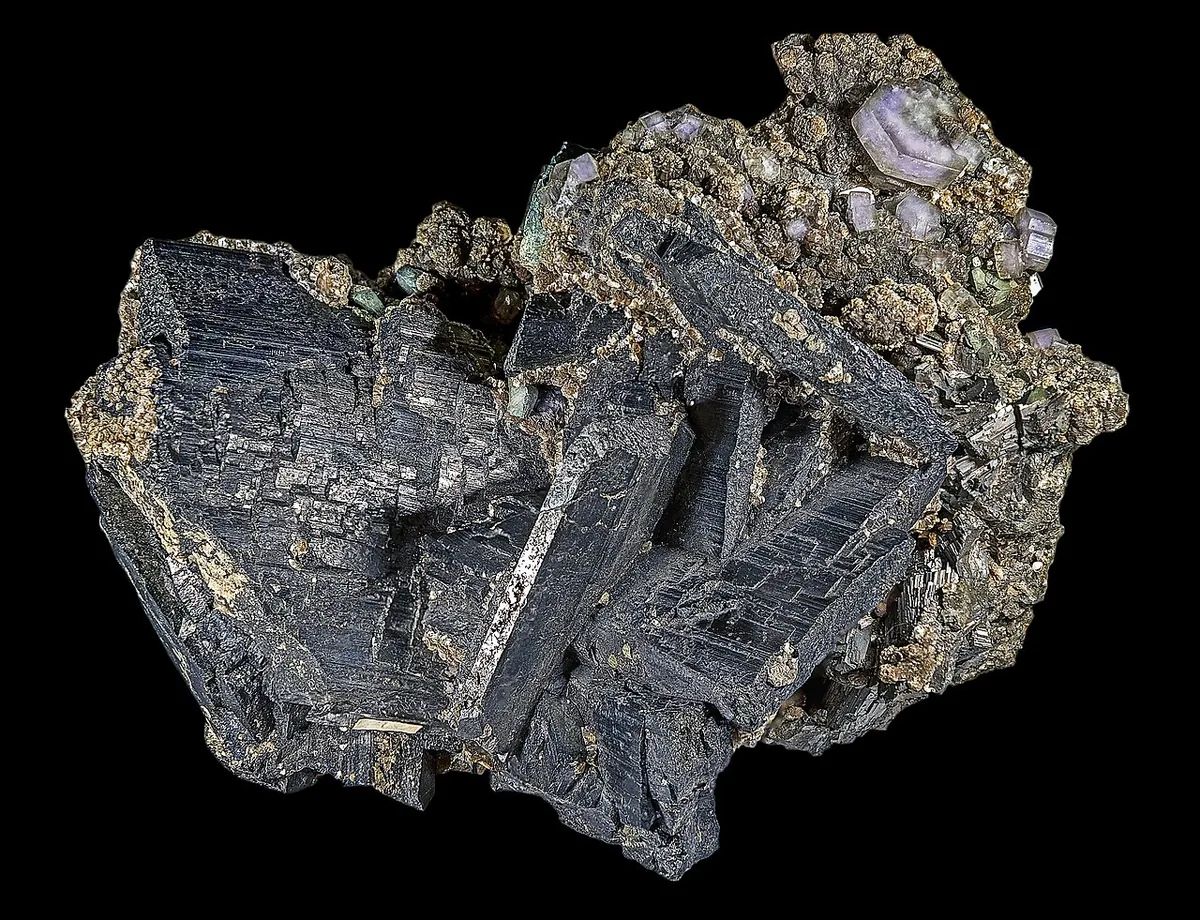
Wolframite is the principal ore of tungsten and a defining mineral of the Yaogangxian and Xianghualing tungsten-tin districts. Black, dense, and bladed, it is the metallic counterpoint to the brilliant fluorite for which these mines are now better known.
Wolframite is the principal ore of tungsten and a defining mineral of the Yaogangxian and Xianghualing tungsten-tin districts. Black, dense, and bladed, it is the metallic counterpoint to the brilliant fluorite for which these mines are now better known.
Notable Varieties
- Ferberite (Fe-rich end-member)
- Hubnerite (Mn-rich end-member)
The Chinese Angle
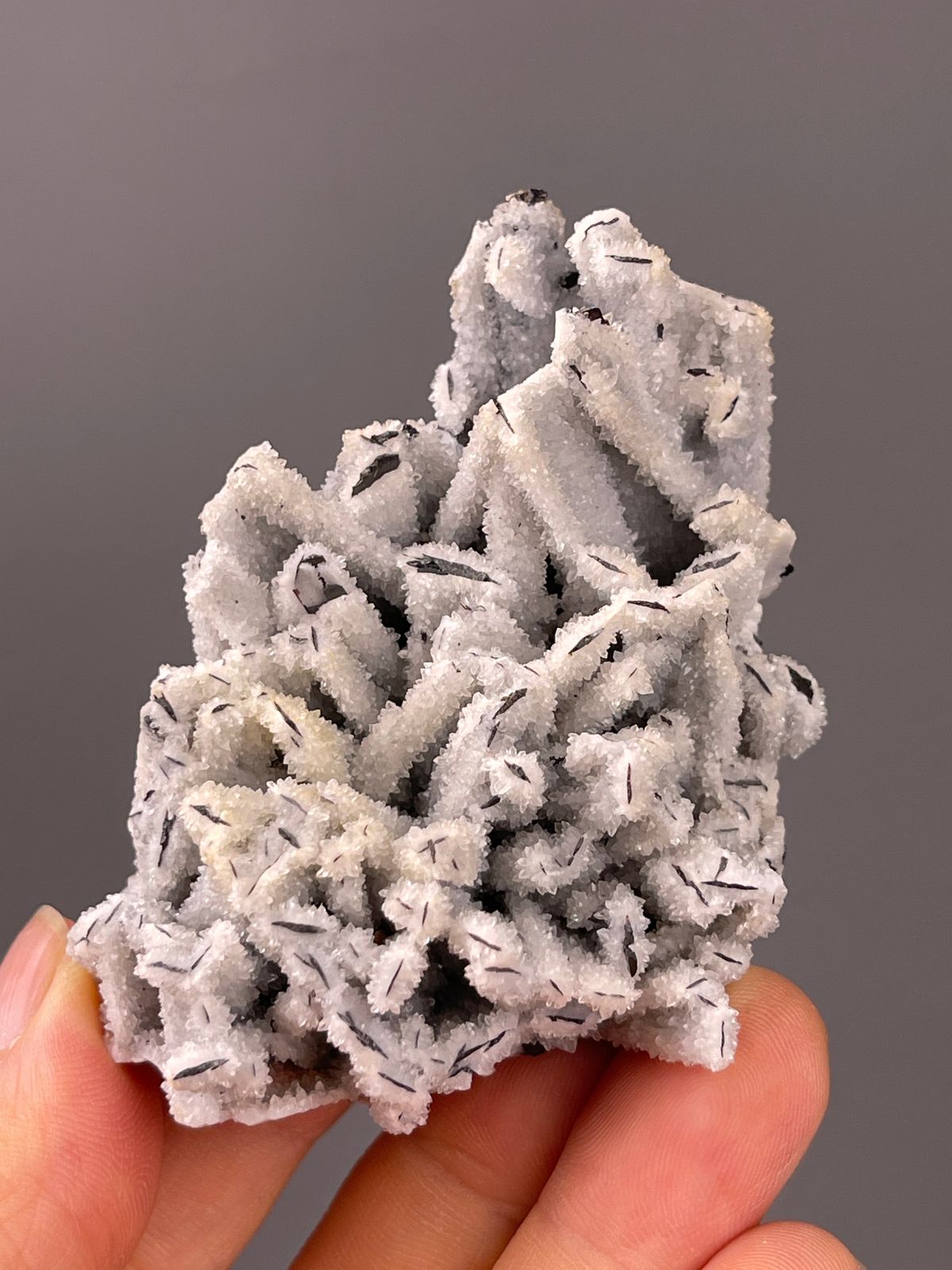
Yaogangxian and Xianghualing in Hunan are world-class wolframite localities. Specimen-grade crystals reach 5-15 cm and are often associated with quartz, fluorite, and arsenopyrite. Hunan wolframite is noted for matrix-paired collector specimens.
Cite this entry
APA
MyMineralBox Editorial Team. (2026). Wolframite. My Mineral Box. Retrieved May 23, 2026, from https://mymineralbox.com/mineral-encyclopedia/minerals/wolframite/
MLA
MyMineralBox Editorial Team. "Wolframite." My Mineral Box, 2026, https://mymineralbox.com/mineral-encyclopedia/minerals/wolframite/. Accessed May 23, 2026.
Chicago
MyMineralBox Editorial Team. "Wolframite." My Mineral Box. Last modified May 4, 2026. https://mymineralbox.com/mineral-encyclopedia/minerals/wolframite/.
BibTeX
@misc{mmb_wolframite,
 author = {{MyMineralBox Editorial Team}},
 title = {{Wolframite}},
 year = {2026},
 publisher = {My Mineral Box},
 url = {https://mymineralbox.com/mineral-encyclopedia/minerals/wolframite/},
 urldate = {2026-05-23}
}