Some imperial topaz fades slightly with extreme UV.
Handling: Diffused lighting OK.
Information provided in good faith. Consult local hazmat regulations for transport and disposal. Severely hazardous specimens may require special storage cabinets.
UV Fluorescence
SW (254 nm)
Yellow / orange
moderate
LW (365 nm)
Yellow
weak
Imperial topaz shows weak response; blue topaz often inert.
SW = shortwave (germicidal lamp). LW = longwave (blacklight). Response varies with locality, trace impurities, and treatment.
Famous specimens of this species
American Golden Topaz— 22892.5 ct
Largest faceted yellow topaz. 172 facets.
Origin: Minas Gerais, Brazil. Now at: Smithsonian NMNH. Recorded 1984.
El-Dorado Topaz— 31000 ct
World's largest faceted gem of any species.
Origin: Brazil. Now at: Private. Recorded 1984.
› Browse all famous specimens
Tenacity
Behavior:
brittle (cleaves)
Under stress:
Splits along basal {001}
Perfect basal cleavage means careful handling at the parting plane.
Luster
vitreous
Bright vitreous.
Color Cause (Chromophore)
Chromophore:
color centers + Cr
Mechanism:
irradiation + heat
Color produced:
blue / yellow / pink
Imperial topaz: Cr-related color center. Blue topaz: irradiation-heat treatment.
Diaphaneity (Transparency)
transparent
Imperial, blue, and colorless topaz all transparent.
Type Locality
(ancient term)— Egypt (Topazos Island)
Source: Pliny
› Browse all type localities
Magnetism
Category:
diamagnetic
Test result:
Slight repulsion
Al₂SiO₄(F,OH)₂; diamagnetic.
Test with rare-earth magnet (N42 or N52 neodymium). Suspend specimen on thread for sensitive paramagnetic detection. Diamagnetic minerals are weakly repelled (visible only with strong magnets like bismuth).
Diagnostic Field Tests
Cleavage→ Perfect basal — careful handling
Sharp tap along c-axis can split crystals.
⚠ Use dilute HCl (~10%) only on inconspicuous spots; rinse promptly. Smell-tests should be brief and ventilated. Taste-test ONLY halite/sylvite — never lead, arsenic, or sulfur minerals.
Specific Gravity
3.49–3.57
g/cm³
medium
Heavier than quartz; lighter than corundum.
For comparison: water = 1.00, glass ≈ 2.5, quartz = 2.65, corundum ≈ 4.00, galena ≈ 7.50, gold ≈ 19.3.
Topaz sits at 8 on the Mohs scale —
very hard; only diamond or corundum scratches it.
Colors:
Streak White
Crystal system Orthorhombic
Pronunciation/ˈtoʊpæz/
Type localitySchneckenstein, Saxony, Germany (classical)
Discovery First described 1737 by Johann Friedrich Henckel (Germany)
SilicatesSilicates – Nesosilicates
TL;DR · 1 min read
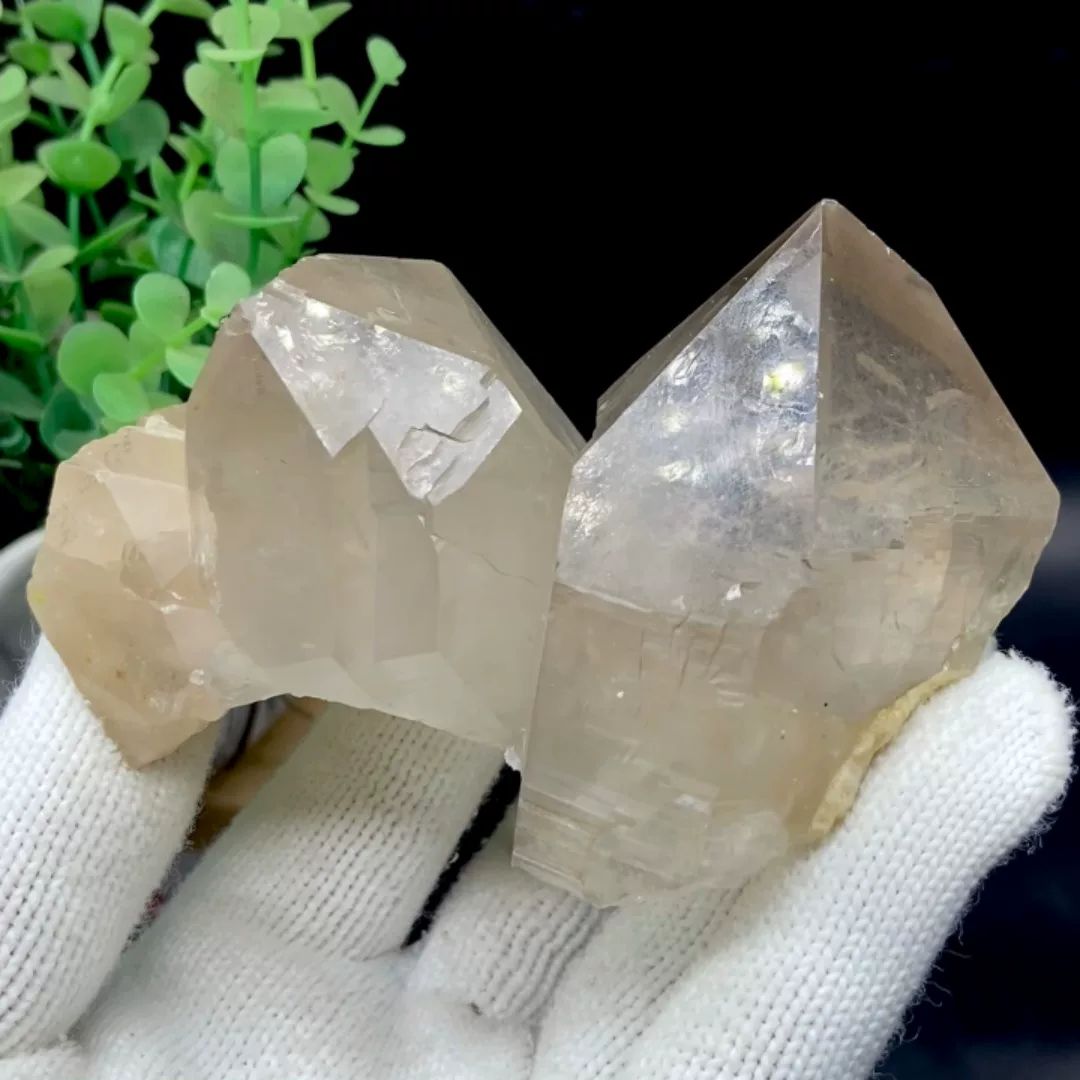
Topaz is the iconic Mohs-8 reference mineral and a Chinese Sichuan signature. The Xuebaoding district produces the world reference for translucent colorless and pale-blue topaz crystals on milky quartz, often paired with cassiterite and beryl.
Topaz is the iconic Mohs-8 reference mineral and a Chinese Sichuan signature. The Xuebaoding district produces the world reference for translucent colorless and pale-blue topaz crystals on milky quartz, often paired with cassiterite and beryl. Sichuan topaz – distinct from heat-treated commercial topaz – is the gem-collector standard.
Notable Varieties
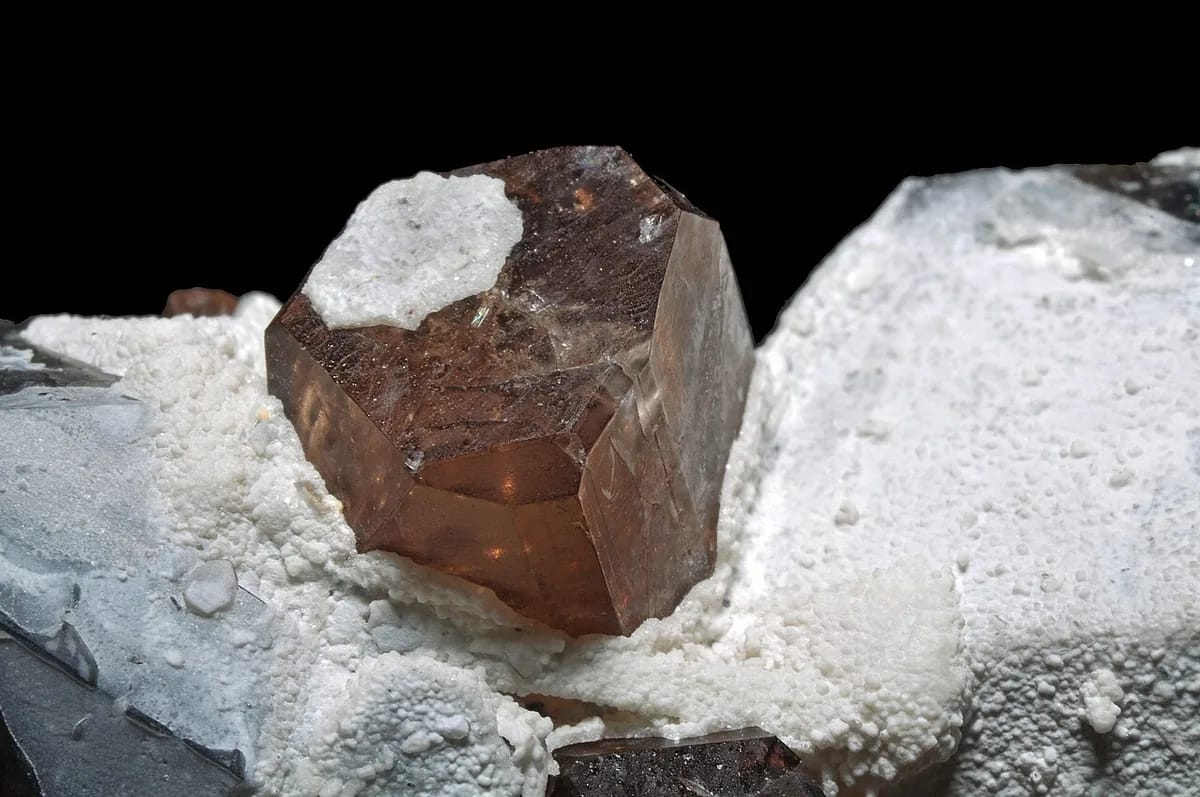
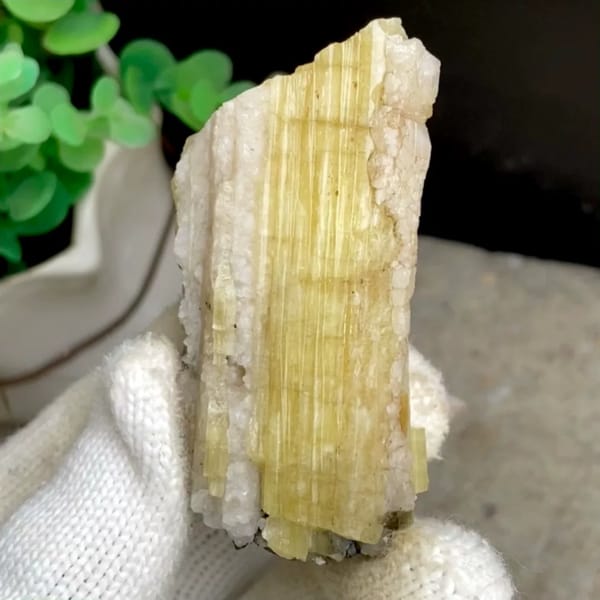
Imperial topaz (orange-pink)
Sherry topaz (champagne)
Sky-blue topaz
Colorless topaz
The Chinese Angle
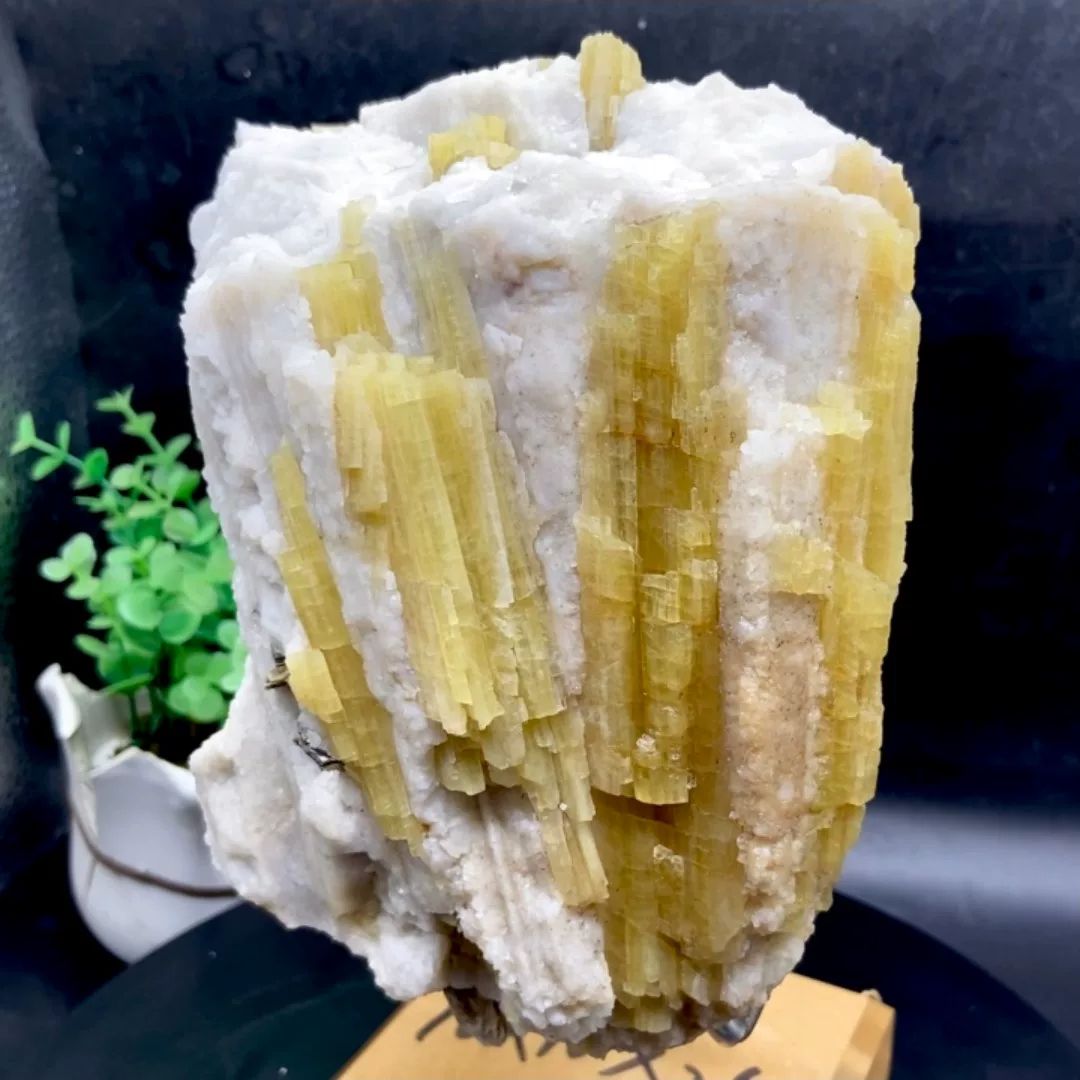
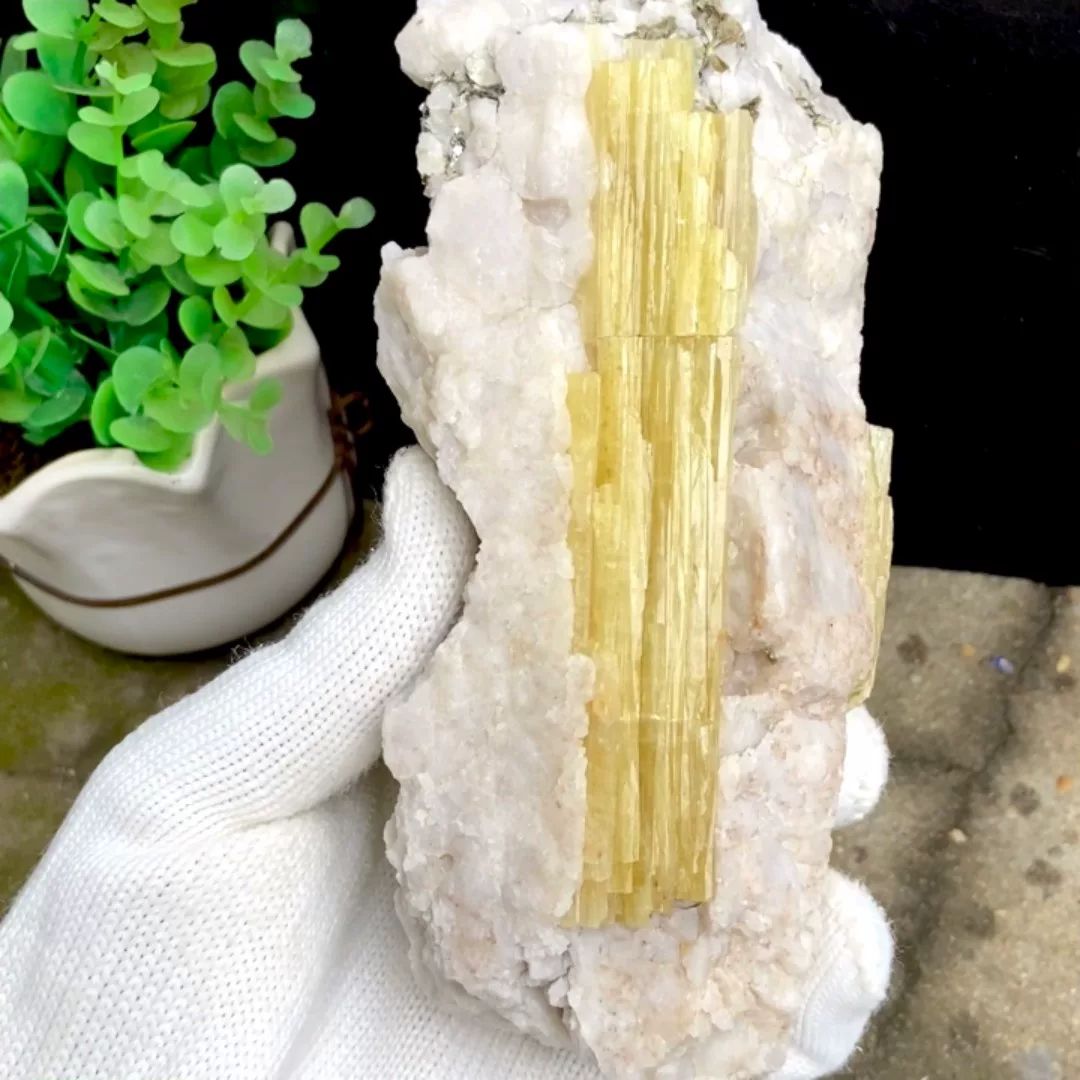
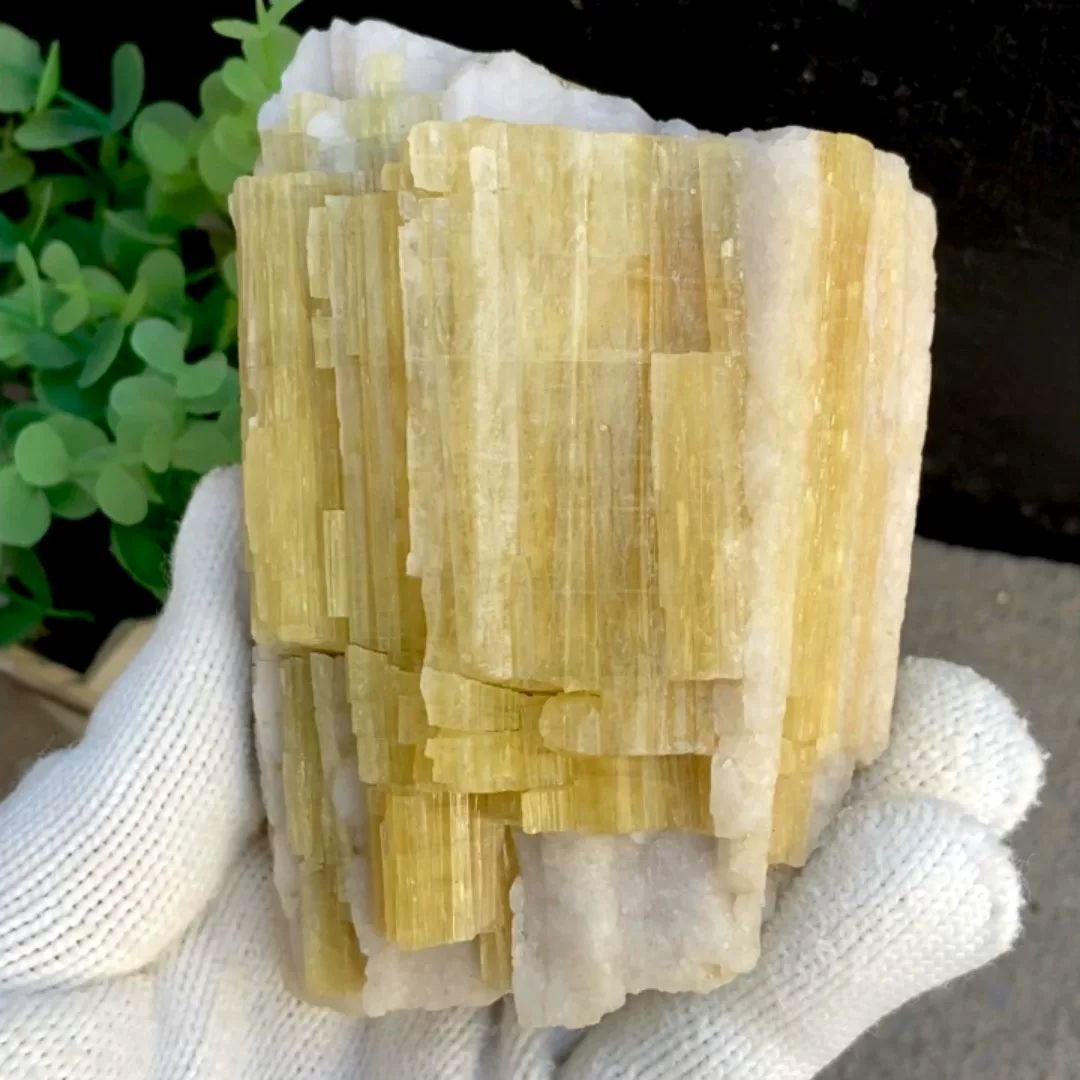
Xuebaoding Mine (Sichuan) is the world reference for collector-grade Chinese topaz – sharp pale-blue and colorless crystals on smoky quartz with cassiterite and beryl. Xianghualing in Hunan produces a secondary supply, often as smaller pale topaz crystals in pegmatite pockets. Both are untreated natural color.
Cite this entry
APA
MyMineralBox Editorial Team. (2026). Topaz. My Mineral Box. Retrieved May 23, 2026, from https://mymineralbox.com/mineral-encyclopedia/minerals/topaz/
MLA
MyMineralBox Editorial Team. "Topaz." My Mineral Box, 2026, https://mymineralbox.com/mineral-encyclopedia/minerals/topaz/. Accessed May 23, 2026.
Chicago
MyMineralBox Editorial Team. "Topaz." My Mineral Box. Last modified May 3, 2026. https://mymineralbox.com/mineral-encyclopedia/minerals/topaz/.
BibTeX
@misc{mmb_topaz,
 author = {{MyMineralBox Editorial Team}},
 title = {{Topaz}},
 year = {2026},
 publisher = {My Mineral Box},
 url = {https://mymineralbox.com/mineral-encyclopedia/minerals/topaz/},
 urldate = {2026-05-23}
}
About Topaz
Topaz belongs to the silicate class in the topaz group and has the chemical formula Al₂(SiO₄)(F,OH)₂. It crystallizes in the orthorhombic system and is one of the most visually varied minerals in the collector market. Its combination of structural character and global distribution make it a recognized species in both systematic and aesthetic collections.
Identification & care
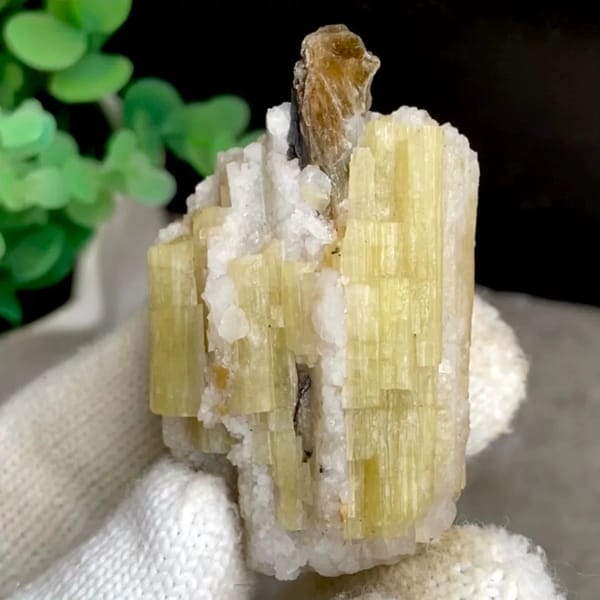
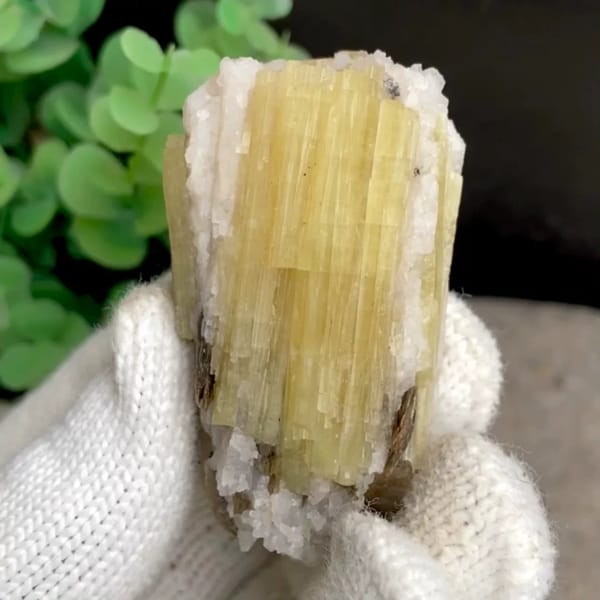
Crystals commonly develop as prismatic with diamond-shaped cross-section; striated; often large crystals. Its color range is broad, including colorless, pale blue, light green, yellow, yellowish-brown, orange, pink, reddish-pink, and pale pink. The luster is vitreous, the streak is white, and specimens are typically transparent. The cleavage is perfect basal {001} — one direction, very pronounced. The fracture is conchoidal to uneven, which aids identification.
Collector context
How it forms
In terms of geology, Topaz forms in granitic pegmatites; high-temperature pneumatolytic veins; alluvial. It is commonly found in association with quartz, feldspar, tourmaline, beryl, cassiterite, fluorite.
Classic Chinese localities
Xianghualing Sn-polymetallic ore field, and Xihuashan ore field are each a benchmark source for topaz.
Why collectors care
Topaz occupies a rare position: it matters equally to specimen collectors and to the gem trade. Crisp natural crystals with saturated color and good clarity command premium pricing and are among the highest-prestige targets in any systematic collection.
What affects value
Value in Topaz is assessed, in typical order of weight, against: (1) locality provenance; (2) crystal size; (3) transparency and internal clarity; (4) color intensity and saturation; (5) crystal form and termination sharpness; (6) matrix and associated-species aesthetics; (7) gem-cutting potential. Verified locality documentation and cutting potential further elevate collector demand.
Frequently asked questions
What is Topaz?
Topaz has the chemical formula Al2(SiO4)(F,OH)2, crystallises in the Orthorhombic system, has a Mohs hardness of 8. Topaz is a silicate mineral valued for its hardness and gem potential, with several world-class Chinese localities.
What is the chemical formula of Topaz?
The chemical formula of Topaz is Al2(SiO4)(F,OH)2.
What crystal system does Topaz belong to?
Topaz crystallises in the Orthorhombic crystal system.
Where is Topaz found?
Notable localities for Topaz include Minas Gerais, Pikes Peak, Ratnapura.
Is Topaz rare?
As a collector mineral, Topaz is generally considered uncommon.
We use a small set of cookies (analytics, checkout, chat) to keep the site working and understand how visitors use it. Checkout-essential cookies are always loaded. Privacy policy