
Onyx
Curated by Maggie Liu · Updated:
Onyx is a silicate mineral prized by collectors for its exceptional color range.
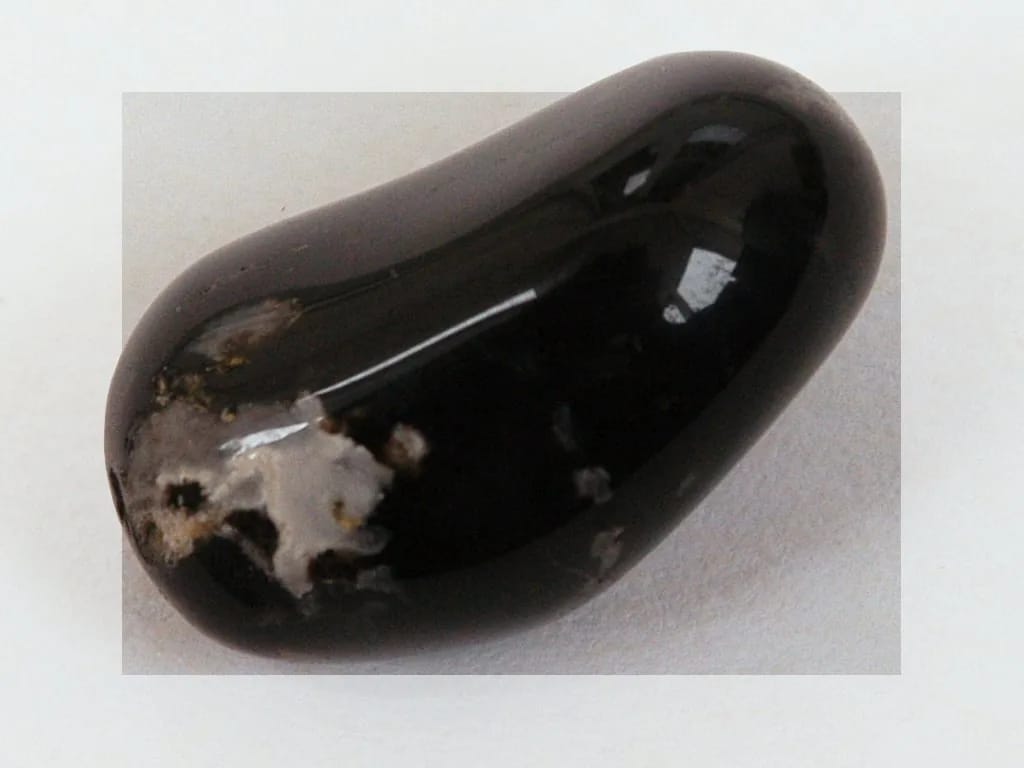
Onyx is a banded variety of chalcedony (microcrystalline quartz) with straight, parallel bands — classically black and white — long used for cameos, beads and carvings.
About Onyxextended article
Onyx is a form of chalcedony, meaning it is quartz (SiO₂) built from microscopic fibrous crystals. What sets onyx apart from agate is the geometry of its banding: onyx shows straight, flat, parallel layers rather than the concentric or curved bands of agate. The classic black-and-white onyx, and the red-brown-and-white variety called sardonyx, have been carved into cameos and intaglios since antiquity.
Identifying onyx
True onyx is hard (about 7 on the Mohs scale, like all quartz), takes a high polish, and shows clean straight banding. It should not be confused with the soft, translucent banded calcite/aragonite sold as 'onyx marble' or 'Mexican onyx', which is a carbonate (hardness 3) and a completely different material despite the shared trade name.
Where it is found
Chalcedony and its banded varieties form in cavities and fractures in many rock types worldwide. Brazil, India, Uruguay and the United States are major sources, and much commercial black onyx is colour-enhanced agate. China is a long-established producer of agate and chalcedony, used both for specimens and for the carving and bead trades.
What collectors look for
Collectors and lapidaries look for crisp, high-contrast banding, even colour, and freedom from fractures. Natural untreated banded onyx, and fine sardonyx with clean red-and-white layers, are the most desirable.
About Onyx
Onyx is a silicate mineral in the quartz group (chalcedony varieties) and has the chemical formula SiO2 (banded chalcedony variety). It crystallizes in the trigonal system and is one of the most visually varied minerals in the collector market.
Identification & care
Specimens usually show massive, banded layers (parallel banding — vs agate's curved). Its color range is broad, including black, black and white banded, also red-white (sardonyx), green-white, and etc.. The luster is waxy, the streak is white, and specimens range from translucent to opaque. The fracture is conchoidal, which is one of its key identifying features.
Collector context
Collector notes
Among ornamental materials, Onyx has a recognized place in collections.
Frequently asked questions
What is Onyx?
Onyx has the chemical formula SiO2 (banded chalcedony variety), crystallises in the Trigonal system. Onyx is a silicate mineral prized by collectors for its exceptional color range.
What is the chemical formula of Onyx?
The chemical formula of Onyx is SiO2 (banded chalcedony variety).
What crystal system does Onyx belong to?
Onyx crystallises in the Trigonal crystal system.
Related minerals
Looking for a Onyx specimen?
Our inventory is one-of-a-kind and turns over quickly. Tell us what you're after — species, size, budget — and we'll notify you when a matching Onyx arrives from our sourcing network.
Request this mineral