Elemental Composition (by mass)
| Element | Mass % | Visual |
|---|---|---|
| Pb Lead | 56.44% | |
| Mo Molybdenum | 26.13% | |
| O Oxygen | 17.43% |
Computed from simplified end-member formula. Solid-solution series, water content, and trace substitutions cause real-world variation.
IMA Abbreviation (Whitney-Evans 2010)
Wul
→ Wulfenite
Pb molybdate
Standard symbol from American Mineralogist (Whitney & Evans, 2010). Used in thin-section labeling, phase diagrams, and IMA-style species records.
Pronunciation
/ˈwʊlfənaɪt/
↔ WOOLF-uh-nite
for F.X. von Wulfen
⚠ Safety & Handling
☠toxicmoderate
Lead molybdate.
Handling: Wash hands.
Information provided in good faith. Consult local hazmat regulations for transport and disposal. Severely hazardous specimens may require special storage cabinets.
Tenacity
Behavior:
brittle (fragile)
Under stress:
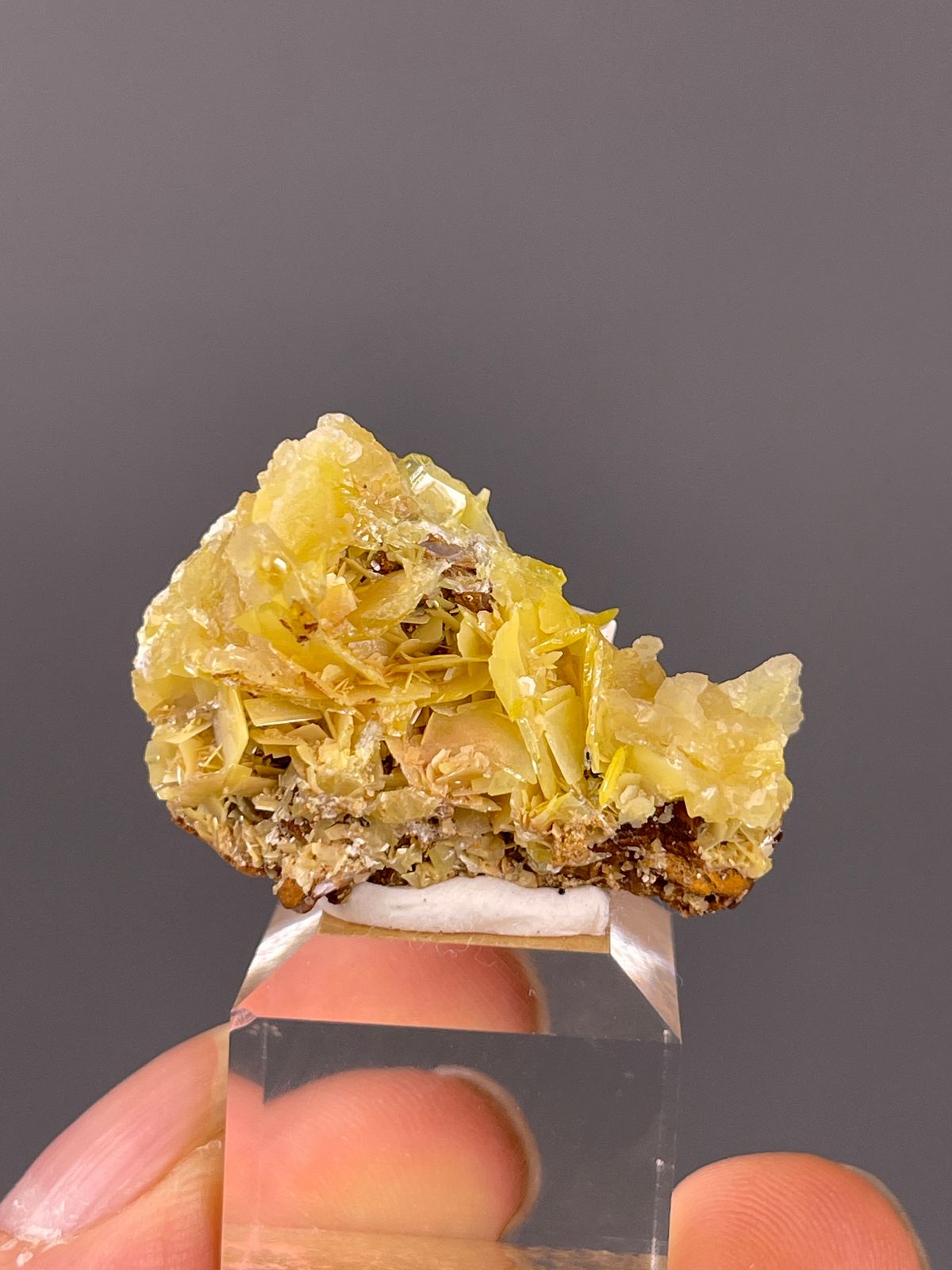
Thin plates chip easily
Tabular crystals very thin; chip on edges.
Luster
adamantine→resinous
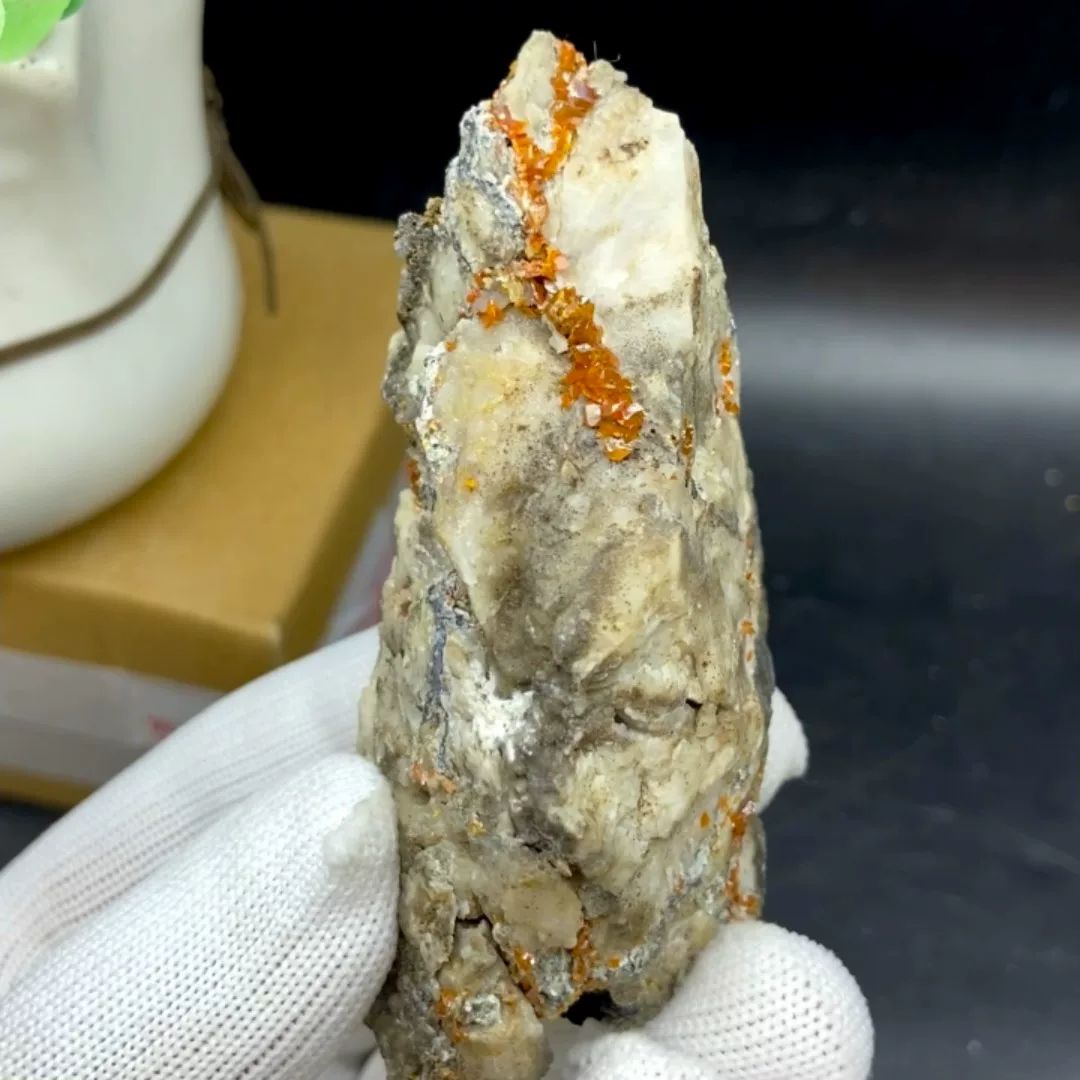
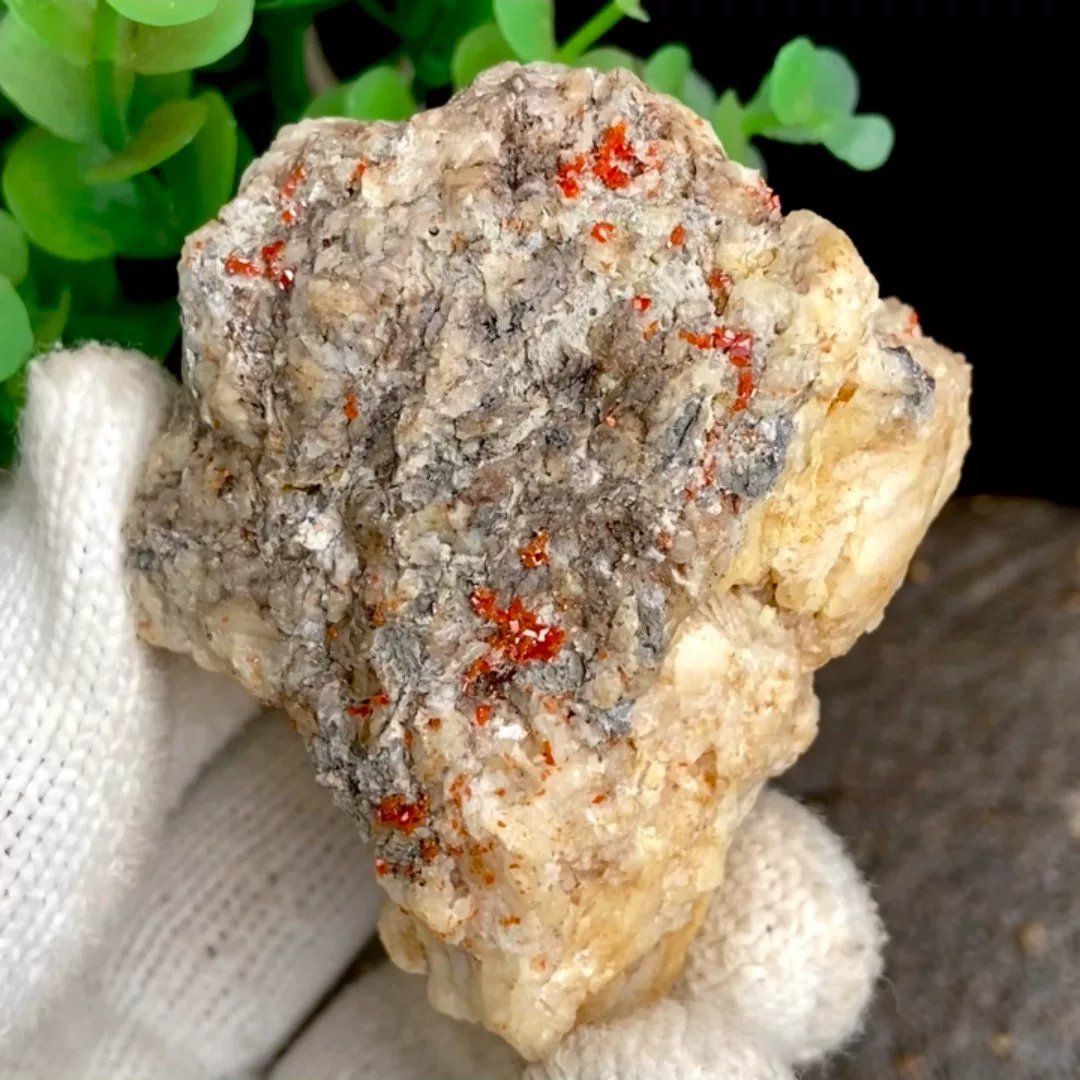
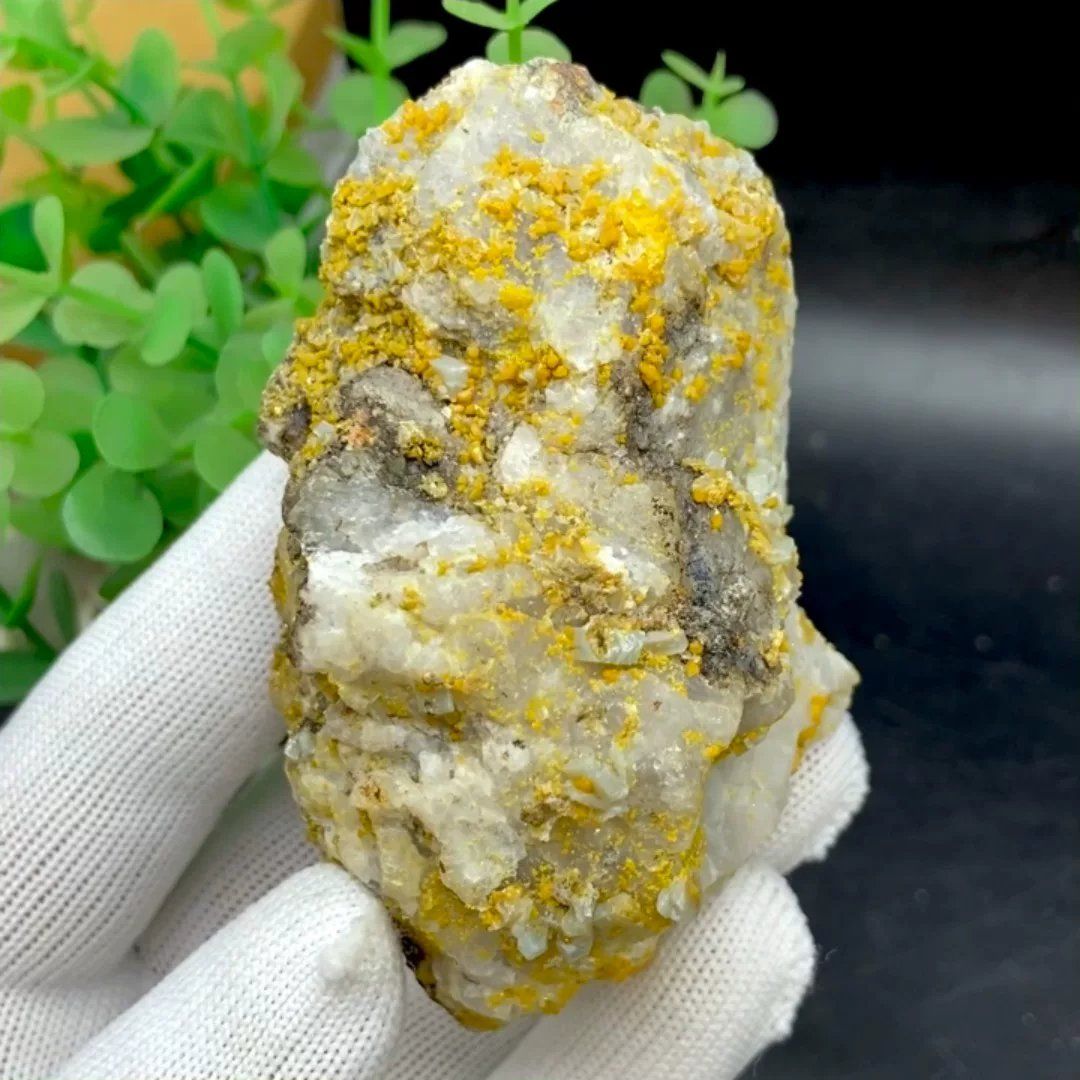
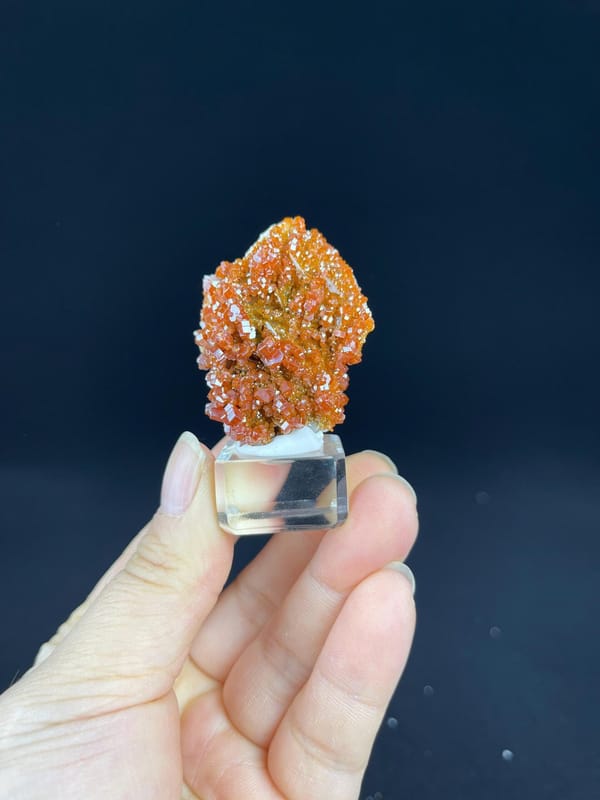
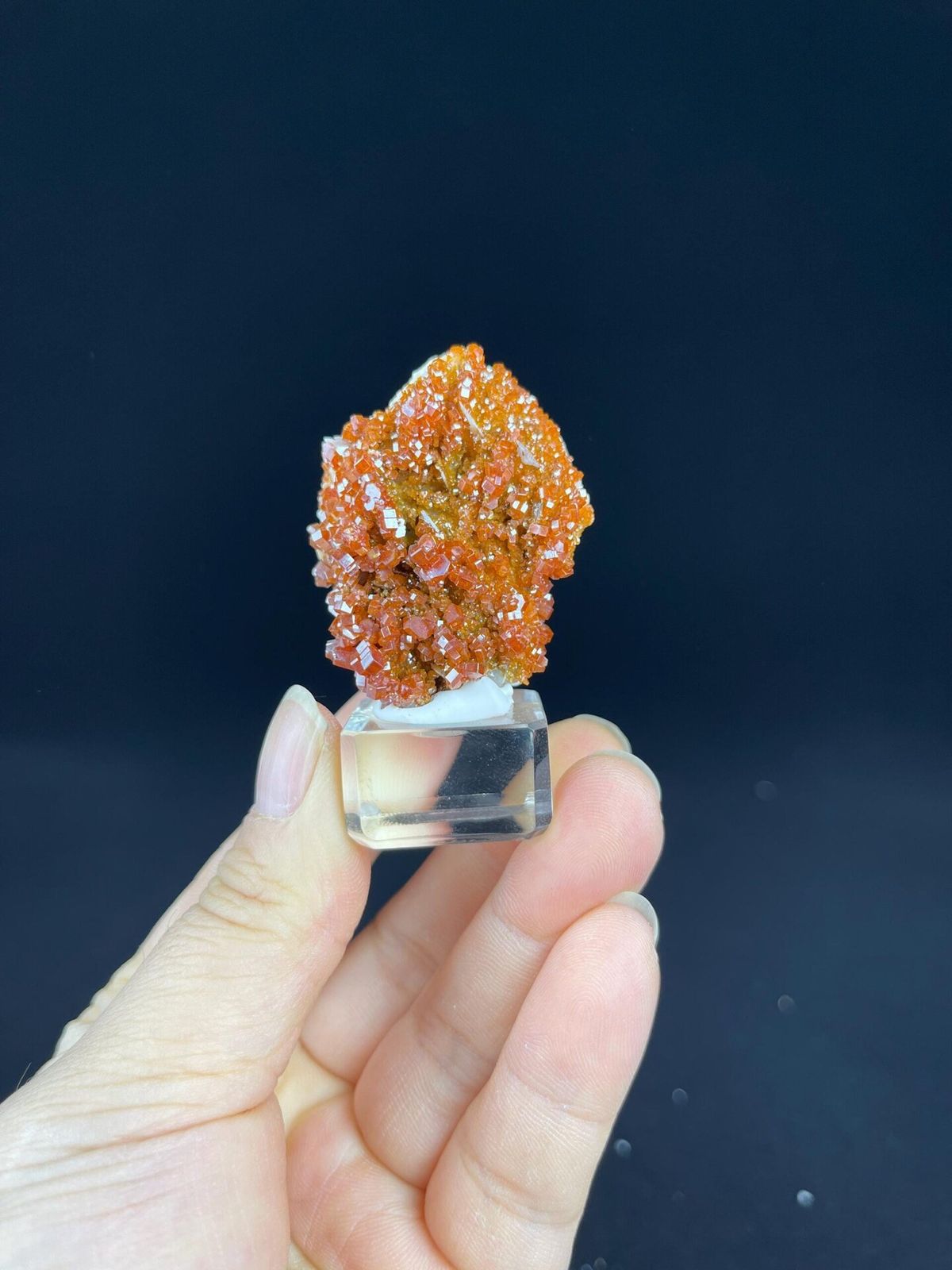
Bright orange-yellow with characteristic adamantine sparkle.
Type Locality
Bleiberg — Austria
Described 1845 by Haidinger (named for F.X. von Wulfen)
› Browse all type localities
Care notesLight-sensitive (some specimens fade). Avoid acid cleaning. Full cleaning guide →
Market availability: Uncommon
Found at major shows and select dealers. Quality varies by locality.
Collector tier: Cabinet Classic
Display species collected for cabinet presentation, with specimens recorded from named localities.
Mohs 2.5–3
Vickers (~) 170 HV
Knoop (~) 185 HK
Nickel–Strunz
7.GA.05Dana
48.02.04.01Geological setting
Oxidation zone
Element composition by mass
Formula: PbMoO₄ · molar mass: 367.15 g/mol
| Pb | 56.44% | |
| Mo | 26.13% | |
| O | 17.43% |
Computed from atomic weights (IUPAC 2021). Site-occupancy groups (Fe,Mn) split equally.
Mohs Hardness
2.5–3
Wulfenite sits at 2.5–3 on the Mohs scale — can be scratched by a steel knife.
Colors:
Streak
White
White
Crystal system
Tetragonal
Tetragonal
Pronunciation/ˈwʊlfənaɪt/
Type localityBad Bleiberg, Carinthia, Austria
Discovery First described 1845 by Wilhelm Karl Ritter von Haidinger (Carinthia)
MolybdatesMolybdates
TL;DR · 1 min read
Wulfenite (PbMoO₄) is a lead-molybdate mineral famous for its bright orange, yellow, and red square tabular crystals. The most prized Wulfenite specimens — saturated honey-orange paper-thin tablets from Red Cloud Mine (Arizona) and Mibladen (Morocco) — are among the most photographed minerals in collector literature.
Wulfenite (PbMoO₄) is a lead-molybdate mineral famous for its bright orange, yellow, and red square tabular crystals. The most prized Wulfenite specimens — saturated honey-orange paper-thin tablets from Red Cloud Mine (Arizona) and Mibladen (Morocco) — are among the most photographed minerals in collector literature. China hosts modest Wulfenite occurrences at Yongping (Jiangxi).
More minerals to explore
Powellite (钼钙矿)
Tetragonal