Mohs 3.5
Vickers (~) 170 HV
Knoop (~) 185 HK
Geological setting
Hydrothermal
Element composition by mass
Formula: SrCO₃ · molar mass: 147.63 g/mol
| Sr | 59.35% | |
| O | 32.51% | |
| C | 8.14% |
Computed from atomic weights (IUPAC 2021). Site-occupancy groups (Fe,Mn) split equally.
Mohs Hardness
3.5
Strontianite sits at 3.5 on the Mohs scale — can be scratched by a steel knife.
Colors:
Streak
White
White
Crystal system
Orthorhombic
Orthorhombic
CarbonatesCarbonates
TL;DR · 1 min read
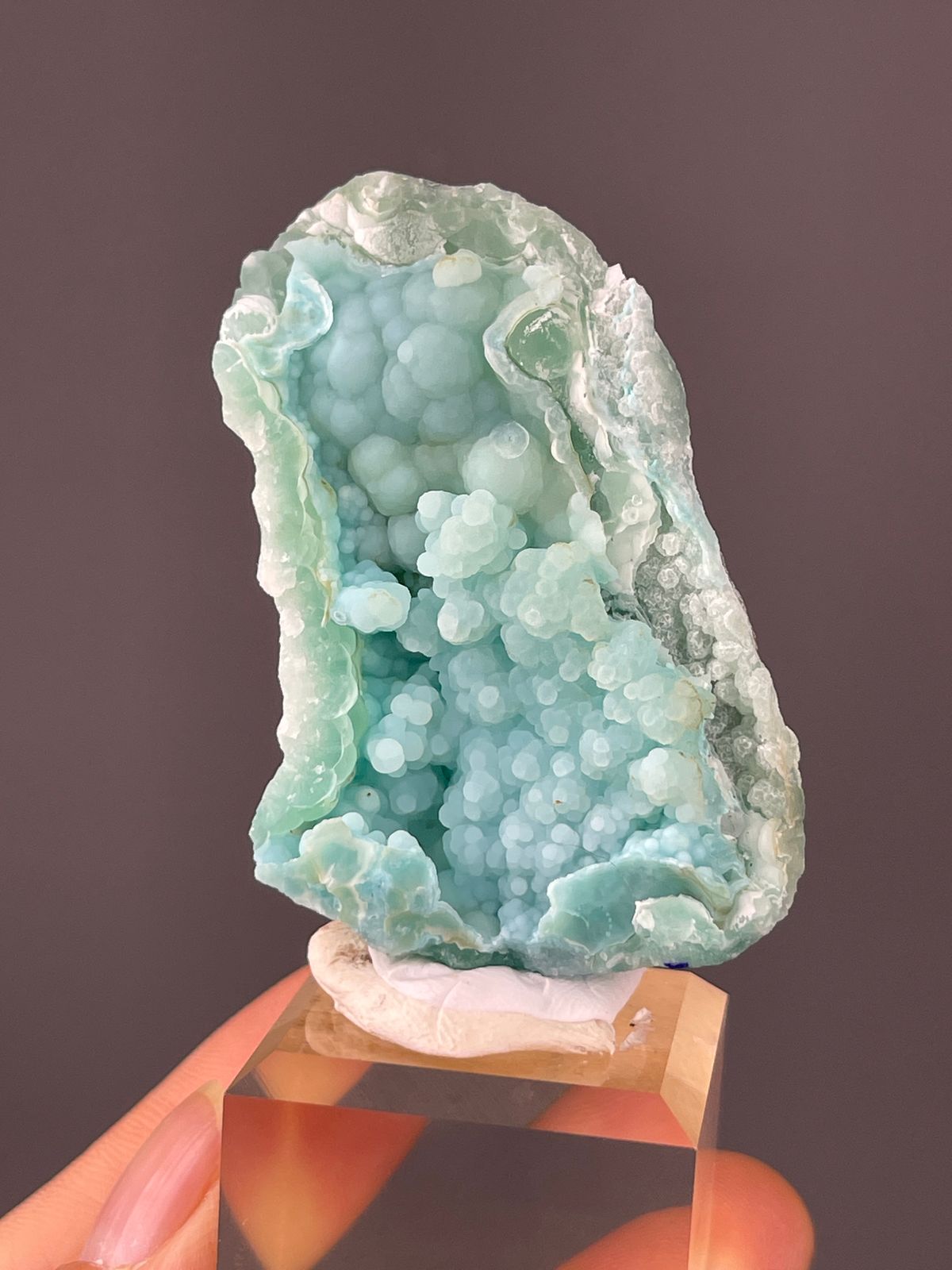
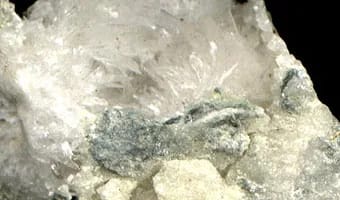
Strontianite (SrCO₃) is strontium carbonate — the carbonate analog of celestite (SrSO₄). Discovered in 1790 in Strontian, Scotland (the type-locality), it gave both the mineral name and the element strontium their etymology.
Strontianite (SrCO₃) is strontium carbonate — the carbonate analog of celestite (SrSO₄). Discovered in 1790 in Strontian, Scotland (the type-locality), it gave both the mineral name and the element strontium their etymology. Strontianite forms in low-temperature hydrothermal veins, often in association with calcite and barite.
More minerals to explore
Aurichalcite (绿铜锌矿)
Monoclinic
Magnesite (菱镁矿)
Trigonal
Bastnäsite (氟碳铈矿)
Hexagonal
Aragonite (霰石)
Orthorhombic
Ankerite (铁白云石)
Trigonal
Rhodochrosite (菱锰矿)
Trigonal