Elemental Composition (by mass)
| Element | Mass % | Visual |
|---|---|---|
| Pb Lead | 69.61% | |
| As Arsenic | 15.10% | |
| O Oxygen | 12.90% | |
| Cl Chlorine | 2.38% |
Computed from simplified end-member formula. Solid-solution series, water content, and trace substitutions cause real-world variation.
IMA Abbreviation (Whitney-Evans 2010)
Mmt
→ Mimetite
Pb chloroarsenate
Standard symbol from American Mineralogist (Whitney & Evans, 2010). Used in thin-section labeling, phase diagrams, and IMA-style species records.
Pronunciation
/ˈmɪmɪtaɪt/
↔ MIM-ih-tite
Greek mimetes (imitator)
⚠ Safety & Handling
☠toxichigh
Lead chloroarsenate — both Pb and As content.
Handling: Wash hands. No grinding/polishing.
Information provided in good faith. Consult local hazmat regulations for transport and disposal. Severely hazardous specimens may require special storage cabinets.
Specific Gravity
7.15–7.27
g/cm³
very heavy
Pb chloroarsenate.
For comparison: water = 1.00, glass ≈ 2.5, quartz = 2.65, corundum ≈ 4.00, galena ≈ 7.50, gold ≈ 19.3.
Streak Test
white
White streak — diagnostic Pb-As mineral.
Streak = color of the powdered mineral. Drag specimen across unglazed white porcelain plate (Mohs 6.5). For minerals harder than the plate, crush a small flake into powder and observe color.
Mohs 3.5–4
Vickers (~) 200 HV
Knoop (~) 220 HK
Element composition by mass
Formula: Pb₅(AsO₄)₃Cl · molar mass: 1488.2 g/mol
| Pb | 69.61% | |
| As | 15.1% | |
| O | 12.9% | |
| Cl | 2.38% |
Computed from atomic weights (IUPAC 2021). Site-occupancy groups (Fe,Mn) split equally.
Mohs Hardness
3.5–4
Mimetite sits at 3.5–4 on the Mohs scale — can be scratched by a steel knife.
Colors:
Streak
White
White
Crystal system
Hexagonal
Hexagonal
PhosphatesPhosphates (Arsenates)
TL;DR · 1 min read
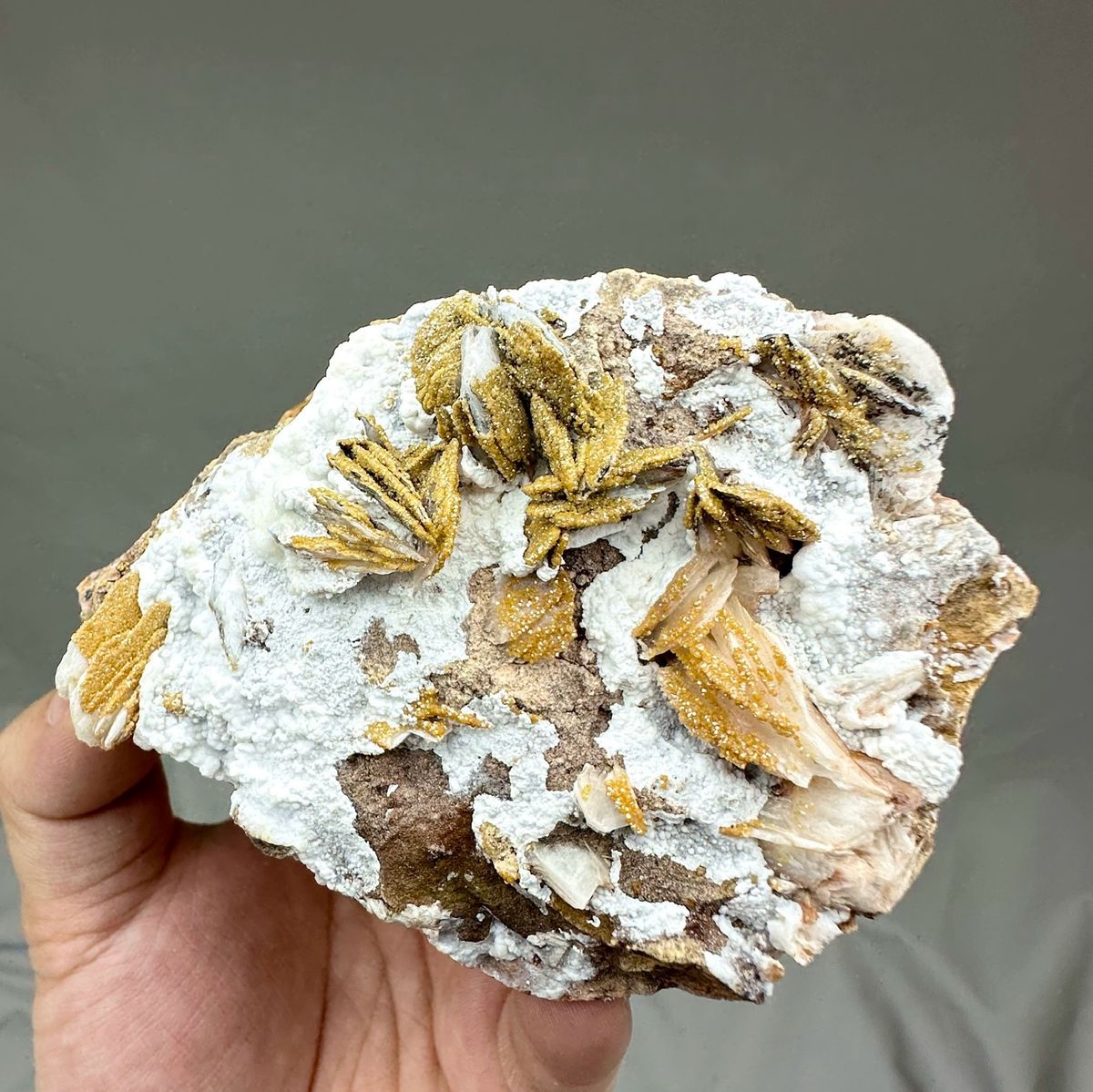
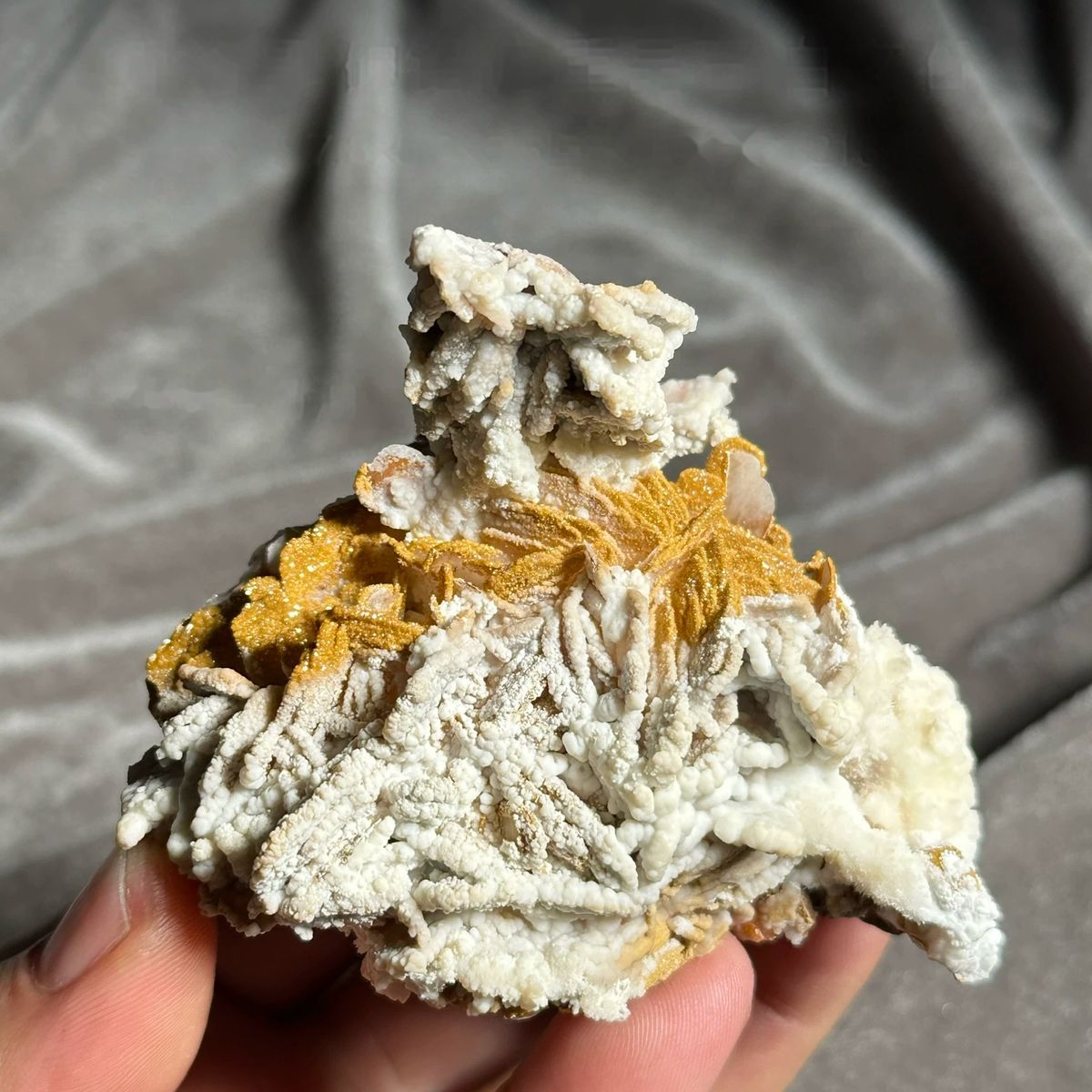
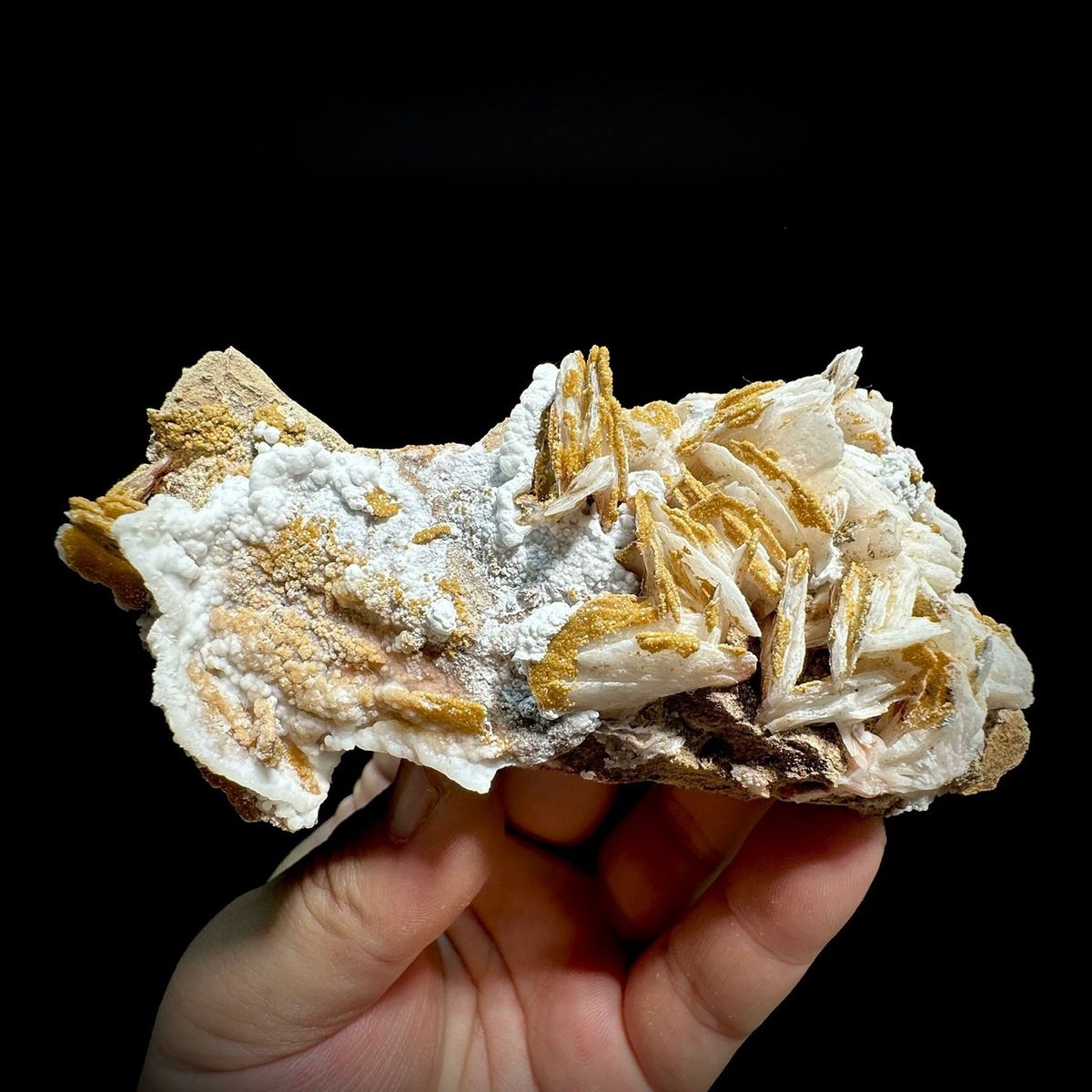
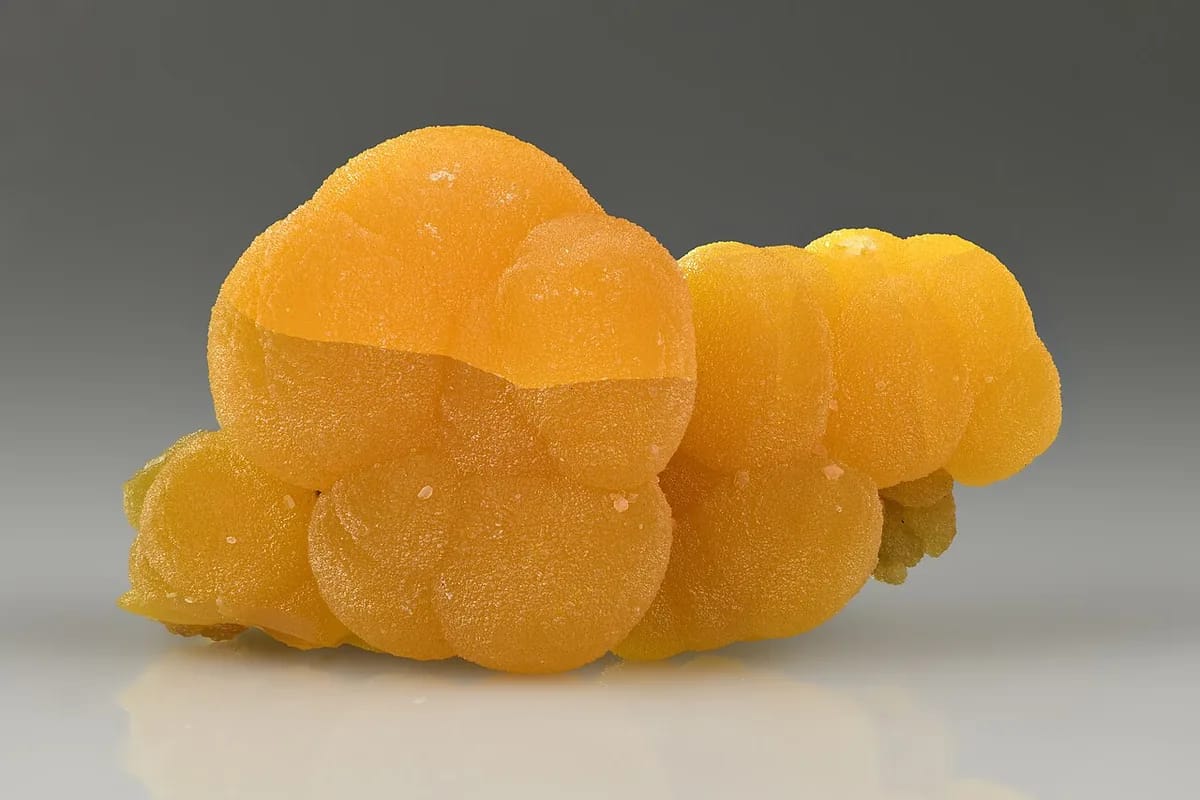
Mimetite (Pb₅(AsO₄)₃Cl) is the arsenate analog of pyromorphite — yellow to orange hexagonal crystals from oxidized lead-arsenic ore zones. The "campylite" variety forms characteristic barrel-shaped, curved crystals.
Mimetite (Pb₅(AsO₄)₃Cl) is the arsenate analog of pyromorphite — yellow to orange hexagonal crystals from oxidized lead-arsenic ore zones. The “campylite” variety forms characteristic barrel-shaped, curved crystals. Bayan Obo (Inner Mongolia) hosts notable specimens alongside REE-bearing minerals.
Notable Chinese Localities
Bayan Obo Mine (Inner Mongolia) is the principal Chinese source. Daoping (Guangxi) produces mimetite alongside pyromorphite.
Cite this entry
APA
MyMineralBox Editorial Team. (2026). Mimetite. My Mineral Box. Retrieved May 23, 2026, from https://mymineralbox.com/mineral-encyclopedia/minerals/mimetite/
MLA
MyMineralBox Editorial Team. "Mimetite." My Mineral Box, 2026, https://mymineralbox.com/mineral-encyclopedia/minerals/mimetite/. Accessed May 23, 2026.
Chicago
MyMineralBox Editorial Team. "Mimetite." My Mineral Box. Last modified May 4, 2026. https://mymineralbox.com/mineral-encyclopedia/minerals/mimetite/.
BibTeX
@misc{mmb_mimetite,
 author = {{MyMineralBox Editorial Team}},
 title = {{Mimetite}},
 year = {2026},
 publisher = {My Mineral Box},
 url = {https://mymineralbox.com/mineral-encyclopedia/minerals/mimetite/},
 urldate = {2026-05-23}
}