Elemental Composition (by mass)
| Element | Mass % | Visual |
|---|---|---|
| Pb Lead | 76.38% | |
| O Oxygen | 14.15% | |
| P Phosphorus | 6.85% | |
| Cl Chlorine | 2.61% |
Computed from simplified end-member formula. Solid-solution series, water content, and trace substitutions cause real-world variation.
IMA Abbreviation (Whitney-Evans 2010)
Pmo
→ Pyromorphite
Pb chlorophosphate
Standard symbol from American Mineralogist (Whitney & Evans, 2010). Used in thin-section labeling, phase diagrams, and IMA-style species records.
Pronunciation
/ˌpaɪrəˈmɔːrfaɪt/
↔ pye-roh-MOR-fite
Greek "fire shape"
⚠ Safety & Handling
☠toxicmoderate
Lead chlorophosphate.
Handling: Same as galena.
Information provided in good faith. Consult local hazmat regulations for transport and disposal. Severely hazardous specimens may require special storage cabinets.
Pseudomorph Relationships
Replaced by — this mineral commonly becomes:
→ Galena replacement (rare)
Reverse — Pb chlorophosphate reduces to galena under sulfide-rich conditions. Rare.
Tsumeb.
Replaces — this mineral is often a pseudomorph after:
← Galena replacement
Galena oxidizes to pyromorphite in oxidized Pb deposits.
Bunker Hill, Idaho; Cumberland.
A pseudomorph (Greek "false form") is a mineral with the external shape of another species — the chemistry has changed but the crystal habit is inherited.
Luster
resinous→adamantine
Bright high-RI green or yellow.
Specific Gravity
7.00–7.10
g/cm³
very heavy
Pb chlorophosphate.
For comparison: water = 1.00, glass ≈ 2.5, quartz = 2.65, corundum ≈ 4.00, galena ≈ 7.50, gold ≈ 19.3.
Streak Test
white / pale green
Pale streak; distinguishes from green apatite (white).
Streak = color of the powdered mineral. Drag specimen across unglazed white porcelain plate (Mohs 6.5). For minerals harder than the plate, crush a small flake into powder and observe color.
Mohs 3.5–4
Vickers (~) 200 HV
Knoop (~) 220 HK
Element composition by mass
Formula: Pb₅(PO₄)₃Cl · molar mass: 1356.36 g/mol
| Pb | 76.38% | |
| O | 14.15% | |
| P | 6.85% | |
| Cl | 2.61% |
Computed from atomic weights (IUPAC 2021). Site-occupancy groups (Fe,Mn) split equally.
Mohs Hardness
3.5–4
Pyromorphite sits at 3.5–4 on the Mohs scale — can be scratched by a steel knife.
Colors:
Streak
White
White
Crystal system
Hexagonal
Hexagonal
PhosphatesPhosphates
TL;DR · 1 min read
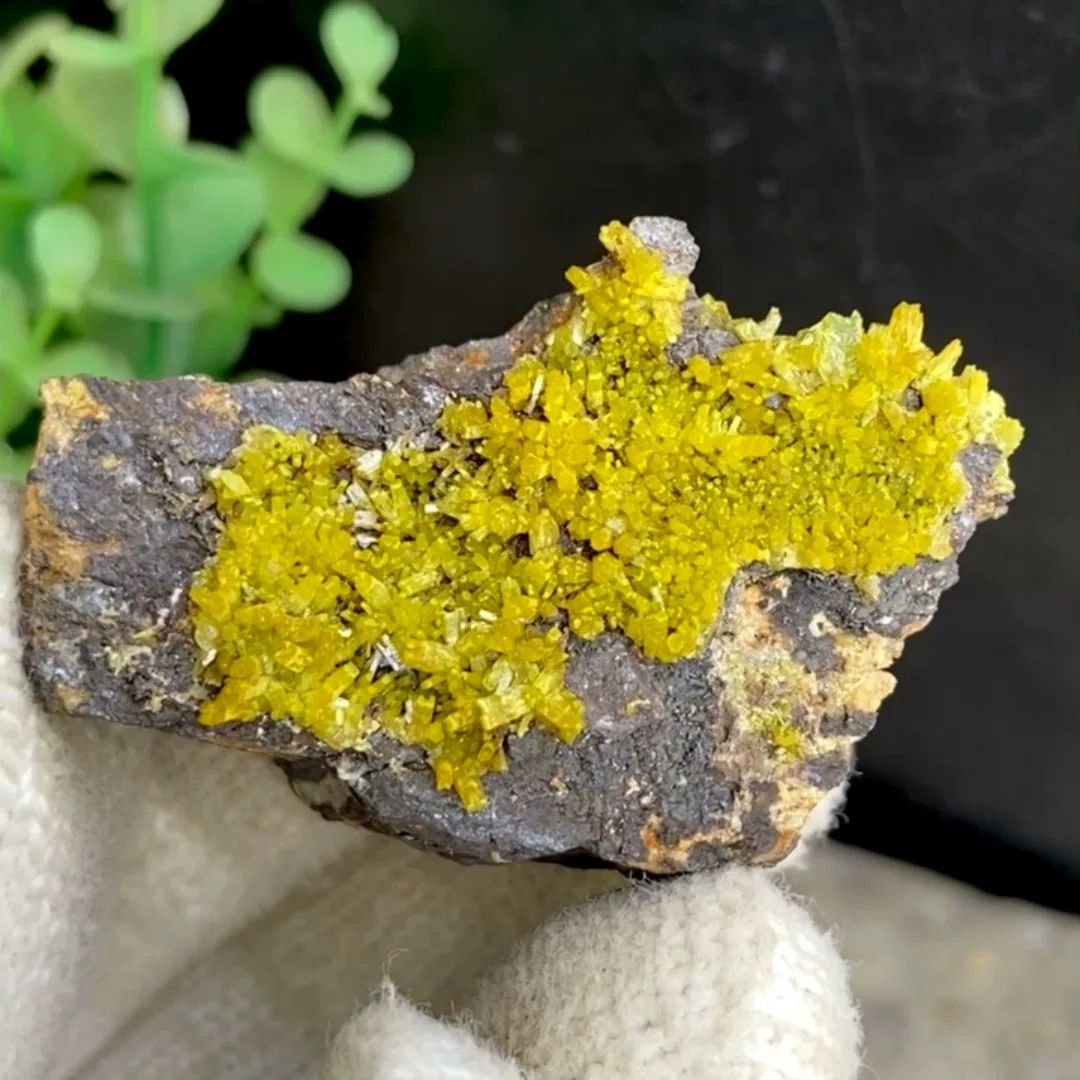
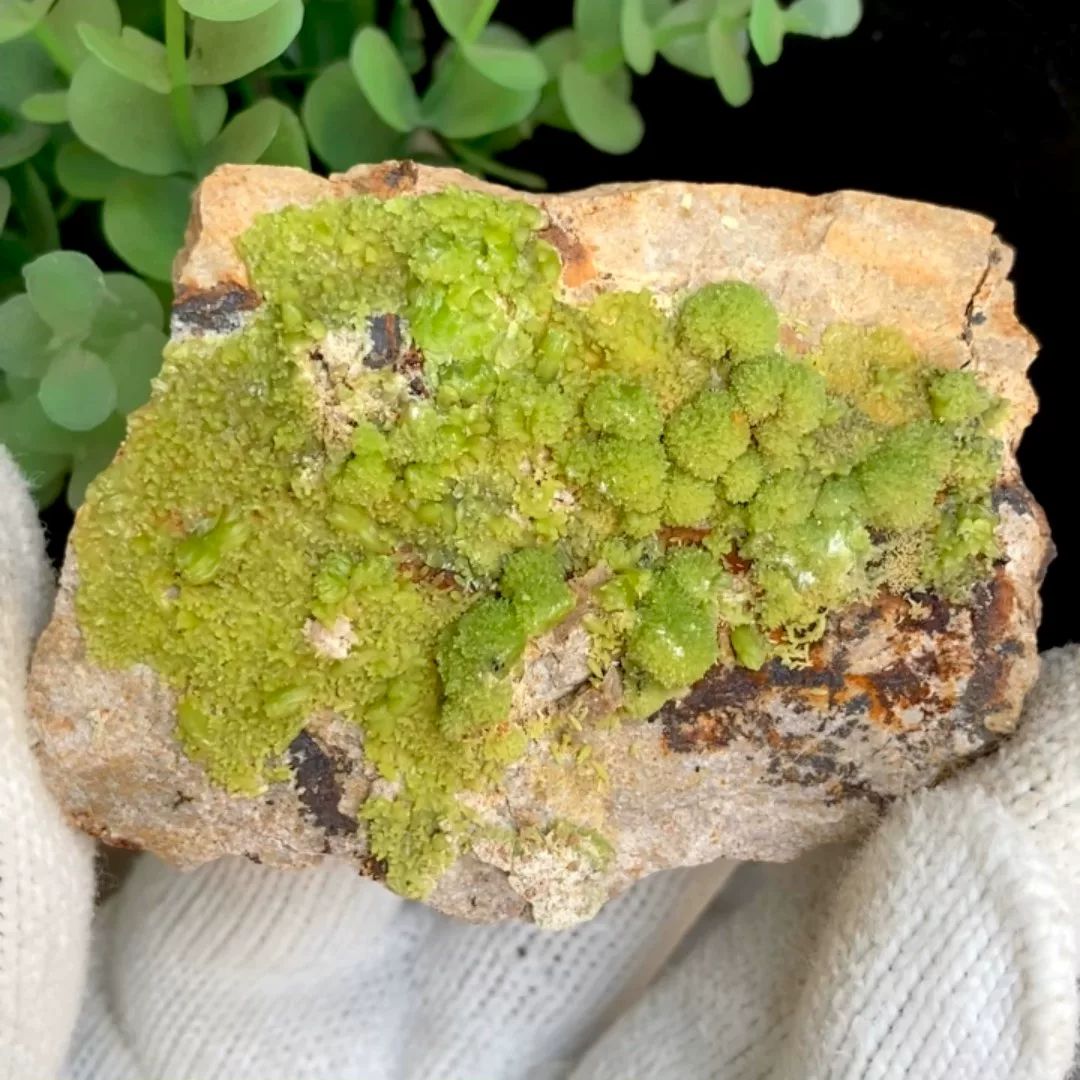
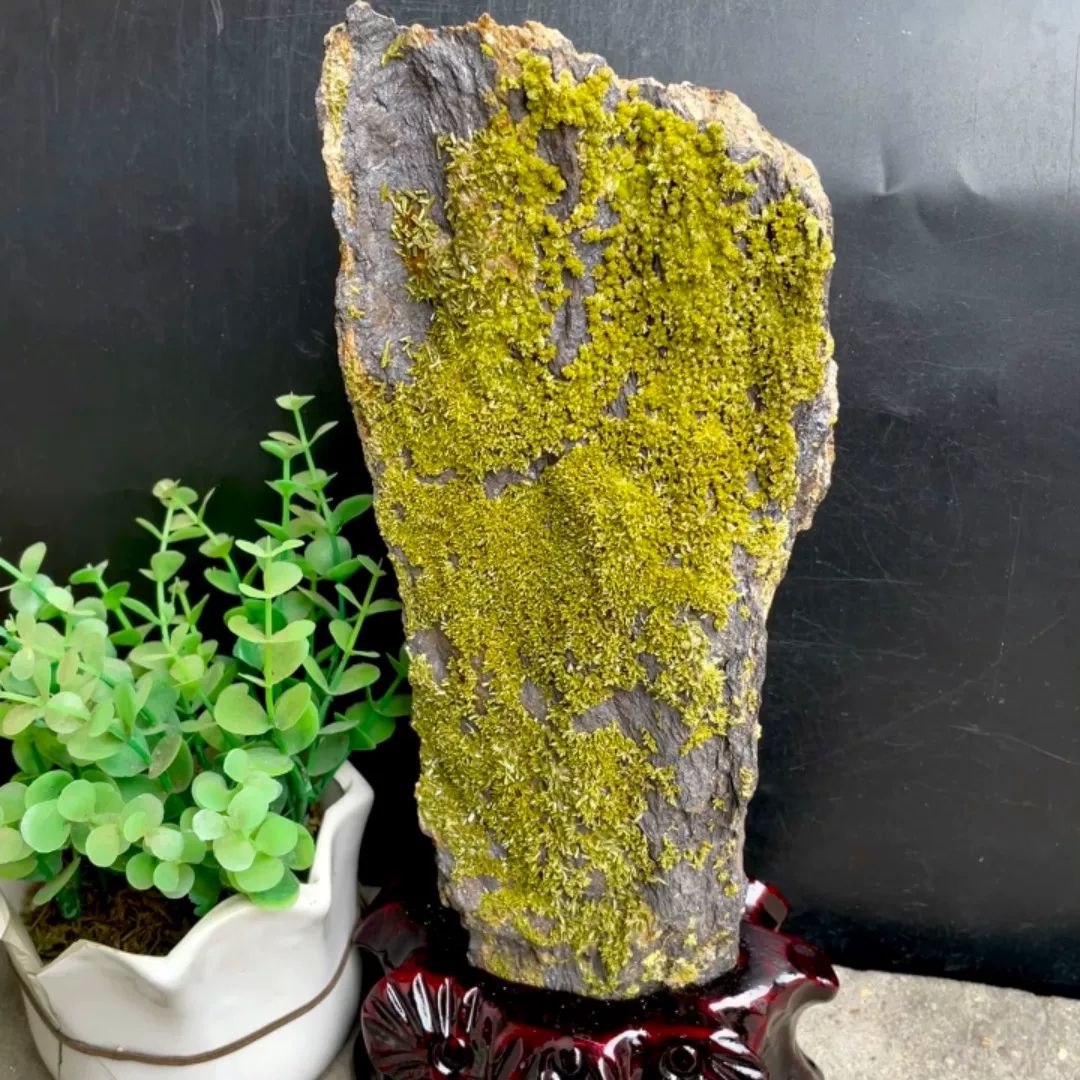
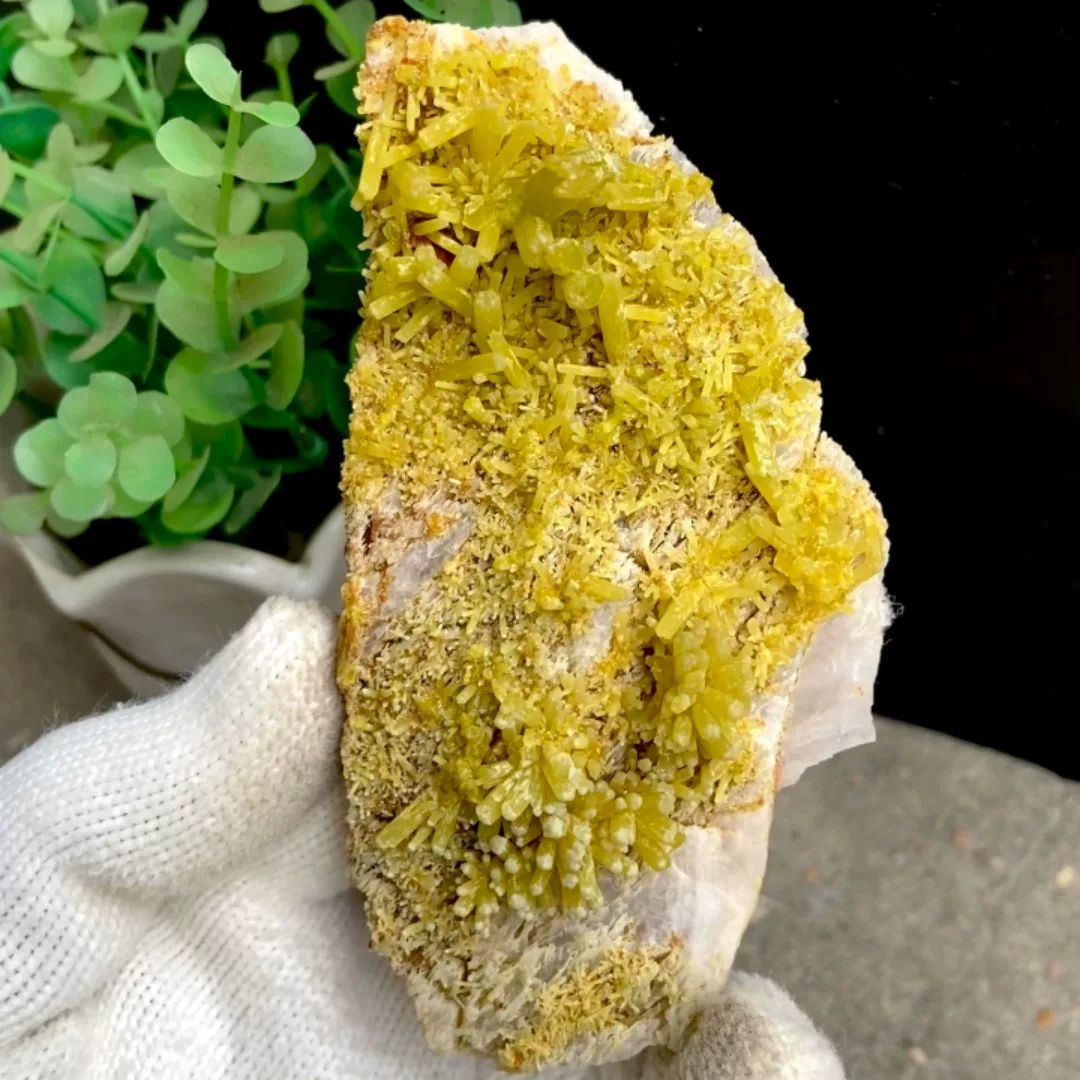
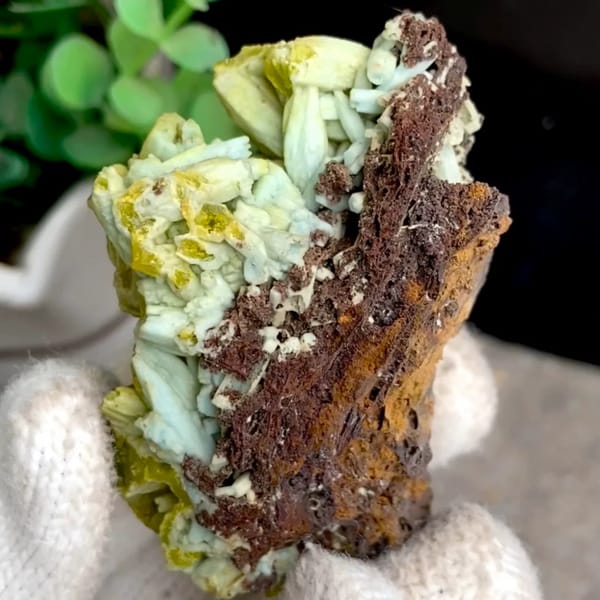
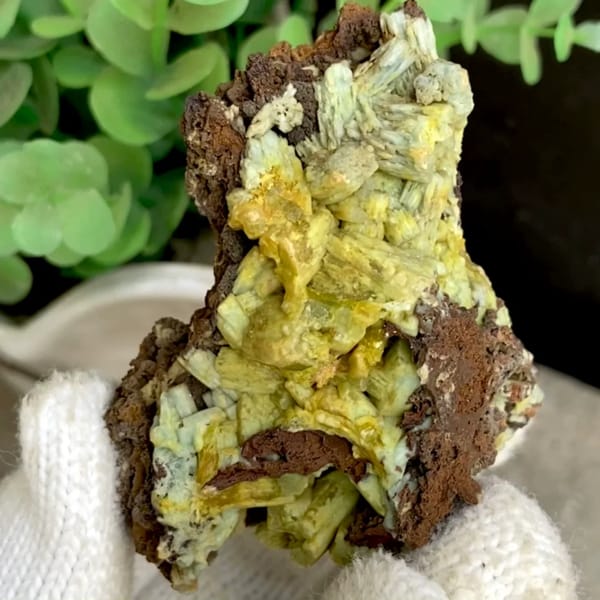
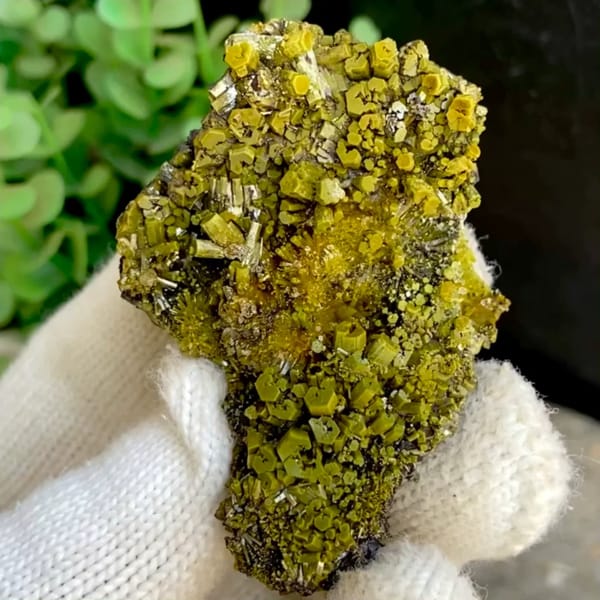
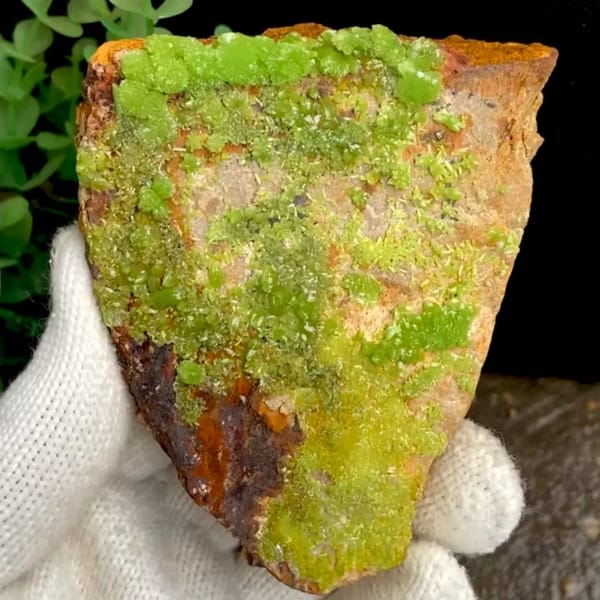
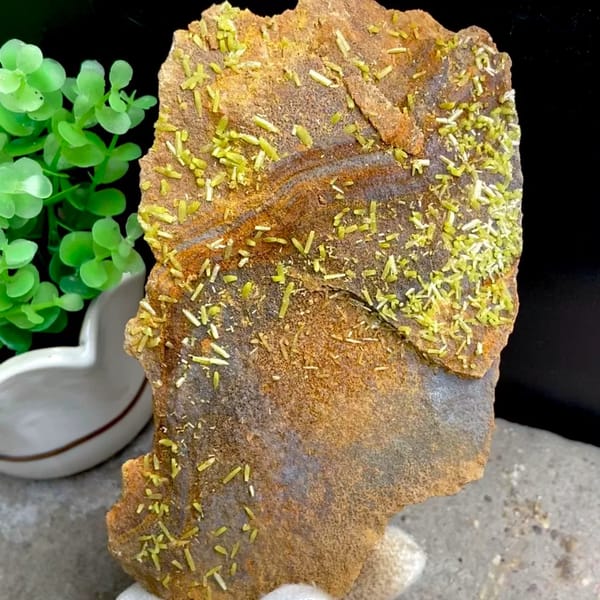
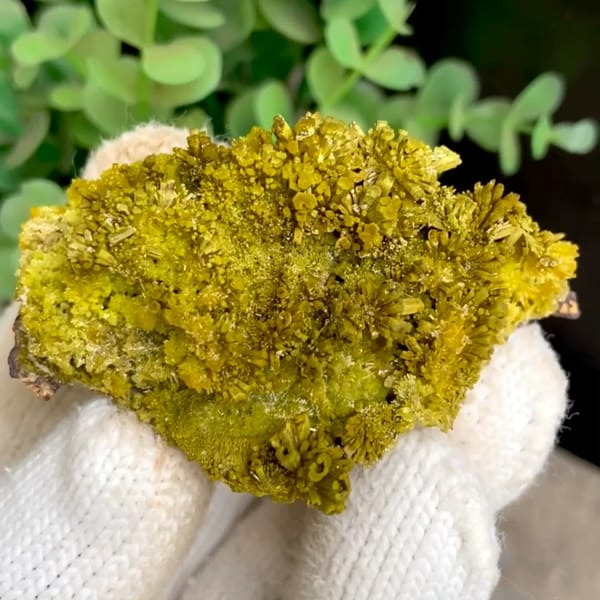
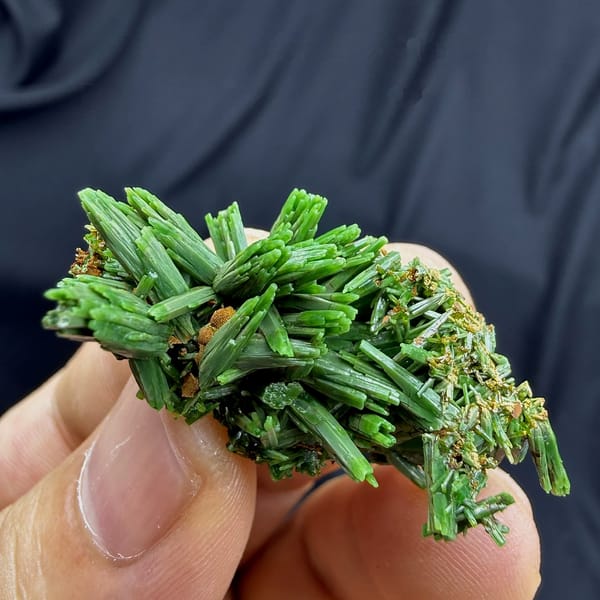
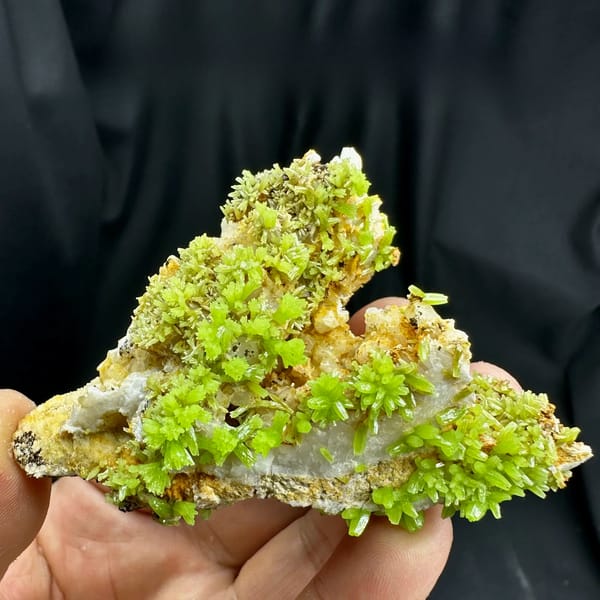
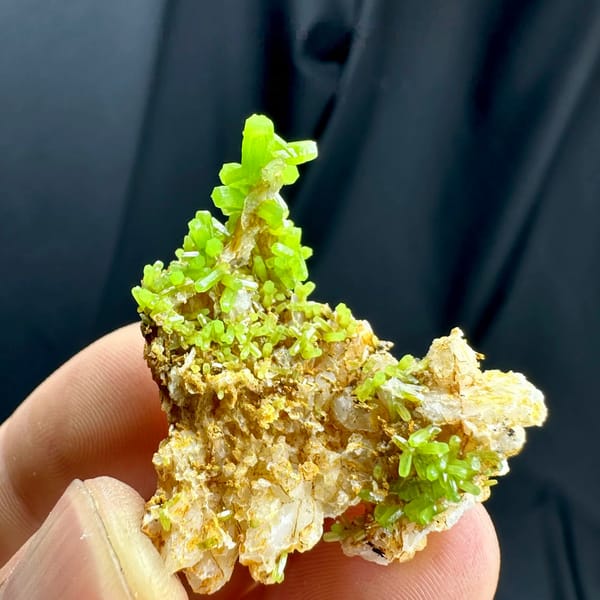
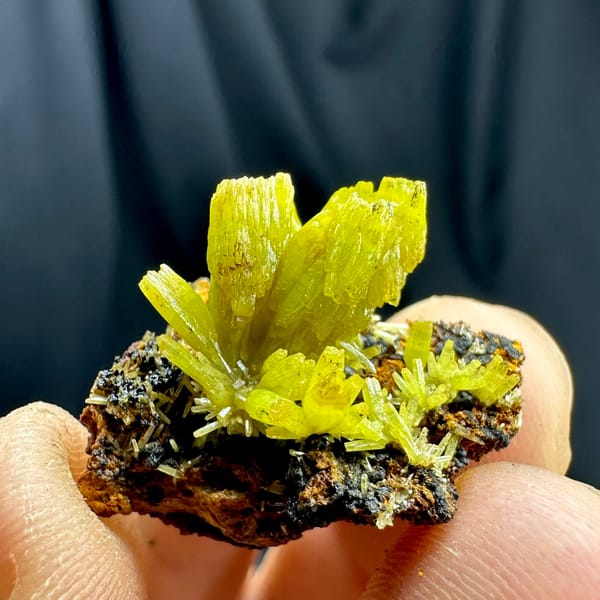
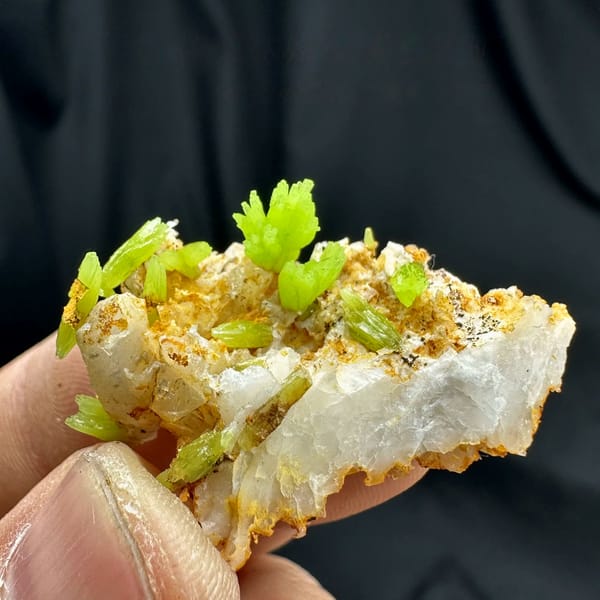
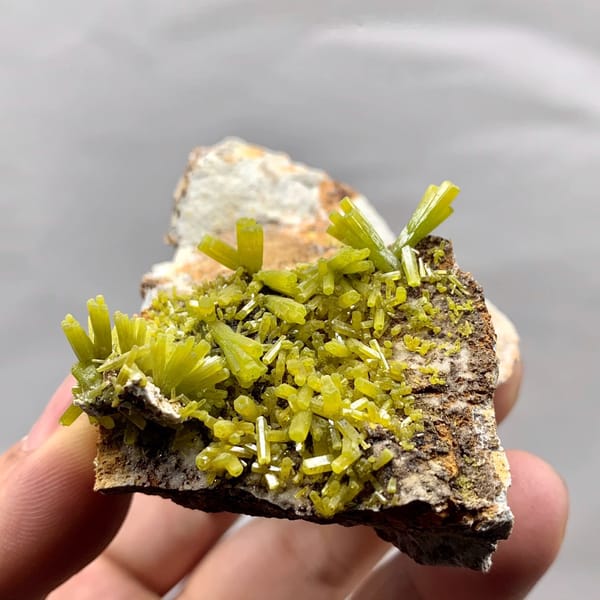
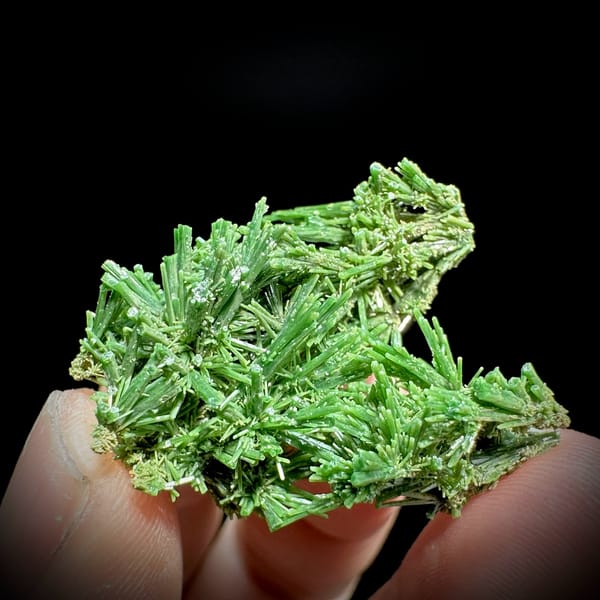
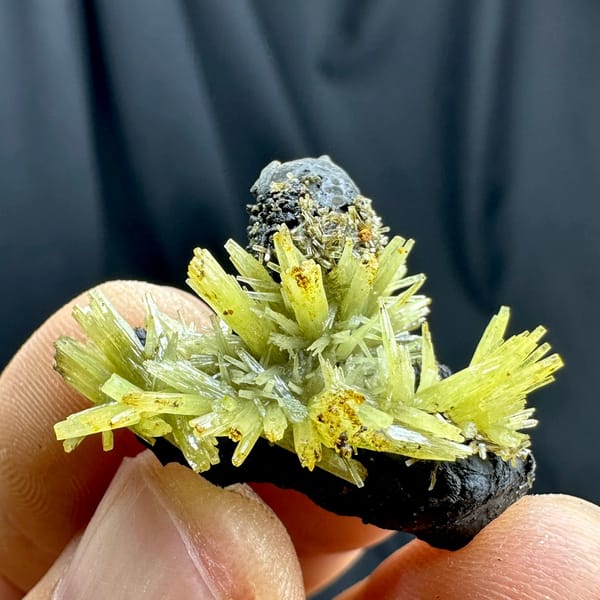
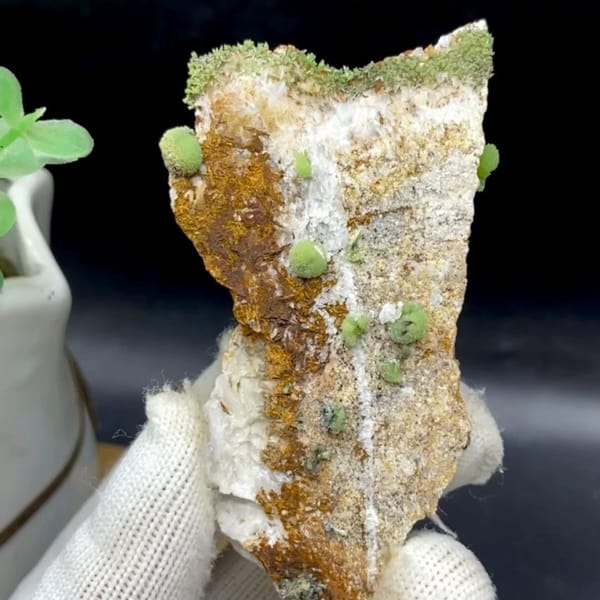
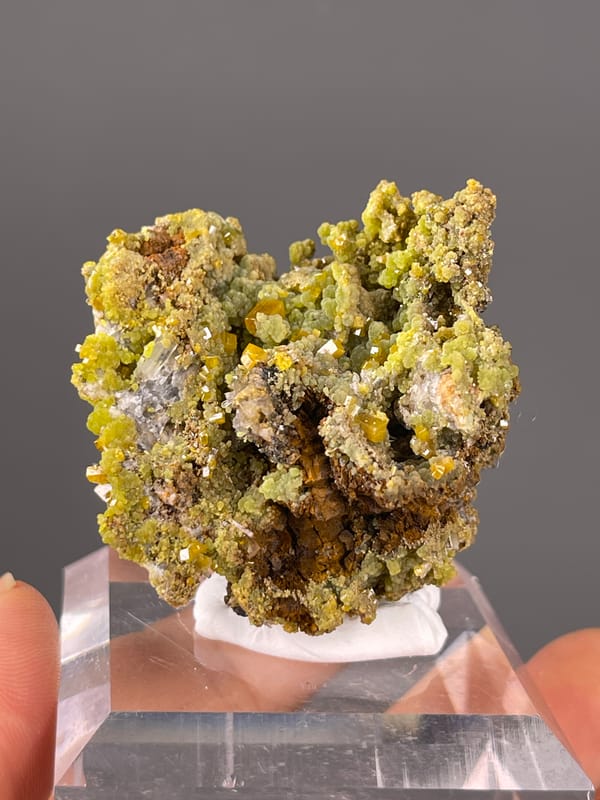
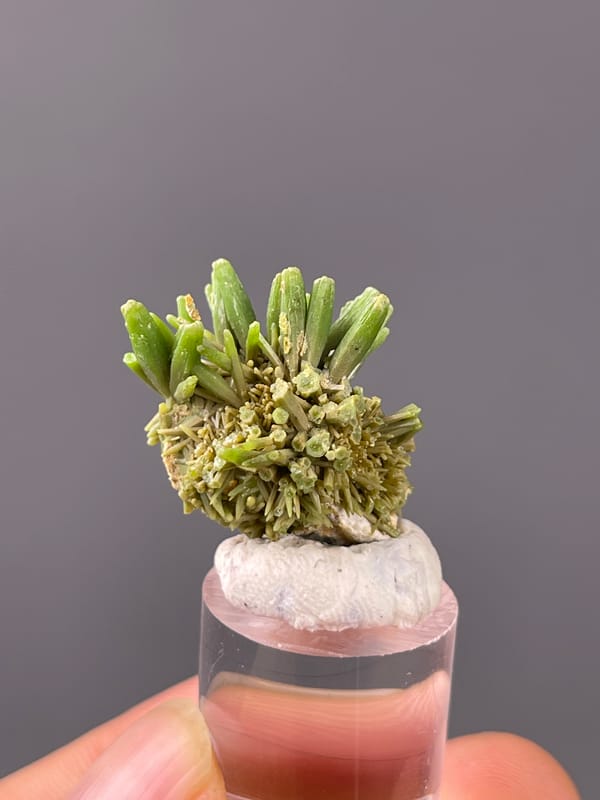
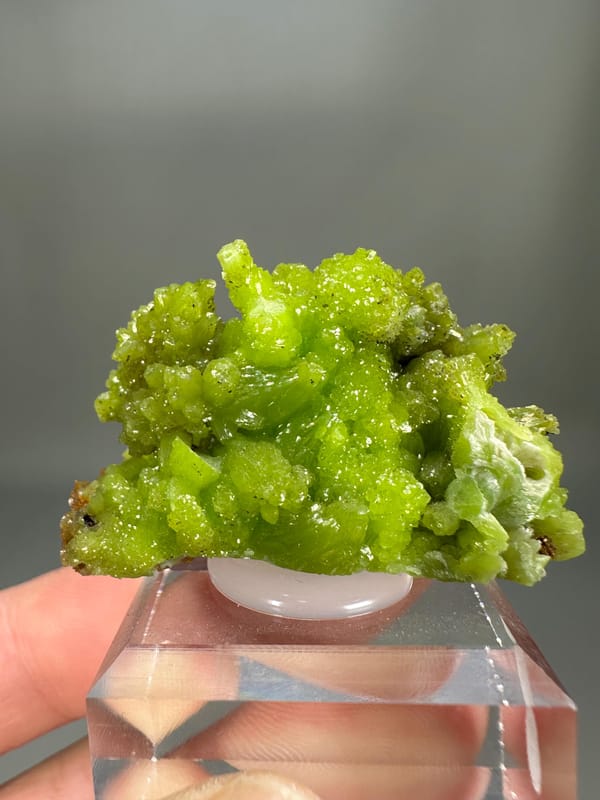
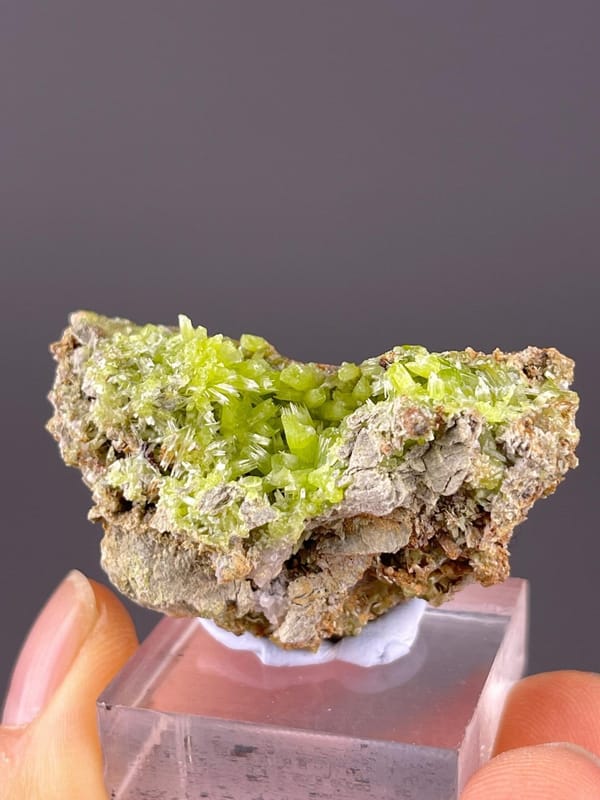
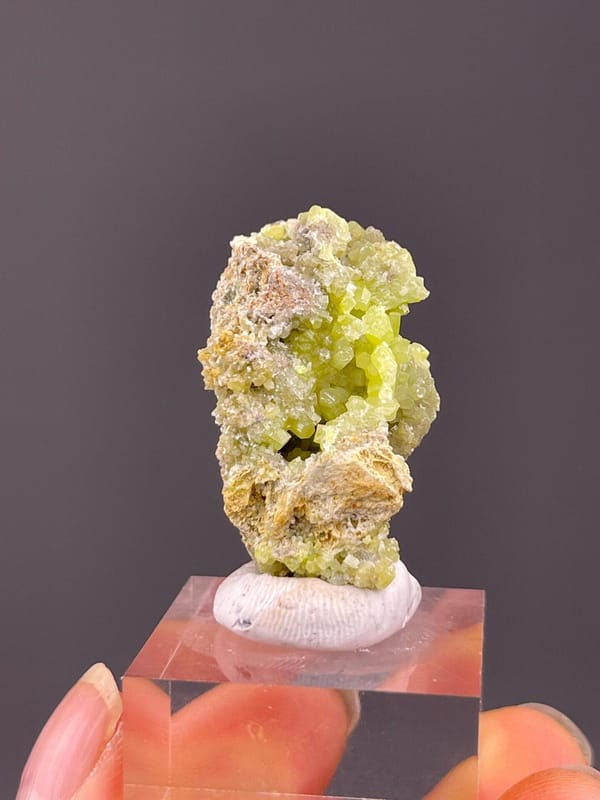
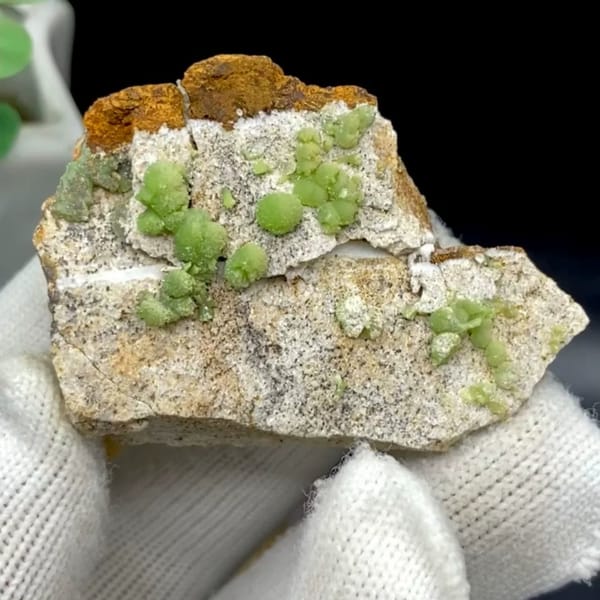
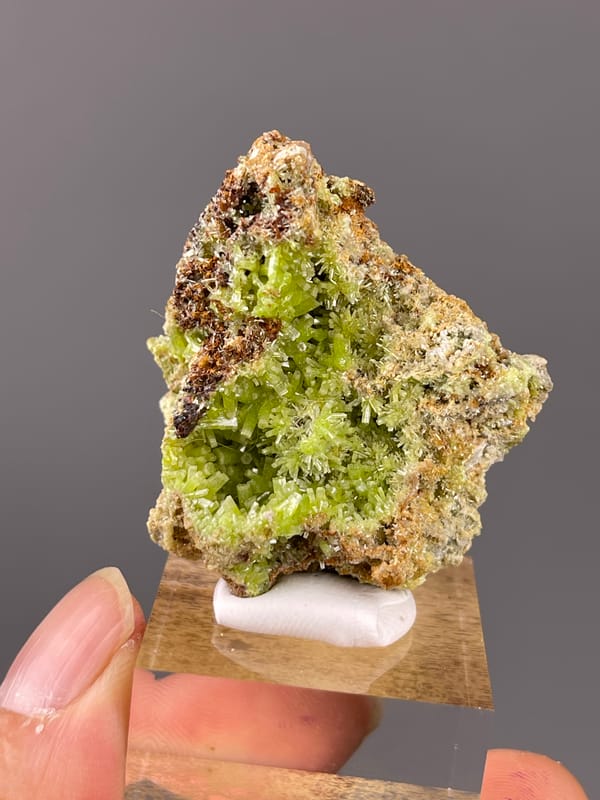
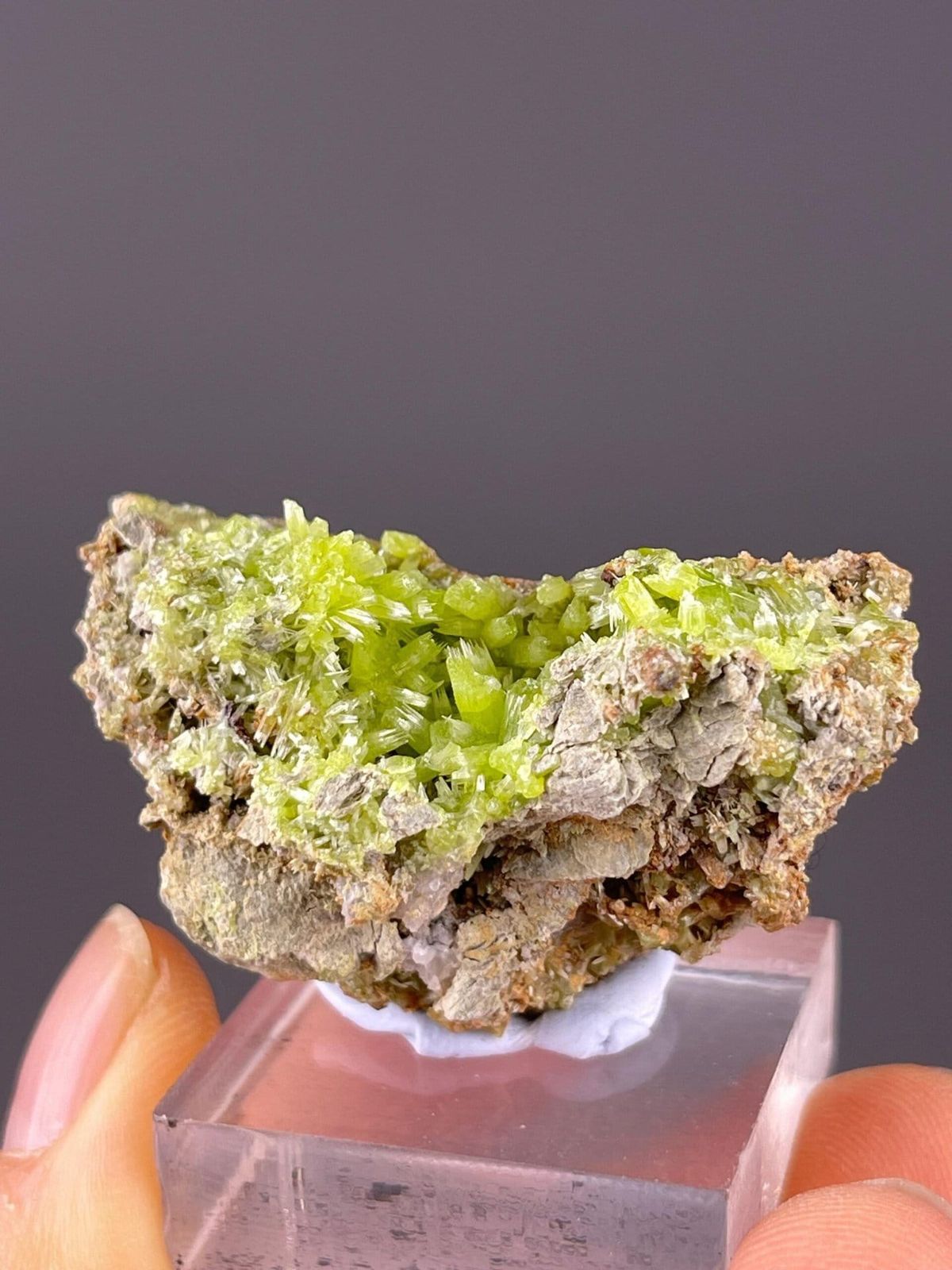
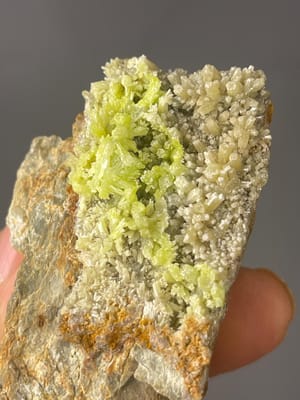
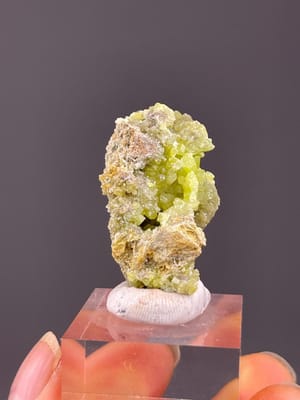
Pyromorphite (Pb₅(PO₄)₃Cl) is one of China's most iconic collector minerals. Vivid green to yellow-green hexagonal prisms form barrel-shaped clusters in oxidized lead deposits.
Pyromorphite (Pb₅(PO₄)₃Cl) is one of China’s most iconic collector minerals. Vivid green to yellow-green hexagonal prisms form barrel-shaped clusters in oxidized lead deposits. Daoping Mine in Guangxi is the world’s premier source of large, gemmy specimens with electric apple-green color.
Notable Chinese Localities
Daoping Mine and Yangshuo (Guangxi) produce world-class apple-green clusters. Huanggang (Inner Mongolia) and Yaogangxian (Hunan) yield smaller specimens.
Cite this entry
APA
MyMineralBox Editorial Team. (2026). Pyromorphite. My Mineral Box. Retrieved May 23, 2026, from https://mymineralbox.com/mineral-encyclopedia/minerals/pyromorphite/
MLA
MyMineralBox Editorial Team. "Pyromorphite." My Mineral Box, 2026, https://mymineralbox.com/mineral-encyclopedia/minerals/pyromorphite/. Accessed May 23, 2026.
Chicago
MyMineralBox Editorial Team. "Pyromorphite." My Mineral Box. Last modified May 4, 2026. https://mymineralbox.com/mineral-encyclopedia/minerals/pyromorphite/.
BibTeX
@misc{mmb_pyromorphite,
 author = {{MyMineralBox Editorial Team}},
 title = {{Pyromorphite}},
 year = {2026},
 publisher = {My Mineral Box},
 url = {https://mymineralbox.com/mineral-encyclopedia/minerals/pyromorphite/},
 urldate = {2026-05-23}
}