Mohs 4.5–5
Vickers (~) 540 HV
Knoop (~) 620 HK
Geological setting
Volcanic
Element composition by mass
Formula: KCa₄Si₈O₂₀(F,OH)·8H₂O · molar mass: 780.09 g/mol
| O | 44.09% | |
| Si | 28.8% | |
| Ca | 20.55% | |
| K | 5.01% | |
| F | 1.22% | |
| H | 0.32% |
Computed from atomic weights (IUPAC 2021). Site-occupancy groups (Fe,Mn) split equally.
Mohs Hardness
4.5–5
Apophyllite sits at 4.5–5 on the Mohs scale — can be scratched by a steel knife.
Colors:
Streak
White
White
Crystal system
Tetragonal
Tetragonal
SilicatesSilicates (Phyllosilicates)
TL;DR · 1 min read
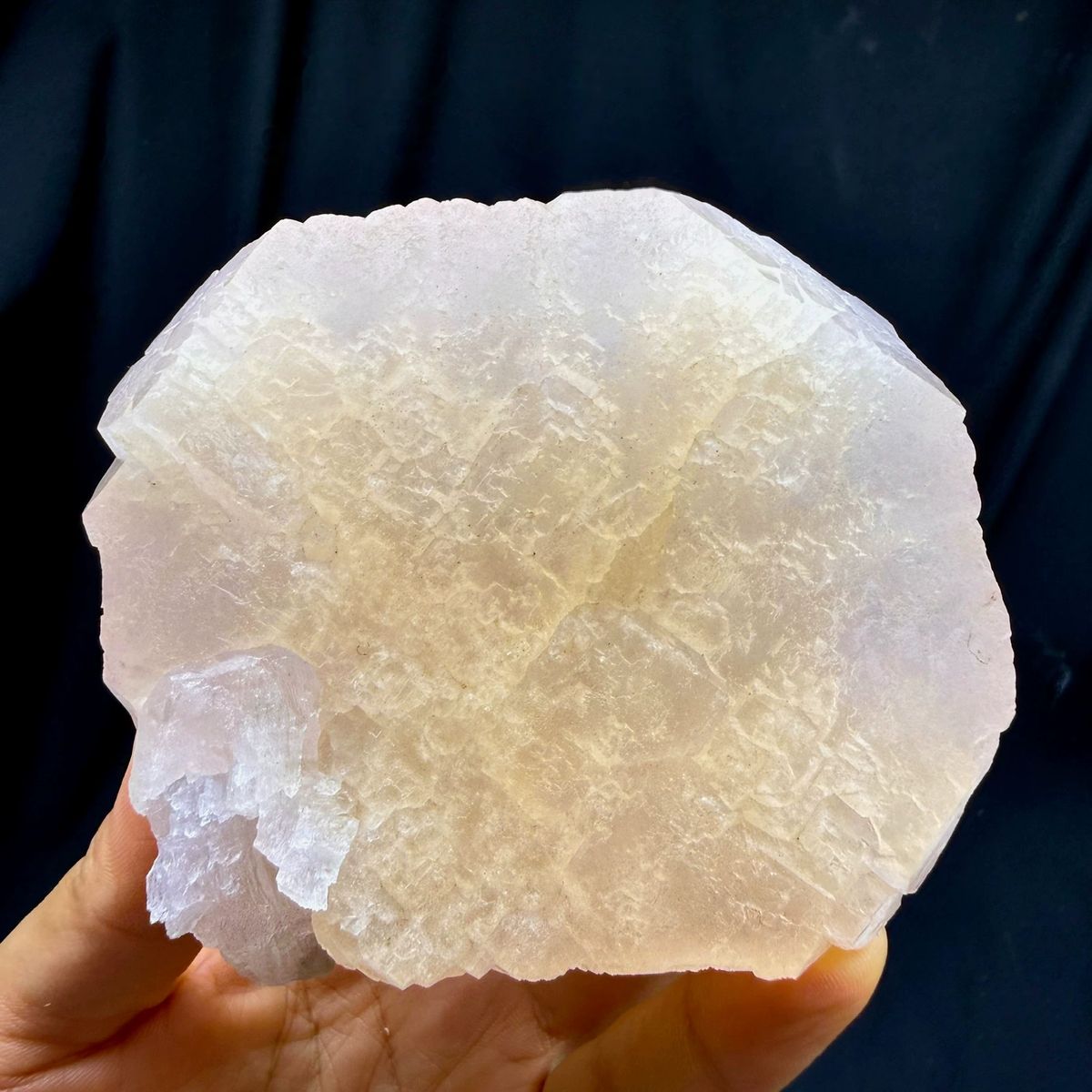
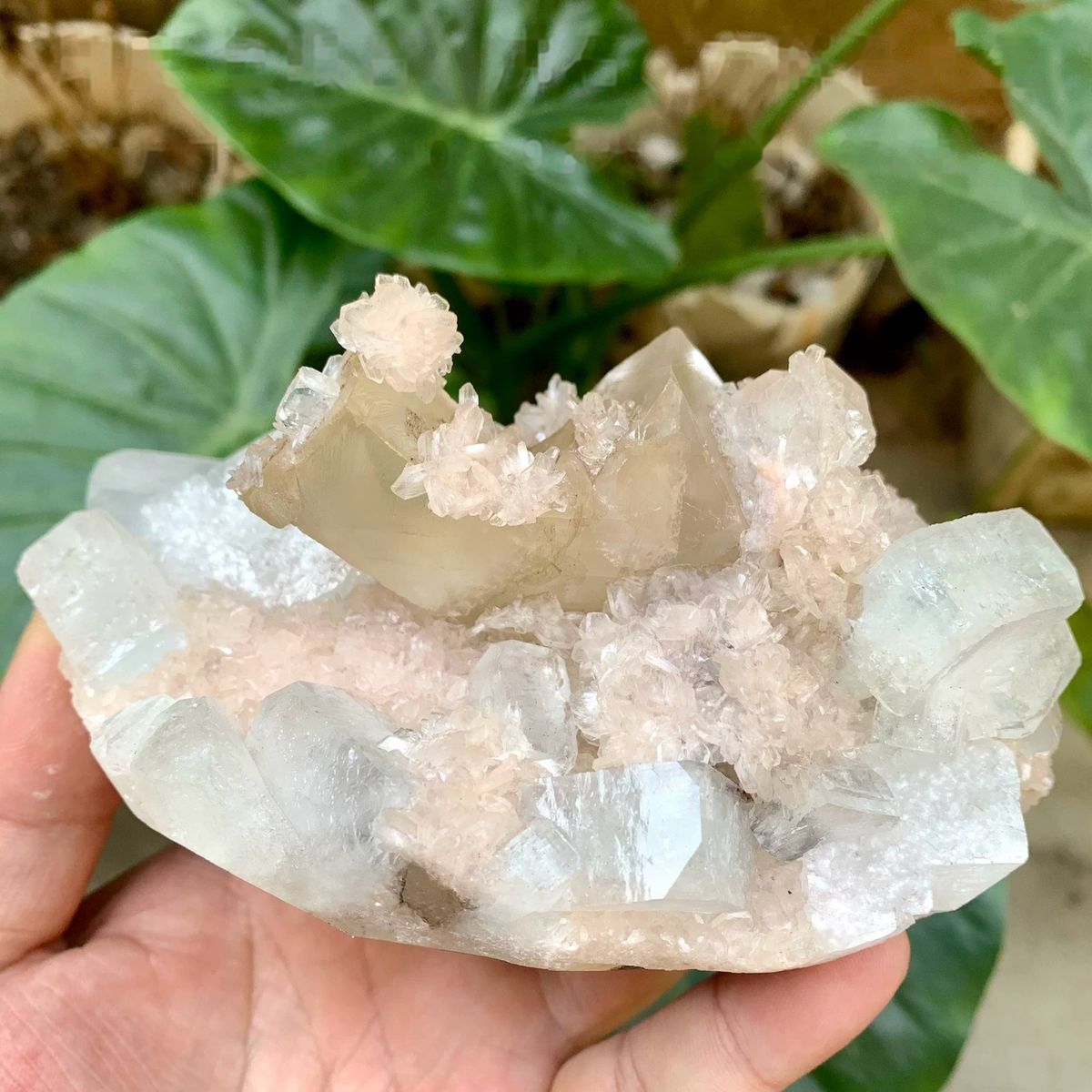
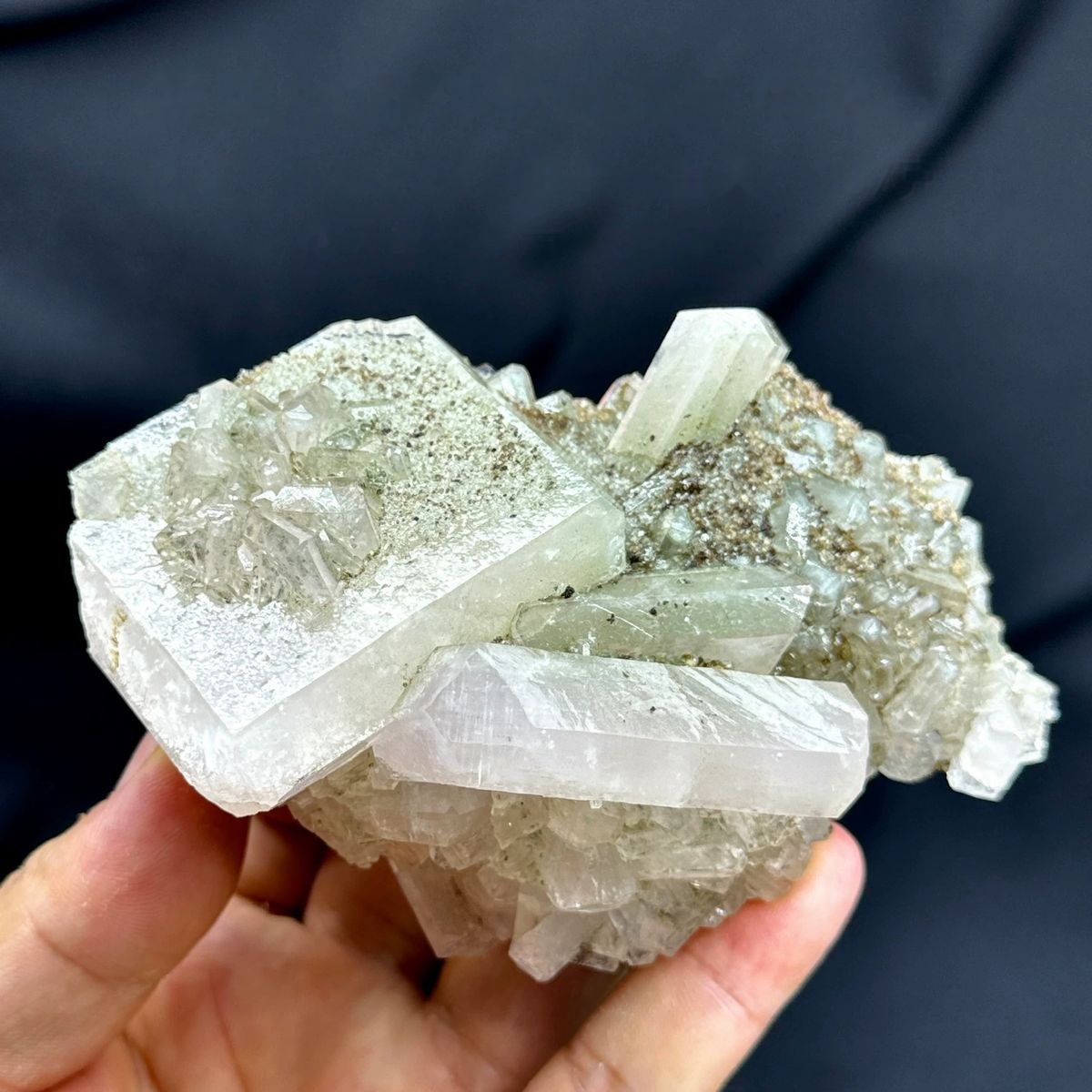
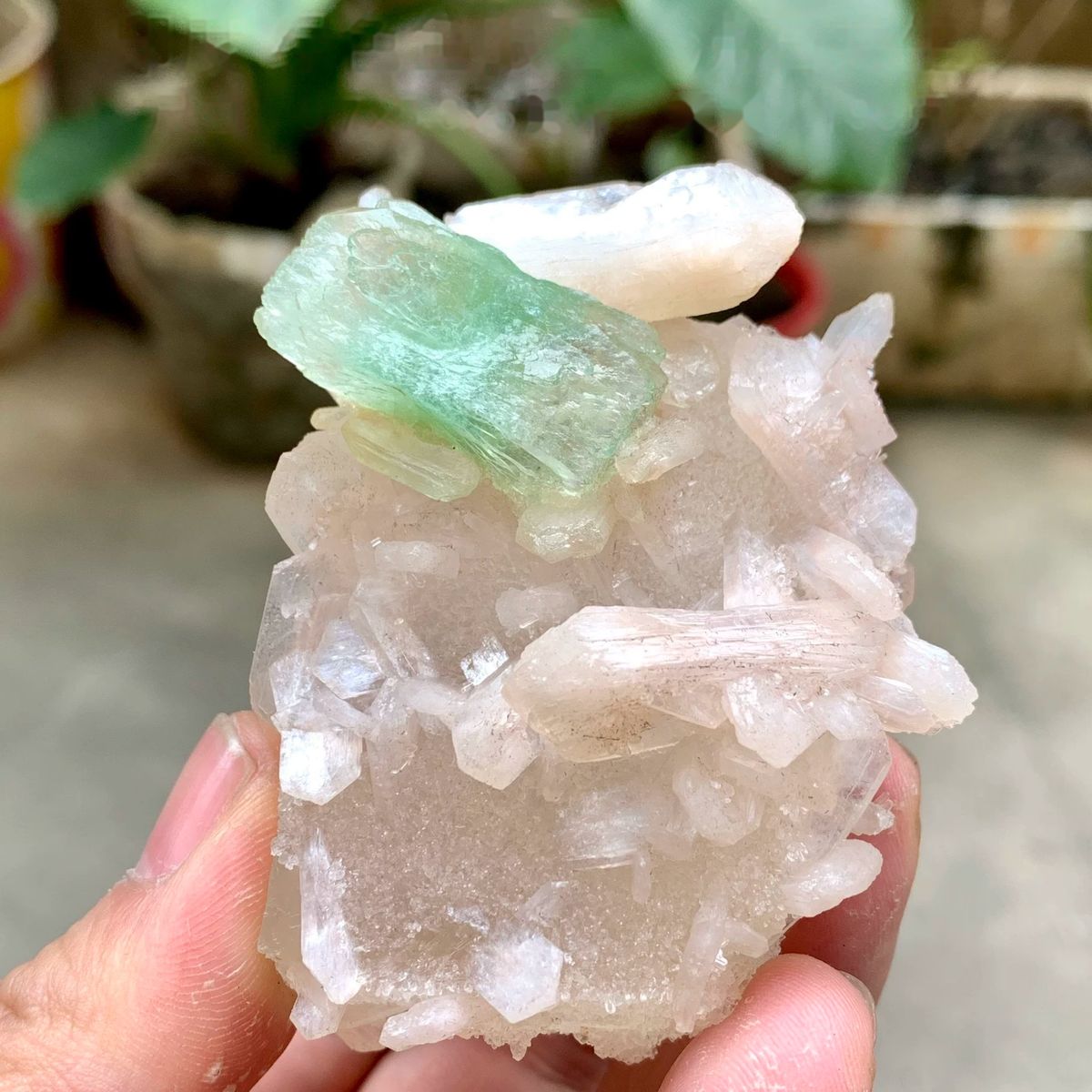
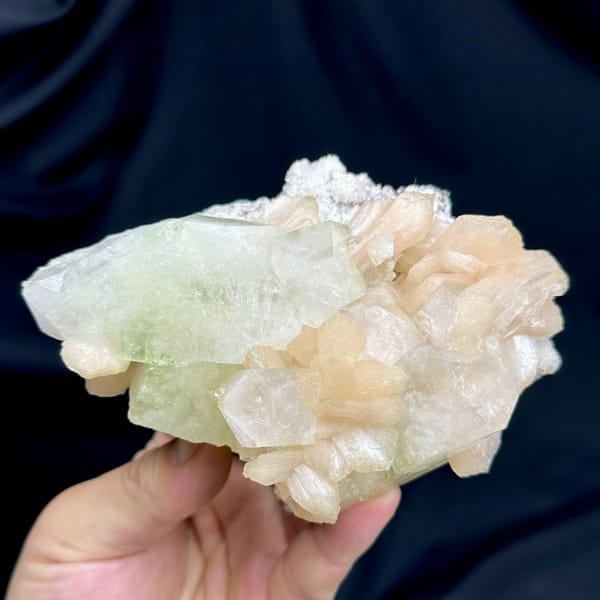
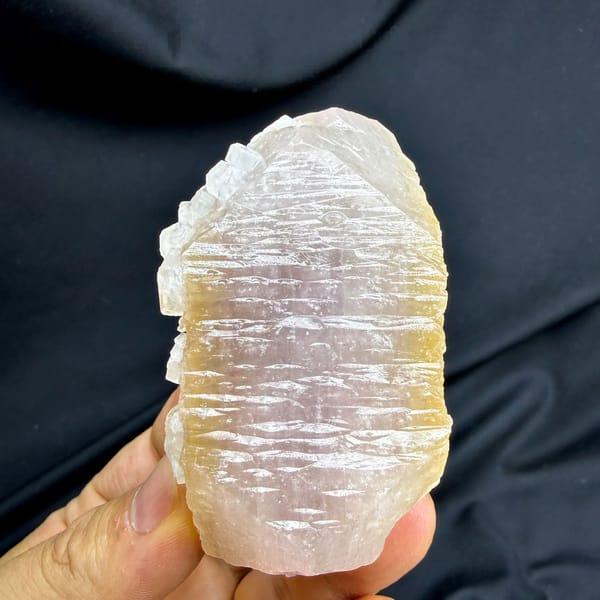
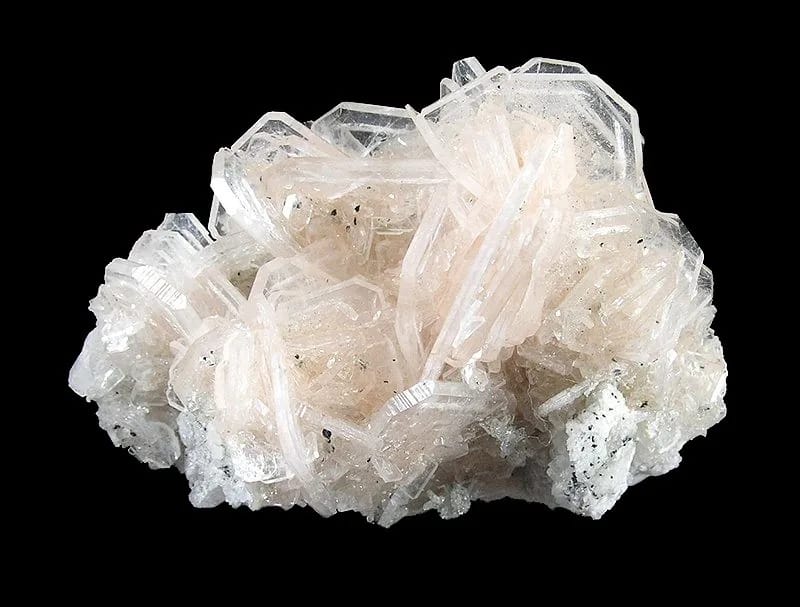
Apophyllite (KCa₄Si₈O₂₀(F,OH)·8H₂O) is a tetragonal phyllosilicate famous for its glassy, water-clear pyramidal crystals on chalcedony or stilbite matrix in basalt cavities. The Indian Deccan Traps — particularly the Pune and Jalgaon districts in Maharashtra — produce well-formed apophyllite specimens, with sharp single crystals reaching 10+ cm and complete pyramid terminations.
Apophyllite (KCa₄Si₈O₂₀(F,OH)·8H₂O) is a tetragonal phyllosilicate famous for its glassy, water-clear pyramidal crystals on chalcedony or stilbite matrix in basalt cavities. The Indian Deccan Traps — particularly the Pune and Jalgaon districts in Maharashtra — produce well-formed apophyllite specimens, with sharp single crystals reaching 10+ cm and complete pyramid terminations. The pearly luster on basal pinacoid surfaces is diagnostic.