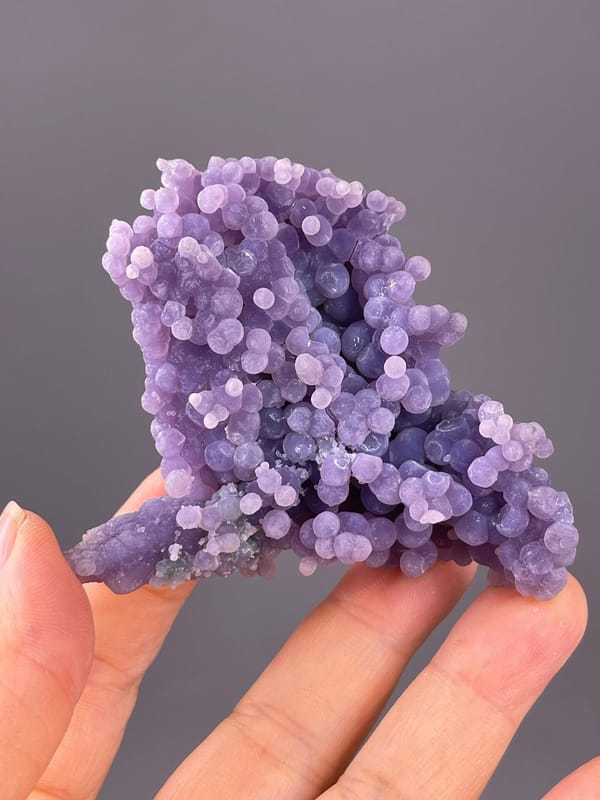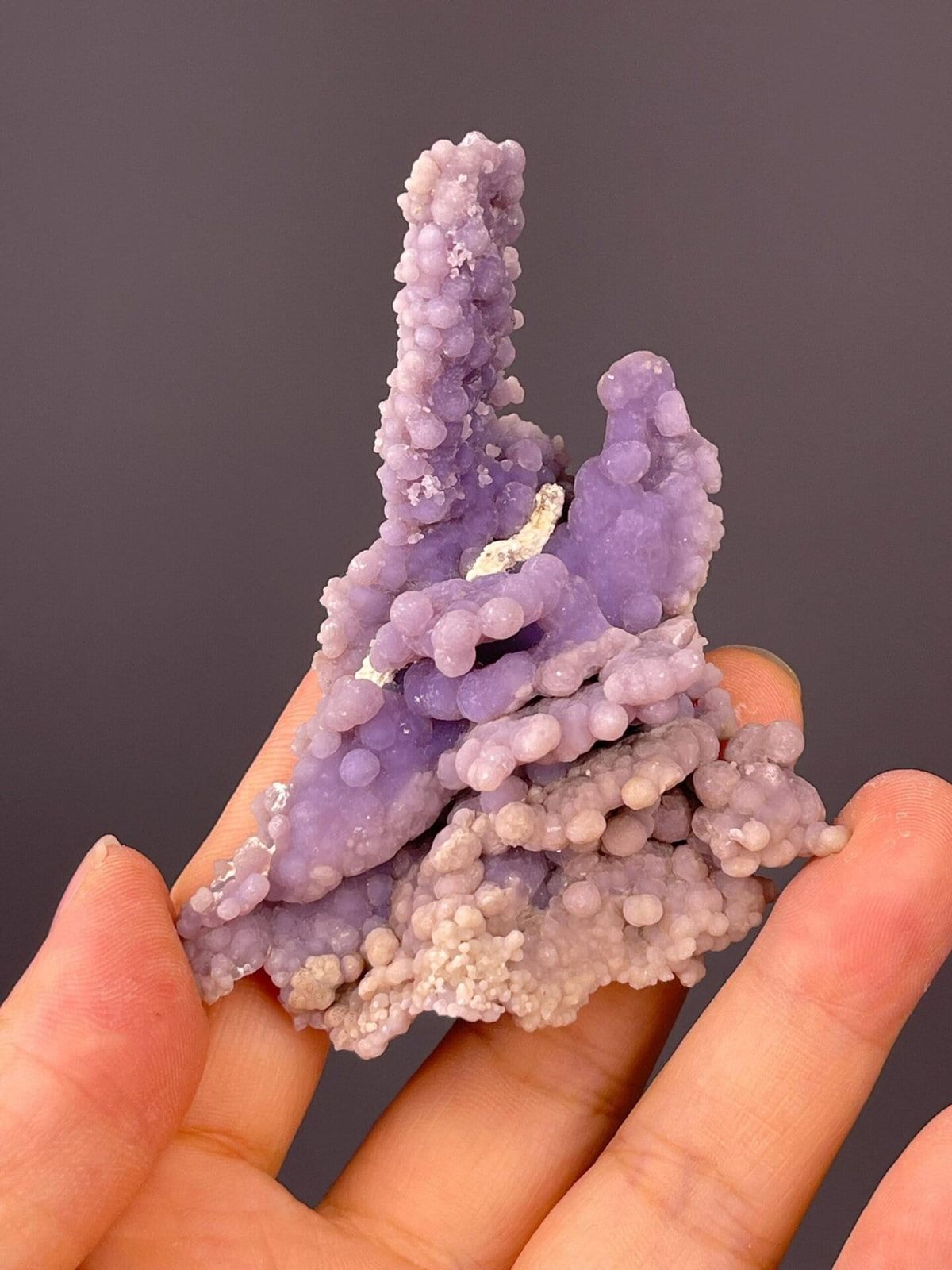
IMA Abbreviation (Whitney-Evans 2010)
Cha
→ Chalcedony
Cryptocrystalline quartz
Standard symbol from American Mineralogist (Whitney & Evans, 2010). Used in thin-section labeling, phase diagrams, and IMA-style species records.
Pronunciation
/kælˈsɛdəni/
↔ kal-SED-uh-nee
four syllables (Greek)
UV Fluorescence
SW (254 nm)
Green
weak
LW (365 nm)
Green
weak
U-activated examples; locality-dependent.
SW = shortwave (germicidal lamp). LW = longwave (blacklight). Response varies with locality, trace impurities, and treatment.
Diaphaneity (Transparency)
translucent
Cryptocrystalline; light passes through edges only.
Specific Gravity
2.58–2.64
g/cm³
light
Cryptocrystalline quartz; slightly lower SG.
For comparison: water = 1.00, glass ≈ 2.5, quartz = 2.65, corundum ≈ 4.00, galena ≈ 7.50, gold ≈ 19.3.
Market availability: Common
Widely available in most dealer stocks. Specimens span all price tiers.
Collector tier: Solid Display
Reliable mid-tier display species. Easy to find in well-formed examples; broad locality diversity.
Mohs 7
Vickers (~) 1400 HV
Knoop (~) 1100 HK
Geological setting
Volcanic
Element composition by mass
Formula: SiO₂ (cryptocrystalline) · molar mass: 60.08 g/mol
| O | 53.26% | |
| Si | 46.74% |
Computed from atomic weights (IUPAC 2021). Site-occupancy groups (Fe,Mn) split equally.
GroupQuartz Group (silica)
Mohs Hardness
7
Chalcedony sits at 7 on the Mohs scale — harder than glass; scratches steel.
Colors:
Streak
White
White
Crystal system
Trigonal (microcrystalline)
Trigonal (microcrystalline)
Oxides & HydroxidesOxides (Silica Group)
TL;DR · 1 min read
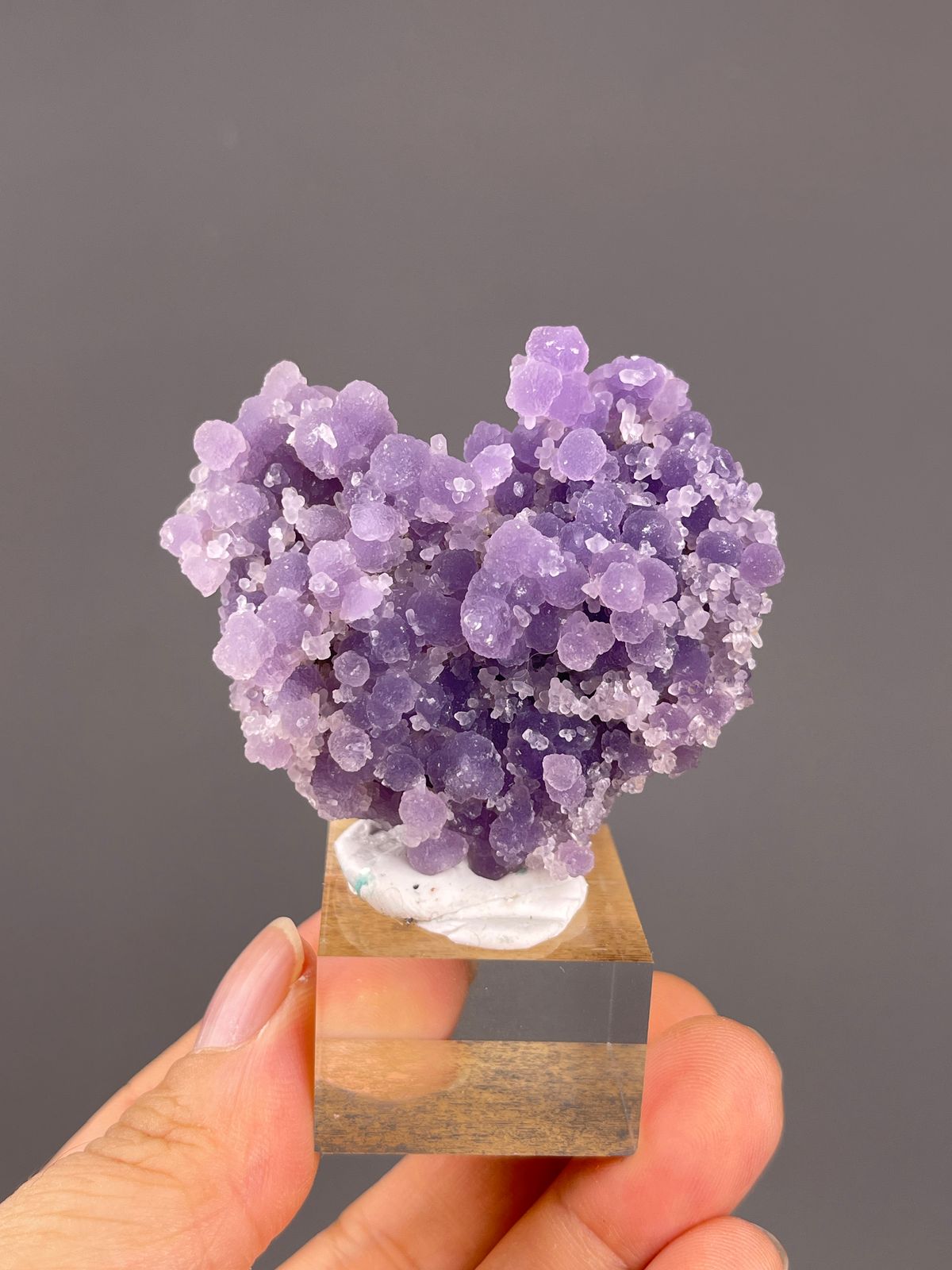
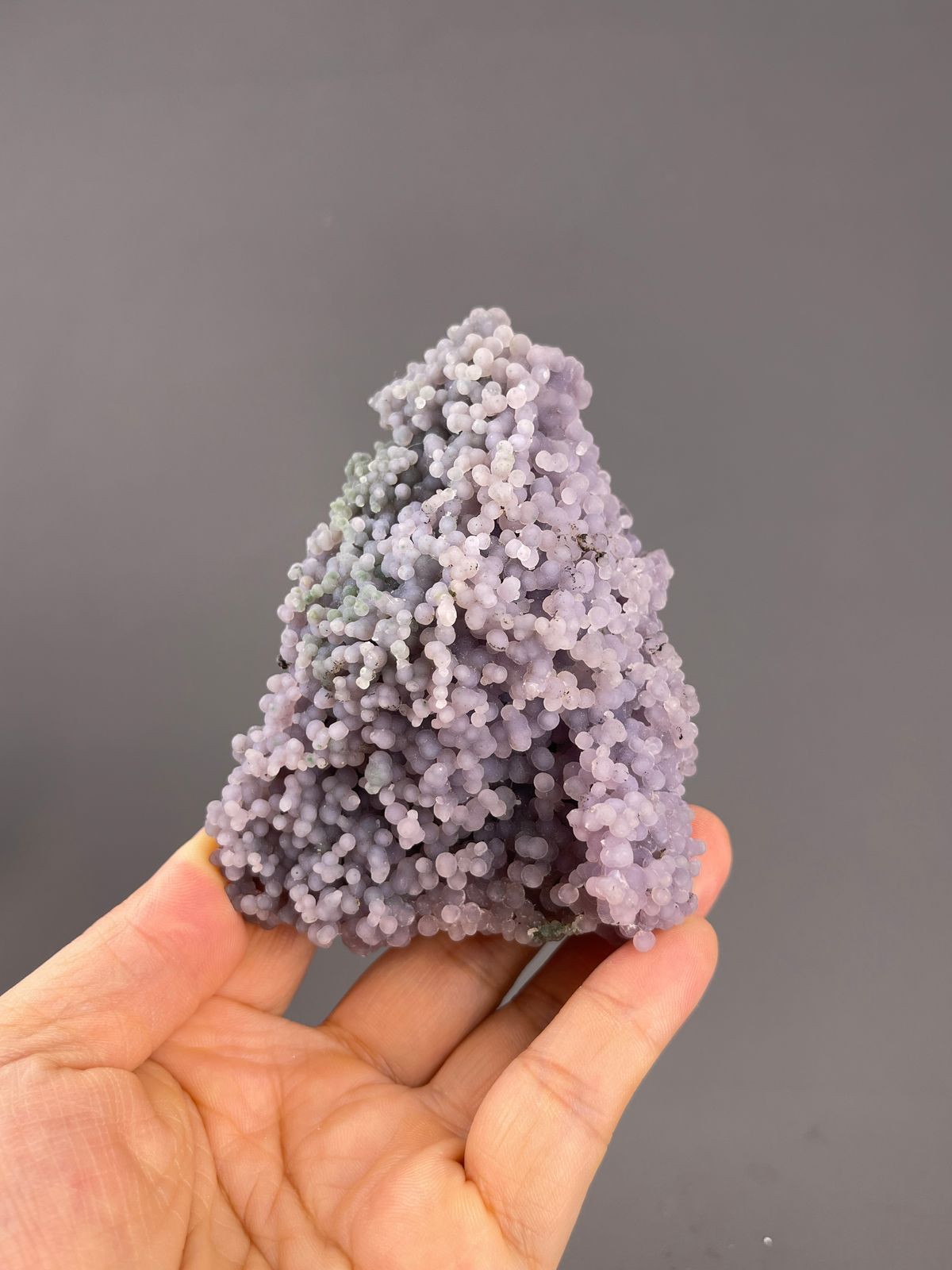
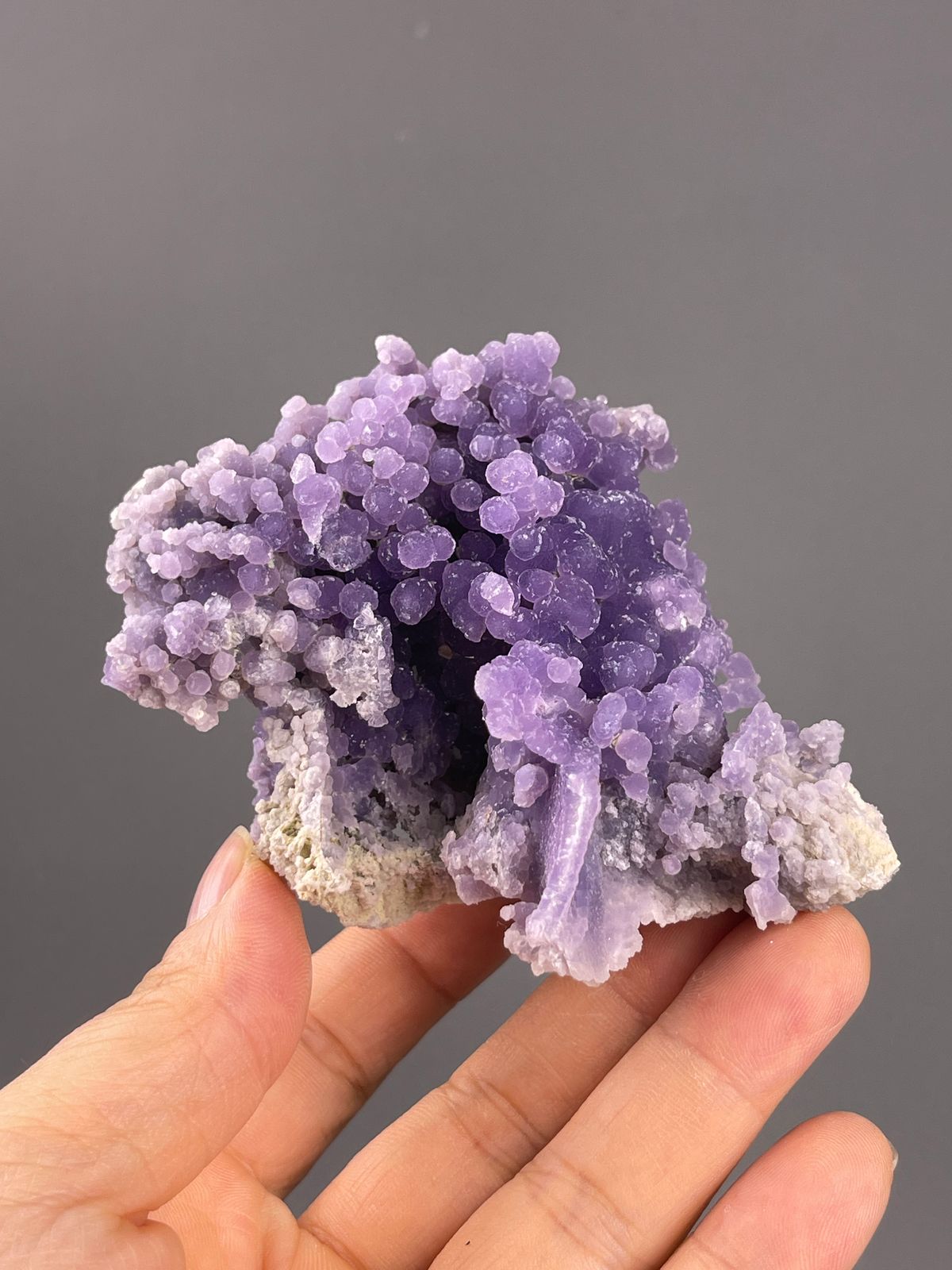
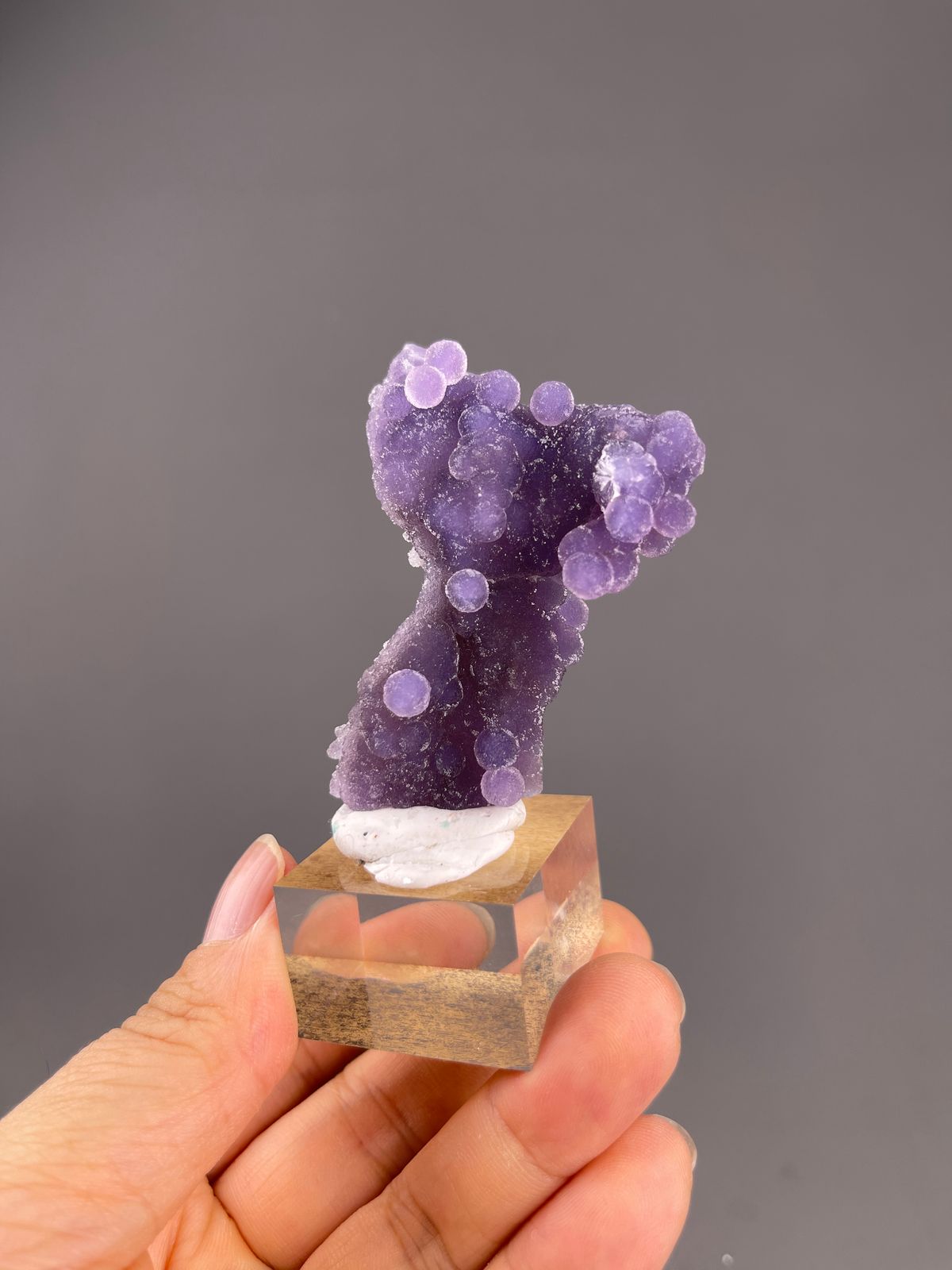
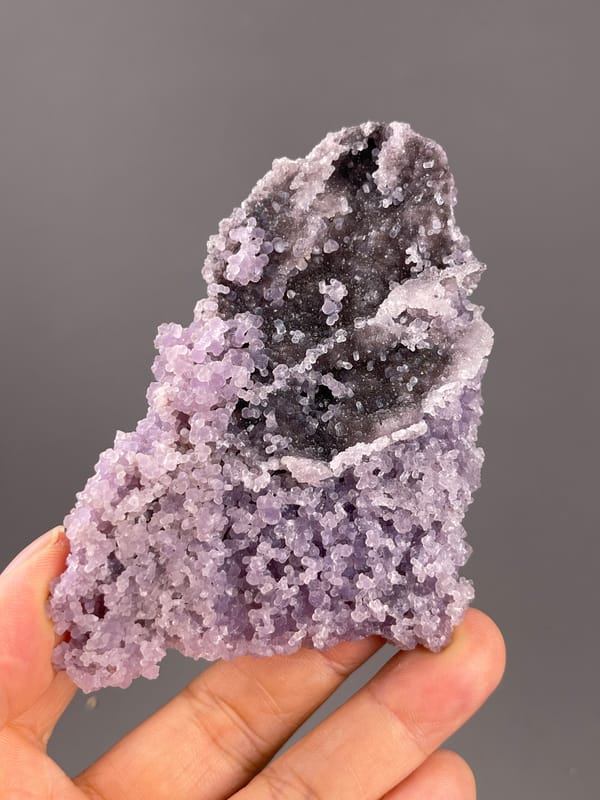
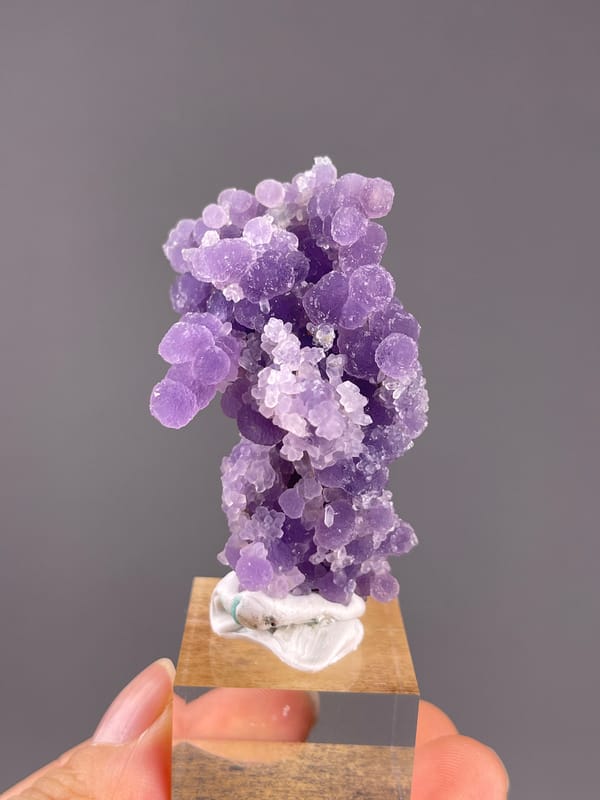
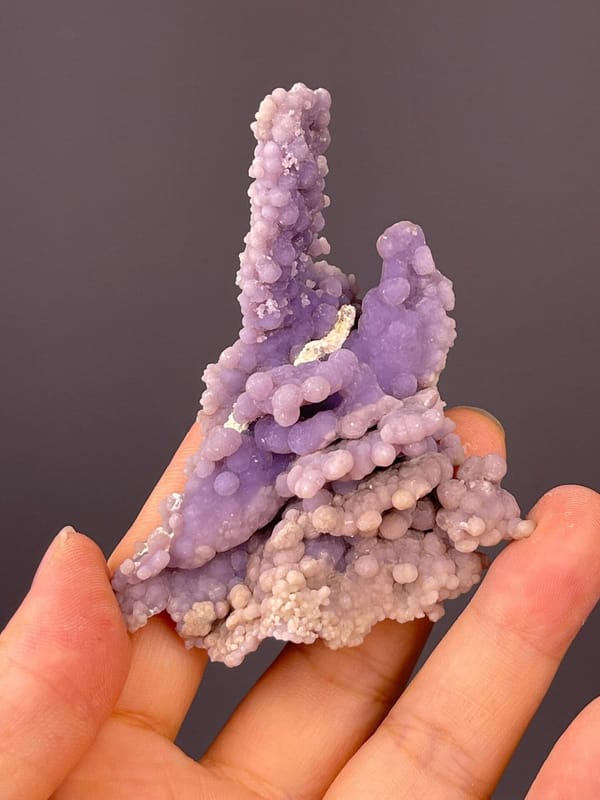
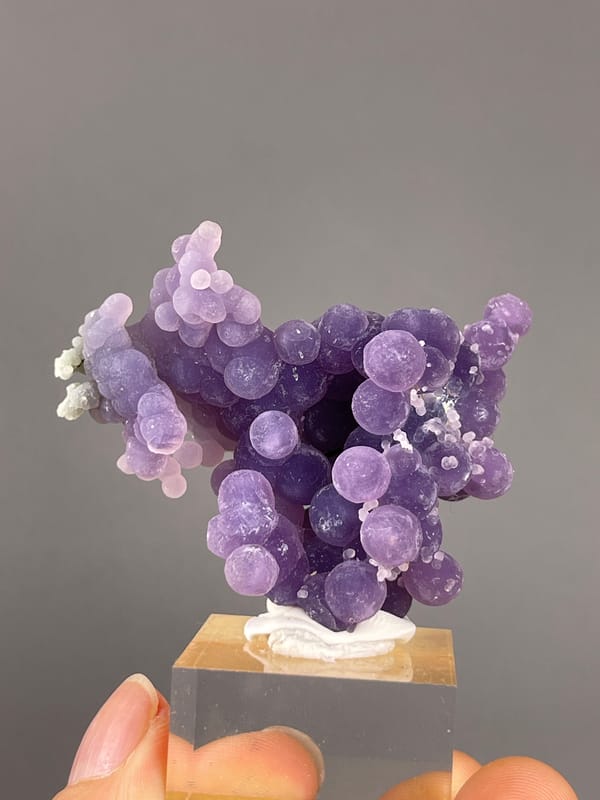
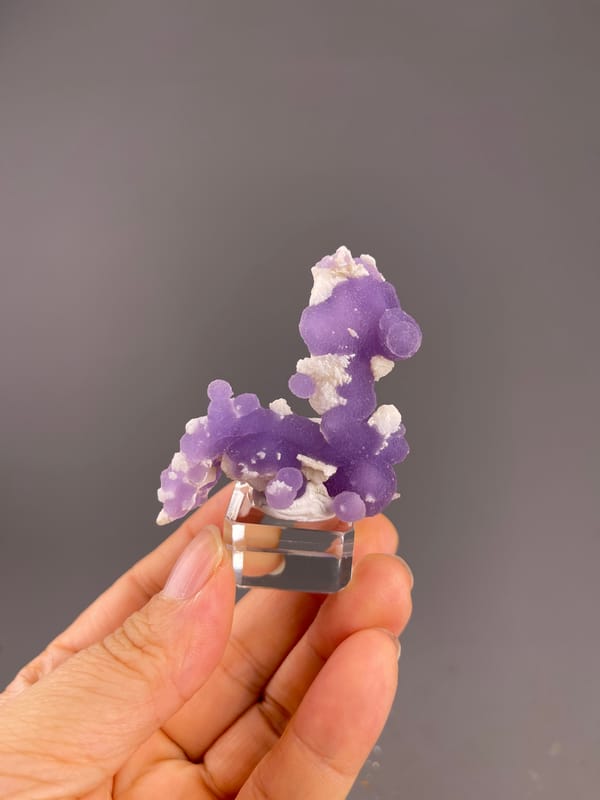
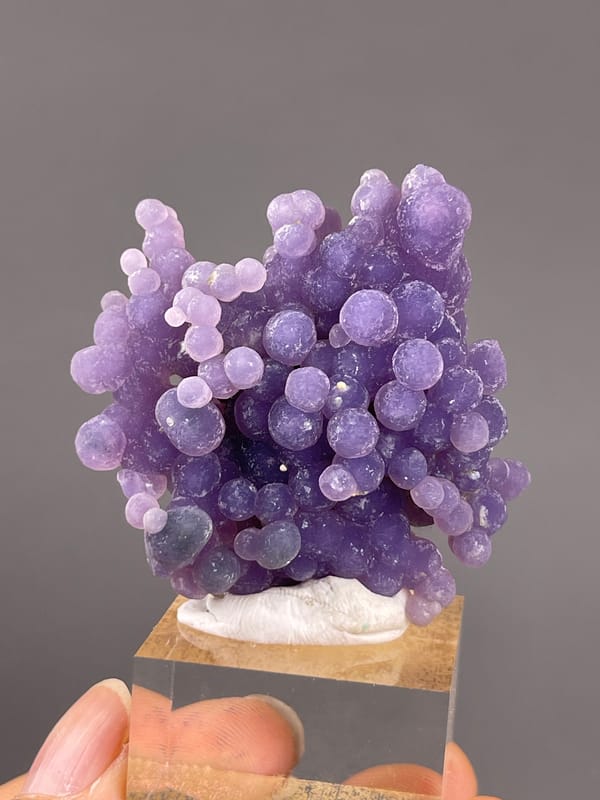
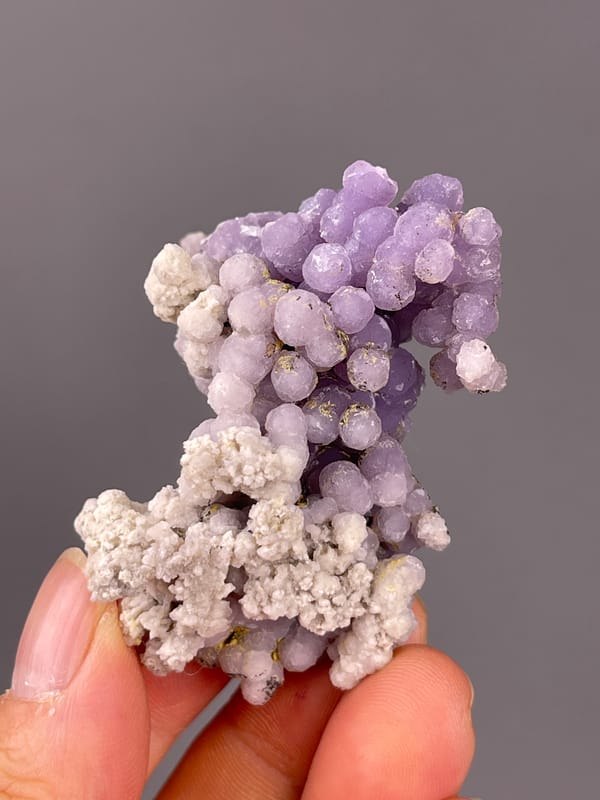
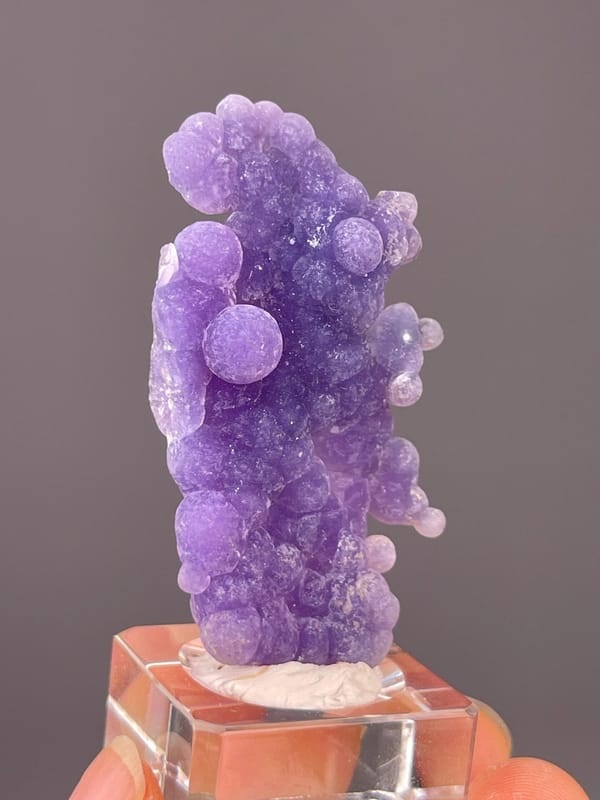
Chalcedony is the cryptocrystalline form of quartz — submicroscopic interlocked quartz fibers producing a tough, waxy-lustered material. Many named varieties are Chalcedony: agate (banded), carnelian (red-orange), chrysoprase (apple-green Ni), bloodstone (green with red jasper), and onyx (parallel-banded).
Chalcedony is the cryptocrystalline form of quartz — submicroscopic interlocked quartz fibers producing a tough, waxy-lustered material. Many named varieties are Chalcedony: agate (banded), carnelian (red-orange), chrysoprase (apple-green Ni), bloodstone (green with red jasper), and onyx (parallel-banded). Chalcedony forms in basalt cavities and silica-replacement environments.
More minerals to explore
Citrine (黄水晶)
Trigonal
Rose Quartz (玫瑰石英)
Trigonal
Amethyst (紫水晶)
Trigonal
Jasper (碧玉)
Trigonal (microcrystalline)
Varieties of Chalcedony
Chalcedony is a parent species — the following named varieties differ in color or chemistry but share the same fundamental mineralogy.
- Onyx (u7f1fu739bu7459)parallel banded black-and-whiteBlack-and-white parallel-banded chalcedony variety, used for cameos.
- Sardonyx (u7ea2u7f1fu739bu7459)red-and-white bandedRed-and-white parallel-banded chalcedony, used for cameos and intaglios.
- Carnelian (u7ea2u7389u9ad3)red-orangeIron-bearing reddish-orange chalcedony variety.
- Sard (u6df1u8910u7389u9ad3)brownish-redDarker-brown carnelian-related chalcedony variety.
- Chrysoprase (u7effu7389u9ad3)apple-greenNickel-bearing apple-green chalcedony variety; the rarest chalcedony color.
- Bloodstone (Heliotrope) (u8840u77f3)green with red spotsDark-green chalcedony with red iron-oxide spots resembling blood drops.