
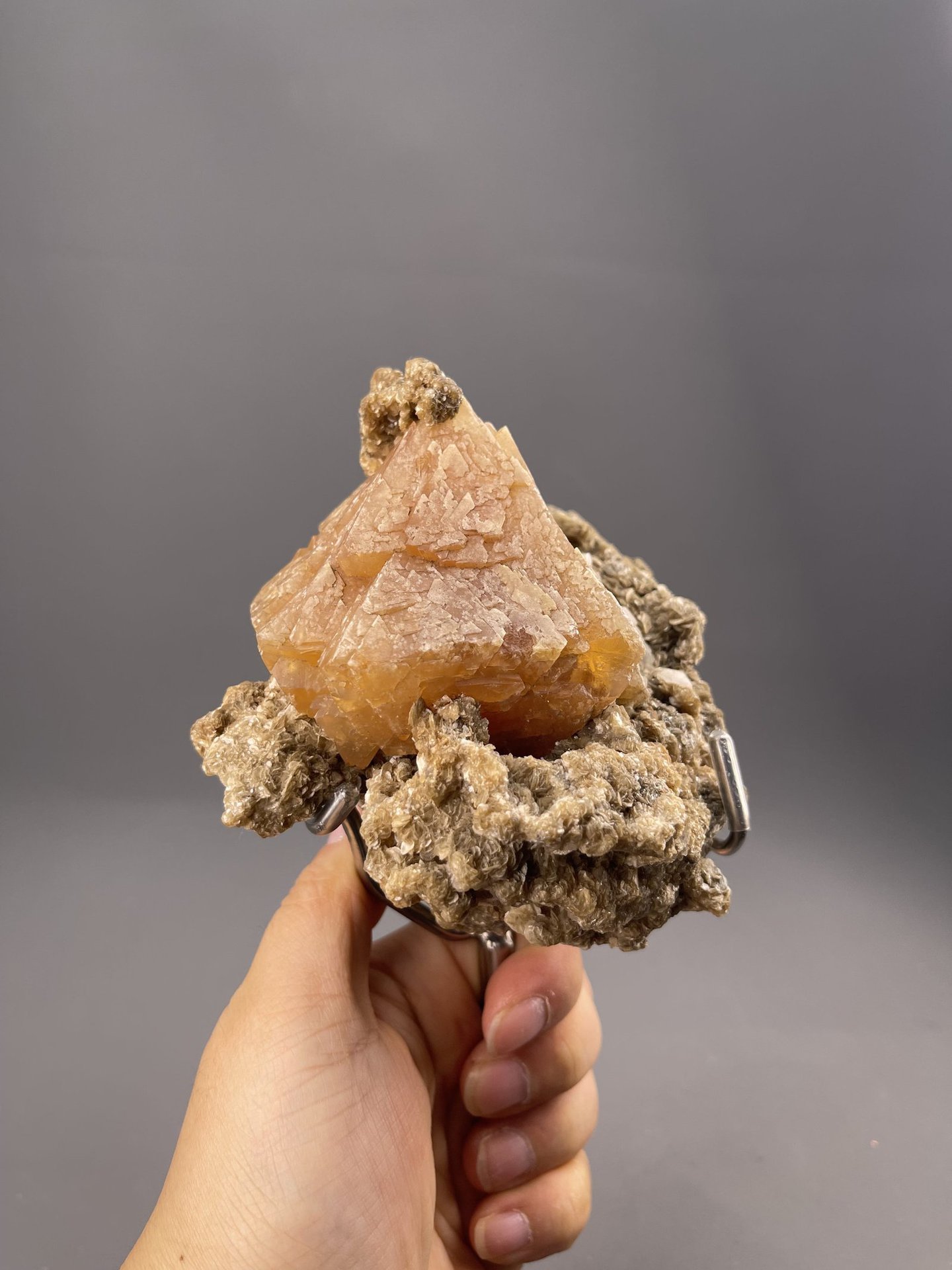
1. Crystals from molten rock (igneous)
Most minerals begin in magma. As molten rock cools, minerals crystallize in sequence; the slower it cools, the larger the crystals grow. Quick-chilled lava gives tiny grains, while magma that cools over thousands of years deep underground can build big, clean crystals.
The extreme case is a pegmatite — the last, water-rich dregs of a cooling granite — where elements concentrate and crystals reach giant size. China's Xuebaoding in Sichuan, source of gemmy scheelite, beryl and cassiterite, formed in this high-temperature granitic environment.
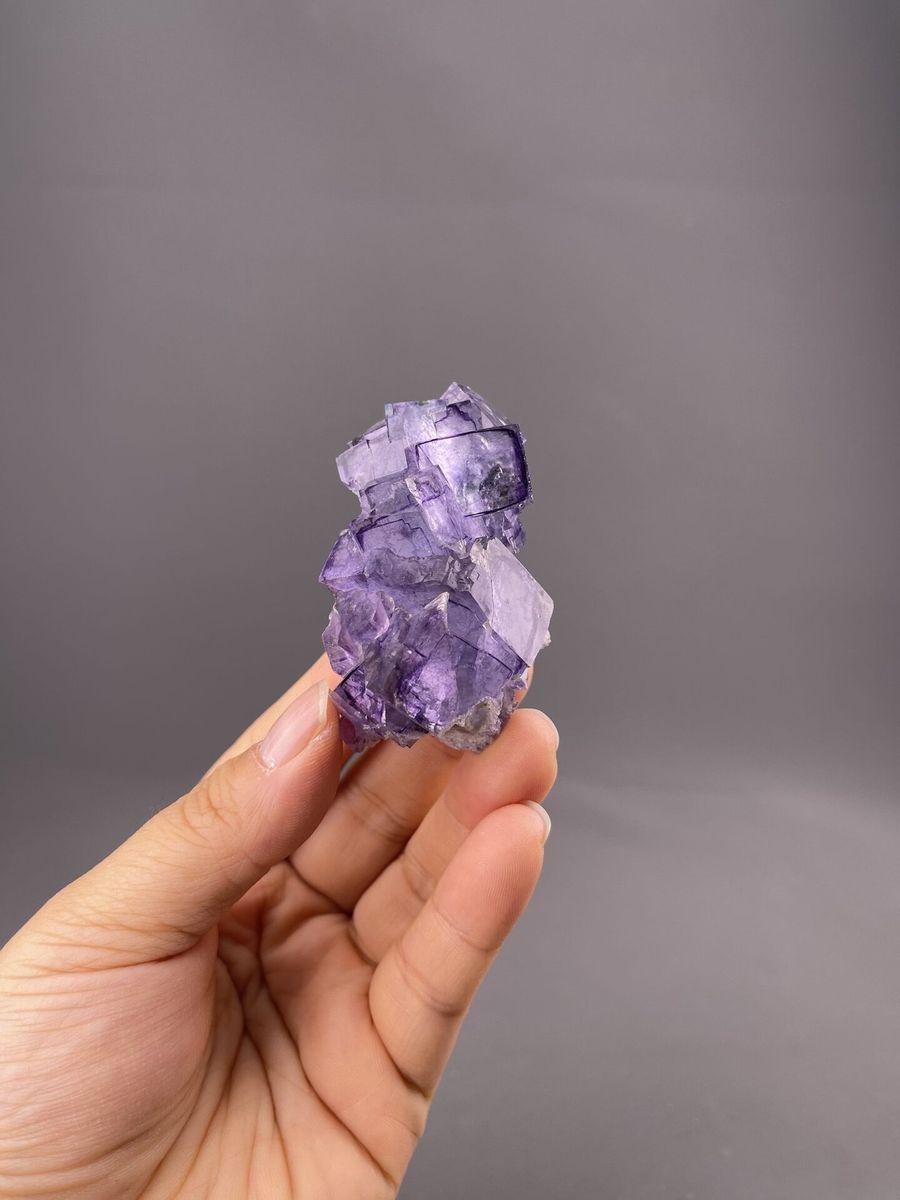
2. Hot-water veins (hydrothermal)
Hot, mineral-rich water is the single most important source of fine collector crystals. As these fluids move through cracks in the rock and cool, they deposit minerals on the fracture walls, lining open spaces where crystals can grow freely into perfect form.
Most of China's famous specimens are hydrothermal: the fluorite of Yaogangxian, the stibnite of Xikuangshan, and countless quartz and calcite veins all formed this way. See our guide to hydrothermal veins.
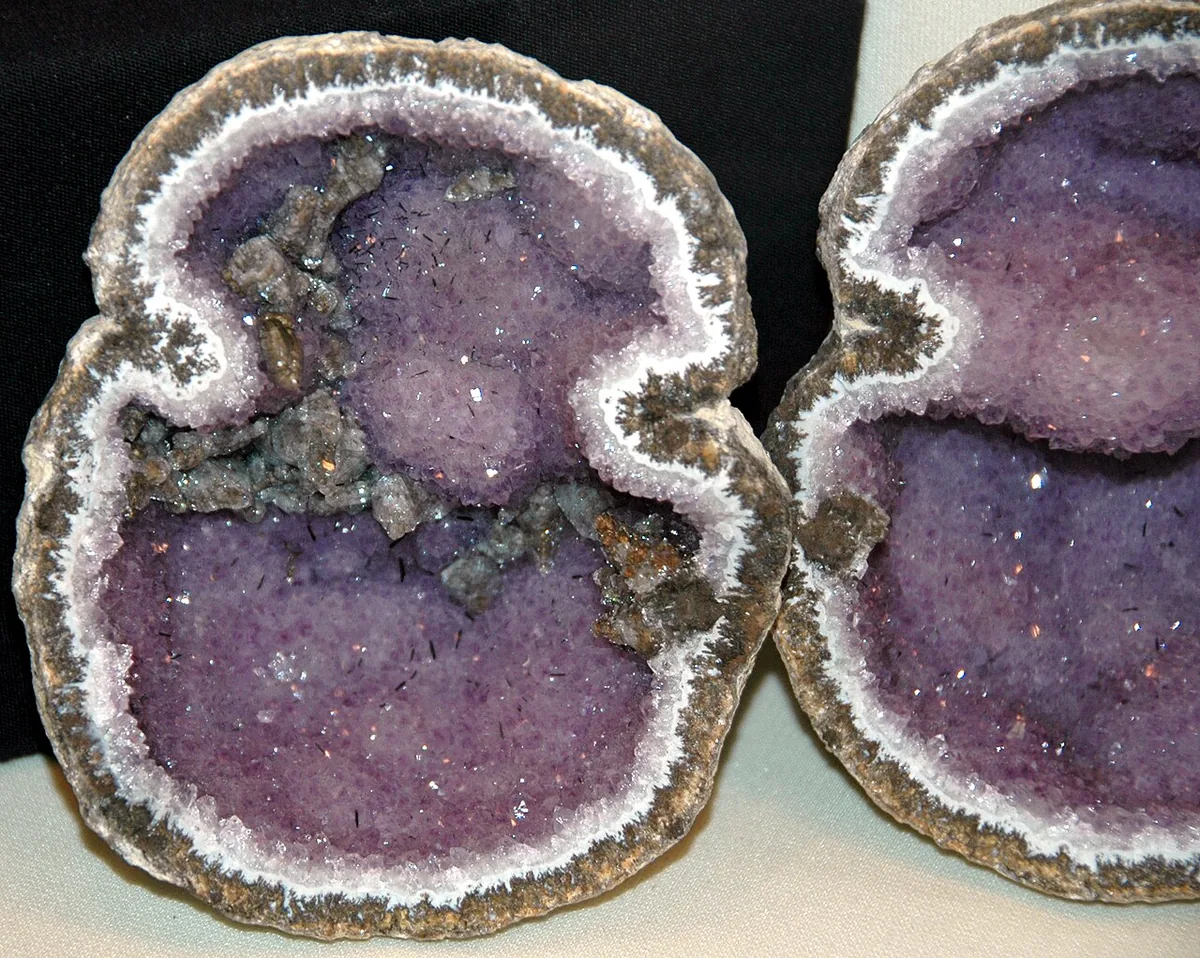
3. Cavities, geodes and the oxidized zone
Where fluids fill a gas bubble or a dissolved cavity, minerals crystallize inward from the walls to make a geode — an agate rind lined with quartz or amethyst points around a hollow center. The concentric growth records each pulse of mineral-bearing water.
Near the surface, weathering and oxygen attack existing ore to grow brilliant "secondary" minerals: green malachite, blue azurite, and the grass-green pyromorphite of Daoping all form in this oxidized zone.
4. Layer by layer (sedimentary and evaporite)
Minerals also precipitate directly from water at the surface. When a salt lake or shallow sea evaporates, it leaves beds of evaporite minerals such as gypsum and halite, sometimes as large, clear selenite crystals.
Other sedimentary minerals build up grain by grain or as concretions and nodules, and banded iron formations preserve ancient ocean chemistry. These processes rarely make showy crystals, but they form a huge share of the Earth's mineral mass.
5. Cooked and squeezed (metamorphic and skarn)
Heat and pressure deep in the crust recrystallize existing rock without melting it, growing minerals such as garnet, kyanite and staurolite in schists and gneisses.
A special case is the skarn — where hot granite intrudes limestone and the two react — which produces rich pockets of garnet, ilvaite and many other species. China's Huanggang and Daye are world-class skarn localities.
Reading the formation from a specimen
Once you know the four pathways, a specimen starts telling its own story. Free-standing crystals in a vug suggest a hydrothermal vein or cavity; coarse intergrowths point to igneous or pegmatitic growth; secondary greens and blues mean a weathered, oxidized ore.
This is practical, not just academic: knowing what a locality's geology should produce is one of the quickest ways to sense when a label or an association looks wrong.
Frequently asked questions
What are the main ways minerals form?
Four broad processes: crystallization from molten rock (igneous), deposition from hot watery fluids (hydrothermal), precipitation and layering at the surface (sedimentary/evaporite), and recrystallization under heat and pressure (metamorphic, including skarns).
How long does a crystal take to grow?
It varies enormously — from days for some evaporite salts to tens of thousands of years for large crystals in slowly cooling magma. In general, slower growth and more open space produce larger, better-formed crystals.
Why are pegmatite crystals so big?
Pegmatites form from the last, water-rich melt of a cooling granite, which is very fluid and rich in concentrated elements. That lets atoms move easily and crystals grow to exceptional size.
What is a skarn deposit?
A skarn forms where hot granite intrudes limestone or other carbonate rock and the two chemically react, growing minerals like garnet and ilvaite. China's Huanggang and Daye are famous skarn localities.