Elemental Composition (by mass)
| Element | Mass % | Visual |
|---|---|---|
| O Oxygen | 45.78% | |
| Si Silicon | 18.54% | |
| Al Aluminum | 17.82% | |
| Ca Calcium | 17.64% | |
| H Hydrogen | 0.22% |
Computed from simplified end-member formula. Solid-solution series, water content, and trace substitutions cause real-world variation.
IMA Abbreviation (Whitney-Evans 2010)
Ep
→ Epidote
Sorosilicate
Standard symbol from American Mineralogist (Whitney & Evans, 2010). Used in thin-section labeling, phase diagrams, and IMA-style species records.
Pronunciation
/ˈɛpɪdoʊt/
↔ EP-ih-dote
Greek "addition"
Luster
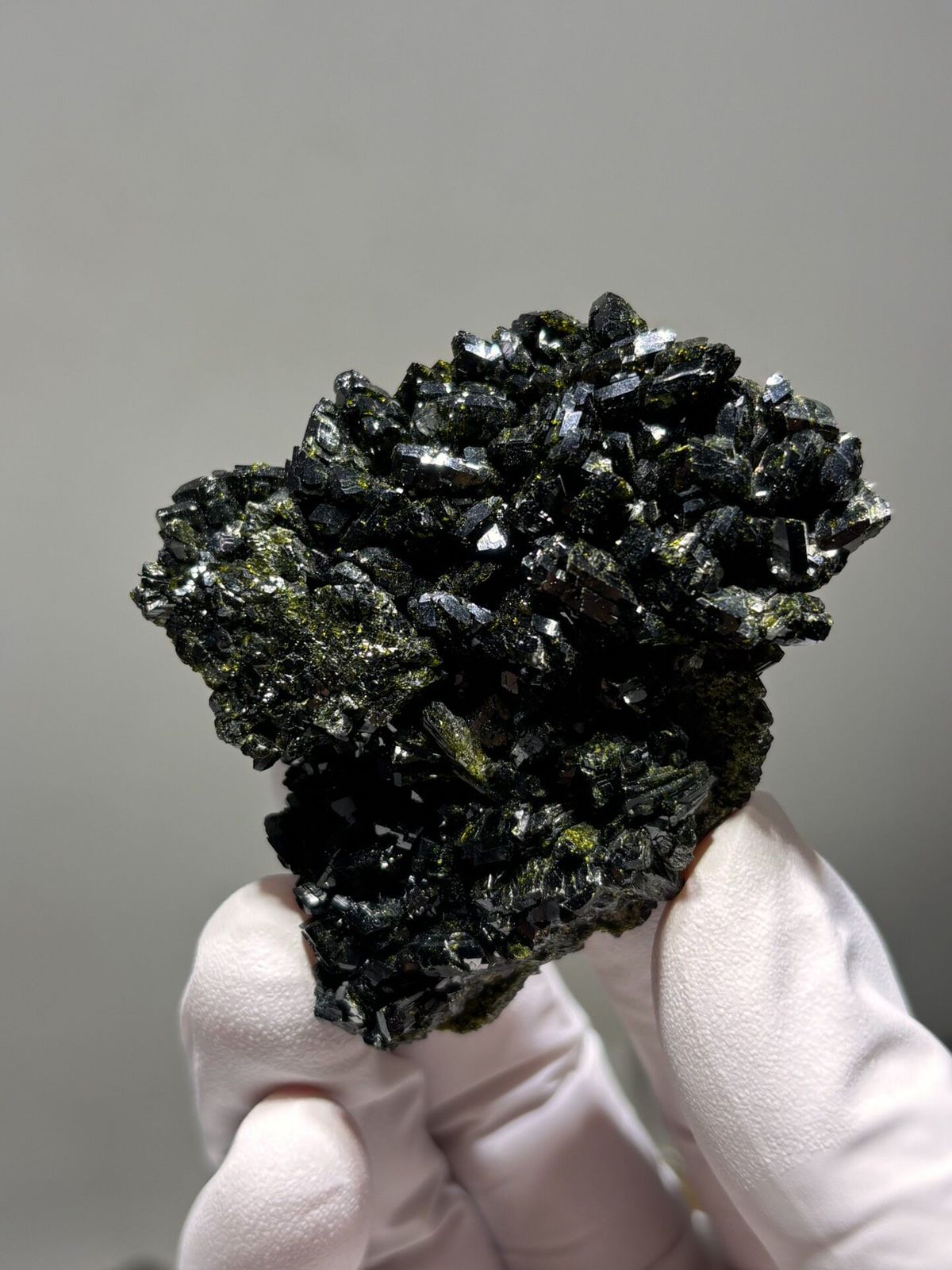
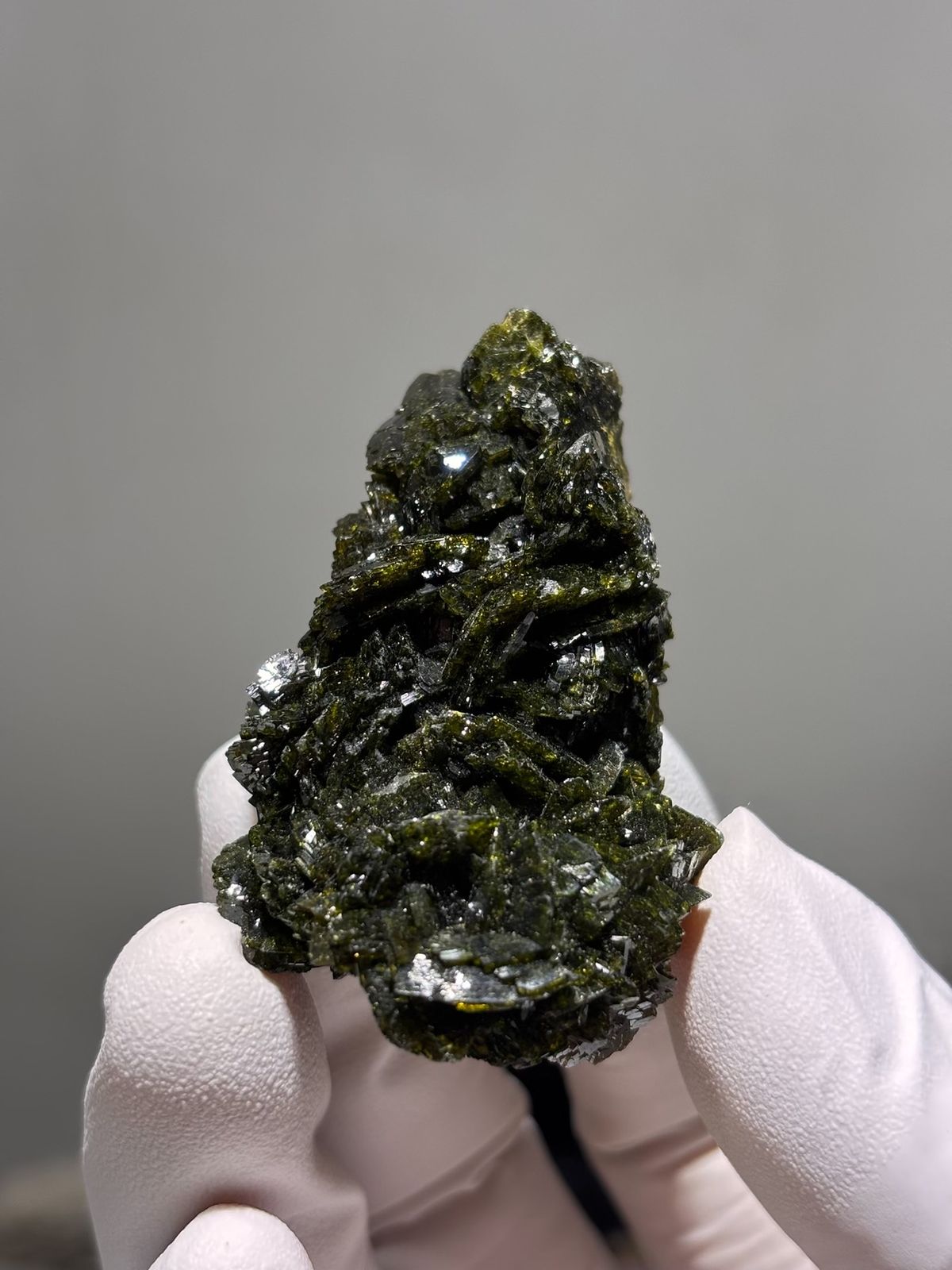
vitreous
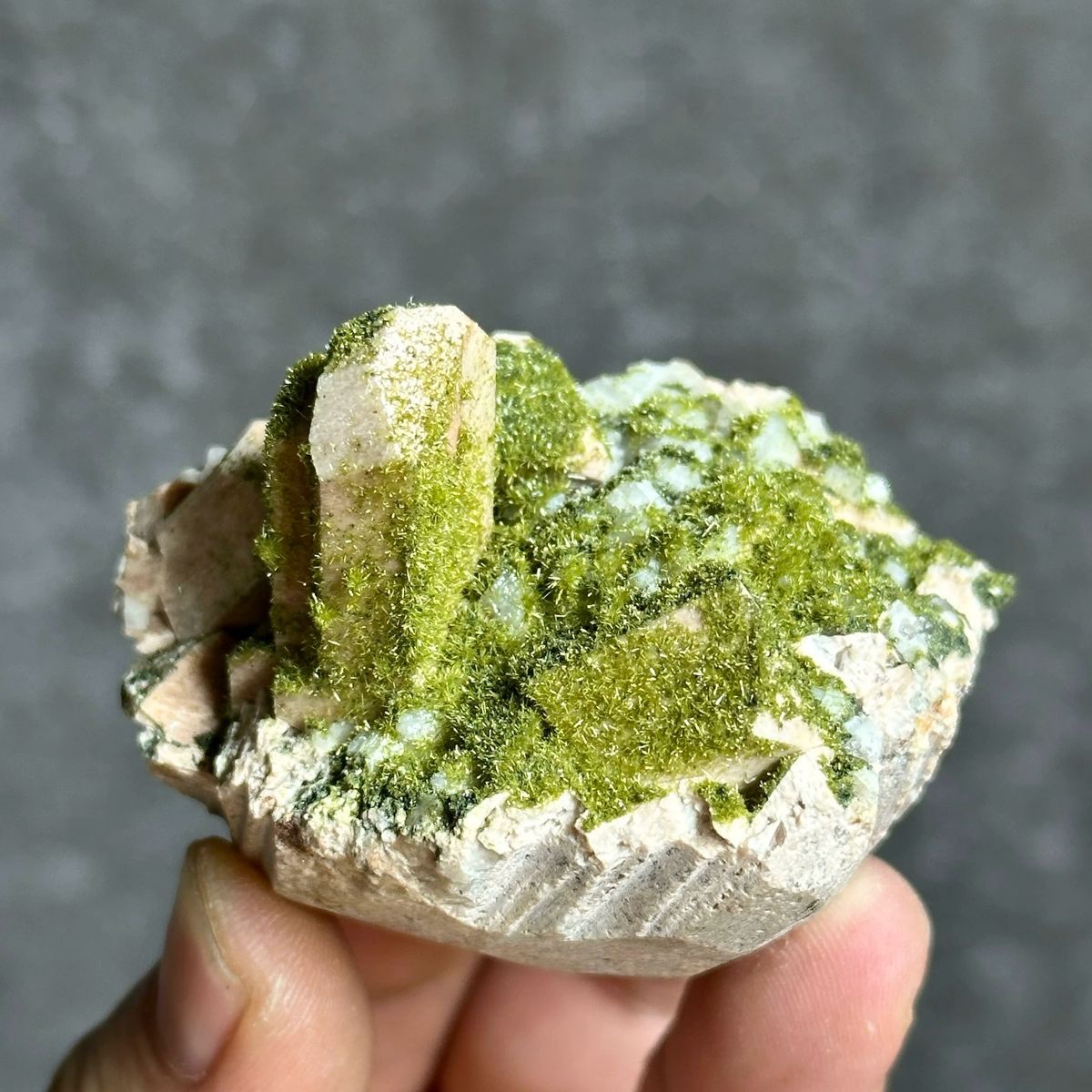
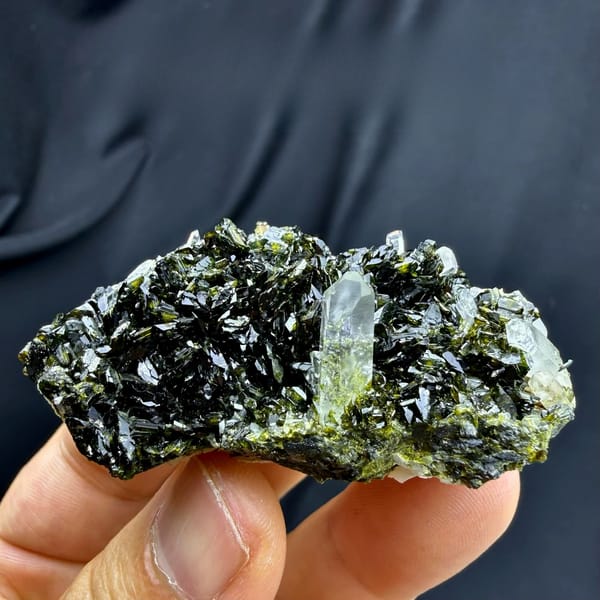
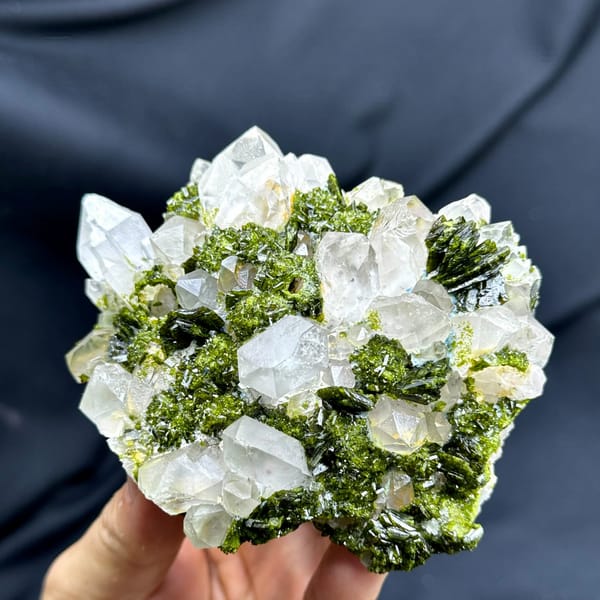
Bright pistachio green.
Color Cause (Chromophore)
Chromophore:
Fe³⁺
Mechanism:
idiochromatic
Color produced:
pistachio green
Fe³⁺ replacing Al in epidote structure.
Type Locality
Bourg d'Oisans — France
Described 1801 by Haüy
› Browse all type localities
Specific Gravity
3.38–3.49
g/cm³
medium
Pistachio green; sometimes confused with peridot.
For comparison: water = 1.00, glass ≈ 2.5, quartz = 2.65, corundum ≈ 4.00, galena ≈ 7.50, gold ≈ 19.3.
Pleochroism (trichroic)
Axis a
yellow-green
Axis b
green
Axis c
brown
Strength: strong
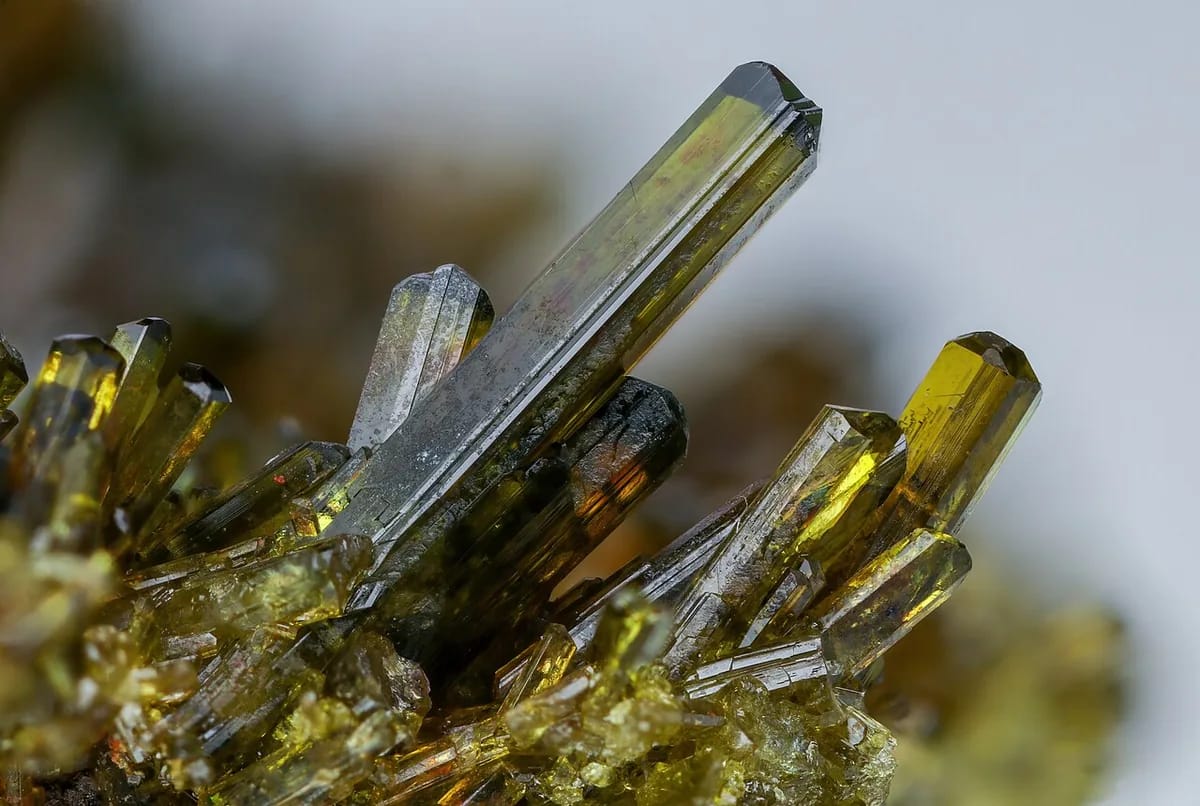
Pistachio-green epidote shows obvious trichroism.
Market availability: Uncommon
Found at major shows and select dealers. Quality varies by locality.
Collector tier: Cabinet Classic
Display species collected for cabinet presentation, with specimens recorded from named localities.
Mohs 6–7
Vickers (~) 820 HV
Knoop (~) 870 HK
Nickel–Strunz
9.BG.05aDana
58.02.01a.06Geological setting
MetamorphicSkarnHydrothermal
Element composition by mass
Formula: Ca₂(Al,Fe)₃(SiO₄)₃(OH) · molar mass: 497.65 g/mol
| O | 41.79% | |
| Si | 16.93% | |
| Fe | 16.83% | |
| Ca | 16.11% | |
| Al | 8.13% | |
| H | 0.2% |
Computed from atomic weights (IUPAC 2021). Site-occupancy groups (Fe,Mn) split equally.
GroupEpidote Group
Mohs Hardness
6–7
Epidote sits at 6–7 on the Mohs scale — harder than glass; scratches steel.
Colors:
Streak
Gray-white
Gray-white
Crystal system
Monoclinic
Monoclinic
Type localityKnappenwand, Salzburg, Austria
SilicatesSilicates (Sorosilicates)
TL;DR · 1 min read
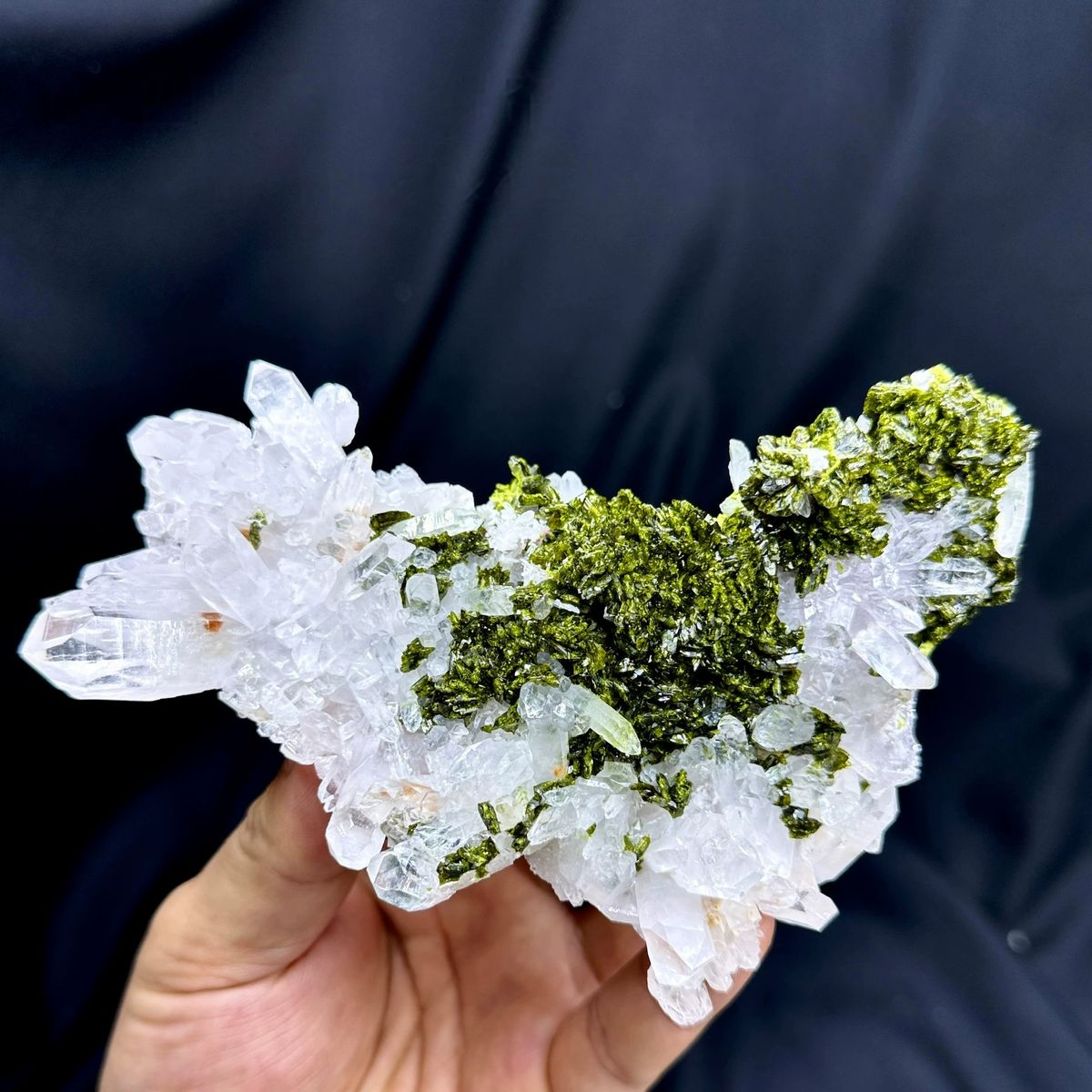
Epidote (Ca₂(Al,Fe)₃(SiO₄)₃(OH)) is a calcium-aluminum-iron sorosilicate famous for its distinctive pistachio-green to dark-green color and long striated prismatic crystals. It is the namesake of the epidote group and a widespread metamorphic indicator mineral.
Epidote (Ca₂(Al,Fe)₃(SiO₄)₃(OH)) is a calcium-aluminum-iron sorosilicate famous for its distinctive pistachio-green to dark-green color and long striated prismatic crystals. It is the namesake of the epidote group and a widespread metamorphic indicator mineral. The Knappenwand locality in Austria is the historical world standard, producing meter-long prismatic crystals; modern collector specimens come from Alaska, Pakistan, and the Sichuan basin in China.