IMA Abbreviation (Whitney-Evans 2010)
Pyl
→ Pyrolusite
MnO₂
Standard symbol from American Mineralogist (Whitney & Evans, 2010). Used in thin-section labeling, phase diagrams, and IMA-style species records.
Magnetism
Category:
weakly paramagnetic
Test result:
Detectable
Mn oxide.
Test with rare-earth magnet (N42 or N52 neodymium). Suspend specimen on thread for sensitive paramagnetic detection. Diamagnetic minerals are weakly repelled (visible only with strong magnets like bismuth).
Streak Test
black
Soft (Mohs 2); marks paper. Black streak.
Streak = color of the powdered mineral. Drag specimen across unglazed white porcelain plate (Mohs 6.5). For minerals harder than the plate, crush a small flake into powder and observe color.
Mohs 2–6.5
Vickers (~) 200 HV
Knoop (~) 220 HK
Geological setting
Sedimentary
Element composition by mass
Formula: MnO₂ · molar mass: 86.94 g/mol
| Mn | 63.19% | |
| O | 36.81% |
Computed from atomic weights (IUPAC 2021). Site-occupancy groups (Fe,Mn) split equally.
Mohs Hardness
2–6.5
Pyrolusite sits at 2–6.5 on the Mohs scale — can be scratched by a steel knife.
Colors:
Streak
Black, bluish-black
Black, bluish-black
Crystal system
Tetragonal
Tetragonal
Oxides & HydroxidesOxides
TL;DR · 1 min read
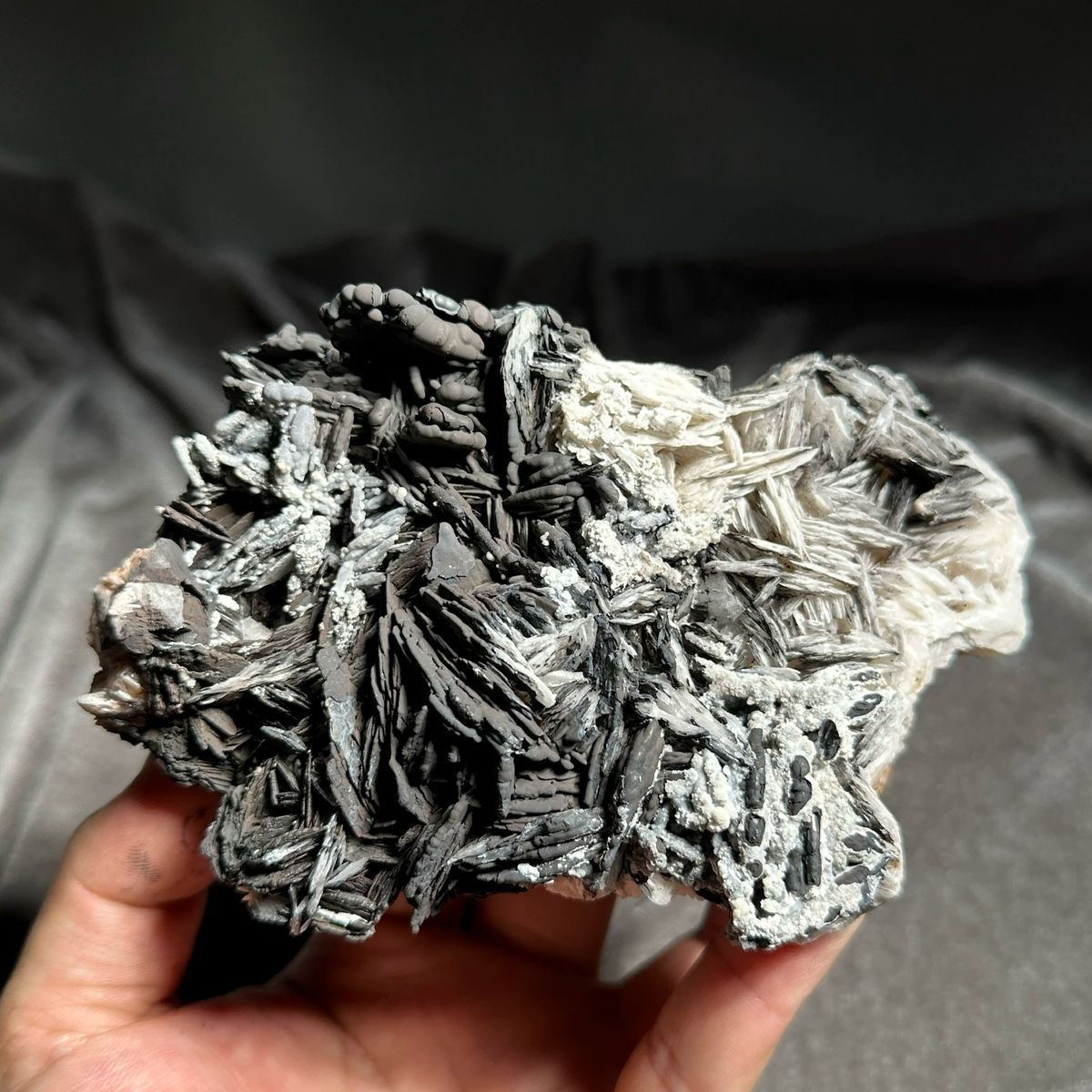
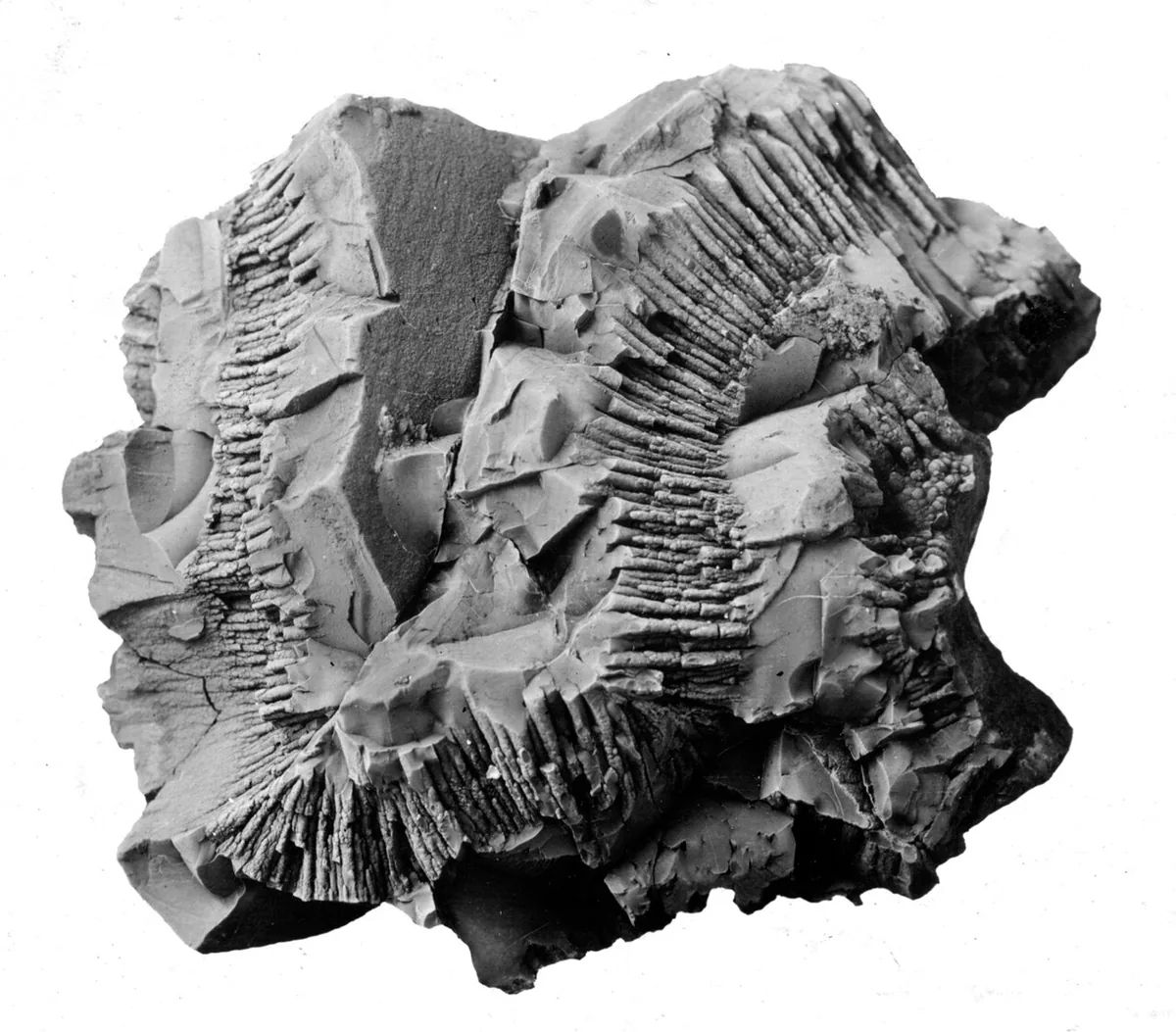
Pyrolusite (MnO₂) is the most common manganese ore mineral and the principal source of industrial manganese for steelmaking and battery production. While massive forms dominate the ore market, collectors prize the dendritic "manganese trees" that grow along fracture surfaces in sedimentary rocks, and rare botryoidal or fibrous crystalline aggregates from oxidized manganese deposits.
Pyrolusite (MnO₂) is the most common manganese ore mineral and the principal source of industrial manganese for steelmaking and battery production. While massive forms dominate the ore market, collectors prize the dendritic “manganese trees” that grow along fracture surfaces in sedimentary rocks, and rare botryoidal or fibrous crystalline aggregates from oxidized manganese deposits.
Notable Chinese Localities
Hunan and Guangxi host the largest Chinese manganese fields. Botryoidal and fibrous specimens are mined as byproducts of industrial Mn extraction.
Cite this entry
APA
MyMineralBox Editorial Team. (2026). Pyrolusite. My Mineral Box. Retrieved May 23, 2026, from https://mymineralbox.com/mineral-encyclopedia/minerals/pyrolusite/
MLA
MyMineralBox Editorial Team. "Pyrolusite." My Mineral Box, 2026, https://mymineralbox.com/mineral-encyclopedia/minerals/pyrolusite/. Accessed May 23, 2026.
Chicago
MyMineralBox Editorial Team. "Pyrolusite." My Mineral Box. Last modified May 4, 2026. https://mymineralbox.com/mineral-encyclopedia/minerals/pyrolusite/.
BibTeX
@misc{mmb_pyrolusite,
 author = {{MyMineralBox Editorial Team}},
 title = {{Pyrolusite}},
 year = {2026},
 publisher = {My Mineral Box},
 url = {https://mymineralbox.com/mineral-encyclopedia/minerals/pyrolusite/},
 urldate = {2026-05-23}
}