Crystal Structure
Inverse spinel — Fe³⁺ in tetrahedral, Fe²⁺ + Fe³⁺ in octahedral.
Elemental Composition (by mass)
| Element | Mass % | Visual |
|---|---|---|
| Fe Iron | 72.36% | |
| O Oxygen | 27.64% |
Computed from simplified end-member formula. Solid-solution series, water content, and trace substitutions cause real-world variation.
IMA Abbreviation (Whitney-Evans 2010)
Mag
→ Magnetite
Fe₃O₄ — common spinel
Standard symbol from American Mineralogist (Whitney & Evans, 2010). Used in thin-section labeling, phase diagrams, and IMA-style species records.
Pronunciation
/ˈmæɡnətaɪt/
↔ MAG-nuh-tite
from Magnesia (place)
Pseudomorph Relationships
Replaced by — this mineral commonly becomes:
→ Hematite replacement
Magnetite oxidizes to hematite ("martite") under prolonged oxidation while preserving octahedral form.
Australia, Ural Mountains, Brazil.
A pseudomorph (Greek "false form") is a mineral with the external shape of another species — the chemistry has changed but the crystal habit is inherited.
Tenacity
Behavior:
brittle
Under stress:
Shatters cleanly
Hard and brittle.
Luster
metallic→sub-metallic
Black metallic; mass-effect from Fe content.
Diaphaneity (Transparency)
opaque
Black metallic; opaque.
Type Locality
(ancient — Greek "magnes lithos") — Worldwide
Source: Pliny
› Browse all type localities
Magnetism
Category:
ferromagnetic
Test result:
Picks up iron filings; sticks to refrigerator magnet
Fe₃O₄ — only commonly-collected mineral that is naturally ferromagnetic. Lodestone variety is naturally permanently magnetized.
Test with rare-earth magnet (N42 or N52 neodymium). Suspend specimen on thread for sensitive paramagnetic detection. Diamagnetic minerals are weakly repelled (visible only with strong magnets like bismuth).
Diagnostic Field Tests
Magnet test→ Strongly attracts a magnet
Lodestone variety is naturally magnetized.
Streak→ Black
Distinguishes from hematite (red streak).
⚠ Use dilute HCl (~10%) only on inconspicuous spots; rinse promptly. Smell-tests should be brief and ventilated. Taste-test ONLY halite/sylvite — never lead, arsenic, or sulfur minerals.
Specific Gravity
5.17
g/cm³
heavy
Fe₃O₄; magnetic + heavy.
For comparison: water = 1.00, glass ≈ 2.5, quartz = 2.65, corundum ≈ 4.00, galena ≈ 7.50, gold ≈ 19.3.
Streak Test
black
Black streak + magnetic — diagnostic combination.
Streak = color of the powdered mineral. Drag specimen across unglazed white porcelain plate (Mohs 6.5). For minerals harder than the plate, crush a small flake into powder and observe color.
Twinning Laws
Spinel lawcontact
Same {111} twin as spinel — flat octahedra rare but striking.
Cleavage & Fracture
Cleavage:
none — (parting on {111})
Fracture:
subconchoidal
Octahedral parting common.
Market availability: Common
Widely available in most dealer stocks. Specimens span all price tiers.
Collector tier: Solid Display
Reliable mid-tier display species. Easy to find in well-formed examples; broad locality diversity.
Mohs 5.5–6.5
Vickers (~) 820 HV
Knoop (~) 870 HK
Nickel–Strunz
4.BB.05Dana
07.02.02.03Geological setting
MetamorphicSkarnBanded iron formation
Diagnostic properties
Strongly magnetic
Element composition by mass
Formula: Fe₃O₄ · molar mass: 231.53 g/mol
| Fe | 72.36% | |
| O | 27.64% |
Computed from atomic weights (IUPAC 2021). Site-occupancy groups (Fe,Mn) split equally.
Mohs Hardness
5.5–6.5
Magnetite sits at 5.5–6.5 on the Mohs scale — just hard enough to scratch glass.
Colors:
Streak
Black
Black
Crystal system
Isometric (Cubic)
Isometric (Cubic)
Type localityMagnesia, Greece
Discovery Known since antiquity (Magnesia, Greece)
Oxides & HydroxidesOxides
TL;DR · 1 min read
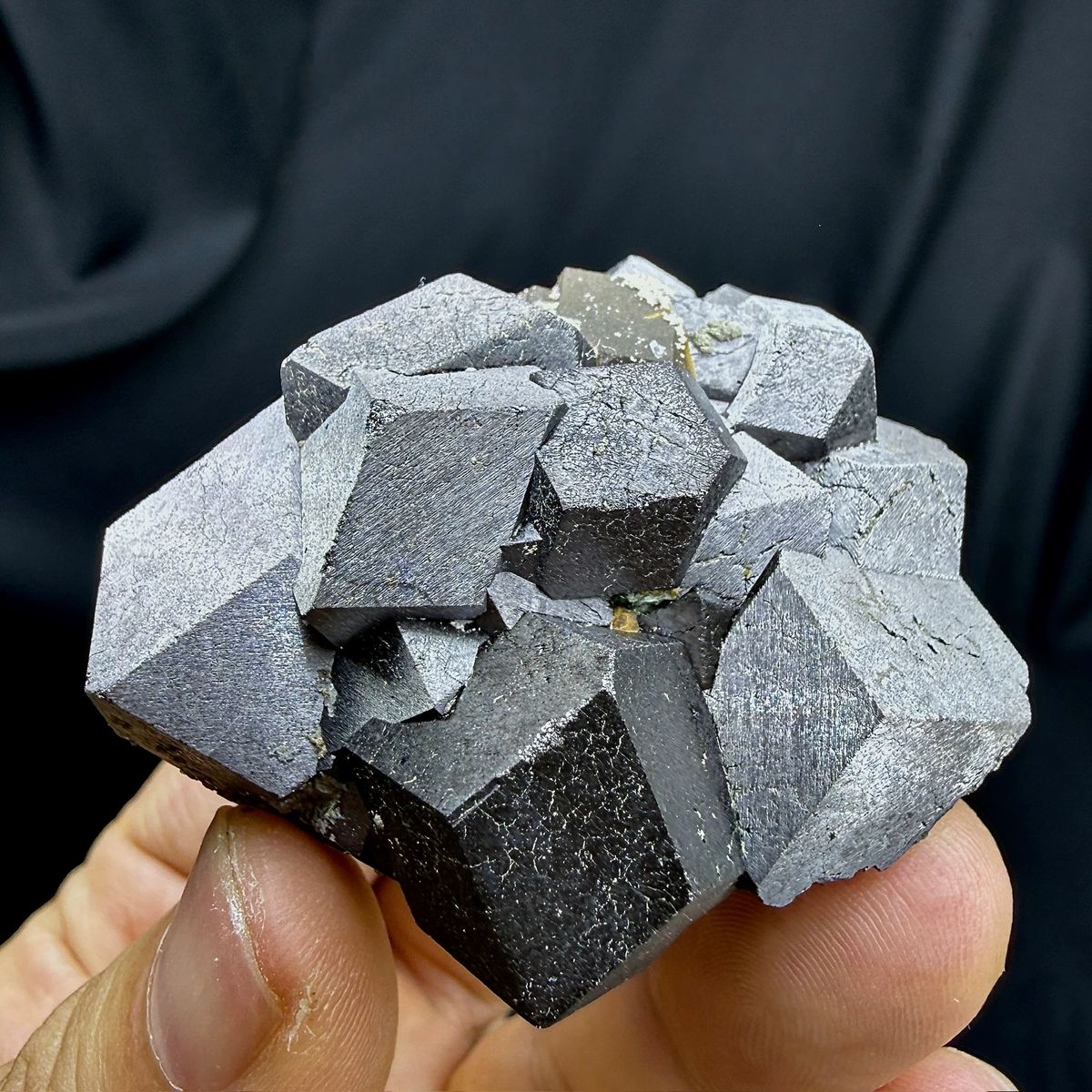
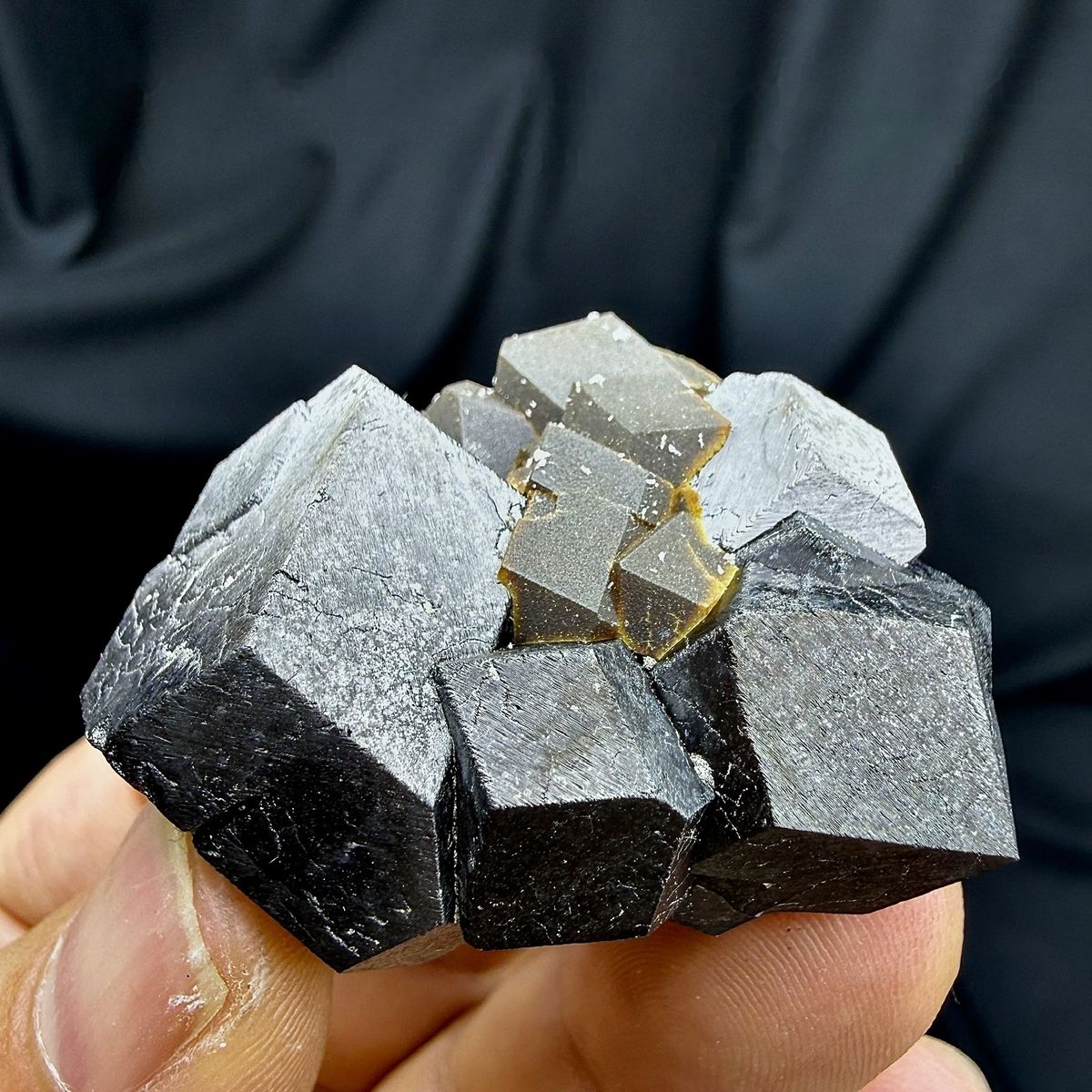
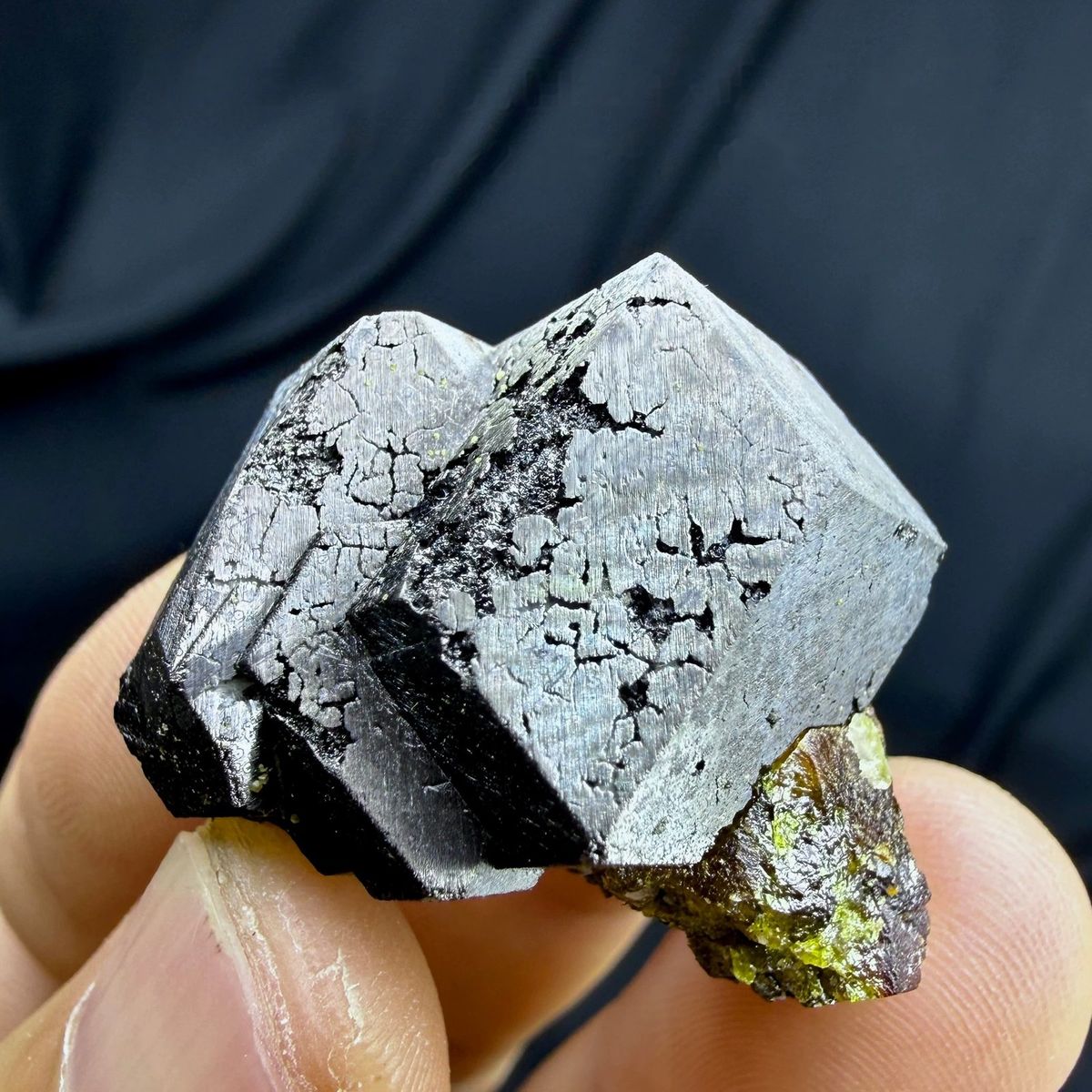
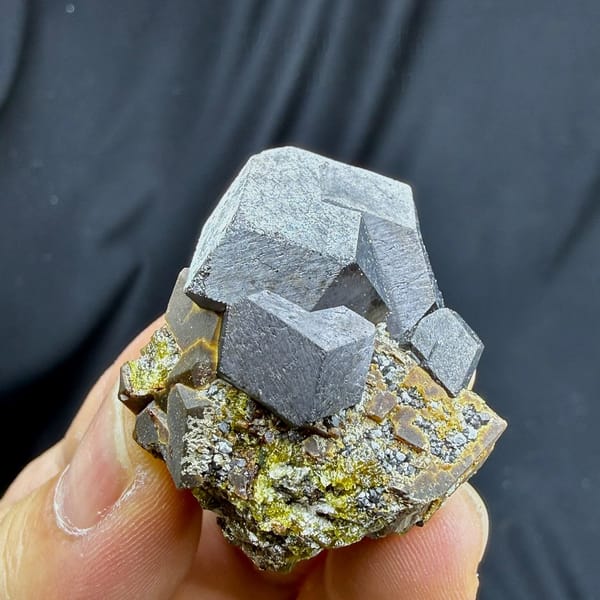
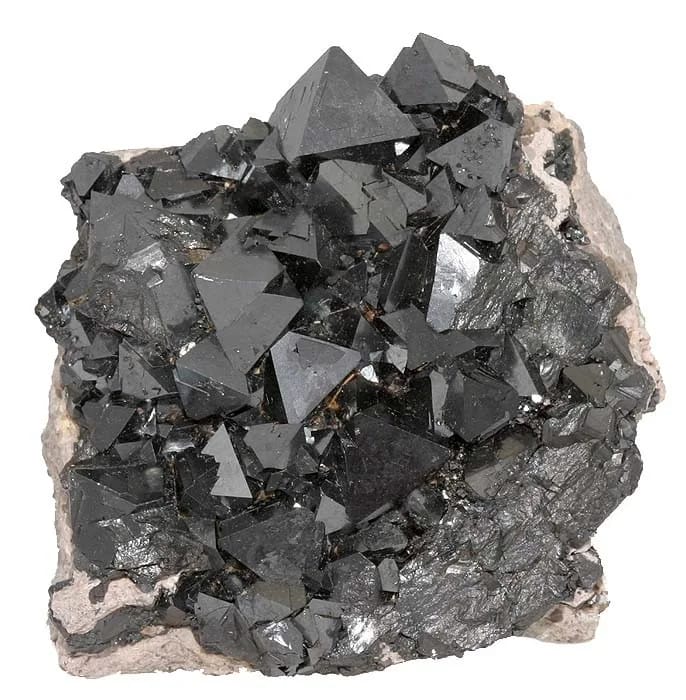
Magnetite (Fe₃O₄) is the strongly magnetic iron oxide and one of the principal iron ores. Its octahedral crystal habit and natural magnetism (lodestone variety) make it instantly recognizable.
Magnetite (Fe₃O₄) is the strongly magnetic iron oxide and one of the principal iron ores. Its octahedral crystal habit and natural magnetism (lodestone variety) make it instantly recognizable. Magnetite forms in mafic-ultramafic igneous rocks, banded iron formations, and contact-metamorphic skarns. Anshan (Liaoning) and Panzhihua (Sichuan) are major Chinese ore producers.