IMA Abbreviation (Whitney-Evans 2010)
Po
→ Pyrrhotite
Magnetic Fe sulfide
Standard symbol from American Mineralogist (Whitney & Evans, 2010). Used in thin-section labeling, phase diagrams, and IMA-style species records.
⏳ Long-term Aging & Care Timeline
sulfide oxidationyears
Trigger: humidity
Intervention: Magnetic pyrrhotite oxidizes more slowly than pyrite but similar care.
Tenacity
Behavior:
brittle
Under stress:
Shatters
Magnetic but brittle.
Magnetism
Category:
ferromagnetic
Test result:
Weakly attracted to a small magnet
Fe₁₋ₓS — magnetic intensity depends on Fe vacancy concentration. Common ore mineral.
Test with rare-earth magnet (N42 or N52 neodymium). Suspend specimen on thread for sensitive paramagnetic detection. Diamagnetic minerals are weakly repelled (visible only with strong magnets like bismuth).
Diagnostic Field Tests
Magnet test→ Weakly magnetic
Distinguishes from non-magnetic pyrite.
⚠ Use dilute HCl (~10%) only on inconspicuous spots; rinse promptly. Smell-tests should be brief and ventilated. Taste-test ONLY halite/sylvite — never lead, arsenic, or sulfur minerals.
Streak Test
dark gray-black
Magnetic; distinguishes by streak from pyrite.
Streak = color of the powdered mineral. Drag specimen across unglazed white porcelain plate (Mohs 6.5). For minerals harder than the plate, crush a small flake into powder and observe color.
Mohs 3.5–4.5
Vickers (~) 200 HV
Knoop (~) 220 HK
Geological setting
MetamorphicSkarnHydrothermal
Diagnostic properties
Weakly magnetic
Mohs Hardness
3.5–4.5
Pyrrhotite sits at 3.5–4.5 on the Mohs scale — can be scratched by a steel knife.
Colors:
Streak
Dark gray-black
Dark gray-black
Crystal system
Hexagonal / Monoclinic polytypes
Hexagonal / Monoclinic polytypes
Sulfides & SulfosaltsSulfides
TL;DR · 1 min read
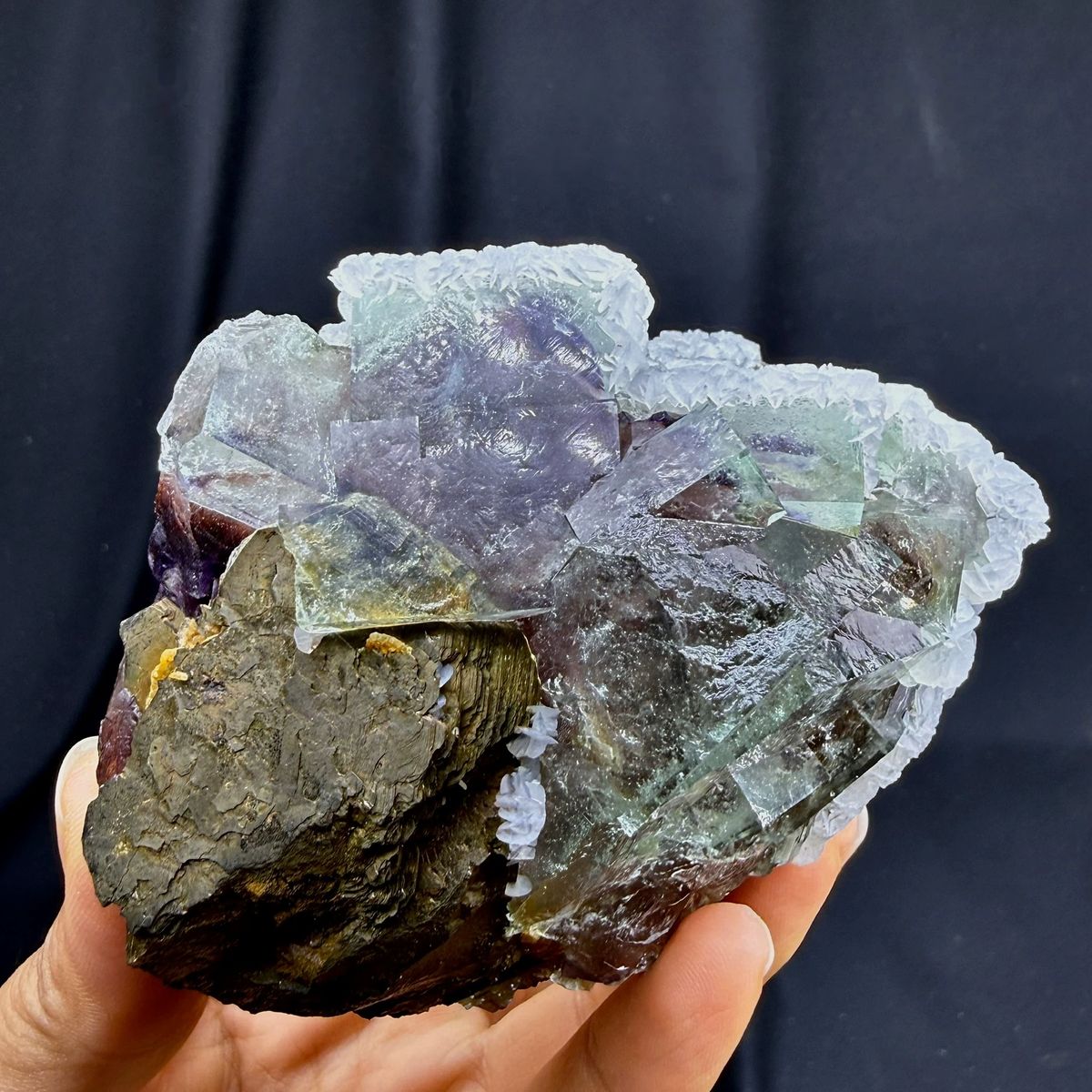
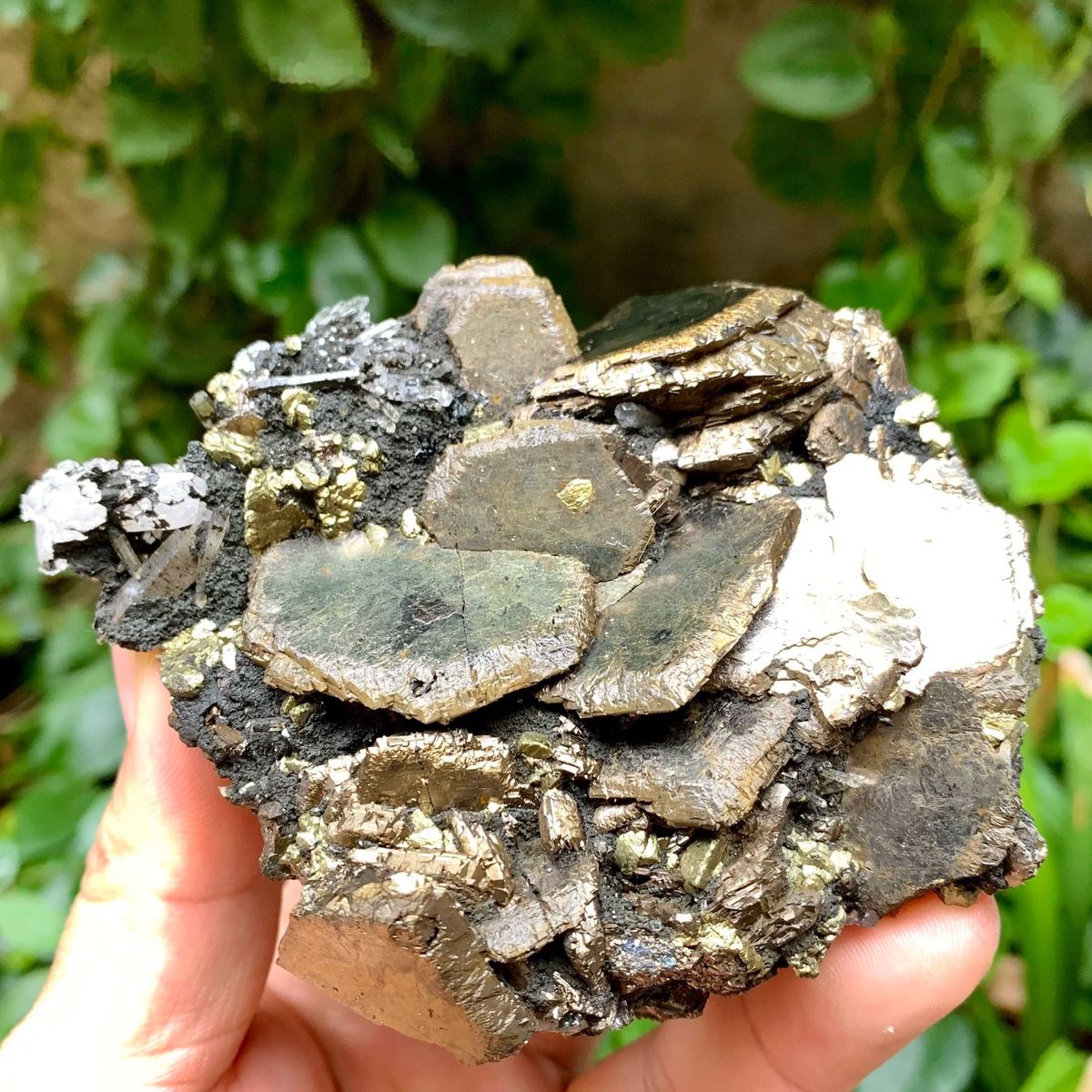
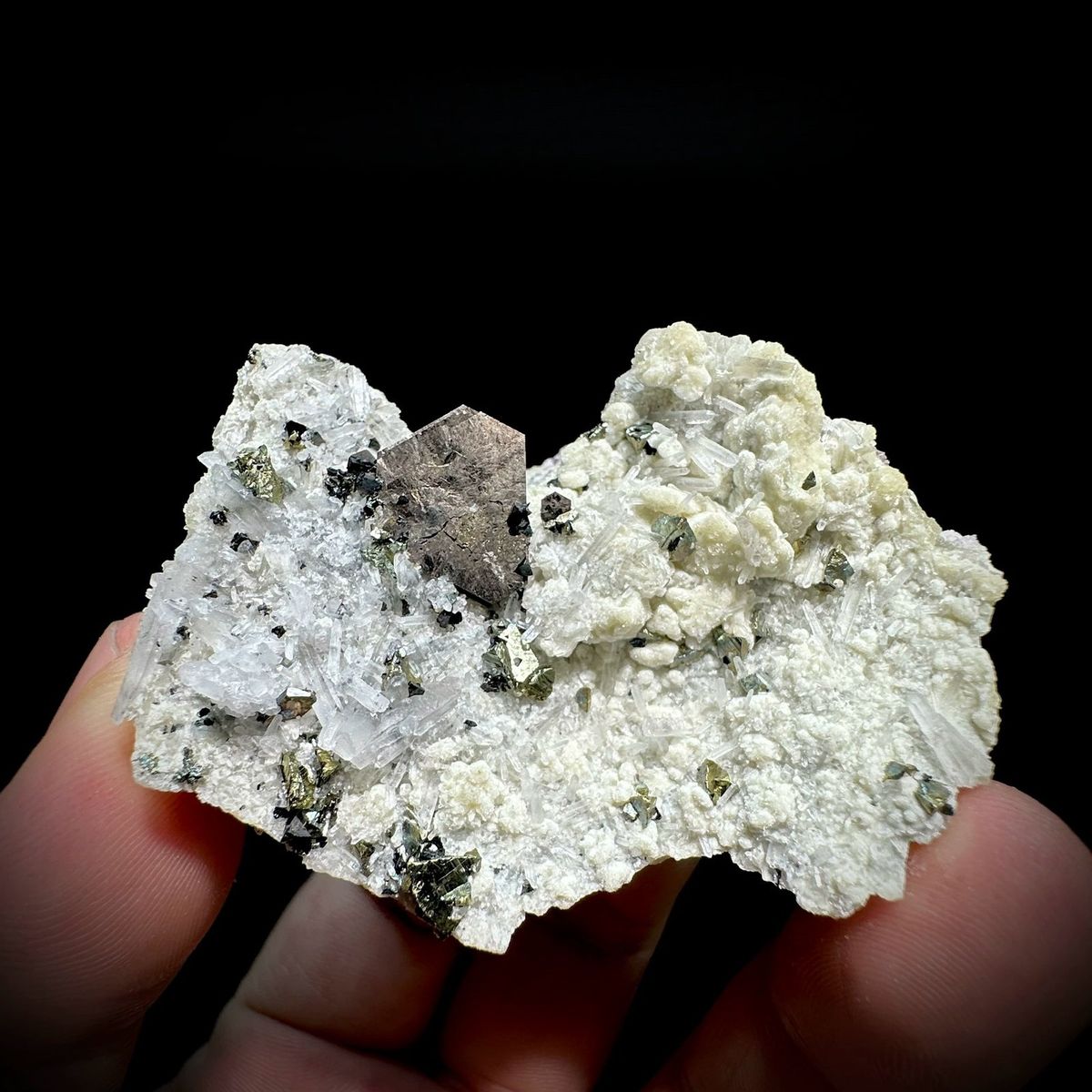
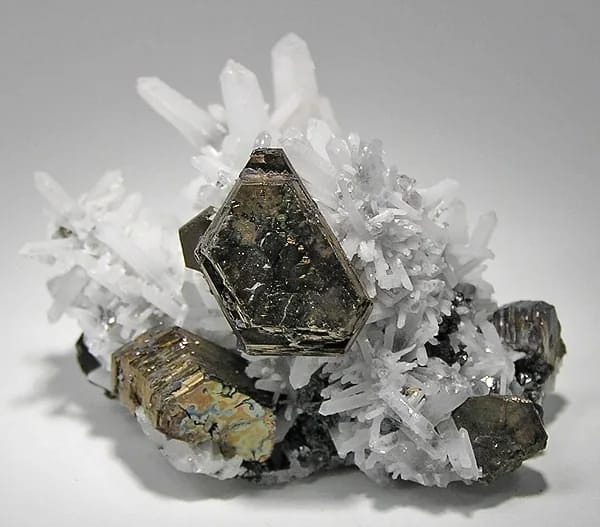
Pyrrhotite (Fe₁₋ₓS) is non-stoichiometric iron sulfide — chemically variable Fe(1-x)S — and is unique among common sulfides for its magnetism (the only common sulfide that is magnetic). Bronze color and slow tarnish are diagnostic.
Pyrrhotite (Fe₁₋ₓS) is non-stoichiometric iron sulfide — chemically variable Fe(1-x)S — and is unique among common sulfides for its magnetism (the only common sulfide that is magnetic). Bronze color and slow tarnish are diagnostic. Pyrrhotite forms in mafic-ultramafic igneous rocks (Sudbury Ni-Cu-PGE), contact-metamorphic skarns, and high-T hydrothermal veins.