Crystal Structure
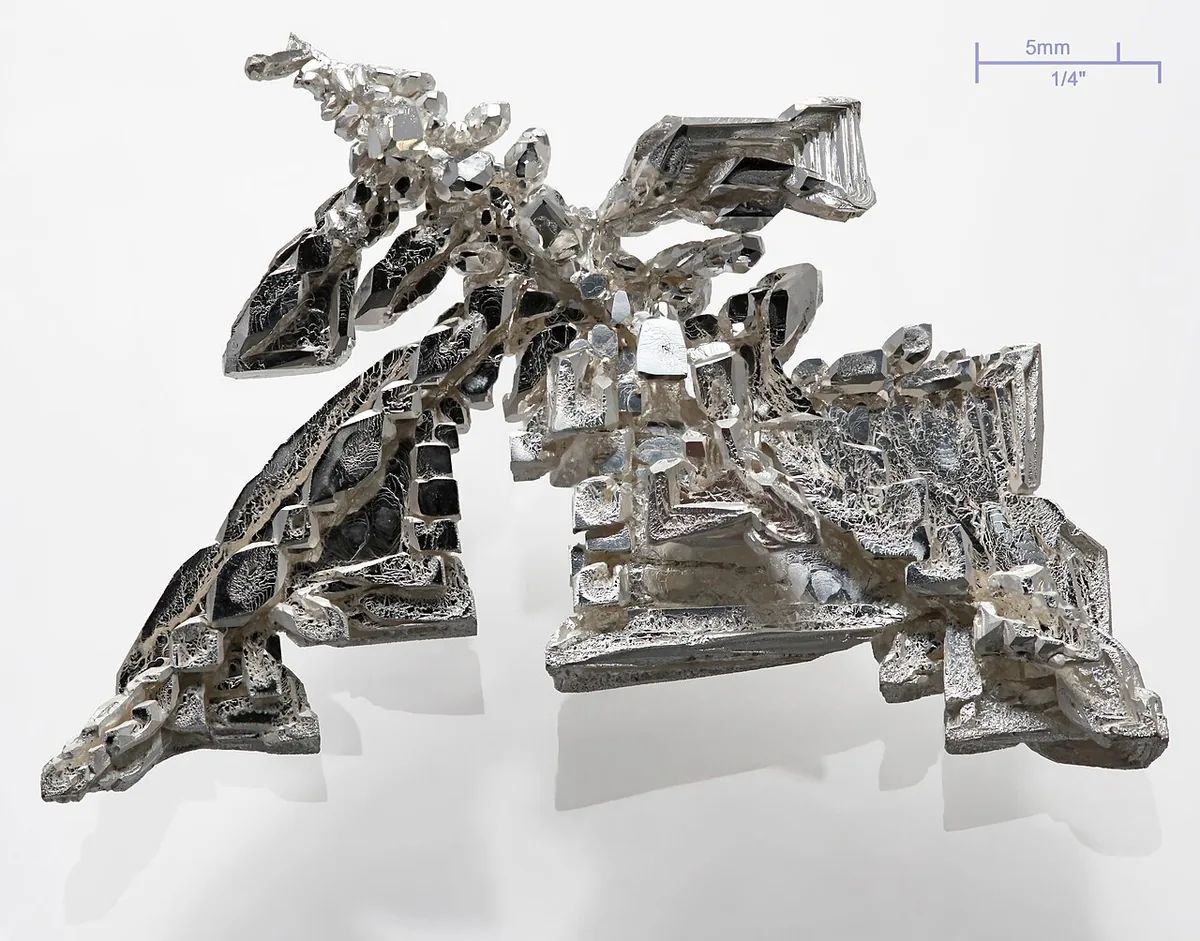
FCC packing — Ag.
Elemental Composition (by mass)
| Element | Mass % | Visual |
|---|---|---|
| Ag Silver | 100.00% |
Computed from simplified end-member formula. Solid-solution series, water content, and trace substitutions cause real-world variation.
IMA Abbreviation (Whitney-Evans 2010)
Ag
→ Silver
Symbol = element
Standard symbol from American Mineralogist (Whitney & Evans, 2010). Used in thin-section labeling, phase diagrams, and IMA-style species records.
⏳ Long-term Aging & Care Timeline
tarnish (acanthite/argentite)months
Trigger: air + sulfur compounds
Intervention: Native silver dulls to black. Storage in anti-tarnish strips or sealed cases slows process.
Pronunciation
/ˈsɪlvər/
↔ SIL-ver
Old English seolfor
Birthstone & Anniversary Gift Reference
Anniversary years: 25th (silver)
› Full birthstones registry
Tenacity
Behavior:
malleable + ductile
Under stress:
Flattens; pulls into wire
Second most malleable after gold.
Luster
metallic
Bright when fresh; tarnishes dark from Ag₂S.
Color Cause (Chromophore)
Chromophore:
free electrons
Mechanism:
plasmonic reflection
Color produced:
white
Reflects all visible wavelengths nearly equally.
Diaphaneity (Transparency)
opaque
Native metal.
Magnetism
Category:
diamagnetic
Test result:
Slight repulsion
Native Ag.
Test with rare-earth magnet (N42 or N52 neodymium). Suspend specimen on thread for sensitive paramagnetic detection. Diamagnetic minerals are weakly repelled (visible only with strong magnets like bismuth).
Specific Gravity
10.10–10.50
g/cm³
very heavy
Native silver.
For comparison: water = 1.00, glass ≈ 2.5, quartz = 2.65, corundum ≈ 4.00, galena ≈ 7.50, gold ≈ 19.3.
Streak Test
silver white
Bright metallic.
Streak = color of the powdered mineral. Drag specimen across unglazed white porcelain plate (Mohs 6.5). For minerals harder than the plate, crush a small flake into powder and observe color.
Care notesTarnishes (sulfide); store with anti-tarnish cloth. Full cleaning guide →
Mohs 2.5–3
Vickers (~) 170 HV
Knoop (~) 185 HK
Nickel–Strunz
1.AA.05Dana
01.01.01.01Geological setting
Hydrothermal
Mohs Hardness
2.5–3
Silver (Native) sits at 2.5–3 on the Mohs scale — can be scratched by a steel knife.
Colors:
Streak
Silver-white
Silver-white
Crystal system
Isometric (Cubic)
Isometric (Cubic)
Discovery Known since antiquity
Native ElementsNative Elements
TL;DR · 1 min read
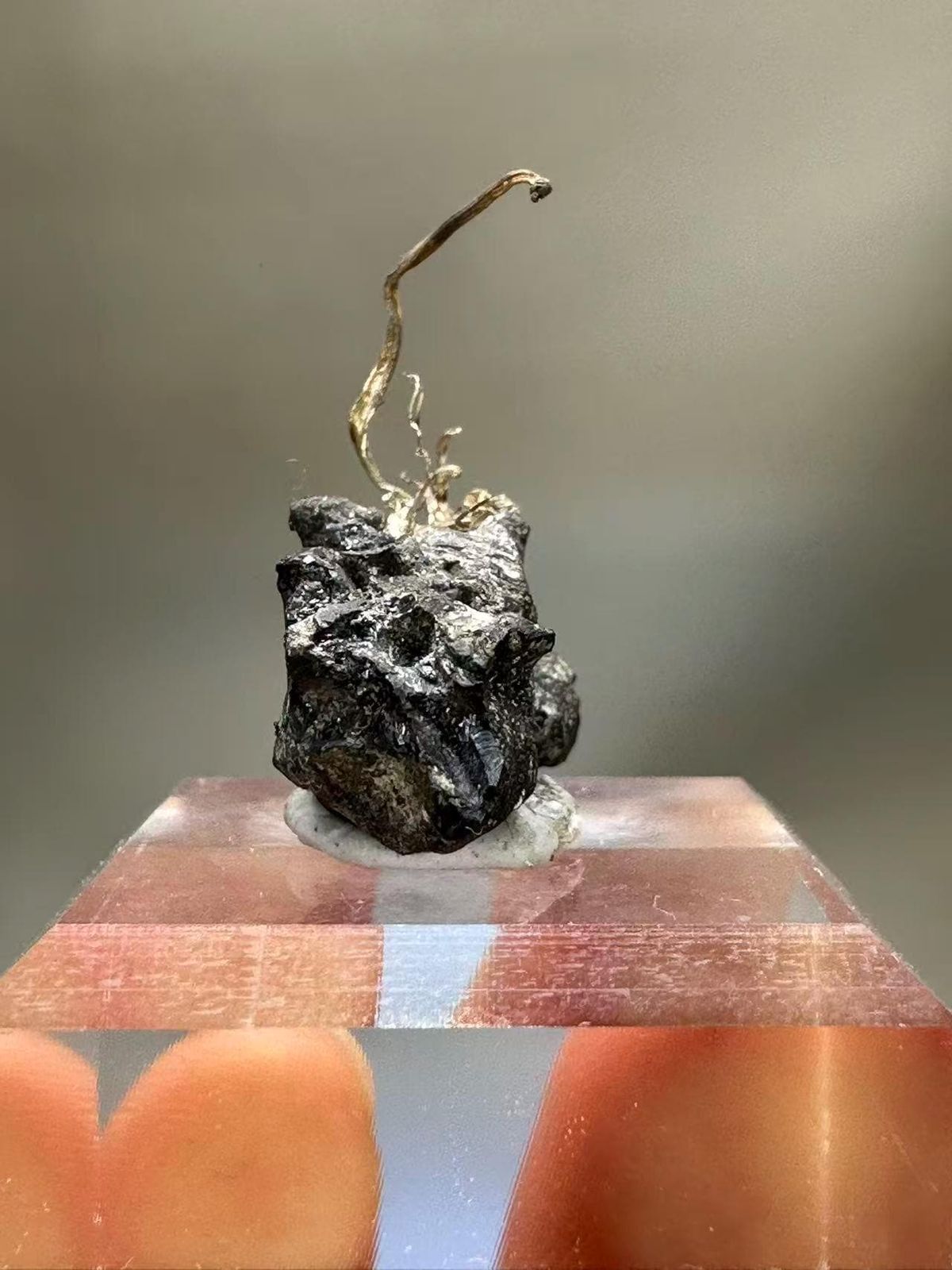
Native silver (Ag) is metallic silver in its pure crystalline form — most famously occurring as wire, dendritic, and herringbone aggregates from Kongsberg (Norway), Cobalt (Ontario), and Andreasberg (Germany). Silver is the second-most malleable native metal after gold and forms in hydrothermal silver-arsenide assemblages alongside acanthite and proustite/pyrargyrite.
Native silver (Ag) is metallic silver in its pure crystalline form — most famously occurring as wire, dendritic, and herringbone aggregates from Kongsberg (Norway), Cobalt (Ontario), and Andreasberg (Germany). Silver is the second-most malleable native metal after gold and forms in hydrothermal silver-arsenide assemblages alongside acanthite and proustite/pyrargyrite.